Most jerks during shifts come from clutch, fluid, mounts, or sensor issues.
If you want a clear, complete answer to what causes a car to jerk when shifting gears, you’re in the right place. I’ve diagnosed thousands of shift complaints and know the patterns, sounds, and fixes that work. I’ll break down what causes a car to jerk when shifting gears in plain English, with simple checks you can do today, and smart steps to avoid big repair bills.
Understanding Gear Jerk
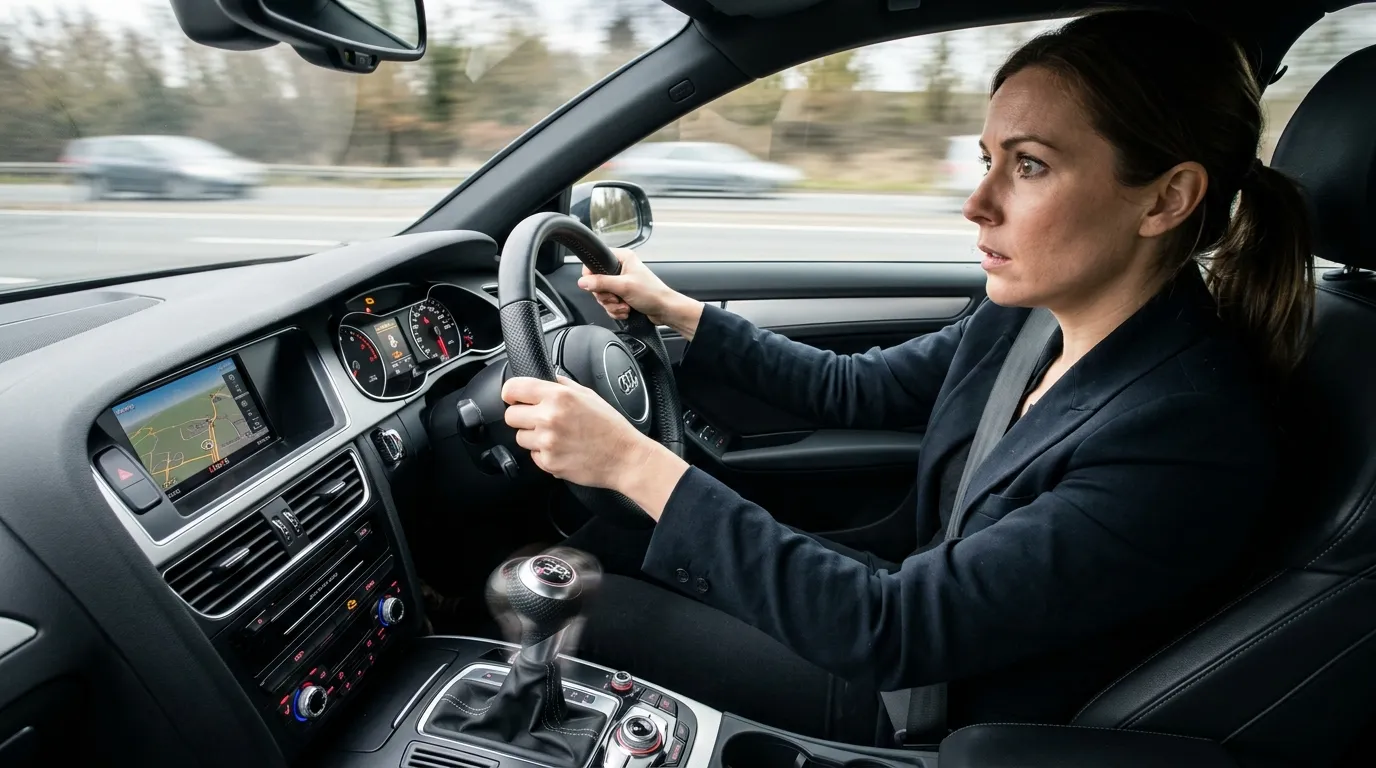
If you have asked yourself what causes a car to jerk when shifting gears, it helps to define the symptom first. Jerking happens when power does not pass smoothly from engine to wheels during a shift. It can feel like a tug, a kick, or a short stall.
How it feels
- A sharp nudge as you release the clutch or as the automatic shifts.
- A pause, then a surge, often called a flare or slip.
- A shake or shudder at low speeds or light throttle.
When it shows up
- Cold starts or after long highway drives.
- Hard acceleration, hill climbs, or stop‑and‑go traffic.
- Just before or after gear changes, including downshifts.
Why it matters
- Jerking hints at wear, low fluid, or timing errors.
- It can stress driveline parts like CV joints and mounts.
- Early fixes cost less than late rebuilds.
PAA: Is it safe to keep driving if my car jerks on shifts?
Short trips may be fine, but do not ignore it. Heat and friction can make light jerk turn into major damage.
PAA: Does cold weather cause more jerking when shifting?
Yes. Cold fluid is thick and moves slow. Rubber mounts also stiffen in cold, which can pass more shock to the cabin.
PAA: Can bad fuel or a misfire cause jerks during a shift?
Yes. A weak spark or lean mix can drop torque at the wrong time. That loss shows up as a harsh shift or bucking.
When you look at what causes a car to jerk when shifting gears, you must match the symptom with the exact moment it occurs. Time the jerk, note engine rpm, road speed, and throttle. Small details point to the root cause.
Main Causes by Transmission Type
Before repairs, tie the symptom to your transmission type. This gives quick focus when you ask what causes a car to jerk when shifting gears.
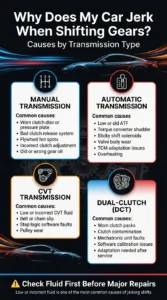
Manual transmissions
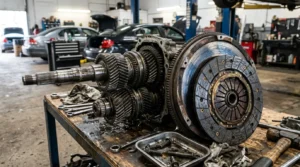
- Worn clutch disc or pressure plate: Slip, grab, or chatter during engagement.
- Bad clutch release system: Air in a hydraulic line or a stretched cable changes bite point.
- Flywheel hot spots: Uneven surfaces make the clutch grab in pulses.
- Incorrect clutch adjustment or driving habit: Riding the clutch causes heat and jerk.
- Old gear oil: Thick or wrong spec oil slows synchros and causes notchiness.
If you want to know what causes a car to jerk when shifting gears in a manual, start with the clutch, linkage, and mounts.
Conventional automatics (torque converter, planetary gears)
- Low or old ATF: Low pressure and slow clutch fill cause harsh or delayed shifts.
- Torque converter shudder: Feels like a rumble strip at 30–50 mph under light throttle.
- Sticky shift solenoids or valve body wear: Erratic line pressure gives banging shifts.
- Adaptation issues: The TCM needs to relearn after battery loss or repairs.
- Overheating: Heat thins fluid and speeds wear.
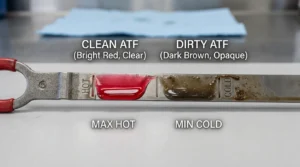
If you wonder what causes a car to jerk when shifting gears in an automatic, check fluid level, color, and smell first.
CVTs (continuously variable transmissions)
- Low or wrong CVT fluid: Special fluid is vital for belt or chain grip.
- Belt/chain slip: Shows as shudder at takeoff or when rolling back on throttle.
- Step logic faults: Software issues can mimic gear changes and jerk.
- Pulley wear: Surfaces glaze and reduce smooth ratio changes.
This is a common case of what causes a car to jerk when shifting gears when the CVT is due for fluid service or has software updates pending.
Dual‑clutch transmissions (DCT)
- Clutch pack wear or contamination: Causes slip, surge, or chatter at low speeds.
- Mechatronic unit faults: Solenoid or sensor errors give harsh engagement.
- Software mismatch: Needs clutch adaptation after service.
Drivers often ask what causes a car to jerk when shifting gears in a DCT. The usual answer is clutch calibration and mechatronic health.
Shared System Causes That Affect Any Transmission
Many shift jerks come from the engine or mounts, not the gearbox. That is a key truth behind what causes a car to jerk when shifting gears.
- Engine misfire: Bad plugs, coils, or injectors cause a drop in torque mid‑shift.
- Dirty throttle body or MAF: Airflow errors cause poor throttle response.
- Vacuum leaks or EGR faults: Lean mix or rough idle shows up as bucking.
- Faulty sensors: Throttle position, crank, or wheel speed sensors confuse the TCM.
- Weak battery or charging system: Low voltage makes modules act up.
- Worn motor or transmission mounts: Allow the drivetrain to rock and jerk.
- Driveline issues: CV joints, U‑joints, or differential backlash give clunks on shifts.
- Contaminated fluids: Wrong spec or old fluid changes friction and timing.
Source: amsoil.com
Quick Diagnostic Checklist
Use this simple path to nail what causes a car to jerk when shifting gears without guesswork.
- Confirm the symptom: Note speed, rpm, gear, throttle, and temperature.
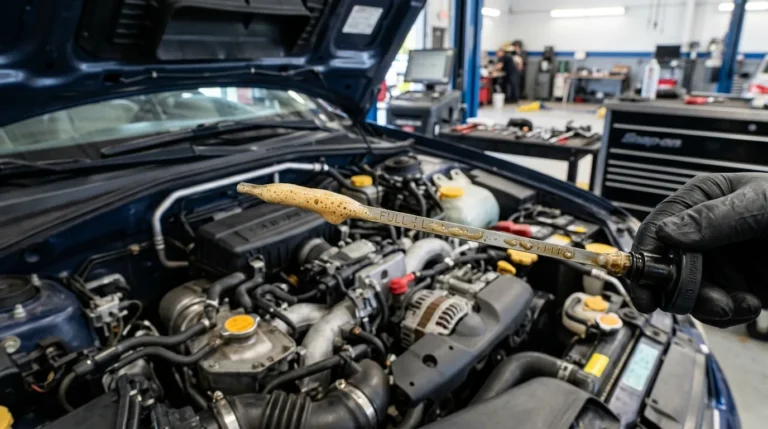
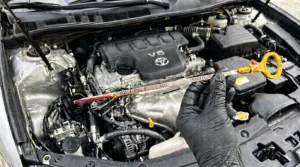
- Check fluids: Verify level and condition for engine oil, ATF/CVT fluid, and coolant.
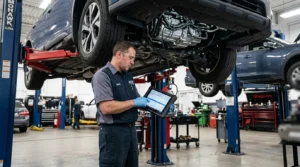
- Scan for codes: Use an OBD‑II scanner and record freeze‑frame data.
- Inspect mounts: Look for cracks, sag, or fluid leaks in hydraulic mounts.
- Look for leaks: Check pan, lines, axle seals, and bellhousing.
- Test misfire: Watch live data for misfire counts and fuel trims.
- Road test: Try light throttle, moderate throttle, uphill, and manual shift mode if available.
- Relearn and updates: Perform TCM/ECM adaptations and check for software updates.
If you still ask what causes a car to jerk when shifting gears after these checks, you likely need a deeper hydraulic or clutch test.
How to Fix and Prevent Jerking on Shifts
Good habits and basic service solve most cases of what causes a car to jerk when shifting gears.
- Change fluids on time: Follow OEM intervals. Severe use may need 30,000–60,000 mile ATF changes.
- Use the right spec: ATF, CVT, and DCT fluids are not interchangeable.
- Service the air path: Clean throttle body and MAF. Replace the air filter.
- Tune‑up basics: Fresh spark plugs, coils as needed, and good fuel quality.
- Mounts and bushings: Replace worn parts to stop drivetrain lash.
- Software health: Get TCM updates and perform clutch or shift adaptations after service.
- Driving style: Smooth throttle, full clutch engagement on manuals, avoid riding the brake or gas during low‑speed shifts.
These steps address the common roots of what causes a car to jerk when shifting gears and help protect the transmission.
When to See a Mechanic and Typical Costs
Know when to stop DIY and seek help for what causes a car to jerk when shifting gears.
- See a pro now if you have burnt‑smelling fluid, metal shavings, or repeated limp mode.
- Go soon if jerks are getting worse, or if you feel shudder at steady speeds.
Typical cost ranges in the US:
- Fluid and filter service: 120–350 dollars for automatics and CVTs, more for DCTs.
- Mount replacement: 200–800 dollars depending on labor time and part type.
- Ignition tune‑up: 150–500 dollars based on engine layout.
- Valve body or solenoid repair: 400–1,500 dollars.
- Clutch kit (manual): 800–2,000 dollars including labor and flywheel resurface.
- Torque converter replacement: 900–2,500 dollars.
- Transmission rebuild: 2,500–5,500 dollars or more, make and model dependent.
If a shop can explain what causes a car to jerk when shifting gears on your model and show scan data, you are in good hands.
My Shop Notes and Pro Tips
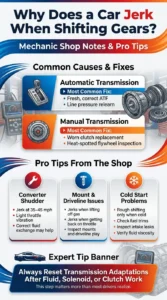
From the bay, patterns repeat. My most common fix for what causes a car to jerk when shifting gears in automatics is fresh, correct ATF plus a line pressure relearn. In manuals, it is often a worn clutch with a heat‑spotted flywheel.
Real‑world tips:
- If the jerk is only on light throttle at 35–45 mph, suspect converter shudder. A fluid exchange with the right additive often helps.
- If it jerks only when you lift off or get back on the gas, check mounts and driveline play.
- If cold starts are rough but warm is fine, look at fuel trims, intake leaks, and fluid viscosity.
- Always reset adaptations after clutch, solenoid, or fluid work. It matters more than people think.
These habits have solved most cases of what causes a car to jerk when shifting gears in my experience, and they can help you too.
Frequently Asked Questions of what causes a car to jerk when shifting gears
What causes a car to jerk when shifting gears most often?
Low or old transmission fluid and worn mounts are common. Misfires and dirty throttle bodies also play a big part.
Can a bad spark plug cause jerking only during shifts?
Yes. A weak spark drops torque as the transmission tries to engage a new gear. That mismatch feels like a jerk or buck.
Why does my car jerk when shifting from 1st to 2nd?
First to second is a big ratio change. Any clutch, fluid, or timing issue shows up here first.
Will a transmission flush fix jerking?
Sometimes. If the cause is sticky valves or old fluid, it helps. If clutches are worn, a flush will not cure it.
How do I know if the torque converter is the problem?
Look for a low‑speed shudder at steady cruise that goes away when you tap the brake. Scan data may show converter lockup issues.
Can engine mounts really make shifting feel harsh?
Yes. Bad mounts let the engine rock, which turns a small shift bump into a hard thud you can feel.
Why does my car jerk more in cold weather?
Fluids are thicker, rubber is stiffer, and sensors need time to stabilize. Many cars smooth out after warm‑up.
Conclusion
Jerking on shifts is your car asking for help. Most fixes are simple when you capture details and follow a clean test path. Start with fluids, mounts, and a scan. Match the symptom to the system and act early.
Take one step today. Log what you feel, check levels, and pull codes. If you found this guide useful, subscribe for more practical advice, or drop a comment with your symptoms and car model so I can help you pinpoint the cause.