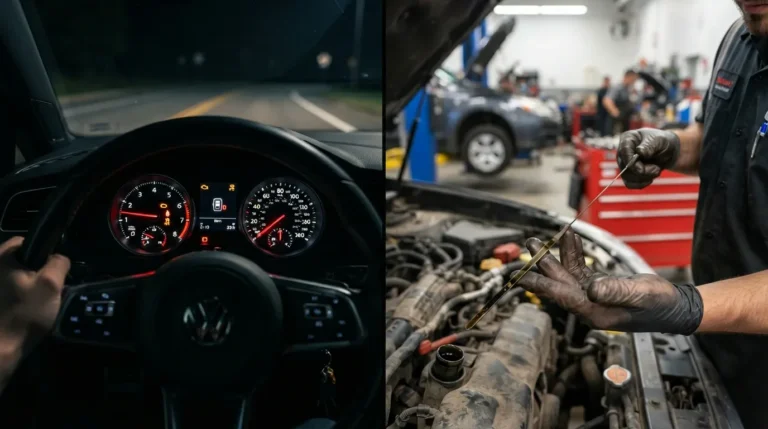
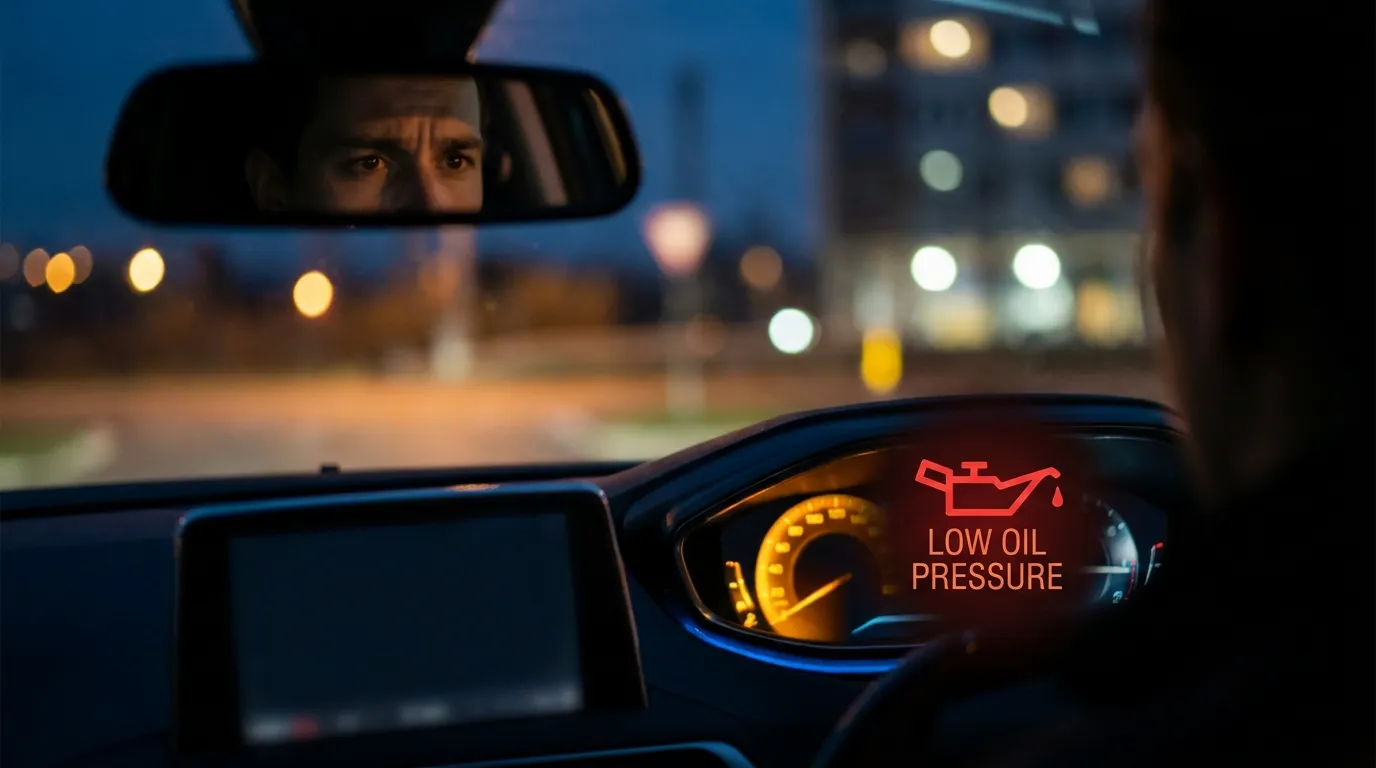
Low oil level, clogged pickup, worn pump, faulty sensor, or wrong oil viscosity cause low oil pressure.
As a mechanic and longtime car writer, I’ve tracked why engine oil pressure low causes trigger urgent repairs and lost time. This guide breaks down what creates low oil pressure, how to diagnose it, and steps to fix or prevent the problem. You’ll find clear checks, real-world tips from hands-on experience, and practical advice so you can act fast and avoid engine damage.
How engine oil pressure works
Oil pressure keeps engine parts lubricated. A pump pushes oil through galleries and bearings. Sensors and a gauge report the pressure to you. Understanding the system makes engine oil pressure low causes easier to find and fix.
Common engine oil pressure low causes
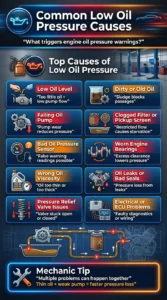
Many things can drop oil pressure. Below are the usual engine oil pressure low causes I see in shops and on the road.
- Low oil level
- Running with too little oil reduces pump flow and pressure. Check the dipstick first.
- Dirty or degraded oil
- Old oil becomes thick with sludge or loses lubricity. Dirty oil can clog passages and lower pressure.
- Failed oil pump
- A worn gear or pump housing loses efficiency. A failing pump is a common root cause of low oil pressure.
- Clogged pickup screen or oil filter
- Debris blocks the pickup or filter. Pump cavitation or starvation follows, dropping pressure.
- Faulty oil pressure sensor or gauge
- Sensors fail or wiring breaks. That causes false low readings even when pressure is fine.
- Worn engine bearings
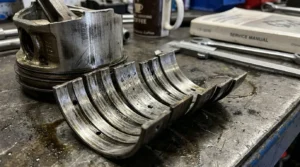
- Big-end or main bearing wear increases clearance. More clearance lowers oil pressure under load.
- Wrong oil viscosity
- Using oil that’s too thin reduces pressure. Similarly, very thick oil in cold weather can read low until warm.
- Leaks or damaged seals
- External leaks drain oil. Internal leaks like a stuck pressure relief valve reduce pressure too.
- Pressure relief valve problems
- A stuck open valve bleeds off pressure. A stuck closed valve can also cause intermittent signals and damage.
- Electrical or ECU issues
- Modern cars use the ECU for oil pressure diagnostics. A software or wiring fault can show false alarms.
I’ve fixed engines where two issues combined. For example, thin oil and a worn pump make pressure fail much faster. Identifying the primary engine oil pressure low causes matters for the right repair.
Symptoms and dashboard warnings
Low oil pressure shows in few ways. Watch for these signs.
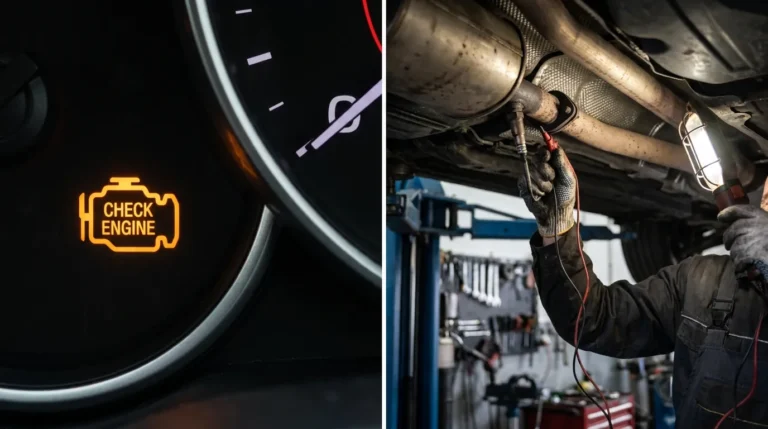
- Oil pressure light on the dash or a red icon.
- Unusual engine noise such as ticking, knocking, or lifter noise.
- Oil pressure gauge reading below normal range.
- Engine misbehavior, reduced power, or sudden overheating.
If you see the oil pressure warning, stop driving soon. Continued running risks bearing damage and complete engine failure.
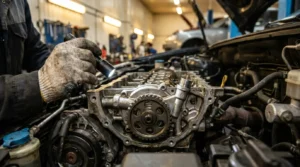
Diagnosing engine oil pressure low causes
A short checklist helps pinpoint the cause. I follow these steps in the garage.
- Check oil level with the dipstick. Top up if low and recheck the light.
- Inspect for visible leaks under the car and around seals.
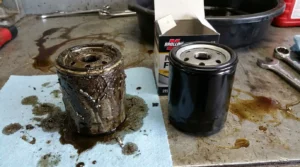
- Replace the oil filter and check the pickup screen for debris.
- Test oil pressure with a mechanical gauge at the pressure port for an accurate reading.
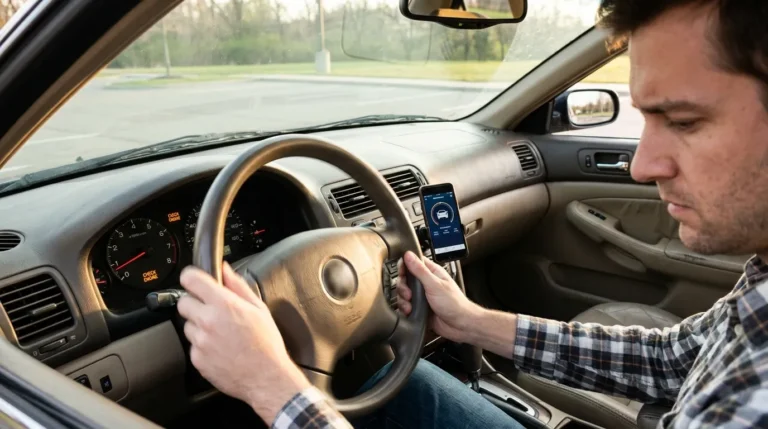
- Swap or test the oil pressure sensor and check wiring for faults.
- If pressure is low on a mechanical gauge, inspect the oil pump, relief valve, and bearings.
I prefer a mechanical gauge test. Many times the dash sensor was wrong. A gauge gives a clear answer about true engine oil pressure low causes.
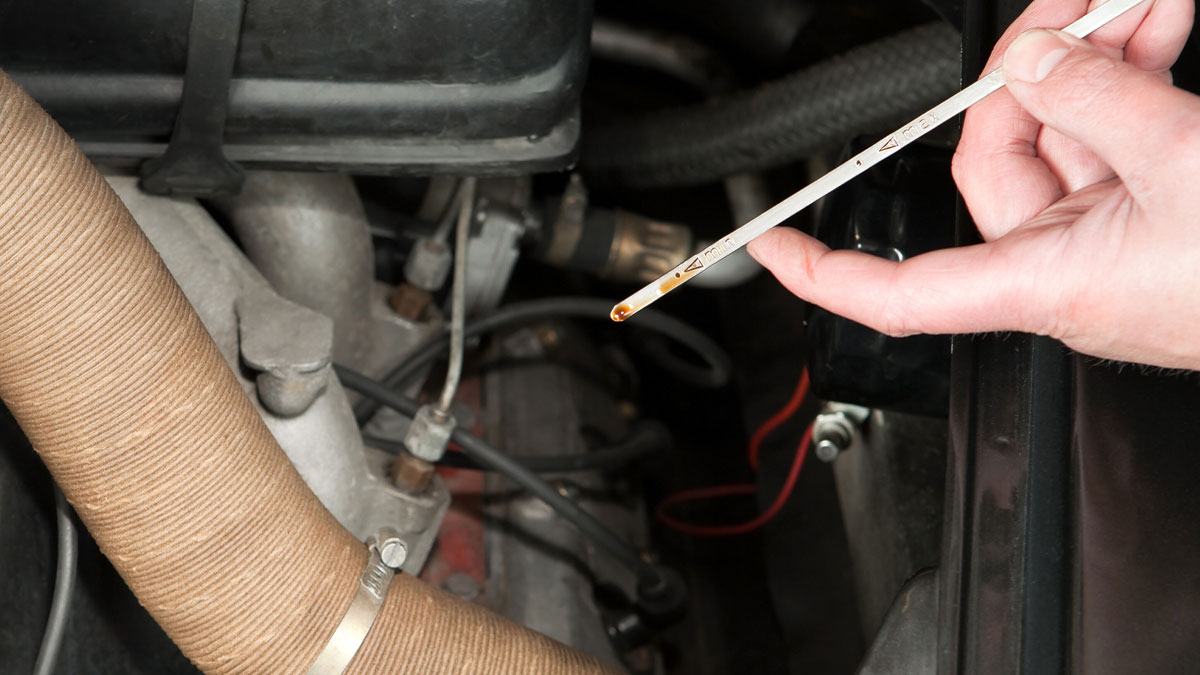
Source: amsoil.com
Quick PAA-style questions
Can low oil level cause engine oil pressure low causes reading?
Yes. Low oil level directly reduces the volume available to the pump and will lower pressure quickly. Topping up can temporarily restore normal readings.
Will an oil change fix low oil pressure?
Sometimes. If dirty oil or wrong viscosity caused the drop, fresh correct oil and a new filter can restore pressure. If the pump or bearings are bad, an oil change won’t fix it.
Is a warning light always accurate?
No. The light can be triggered by sensor faults or wiring issues. Always confirm with a mechanical pressure gauge before major repairs.
Fixes and repairs for low oil pressure
The correct fix depends on the cause. Common repair paths I use and recommend are:
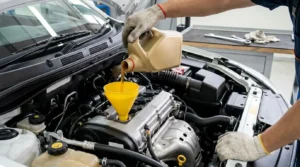
- Top up or change oil and filter if low or dirty.
- Replace a faulty oil pressure sensor or repair wiring.
- Service the oil pump, pickup screen, or pressure relief valve when clogged or worn.
- Rebuild or replace bearings in severe wear cases.
- Use the manufacturer’s recommended oil viscosity to prevent wrong-oil issues.
- Repair external leaks and faulty seals.
Start with the cheapest checks first. In my experience, sensors or low oil are often the culprit. Save expensive repairs for confirmed mechanical failures.
Preventive maintenance to avoid low oil pressure
Routine care keeps oil pressure steady. Follow these tips.
- Change oil and filter at manufacturer intervals.
- Use the correct oil grade and viscosity for your vehicle and climate.
- Check oil level monthly and before long trips.
- Inspect for leaks and unusual noises often.
- Keep engine cooling and PCV systems healthy to reduce oil contamination.
I once avoided a pump failure by spotting early bearing noise during a routine oil change. Small checks save big bills.
When to stop driving and seek help
Low oil pressure is serious. Use this rule.
- If the oil pressure light is on, pull over and shut the engine off as soon as safe.
- If the gauge shows near zero or the engine sounds painful, do not continue driving.
- If pressure is slightly low but stable, drive gently to a repair shop.
- Always confirm with a mechanical gauge before authorizing major engine work.
Stopping early can save the engine. I’ve seen cars ruined because drivers ignored a low pressure warning.
Costs and repair considerations
Repair costs vary widely. Here are typical ranges and factors to expect.
- Sensor or wiring repair: low to moderate cost and quick.
- Oil and filter service: low cost and immediate.
- Oil pump or relief valve replacement: moderate to high cost depending on access.
- Bearing or engine rebuild: high cost and time-consuming.
Get a proper diagnosis before committing. A pressure gauge test is a small cost that prevents unnecessary repairs.
Related concepts and final technical notes
Understand these linked ideas to better handle engine oil pressure low causes.
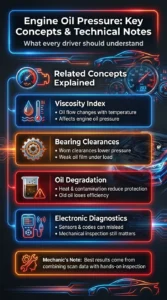
- Viscosity index: Oil’s resistance to flow changes with temperature and affects pressure.
- Bearing clearances: Worn clearances reduce oil film and pressure under load.
- Oil degradation: Contamination and heat reduce oil efficiency over time.
- Electronic diagnostics: Modern cars use sensors and codes that can mislead without mechanical checks.
I always balance electronic diagnostics with hands-on checks. That approach keeps repairs precise and cost-effective.
Frequently Asked Questions of engine oil pressure low causes
What causes a sudden drop in oil pressure?
A sudden drop usually means low oil level, a failed oil pump, or a clogged pickup. It may also be a faulty sensor giving a false reading.
Can I drive my car if the oil pressure light comes on?
If the light is steady or the pressure reads near zero, stop driving and turn off the engine as soon as safe. If the reading is slightly low, drive slowly to a repair shop for a quick check.
How do mechanics test engine oil pressure low causes?
Mechanics use a mechanical oil pressure gauge connected to the engine’s pressure port. They also inspect oil level, filter, pump, and sensor wiring to find the root cause.
Will thicker oil fix low oil pressure?
Thicker oil can raise pressure but may cause other issues if it’s not the correct grade. Use the manufacturer-recommended viscosity to avoid harm.
Is a blinking oil light different from a steady light?
A blinking light often indicates a sensor or electrical problem, while a steady light typically signals true low pressure. Both require prompt attention.
Conclusion
Low oil pressure has clear causes and clear fixes when you know how to check them. Start with simple steps: check oil level, inspect for leaks, and confirm with a mechanical gauge. Act quickly to protect the engine, and use regular maintenance to prevent most engine oil pressure low causes. If you found this guide useful, try the checks above, share your experience, or leave a question below to get personalized advice.