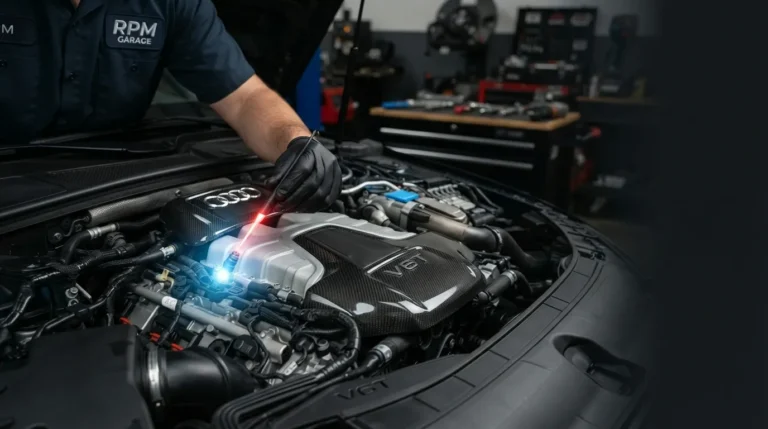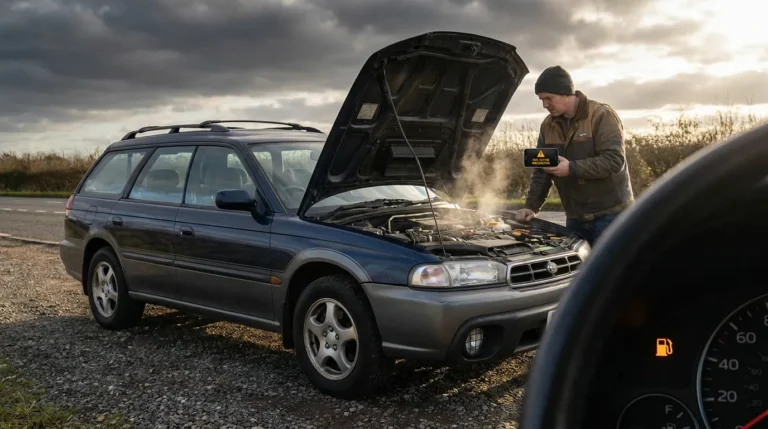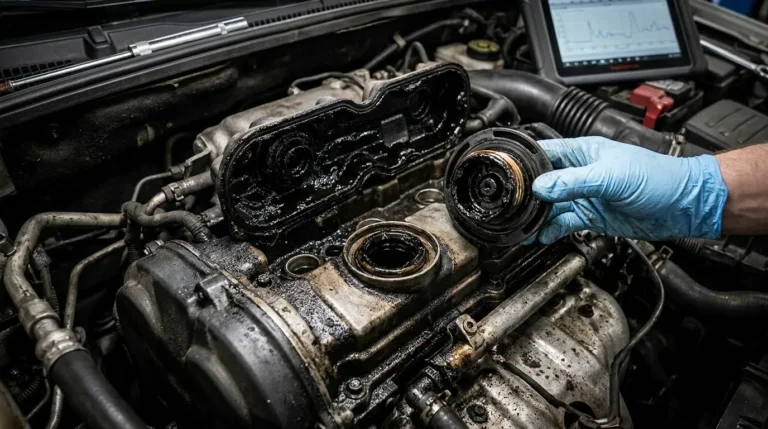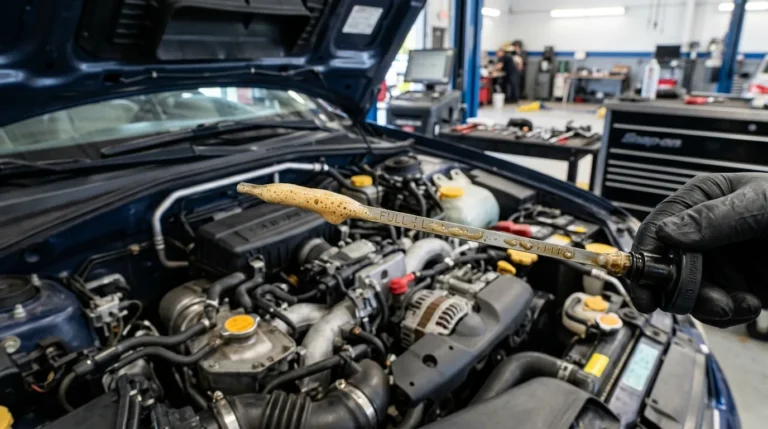
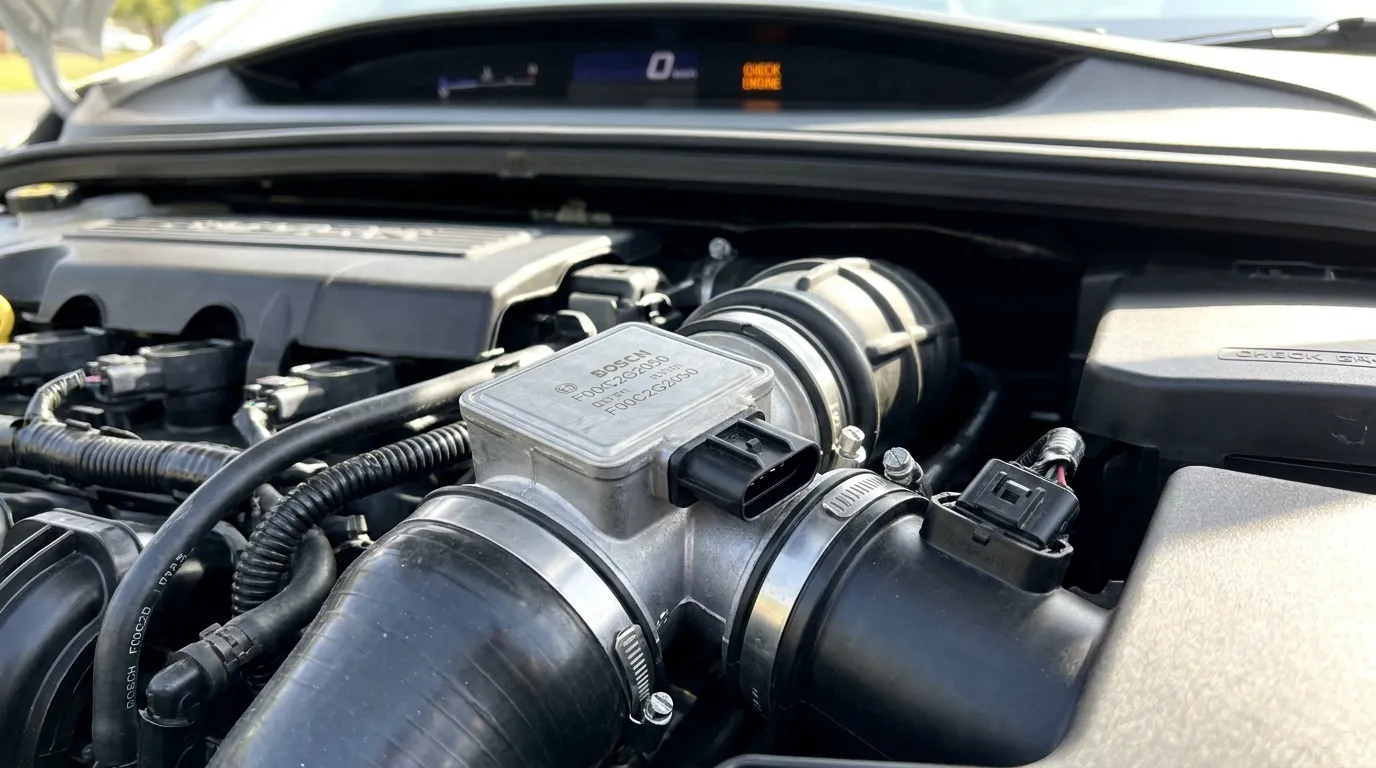
A failing mass air flow sensor often causes rough idle, poor fuel economy, stalling, and engine hesitation.
I’ve worked on cars and written about car electronics for years, so I know how confusing mass air flow sensor symptoms can be. This article explains what the mass air flow sensor does, the clear signs it’s acting up, how to diagnose the problem, common causes, and practical repair and prevention steps you can use today. Read on for easy checks, real-world tips, and simple fixes that save time and money.
What is a mass air flow sensor and why it matters
The mass air flow sensor measures how much air enters the engine. The engine computer uses that data to set fuel delivery and timing. When the mass air flow sensor sends wrong data, the engine runs too rich or too lean. That leads to many mass air flow sensor symptoms drivers notice quickly.
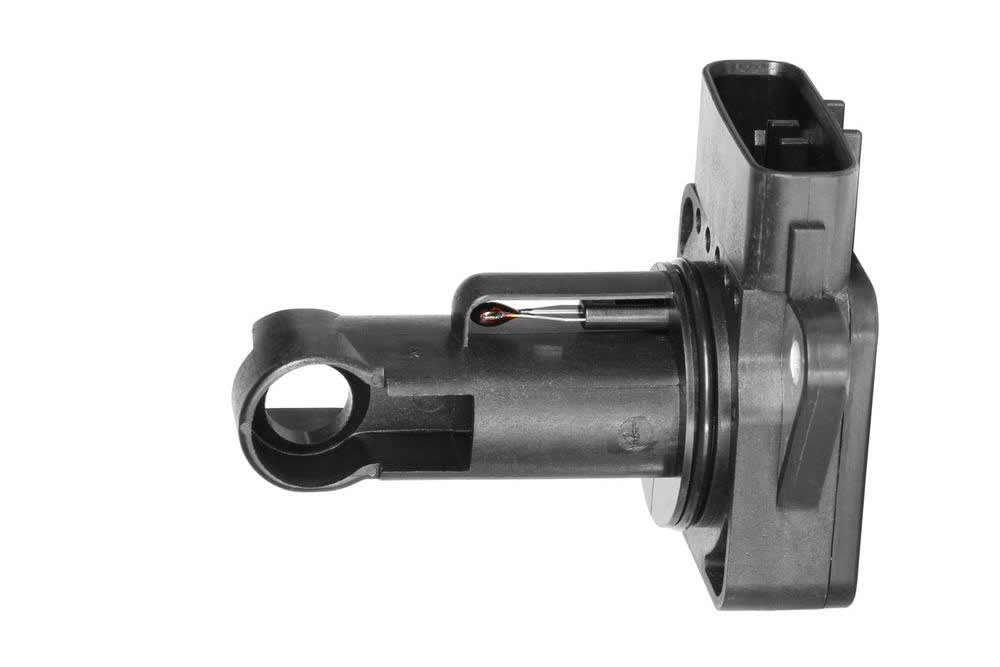
Understanding the sensor’s role makes the symptoms easier to diagnose. The sensor sits between the air filter and the throttle body. It can be a hot-wire, hot-film, or vane-type sensor. Each type shares similar failure signs that affect drivability and emissions.
Common mass air flow sensor symptoms to watch for
Below are the top mass air flow sensor symptoms and what they typically mean. Spotting these early helps avoid bigger repairs.
- Rough idle: The engine shakes or runs uneven at idle. This happens because the sensor reports wrong air volume and the fuel mix is off.
- Poor fuel economy: You notice more trips to the gas station. A bad sensor often causes a rich mixture, wasting fuel.
- Engine hesitation or stumbling: The car hesitates under acceleration or stumbles when you press the gas. The ECU gets bad airflow data and mis-times fuel delivery.
- Stalling when stopped: The engine dies at a stoplight or after idling. Incorrect air readings can lower idle speed too much.
- Check Engine Light (CEL): The CEL may illuminate with codes related to airflow, air/fuel ratio, or the sensor circuit. Codes often include P0100-P0104 series.
- Hard starting: The engine struggles to start or takes multiple cranks. Wrong air data confuses the startup fuel calculation.
- Surging or uneven power: The car surges at steady throttle. The ECU compensates for fluctuating airflow readings.
- Black exhaust smoke: Visible soot or black smoke signals a rich condition often caused by bad mass air flow sensor symptoms.
- Limp mode or reduced power: On modern cars, the ECU may limit power if it detects bad airflow signals to protect the engine.
Use these symptoms together. One symptom alone may point elsewhere. Two or more point strongly to mass air flow sensor symptoms.

How to diagnose mass air flow sensor symptoms step by step
A clear diagnosis avoids wasted parts. Follow these steps from simple checks to deeper tests.
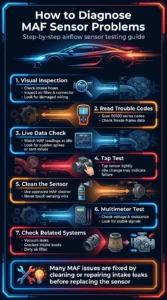
- Visual inspection
- Look for loose or cracked air intake hoses. Check the air filter and sensor connector.
- Inspect wiring and pins for corrosion or breaks.
- Read trouble codes
- Use an OBD-II scanner. Note codes and freeze-frame data. Codes in the P0100 range often point to the mass air flow sensor.
- Live data observation
* Watch MAF readings at idle and during revs. Typical idle readings vary by engine, but a sudden jump, drop, or zero reading is a red flag. - Tap test
- With the engine running, lightly tap the sensor housing. If idle changes, the sensor may be failing.
- Clean the sensor
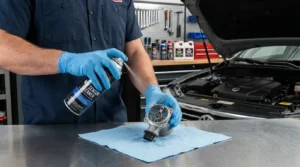
- Use approved MAF cleaner. Avoid harsh chemicals and avoid touching the sensing element.
- Multimeter test
- For hot-wire sensors, test voltage and resistance per service manual values. Look for stable voltage signals while revving.
- Swap or bench test
- If available, swap with a known good sensor or test the component on a bench according to specs.
- Check related systems
- Verify vacuum leaks, cracked intake boots, or a clogged air filter. These can mimic mass air flow sensor symptoms.
From my experience, many issues were resolved by cleaning and fixing an air hose. Only replace the sensor after you rule out wiring and intake leaks.
Causes behind mass air flow sensor symptoms
Understanding causes helps prevent repeat problems. Common causes include:
- Contamination
- Oil from aftermarket filters, dirt, or road grime can coat the sensing element and skew readings.
- Wiring and connector faults
- Corroded pins, frayed wires, or poor grounds create intermittent signals and trigger mass air flow sensor symptoms.
- Physical damage
- Impact, improper removal, or debris entering the intake can damage the sensor.
- Intake leaks
- Cracked hoses or loose clamps let unmetered air in. The ECU reads less air than enters, producing wrong mixture.
- Faulty ECU or software
- Rarely, the engine control unit or software faults may misinterpret sensor data.
Be open to multiple causes. I’ve seen cars with a clean MAF still misbehave because a cracked intake boot let extra air bypass the sensor.
Source: yourmechanic.com
Repair, cleaning, replacement, and cost expectations
Here’s a practical guide for fixes and money-saving choices.
- Cleaning
- Use a dedicated MAF cleaner spray. Remove the sensor carefully. Spray and air-dry for 15–30 minutes. Reinstall and test.
- Cleaning often fixes intermittent mass air flow sensor symptoms.
- Repairing wiring
- Repair frayed wires with proper splices and heat-shrink. Replace corroded connectors.
- Replacing sensor
- Replace when cleaning and repairs fail or when sensor fails bench tests.
- OEM sensors cost more but match factory tuning. Aftermarket units are cheaper but vary in quality.
- Cost
- Cleaning: low cost if you do it yourself; cleaner spray costs about $8–$20.
- Replacement sensor: ranges widely, typically $80–$400 depending on vehicle and sensor type.
- Labor: expect 0.5 to 2 hours of shop time, depending on access and diagnostics.
Tip from experience: Clean first, then diagnose. Many replaced sensors were fine after a proper cleaning.
Preventive maintenance and best practices
Simple habits reduce the risk of mass air flow sensor symptoms.
- Replace the air filter on schedule. A clean filter keeps the sensor clean.
- Use proper oil in reusable filters. Over-oiling leads to contamination.
- Inspect intake hoses at oil change intervals. Fix cracks or loose clamps quickly.
- Clean the MAF sensor at planned maintenance intervals rather than waiting for failure.
- Keep wiring dry and sealed. Use dielectric grease in connectors to prevent corrosion.
Small steps save money and keep the MAF reading accurate over the life of the vehicle.

Frequently Asked Questions of mass air flow sensor symptoms
What usually causes the check engine light with mass air flow sensor symptoms?
A bad mass air flow sensor often triggers codes for airflow or air/fuel ratio. It can also light the check engine light when wiring or intake leaks affect readings.
Can I drive with mass air flow sensor symptoms?
You can drive short distances, but expect poor fuel economy and rough performance. Long-term driving may damage the catalytic converter or cause further engine issues.
Will cleaning fix all mass air flow sensor symptoms?
Cleaning fixes many cases, especially when contamination is the issue. If wiring, physical damage, or internal failure exists, cleaning won’t fully resolve symptoms.
How long does a mass air flow sensor last?
Lifespan varies widely by make and driving conditions. With good maintenance, many last over 100,000 miles; harsh environments shorten life.
Are aftermarket sensors reliable for fixing mass air flow sensor symptoms?
Some aftermarket sensors work well and cost less. Choose a high-quality unit and verify compatibility. OEM is the safest choice for calibration and fit.
How do intake leaks mimic mass air flow sensor symptoms?
Intake leaks let unmetered air enter the engine. The ECU sees less air than actually arrives and sets fuel improperly, causing similar symptoms to a bad sensor.
Conclusion
A clear understanding of mass air flow sensor symptoms helps you spot problems early and avoid costly repairs. Check for rough idle, poor fuel economy, stalling, and hesitation as first signs. Start with simple steps: visual inspection, code reading, and careful cleaning. Fix wiring and intake leaks before replacing parts. From my hands-on work, small inspections and regular cleaning prevent most failures and keep your engine running smoothly.
Take action now: inspect the air filter and hoses, read any stored codes, and try a safe MAF cleaning if needed. Share your experience or questions in the comments, and consider subscribing for more practical car-care guides.