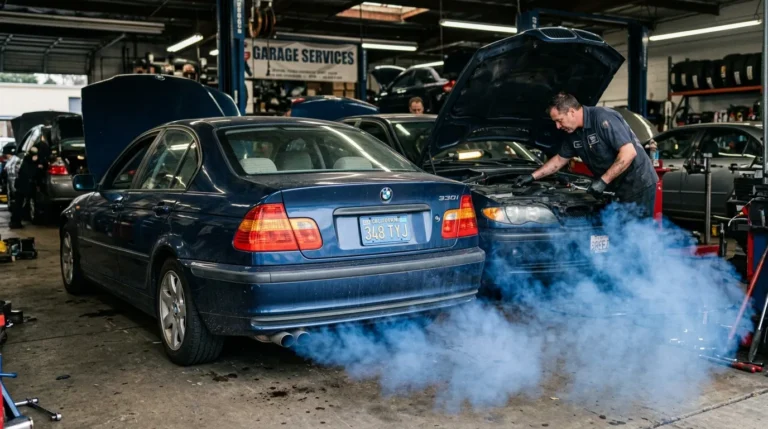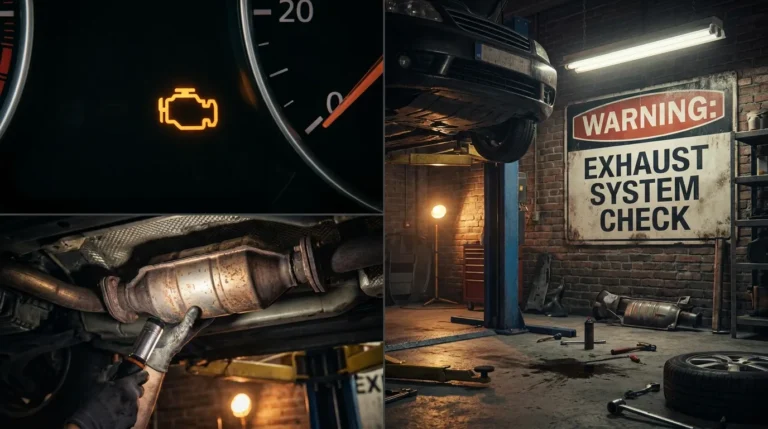

Most cars hesitate due to fuel, air, spark, sensor, or transmission faults.
You press the gas and the car stumbles. I’ve diagnosed this hundreds of times, from simple vacuum leaks to failing catalytic converters. If you want to know what causes a car to hesitate when accelerating, this guide breaks down every major system, shows real fixes, and helps you decide when to tackle it yourself or call a pro.

How hesitation feels and why it matters
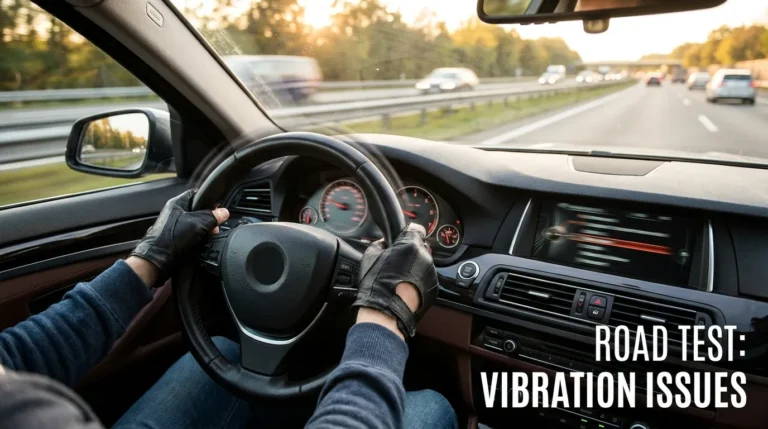
Hesitation feels like a pause, stumble, or flat spot when you add throttle. It may last a second, or several. It can be worse on hills, with the A/C on, or at highway speeds.
This is not just annoying. It often means your engine runs lean or misfires. That can harm the catalytic converter and raise repair costs. Catch it early to save money and stress.
What causes a car to hesitate when accelerating
Think of the engine as a team. It needs air, fuel, spark, timing, and a free exhaust. The computer (ECU) blends it all. If one part lags, the whole team stumbles. If you ask what causes a car to hesitate when accelerating, the answer lives in these groups:
- Fuel delivery issues like weak pumps, clogged filters, or dirty injectors
- Ignition faults like worn plugs or failing coils
- Air and sensor problems like a bad MAF, TPS, or vacuum leaks
- Exhaust and emissions faults like a clogged catalytic converter or lazy O2 sensors
- Transmission or clutch slip under load
- Engine mechanical problems like low compression or timing stretch
If you wonder what causes a car to hesitate when accelerating, start with fuel and air. They cause most cases.

Fuel delivery problems
Fuel must reach the rail at the right pressure and volume. If it drops, power sags and the car bogs.
- Clogged fuel filter. Flow drops at wide open throttle. You feel a flat spot above 3,000 rpm.
- Weak fuel pump. Warm restarts take long. Car hesitates on hills. Low pressure on a gauge confirms it.
- Dirty injectors. Rough idle and uneven pull. A quality injector clean can help.
- Bad gas or water in fuel. Hesitation after a cheap fill-up. Use fresh fuel and a water remover if safe for your car.
- Faulty regulator or sensor. Wrong fuel trims show as P0171 (lean) or high LTFT.
From my bay: a compact car came in with stagger on ramps. Fuel pressure fell 10 psi under load. A new pump fixed it. Often, what causes a car to hesitate when accelerating is a weak fuel pump that only shows up when you need power.

Ignition system faults
Spark must be strong and on time. Weak spark causes misfire under load and a sharp jerk.
- Worn spark plugs. Gaps grow, coils work harder, and spark blows out at higher rpm.
- Failing ignition coils. Hesitation in rain is a clue. Look for P030X codes.
- Old wires or boots. Arcing leaves white tracks. Replace as a set.
- Timing issues. Rare on modern ECU cars, but crank or cam sensor faults can skew timing.
On a road test, I felt a repeat stumble at 45–55 mph, light throttle. New plugs and one coil ended it. If you ask what causes a car to hesitate when accelerating, weak spark is a top answer.

Air intake and sensor problems
Your ECU guesses wrong if air data is off. That causes lean surges and throttle lag.
- Dirty MAF sensor. Coats from oil or dust reduce its readout. Clean with MAF cleaner only.
- Bad TPS or throttle body. Dead spots in the TPS cause a pause as you tip in.
- Vacuum leaks. Cracked hoses, PCV valves, or intake gaskets let in unmetered air.
- Clogged air filter. Chokes flow at high demand.
- MAP sensor errors. Altitude and load data go wrong, fueling lags.
I had a Civic that felt lazy off the line. The MAF looked clean, but readings were low. A careful clean brought the car back. When folks ask what causes a car to hesitate when accelerating, I check the MAF and vacuum first.

Exhaust and emissions faults
If exhaust can’t leave, fresh air and fuel can’t enter. The engine chokes.
- Clogged catalytic converter. The car pulls, then hits a wall. The exhaust gets very hot. Backpressure test confirms it.
- Faulty O2 sensors. A lazy upstream sensor makes fuel trims slow, causing surges.
- Stuck EGR valve. At tip-in, a stuck-open EGR dilutes the mix and the engine bogs.
A high-mile SUV in my shop could not pass 3,500 rpm. We drilled a test bung and saw 4 psi backpressure. New cat, smooth pull. Many wonder what causes a car to hesitate when accelerating at highway speeds; a clogged cat is a common cause.

Transmission and drivetrain issues
Power may be fine, but the drivetrain slips.
- Automatic slip or harsh shift. RPM flares but speed lags. Check fluid level, color, and smell.
- Torque converter shudder. Feels like a rumble strip at 40–60 mph light throttle.
- CVT belt wear. Drone and delay on takeoff.
- Manual clutch slip. Engine revs rise but the car does not move as fast.
If you think what causes a car to hesitate when accelerating is always the engine, remember the gearbox. It can fake engine hesitation.
Engine mechanical problems
Low compression or bad timing lowers torque. No fuel or spark fix will help until you fix the base issue.
- Low compression. Burnt valves, worn rings, or head gasket leaks.
- Stretched timing chain or belt jump. Cam timing retards and the engine feels gutless.
- Sticking valves or lifters. Hot starts and idle stumble show up.
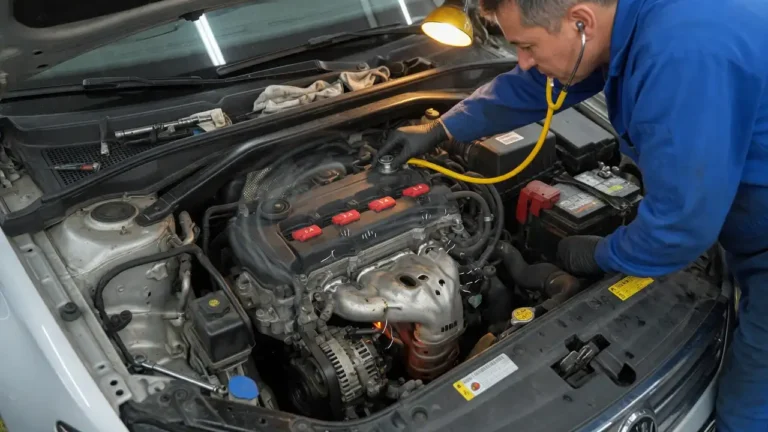
If you still ask what causes a car to hesitate when accelerating after tune-up parts, do a compression and leak-down test. Mechanical health is step zero.
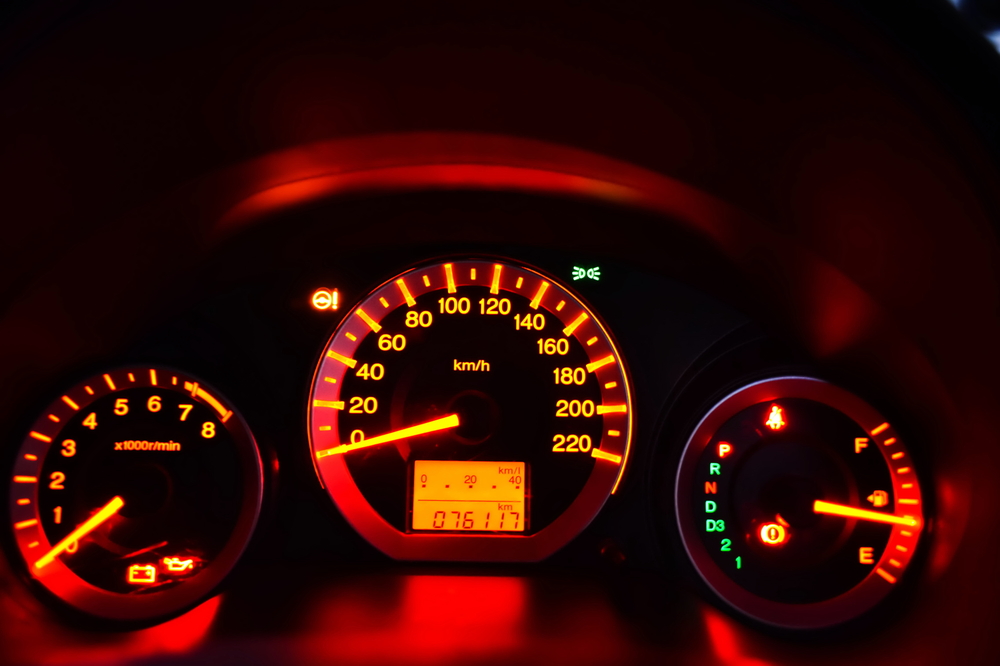
Source: mandmservicecenter.com
How to diagnose hesitation step by step
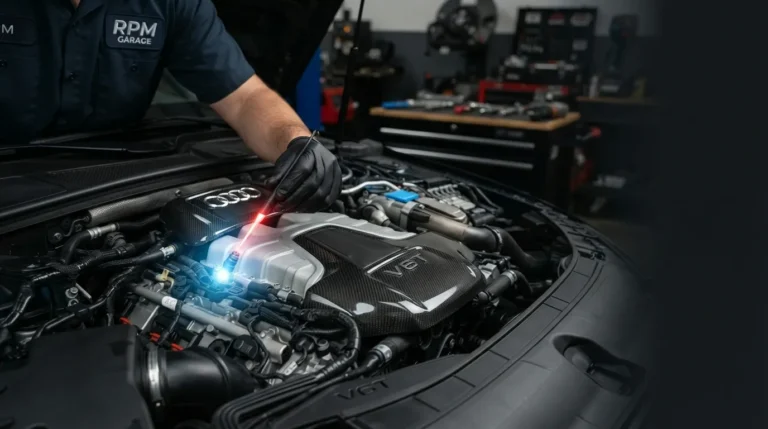
- Scan for codes and data. Look for P0171, P0300–P030X, P0101, P0420, or TPS faults. Check fuel trims, MAF g/s, O2 voltages, and misfire counts.
- Inspect basics. Air filter, intake boots, vacuum lines, PCV hoses, and ground straps.
- Fuel pressure test. Compare idle and under-load values to spec.
- Clean and retest. MAF, throttle body, and injectors with the right cleaners.
- Smoke test for leaks. Any smoke from intake or EVAP lines points to a fix.
- Backpressure or cat test. Measure before the cat or use a vacuum drop test.
- Road test with a plan. Uphill pulls, A/C on, and different throttle angles.
To find what causes a car to hesitate when accelerating, follow this path. Fix the root cause, not just the symptom.
Prevention and maintenance tips
- Use quality fuel and replace the fuel filter on schedule.
- Replace spark plugs and coils as advised by your service manual.
- Clean the MAF and throttle body during every air filter change.
- Inspect and replace vacuum lines and the PCV valve as needed.
- Keep your battery strong. Low voltage confuses sensors and modules.
- Scan for codes every oil change. Catch small issues early.
Do these and you stop what causes a car to hesitate when accelerating before it starts.

Cost ranges and when to see a pro
- Spark plugs: low cost for parts, modest for labor.
- Coils: moderate each, can add up if several fail.
- Fuel filter: low to moderate, depends on access.
- Fuel pump: moderate to high, in-tank pumps add labor.
- O2 sensors: moderate, upstream costs more than downstream.
- Catalytic converter: high, very high for some models.
- Sensors like MAF or TPS: moderate, diagnosis time matters.
The price to fix what causes a car to hesitate when accelerating can vary. If you have repeat misfires, heavy sulfur smell, metal rattle, raw fuel odor, or safety concerns, see a qualified tech. A pro with a scope and smoke machine can save you money by avoiding guesswork.
Frequently Asked Questions of what causes a car to hesitate when accelerating
Why does my car hesitate only when cold?
Cold engines need more fuel. A weak sensor or vacuum leak can make the mix lean until the engine warms up.
Can bad spark plugs cause hesitation under load?
Yes. Wide gaps or worn tips make spark blow out at higher rpm, which feels like a stumble or jerk.
How do I know if the catalytic converter is clogged?
You may feel strong low-end, then no power above mid-range. Exhaust heat, sulfur smell, and a high backpressure test confirm it.
Will a dirty air filter cause hesitation?
It can at higher throttle. The engine starves for air, and the ECU pulls fuel to match, which feels like a delay.
Is it safe to keep driving with hesitation?
Short term, maybe. But it can damage the cat and turn a small fix into a big bill, so diagnose soon.
Could the transmission be the reason for hesitation?
Yes. Slip or torque converter shudder can mimic engine stumble. Watch the tach for rpm flare without matching speed.
Can bad gas make my car hesitate?
Yes. Water or low-quality fuel lowers power and causes stumble. Use fresh fuel and consider a quality fuel system cleaner.
Conclusion
Hesitation is your car’s way of asking for help. Check fuel, spark, air, exhaust, and the drivetrain, then test with a plan. Fix the root cause and your car will pull smooth again.
Take the first step today: scan for codes, inspect the basics, and note when the stumble happens. If you’re stuck, share your symptoms or questions below, and subscribe for more easy, proven guides.