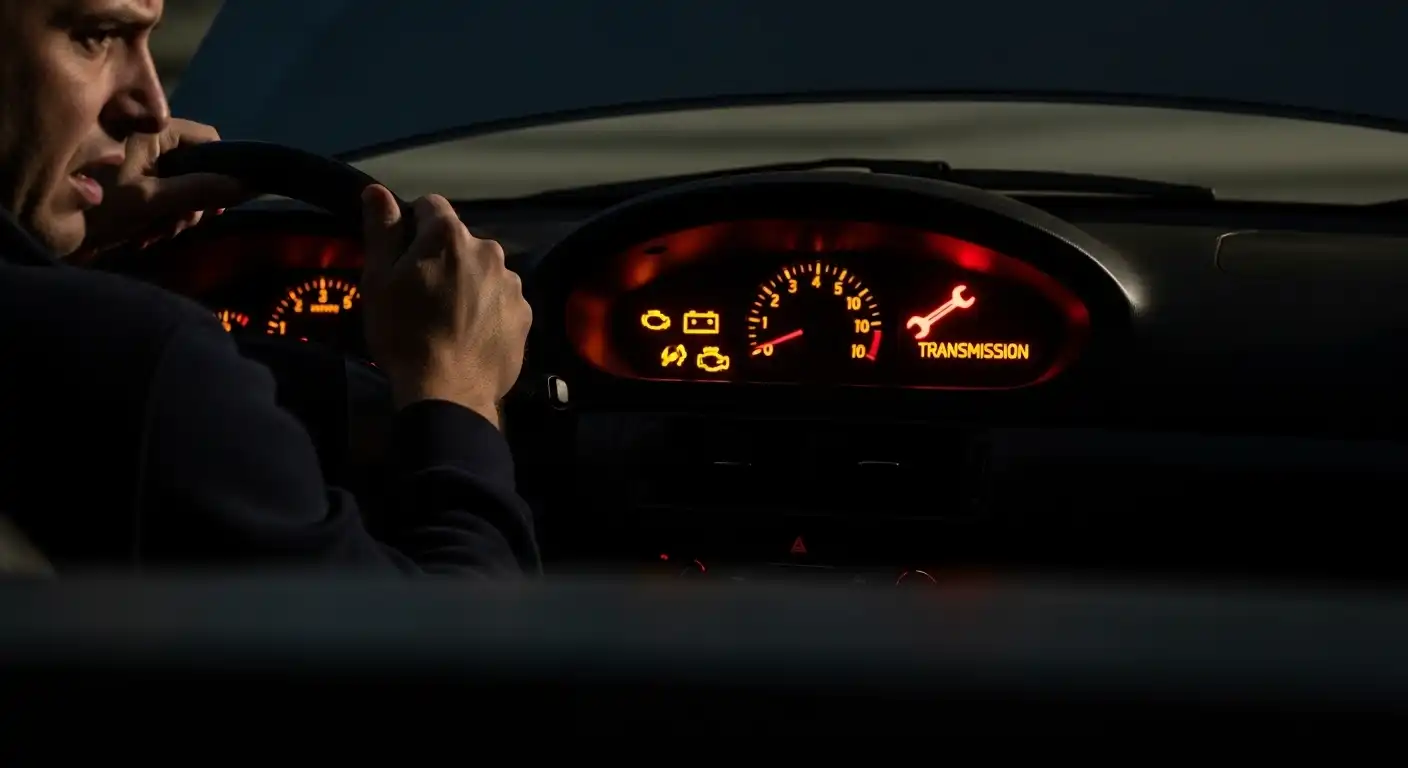
Slipping gears, harsh or delayed shifts, shuddering, and a burnt smell often mean low transmission fluid.
If you want your car to last, learn the warning signs early. I’ve spent years diagnosing low transmission fluid symptoms in daily drivers and work trucks. In this guide, I’ll show you what they look like, why they happen, and how to fix them fast and right. By the end, you will know how to spot low transmission fluid symptoms, check the level, avoid damage, and save money.
What Transmission Fluid Does (and Why Level Matters)
Transmission fluid is the lifeblood of your gearbox. It does four big jobs:
- Creates hydraulic pressure to engage gears on time and with smooth force.
- Lubes gears, clutches, and seals so parts do not grind.
- Cools hot parts and carries heat to the cooler.
- Cleans and protects with detergents and anti-wear agents.
When the level is low, pressure drops. Heat rises. Friction goes up. Tiny delays become big slips. That is why low transmission fluid symptoms show up fast and get worse if you keep driving.

The Most Common Low Transmission Fluid Symptoms
Low transmission fluid symptoms tend to follow a pattern. Here is what I see most in the shop:
- Delayed engagement. You shift from Park to Drive or Reverse. The car waits a beat, then clunks in. That lag is a pressure issue.
- Gear slip or flare. The engine revs, but speed does not match. It feels like a rubber band snap between shifts.
- Harsh or erratic shifts. Shifts hit hard at low speed. Or the box hunts between gears on light throttle.
- Shudder or vibration. A rumble strip feel at takeoff or during highway lockup. Often shows up as torque converter shudder.
- Overheating. A hot smell after a short drive. Some cars show a transmission temp warning or go into limp mode.
- Burnt or dark fluid. Fluid looks brown, smells burnt, or has fine metal dust. That is wear from heat and slip.
- Odd noises. A light whine or buzz that gets louder with load.
- Poor MPG. Slip wastes energy, so fuel use goes up.
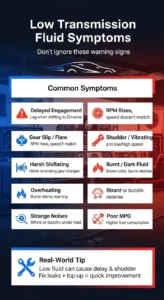
Real-world note: A customer’s SUV came in with a one-second delay into Drive and a light shudder at 45 mph. The dipstick was barely wet. We topped to spec, road-tested, then found a small leak at a cooler line. Fixing that leak ended the shudder and delay. These are classic low transmission fluid symptoms that improve fast once the level is right.
If you spot two or more of these low transmission fluid symptoms at the same time, check the level right away. Heat damage can follow in minutes when fluid is very low.
Causes of Low Fluid and Where It Leaks
Low transmission fluid does not happen by luck. Here are common sources:
- Pan gasket leaks. Look for wet edges around the pan.
- Cooler lines and fittings. Crimps and O-ring joints can seep under load.
- Axle or output shaft seals. Fluid slings onto the underbody.
- Front pump or torque converter seal. Often leaves drops near the bell housing.
- Radiator cooler leaks. Trans fluid may mix with coolant in rare cases.
- Past service issues. Underfilled after repair or a wrong fluid type.
- Overheating. Heat thins fluid and can push it out past weak seals.
Fluid color guide:
- Bright red or pink: healthy.
- Dark red to brown: aged, may smell burnt.
- Milky: coolant mix, stop driving and repair now.
Seeing low transmission fluid symptoms does not always mean a big leak. Even a slow seep can drop the level below the pickup during hard turns or hills.
How to Check Transmission Fluid (Step-by-Step)
Many cars have a dipstick, but some are sealed and need a fill plug and scan tool. Always follow your owner’s manual.
Dipstick method (common on older autos):
- Park on level ground, set the brake, and warm the car.
- With the engine idling, cycle through all gears, then leave it in Park.
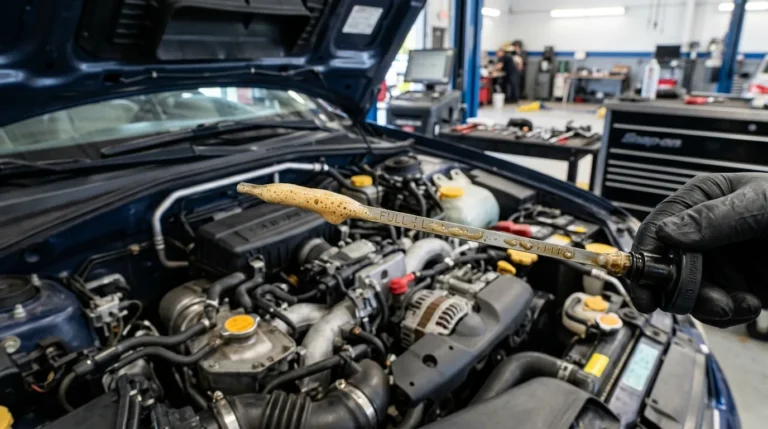
- Pull the dipstick, wipe, reinsert, then check the level and color.
- Add only the exact spec fluid. Do not overfill.
Sealed or no-dipstick method:
- Car on level ground. Use the fill and check plug at set fluid temps.
- Some need a scan tool to read trans temp. The level is set at a narrow temp band.
Smell and feel:
- Healthy fluid feels slick, not gritty.
- Burnt smell or debris points to heat and wear.
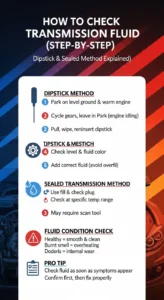
Do this check as soon as you see low transmission fluid symptoms. Confirm first, then plan the fix.
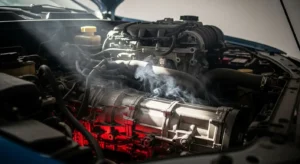
Can You Drive With Low Fluid? Risks and Damage
Short answer: you can, but you should not. Here is why:
- Low fluid starves the pump and clutches. They slip and overheat.
- Heat breaks down friction material. Debris then blocks valves and solenoids.
- Long drives with slip can toast the torque converter and clutch packs.
Warning signs that damage is close:
- Shifts get worse as the car warms up.
- It drops into limp mode. You may see codes like P0700, P0730, P0741, or P0868.
- The fluid turns dark fast after a fresh fill.
If the car will not engage, stop. Add the correct fluid to get off the road, then tow it. That move can save the unit.
Quick Fixes vs Proper Repairs
What helps now:
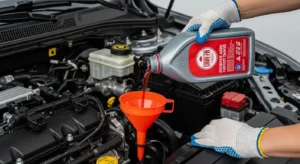
- Top to the right mark with the exact OEM spec fluid.
- Clean the case and lines to spot fresh leaks.
- Light city drive to re-check for drops or drips.
What to avoid:
- Generic additives that claim to stop all leaks. Some swell seals. Some thicken fluid. Results can be short and may hurt valve timing.
- Mixing fluid types. Wrong friction modifiers can cause shudder.
Proper repairs by cause:
- Pan gasket or plug seal: replace gasket or washer, torque to spec.
- Cooler line leak: replace the line or O-rings.
- Axle or pump seal: replace the seal, check vent and bushings.
- Internal slip and burnt fluid: service, filter, and if slip stays, plan for a rebuild.
Shop story: I once chased a “mystery” slip that only happened on hills. The level looked fine cold. Hot, it was a quart low. After a correct hot check and top-off, all low transmission fluid symptoms were gone. The fix cost less than lunch.
Costs, Time, and What to Expect at a Shop
Prices vary by car and region, but these ranges help:
- Drain and fill with filter: 45–120 minutes. Parts and fluid: 80–250 dollars.
- Cooler line or pan gasket repair: 1–2 hours. Parts: 20–150 dollars.
- Front seal or pump seal: 4–8 hours. More if AWD.
- Torque converter or full rebuild: 1,500–5,000+ dollars.
If you act fast at the first low transmission fluid symptoms, you often avoid the big bill. Delay turns a small leak into a clutch job.
Prevention: Service Schedule, Monitoring, and Driving Habits
Small steps prevent big pain:
- Follow your manual. Most call for fluid service every 30,000–60,000 miles. Tow or city use needs shorter spans.
- Use only the right spec fluid. The wrong fluid can feel fine, then cause shudder later.
- Check for seeps at every oil change. A quick look saves time.
- Keep the cooler clean. Bent fins or mud raise temps.
- Drive smooth. Hard launches and heat kill fluid fast.
Use a simple log. Note dates, miles, fluid type, and work done. If low transmission fluid symptoms pop up, you will have proof of care and a faster path to the fix.
Diagnostics and Data: Codes, Temps, and Live Reads
A basic OBD-II scanner can help you confirm what you feel:
- Watch transmission fluid temp. Healthy range is often 170–200°F in light use. Over 220°F is a warning.
- Common codes tied to low fluid or pressure: P0700 (generic trans fault), P0730 (incorrect gear ratio), P0741 (TCC performance), P0715 (input speed sensor), P0868 (line pressure low).
- Live data to watch: TCC slip, line pressure (if shown), shift time, and TFT.
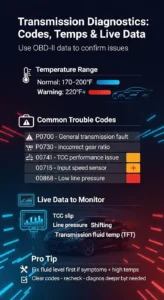
When low transmission fluid symptoms show up with high temps or pressure codes, fix the level first. Then clear codes and re-check. If the code returns, test solenoids, sensors, and pressure with a gauge per the manual.
Frequently Asked Questions of low transmission fluid symptoms
What are the first low transmission fluid symptoms I might notice?
A short delay into Drive or Reverse and a light slip on takeoff are common. You may also smell hot fluid after a short trip.
Can low transmission fluid cause my car not to move?
Yes. If the level is very low, the pump cannot build pressure. The car may not engage any gear until you add fluid.
Will a check engine light come on for low fluid?
Often yes, but not always. You may see codes like P0700 or gear ratio errors that point to slip or pressure loss.
How fast can low fluid damage a transmission?
Heat and slip can cause harm in a single hot drive. If you feel harsh shifts or smell burnt fluid, check the level at once.
Can I just top off and keep driving?
You can top off to get home or to a shop. But you should find and fix the leak so the low transmission fluid symptoms do not return.
Which fluid should I use to top off?
Use the exact spec in your owner’s manual, such as ATF+4, Dexron VI, or CVT fluid. Mixing types can cause shudder or harsh shifts.
Is a flush better than a drain and fill?
It depends on the car and fluid age. A gentle drain and fill with filter is safer for high-mile units that already show slip.
Conclusion
Low transmission fluid symptoms are your early warning system. Catch them fast, confirm the level, and fix the cause. You can turn a pricey rebuild into a quick seal or line repair with a little care and the right fluid.
If this helped, check your level today, set a reminder for the next service, and share your results. Have a question about a code or symptom you feel? Drop it in the comments and I’ll help you sort it out.