
Most soft brake pedals come from air, fluid loss, worn parts, or master cylinder issues.
I’ve spent years fixing brakes and advising drivers. This guide explains soft brake pedal causes with clear checks, fixes, and real-world tips. I’ll show what makes a pedal feel spongy or sink, how to diagnose the problem safely, and which repairs are urgent. Read on to learn practical steps you can do and when to call a pro.
How brakes work — quick primer
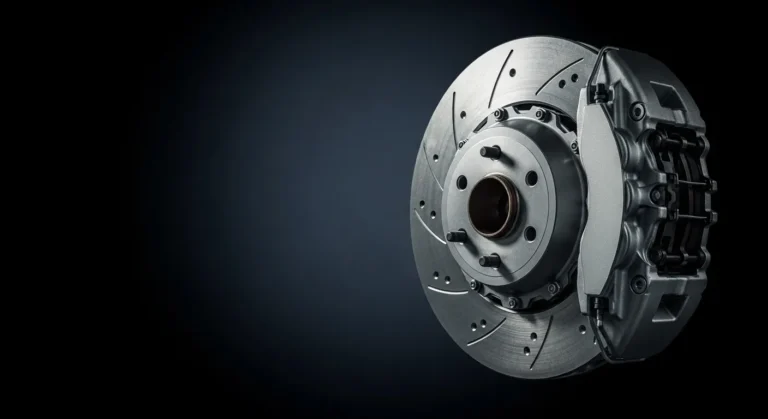
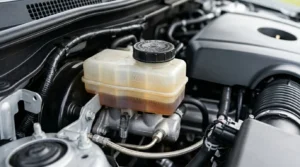
Brakes turn foot pressure into stopping force. Press the pedal. The master cylinder pushes brake fluid through lines. Fluid forces calipers or wheel cylinders to press pads or shoes against rotors or drums. That friction slows the car.
A soft feel means that pressure is lost or delayed somewhere in this chain. That loss can be mechanical, hydraulic, or thermal. Knowing the path helps you spot soft brake pedal causes fast.
Common soft brake pedal causes
Below are the top causes I see most often. Each cause explains why the pedal feels soft, how to spot it, and how urgent the fix is.
Air in the brake lines
- Why it happens: Air enters through a leak or after brake work without proper bleeding.
- Why it feels soft: Air compresses under pedal pressure, so the pedal feels spongy and travels farther.
- How to spot it: Pedal feels sponge-like and may firm up after proper bleeding.
- Urgency: High. Air reduces braking power and must be removed quickly.
Low or leaking brake fluid
- Why it happens: Damaged lines, loose fittings, worn calipers, or leaking wheel cylinders.
- Why it feels soft: Low fluid means less hydraulic pressure and extra pedal travel.
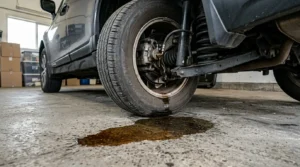
- How to spot it: Check reservoir level and look for fluid puddles near wheels or under the car.
- Urgency: High. Leaks reduce braking force and can lead to failure.
Master cylinder internal failure
- Why it happens: Worn or damaged internal seals allow fluid to bypass rather than move forward.
- Why it feels soft: The pedal often sinks slowly to the floor when held under pressure.
- How to spot it: No external leak but pedal sinks on hold or gets softer over time.
- Urgency: High. Replace the master cylinder promptly.
Contaminated or overheated brake fluid
- Why it happens: Old fluid absorbs moisture; hard driving or towing can boil fluid.
- Why it feels soft: Moisture lowers the fluid boiling point, creating vapor that compresses and causes a spongy pedal.
- How to spot it: Soft pedal after repeated stops, or a brake fade on long descents.
- Urgency: High for overheated fluid. Replace fluid and inspect system.
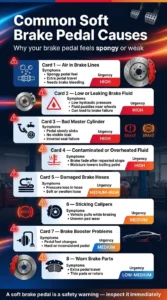
Collapsed or swelling flexible brake hoses
- Why it happens: Hoses age, delaminate, or swell internally.
- Why it feels soft: Swelled hose absorbs pressure, delaying or reducing force at the caliper.
- How to spot it: Hoses feel soft or look damaged. Brake force may return slowly.
- Urgency: Medium to high. Replace bad hoses.
Sticking calipers or wheel cylinders
- Why it happens: Corrosion, dirt, or failed guide pins cause calipers to bind.
- Why it feels soft: Binding can cause uneven feel and reduced effective pressure on one wheel, creating a mushy sense overall.
- How to spot it: Pull to one side when braking or uneven pad wear.
- Urgency: Medium. Fix soon to avoid rotor damage.
Brake booster or vacuum issues
- Why it happens: Vacuum booster leaks, non-return valves fail, or engine vacuum is low.
- Why it feels soft or hard: Boosters more often cause a hard pedal when wrong, but some booster failures reduce assist, altering pedal feel.
- How to spot it: Pedal is hard with no power assist, or pedal response changes with engine off vs. on.
- Urgency: Medium. Booster repairs affect stopping effort.
Worn pads, shoes, or rotors/ drums
- Why it happens: Wear over time or poor maintenance.
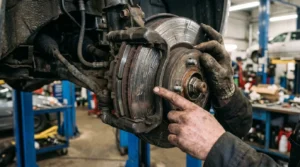
- Why it feels soft: Excessive pad wear increases pedal travel before contact. Thin rotors may also reduce feedback.
- How to spot it: Visual pad thickness check or pulsation under braking.
- Urgency: Low to medium. Replace wear items before safety drops.
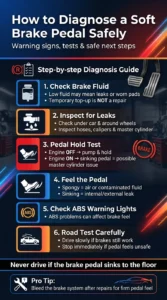
How to diagnose a soft brake pedal safely
Follow these steps in order. Do not drive if brakes are unstable or pedal sinks to floor.
- Check the fluid
- Look at the master cylinder reservoir. Low fluid often points to a leak or worn pads.
- Top off only to test. Driving with a temporary top-up is not a fix.
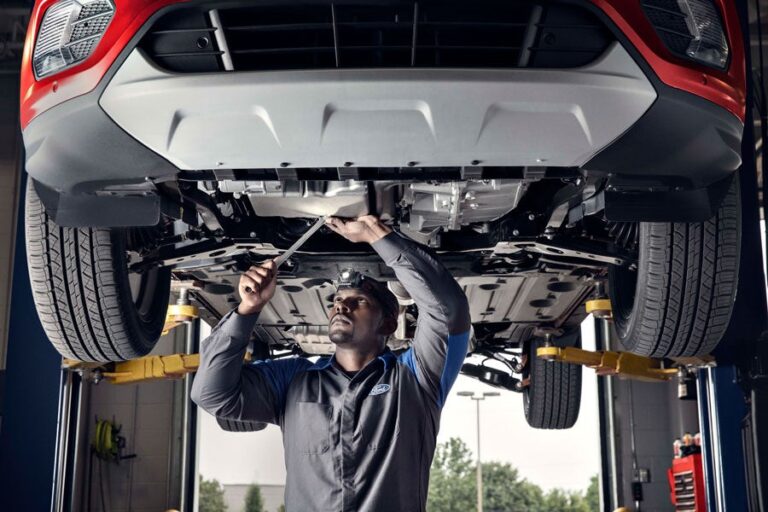
- Visual leak inspection
- Inspect under the car and around wheels for wet spots.
- Check lines, hoses, calipers, wheel cylinders, and the master cylinder.
- Pedal hold test (engine off and on)
- Engine off: Pump pedal 3–4 times, then hold. If it hardens, booster may have vacuum leak.
- Engine on: Hold pedal. If it sinks slowly, suspect master cylinder internal leak.
- Feel for sponginess vs. sinking
- Spongy = air in lines or contaminated fluid.
- Sinking = internal leak in master cylinder or external leak.
- Check for ABS or warning lights
- ABS light on can mean a sensor or hydraulic modulator problem that affects feel.
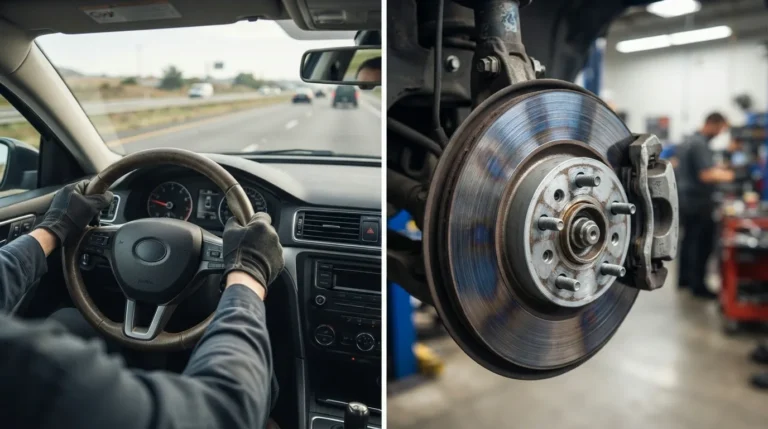
- Road test safely
- If brakes feel different but functional, drive slowly and test braking at low speed.
- Stop and call for assistance if pedal is unpredictable.
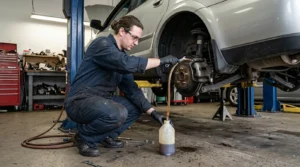
I recommend bleeding the system after any brake work. Proper bleeding removes air and restores pedal firmness. If you lack tools or confidence, get a technician to handle it.
Fixes and repairs for soft brake pedal causes
Match the fix to the cause. I’ve listed common repairs and rough complexity.
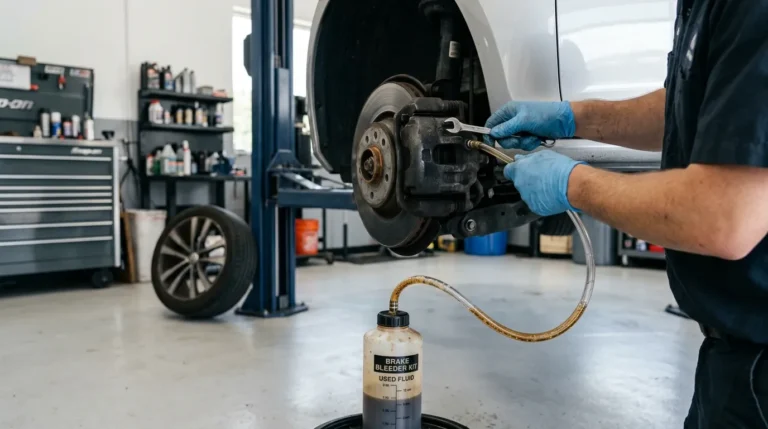
- Bleed the brakes
- Fix for: air in lines, recent service.
- Tools: brake bleeder kit, wrench, helper or one-person bleeder.
- Complexity: Low to medium.
- Replace brake fluid (flush)
- Fix for: contaminated or old fluid.
- Notes: Use the fluid grade your vehicle calls for. Flush, don’t just top up.
- Complexity: Low to medium.
- Repair leaks and replace parts
- Fix for: low fluid, leaking lines, calipers, wheel cylinders.
- Notes: Replace damaged hoses, lines, seals. Pressure-test after repair.
- Complexity: Medium.
- Replace master cylinder
- Fix for: internal leaks, pedal sinks.
- Notes: Bench-bleed and follow manufacturer steps. Often paired with fluid change.
- Complexity: Medium to high.
- Replace hoses or calipers
- Fix for: collapsed hoses or sticking calipers.
- Notes: Replace aging rubber hoses every decade or if damaged.
- Complexity: Medium.
- Brake system and ABS module service
- Fix for: ABS hydraulic faults or complicated internal modulator failures.
- Notes: Often requires diagnostic tools and pro service.
- Complexity: High.
From my shop experience, bleeding and fresh fluid fix many spongy-pedal cases. But never ignore leaks or a pedal that sinks slowly — those point to serious hydraulic issues.
Prevention and maintenance tips
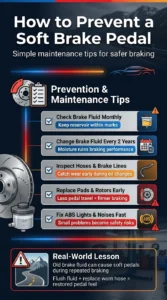
Regular care reduces the chance of soft brake pedal causes.
- Check fluid level monthly
- Keep the reservoir within marks.
- Change brake fluid every 2 years or per your manual
- Moisture buildup ruins performance.
- Inspect hoses and lines during oil changes
- Early signs of wear are cheap to fix.
- Replace pads and rotors before they are gone
- Less travel equals firmer pedal.
- Address ABS lights and odd noises fast
- Small issues can grow into safety hazards.
I once delayed a fluid flush. The car got soft under repeated stops on a mountain road. I flushed the fluid and replaced one hose. The pedal returned to normal. That taught me to follow the service interval.
Quick PAA-style questions
What is the most common cause of a soft brake pedal?
Air in the brake lines and low or contaminated brake fluid are the most common causes.
Can I drive with a spongy brake pedal?
You can drive short distances with extreme caution, but you should not drive long or fast. Get it checked immediately.
Will bleeding brakes always fix a soft pedal?
Bleeding helps if air is the problem, but it won’t fix leaks, a bad master cylinder, or collapsed hoses.
Frequently Asked Questions of soft brake pedal causes
What does a spongy brake pedal mean?
A spongy pedal means the brake system is not transmitting pressure properly. It usually points to air in the lines or low/contaminated fluid.
How do I check for brake fluid leaks?
Look under the car and around each wheel for wet spots. Check the reservoir level and inspect hoses and fittings by hand.
How often should brake fluid be replaced?
Most makers recommend every 1 to 2 years. Replace sooner if you see moisture or degraded performance.
Can brake pads cause a soft pedal?
Worn pads can increase pedal travel, which feels soft, but they usually don’t cause a truly spongy pedal. Sponginess is hydraulic.
When should I replace the master cylinder?
Replace it if the pedal sinks slowly when held under pressure or if internal seals fail. Do not delay this repair.
Is a soft pedal a safety emergency?
Yes. Any sudden change in pedal feel is a safety concern. Get it inspected before driving long distances.
Can ABS problems make the pedal feel soft?
ABS faults can change pedal feel or behavior, especially during ABS activation. Have diagnostic testing done if ABS warning lights appear.
Conclusion
A soft brake pedal is a sign your hydraulic system needs attention. Common causes include air in the lines, low fluid, leaks, contaminated fluid, collapsed hoses, and master cylinder issues. Use the checks above to find the likely cause, and fix it fast. Simple steps like bleeding and flushing fluid often restore firmness, but internal leaks or ABS faults call for professional repair.
Take action today: check your fluid, inspect for leaks, and book a brake check if anything feels off. If this guide helped, leave a comment, share your experience, or subscribe for more hands-on car help.