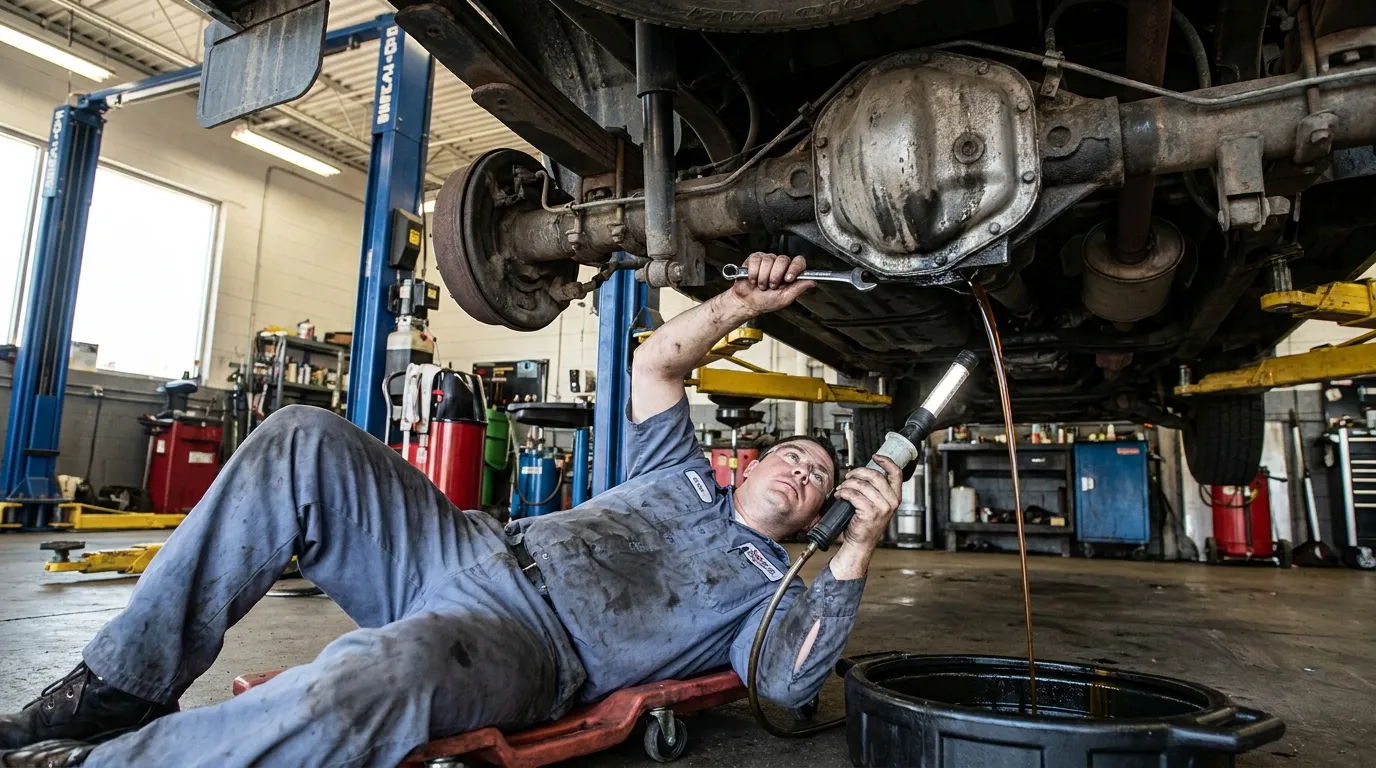
Change differential fluid every 30,000–60,000 miles, sooner if towing or off-road.
I’ve worked on cars and trucks for years and know how easy it is to overlook the differential fluid change interval. This guide explains what the differential fluid change interval means, why it matters, and how to pick the right schedule for your vehicle. You’ll get clear recommendations, step-by-step service tips, and real-world advice so you can protect your gears and avoid costly repairs.
What is differential fluid and why it matters
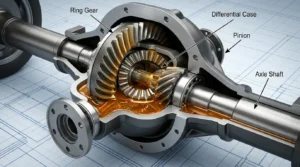
The differential fluid lubricates the ring and pinion gears, bearings, and planetary gears inside the axle housing. Proper lubrication reduces wear and heat, helps transfer torque smoothly, and keeps noise low. A correct differential fluid change interval keeps metal particles and contaminants from grinding the gears. If the differential fluid change interval is ignored, gear wear, overheating, and failure can follow.
Differentials come in several types. Open differentials use basic gear sets. Limited-slip and locking differentials have clutch packs or mechanisms that need specific friction properties. That means the right fluid type and the right differential fluid change interval matter more for some vehicles than others.
Recommended differential fluid change interval by vehicle and use
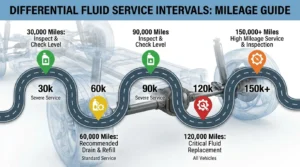
A one-size-fits-all number does not exist. The differential fluid change interval depends on vehicle type, driving conditions, and the differential design. Below are common guidelines you can apply and adapt.
Passenger cars
- Recommended interval: 30,000–60,000 miles under normal driving.
- Check the owner’s manual for the manufacturer’s interval and fluid spec.
- If used mostly on highways, aim near the longer end of the range.
Light trucks and SUVs
- Recommended interval: 30,000–50,000 miles for mixed use.
- Tow or heavy hauling shortens the differential fluid change interval significantly.
- Inspect seals and fluid at regular oil changes.
Off-road and 4×4 use
- Recommended interval: 15,000–30,000 miles for frequent off-road use.
- Water crossings, deep mud, and heavy dust introduce contaminants and require earlier changes.
- After water submersion, change differential fluid immediately.
Heavy-duty towing and commercial use
- Recommended interval: 10,000–20,000 miles depending on load cycles.
- Severe duty cycles shorten the differential fluid change interval because heat and contamination rise.
- Consider scheduled inspections more often.
Always cross-check the owner’s manual for your make and model. If you upgrade gears or add a locker, revisit the differential fluid change interval and the fluid type.
Signs you need to shorten or perform the differential fluid change interval
Watch for clear symptoms that indicate an out-of-spec differential fluid change interval or failing fluid.
- Whining or howling from the axle during acceleration or deceleration.
- Vibration or clunking when shifting or turning.
- Leaking fluid at axle seals or the pinion seal.
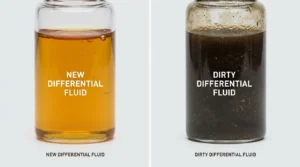
- Burnt smell or discolored, gritty fluid on inspection.
- Presence of metal shavings on the drain plug or magnetic plug.
If you spot any of the above, schedule a fluid check. A short inspection can prevent a full rebuild.
Will bad differential fluid cause noise?
Bad differential fluid often shows up as gear whine or clunking. Worn fluid loses lubrication and lets gears make metal-on-metal contact.
How often should I inspect differential fluid?
Inspect differential fluid annually or at every major service interval. More frequent checks are wise for towing and off-road driving.
How to change differential fluid — step-by-step guide
Changing differential fluid is straightforward if you have basic tools. If you prefer, a shop can do this quickly.
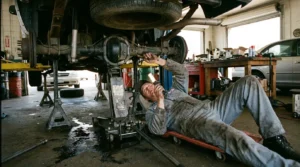
- Park on level ground and secure the vehicle. Use jack stands if you need clearance.
- Clean the fill and drain areas to avoid dirt contamination.
- Remove the fill plug first so you can refill after draining.
- Remove the drain plug or cover plate and let fluid drain into a pan.
- Inspect the fluid for metal particles. Use a magnet to check for high metal content.
- Clean or replace the gasket and magnetic plug if equipped.
- Reinstall the drain plug or new gasket on the cover. Tighten to spec.
- Refill with the correct differential fluid until it reaches the bottom of the fill hole.
- Reinstall the fill plug and test drive. Check for leaks.
Safety tips
- Always use the correct torque values. Over-torquing can warp covers.
- Dispose of used fluid properly at a recycling facility.
- If you find heavy metal wear, consult a technician before refilling.

Source: com.au
Differential fluid types, specs, and additives
Choosing the correct fluid affects the differential fluid change interval and performance. Key points:
- Viscosity and GL ratings
- Gear oils are labeled with GL numbers like GL-4 or GL-5. Use what the manufacturer specifies.
- Viscosity grades (75W-90, 80W-90) matter for temperature and load.
- Synthetic versus conventional
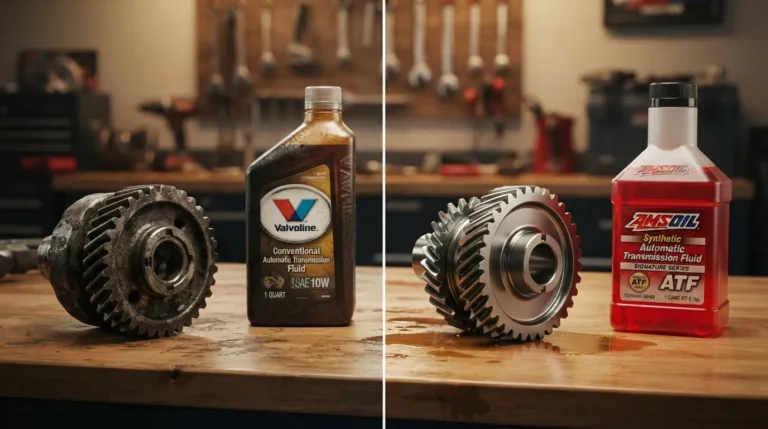
- Synthetic fluids resist breakdown and can extend the differential fluid change interval.
- They cost more but offer better protection at high temperatures.
- Limited-slip additives
- Limited-slip differentials often require friction modifiers to prevent chatter.
- Using the wrong additive can damage clutches or worsen wear.
- Seal compatibility
- Some synthetic fluids can swell seals differently. Verify compatibility with your vehicle.
How to find the right fluid
- Check the owner’s manual or axle cover for spec.
- Use manufacturer part numbers when available.
- Match GL rating, viscosity, and any limited-slip requirement.
Costs, risks of neglect, and maintenance tips
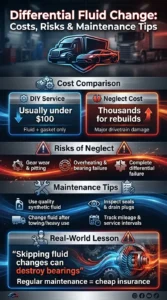
Costs vary. A DIY differential fluid change usually costs under $100 for fluid and gasket. Shop labor pushes totals higher. The real cost of neglect can be thousands for a rebuilt differential.
Risks of neglect
- Accelerated gear wear and pitting.
- Overheating and bearing failure.
- Catastrophic differential failure that can disable the vehicle.
Maintenance tips to extend the differential fluid change interval safely
- Use high-quality or recommended synthetic fluid if you want longer intervals.
- Check seals and drain plugs during every oil change.
- After heavy use, change fluid promptly rather than waiting for the next scheduled interval.
- Keep records of fluid changes and mileage.
Personal experience and lessons learned
I once delayed the differential fluid change interval on a work truck to save time. The result was early bearing failure and a costly rebuild. Since then I now track the differential fluid change interval with service reminders. My takeaway: regular checks are cheap insurance.
Frequently Asked Questions of differential fluid change interval
How often should I change differential fluid on my car?
Most passenger cars need fluid changes every 30,000–60,000 miles under normal use. Check the owner’s manual and adjust for towing or off-road use.
Can I extend the differential fluid change interval with synthetic oil?
Synthetic gear oil resists breakdown and can allow longer intervals, but follow manufacturer guidance for interval extensions. Always confirm compatibility with seals and limited-slip systems.
What happens if I put the wrong differential fluid?
Using the wrong fluid can reduce lubrication, cause clutch chatter in limited-slip units, or damage seals. If you suspect the wrong fluid, change it to the correct type as soon as possible.
Is it safe to drive with a leaking differential?
Minor leaks may not be immediately catastrophic, but driving long-term with low differential fluid risks severe gear and bearing damage. Fix leaks promptly to avoid costly repairs.
Can I change differential fluid myself?
Yes. Changing differential fluid is a common DIY job if you have basic tools and the right fluid. Follow safety steps, torque specs, and proper disposal rules.
Conclusion
Maintaining the differential fluid change interval protects gears, bearings, and your wallet. Use the manufacturer’s guidance, watch for noise or leaks, and adjust intervals for towing or off-road use. Start tracking your differential fluid change interval today and schedule a fluid check if you’re unsure about the last service. If this helped you, subscribe for more practical maintenance guides, share your experience in the comments, or book a shop inspection to confirm your differential health.