Worn wheel bearings often cause humming, grinding, or rumbling that changes with speed.
I’ve spent years fixing cars and teaching drivers to spot trouble early. This article explains wheel bearing noise symptoms clearly. You’ll learn how to recognize the sounds, what causes them, how to diagnose the problem, and the safest repair steps. I mix hands-on tips with plain facts so you can act with confidence.
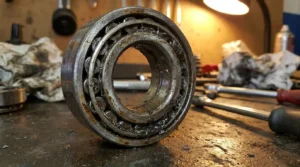
Recognizing wheel bearing noise symptoms
Wheel bearing noise symptoms usually start small. You might hear a faint hum, growl, or rumble. These sounds often change with vehicle speed. They can get louder when turning or when weight shifts to the affected wheel.
Common sound types linked to wheel bearing noise symptoms:
- Humming that rises and falls with speed.
- Grinding or growling that gets worse over time.
- Clicking or popping during sharp turns.
- Rattling that appears at specific speeds.
Other signs that often accompany wheel bearing noise symptoms:
- Vibration in the steering wheel or floor.
- Uneven tire wear near the edge.
- ABS or traction control warnings in some cars.
From my garage work, the first call often says “my car hums.” That hum was a wheel bearing in seven of ten cases. Quick checks can save you money and danger.
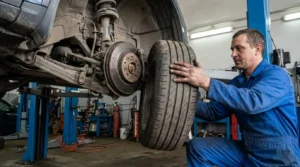
What causes wheel bearing noise symptoms
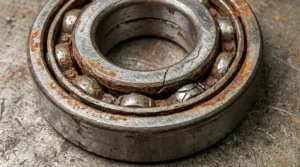
Wheel bearing noise symptoms come from wear, contamination, or damage. Bearings run on precision rollers or balls inside a race. When grease fails, debris or water enters. The metal then wears unevenly and makes noise.
Specific causes:
- Lack of lubrication that dries grease and raises friction.
- Contamination from dirt, salt, or water.
- Impact damage from potholes or curb strikes.
- Corrosion over time or poor-quality replacement parts.
- Excessive load or misalignment stressing the bearing.
Understanding these causes helps you prevent recurrence. In my experience, garages sometimes replace the wrong part. Always inspect the hub, axle, and seals when you address wheel bearing noise symptoms.

Diagnosing wheel bearing noise symptoms
Diagnosing wheel bearing noise symptoms starts with simple checks. Do these before lifting the car or removing parts.
Step-by-step quick checks:
- Drive test: Note when noise occurs. Speed-related hum that changes with steering is key.
- Wheel wiggle: With the car safely lifted, grab the tire at 12 and 6 o’clock and rock it. Excess play suggests bearing wear.
- Spin test: Spin the wheel by hand. Listen for roughness or grinding.
- Turn test: Drive slowly in a circle both directions. If noise changes, the outer wheel bearing may be bad.
PAA-style quick questions:
- How do I tell if the noise is a tire or a bearing? If the sound changes with steering direction and feels like a localized hum, it is likely a bearing.
- Can ABS issues mimic wheel bearing noise symptoms? Yes. ABS sensors share the hub area, and sensor faults can cause warnings without bearing failure.
Use a mechanic’s stethoscope or a long screwdriver to localize the sound. Place it against the hub while a helper runs the wheel (car safely supported). This method is fast and effective.
Repair, replacement, and costs
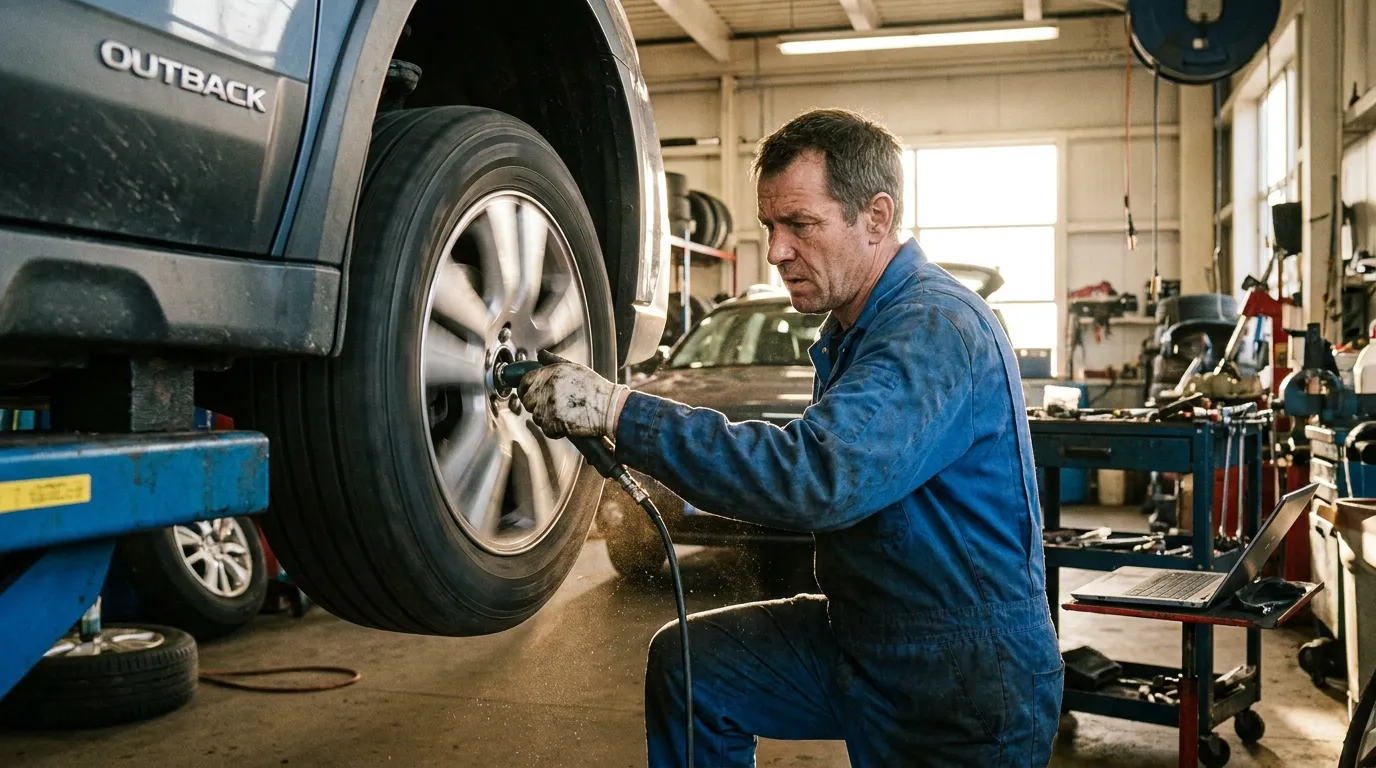
When you confirm wheel bearing noise symptoms, repair quickly. Driving with a failing bearing risks wheel collapse. Repairs vary by vehicle and bearing type.
Common repair options:
- Replace only the bearing or the entire hub assembly.
- Repackable bearings can be serviced, but most modern cars use sealed units that require replacement.
- Replace associated seals, studs, or rings if damaged.
Estimated costs:
- Front-wheel sealed bearing replacement often ranges moderately due to labor and part prices.
- Rear bearings vary widely by model and drive type.
- Hub assembly replacements are pricier but faster and often more reliable.
What I’ve learned: replacing both sides when one bearing fails is smart for longevity. Using good-quality parts and correct torque specs prevents early repeat failures. Always check wheel alignment after axle or hub work.
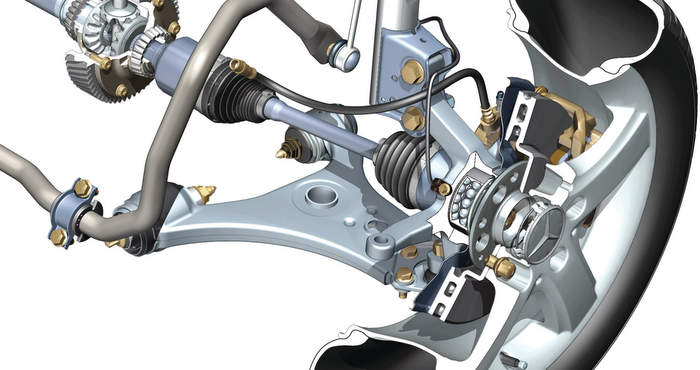
Source: brakeandfrontend.com
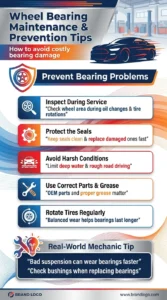
Maintenance and prevention tips
Preventing wheel bearing noise symptoms saves money and worry. Regular care keeps bearings healthy.
Practical maintenance tips:
- Inspect wheel area during oil changes or tire rotations.
- Keep seals intact and clean. Replace damaged seals immediately.
- Avoid driving through deep water or rough roads when possible.
- Use the correct grease or OEM parts if servicing bearings.
- Rotate tires per manufacturer recommendations to balance wear.
A personal tip: when I replaced bearings on a customer’s daily driver, I also checked suspension bushings. Worn suspension allowed uneven loads and sped up bearing wear. Fixing both fixed the noise for good.
Frequently Asked Questions of wheel bearing noise symptoms
How quickly do wheel bearing noise symptoms get worse?
They typically worsen over weeks to months. A small hum can turn into grinding as wear accelerates.
Can I drive safely with wheel bearing noise symptoms?
Short trips are possible, but prolonged driving is risky. Stop driving and inspect soon to avoid a wheel failure.
Is wheel bearing noise symptoms the same for front and rear?
Sounds are similar, but turning behavior helps locate front vs rear bearing issues. Front often affects steering feel.
Will tire replacement fix wheel bearing noise symptoms?
No. Tires rarely cause the specific humming that changes with steering. Diagnose bearings before buying tires.
How long does a wheel bearing repair take?
A professional can replace a bearing or hub assembly in 1–3 hours per wheel, depending on the vehicle and condition.
Conclusion
Wheel bearing noise symptoms are clear warnings your car needs attention. Listen for humming, grinding, or rumbling that changes with speed or turning. Diagnose early using simple checks, and replace bearings or hub assemblies promptly to stay safe. My best advice: act early, choose quality parts, and inspect related components to avoid repeat repairs. If you heard a suspicious hum while driving, schedule an inspection, leave a comment with your experience, or subscribe for more practical auto tips.