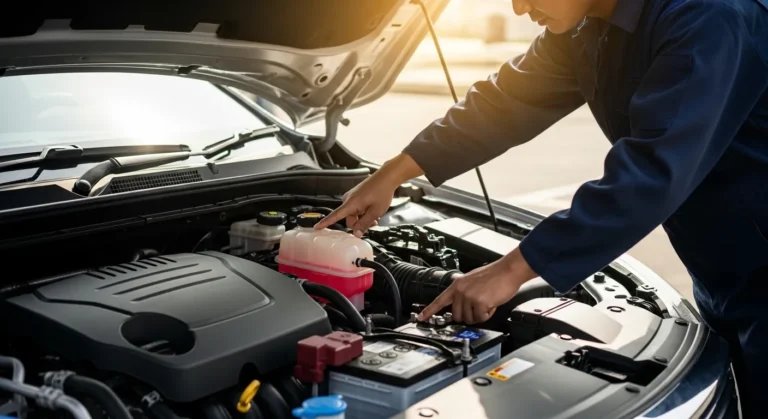
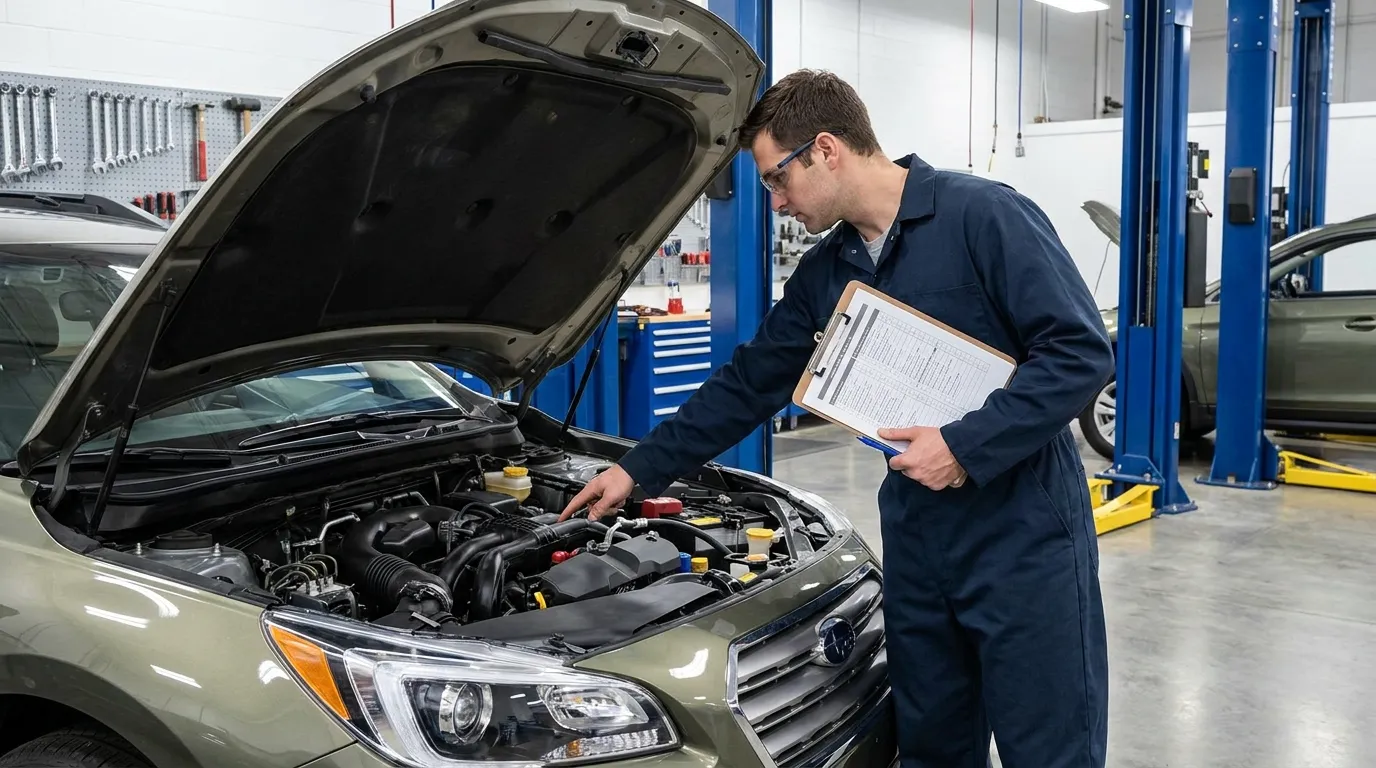
A car safety inspection checklist keeps you road-ready, prevents failures, and protects passengers.
I’ve inspected hundreds of cars over the years and built this clear, practical car safety inspection checklist to help drivers spot risks early. This guide walks you through every inspection area, explains why each item matters, and gives easy, actionable steps you can use whether you’re doing a quick DIY check or preparing for a professional inspection. Read on to boost safety, save money, and drive with confidence.
What is a car safety inspection checklist?
A car safety inspection checklist is a step-by-step list to review a vehicle’s key systems. It covers lights, brakes, tires, fluids, belts, and safety gear. The goal is to find worn parts or safety risks before they lead to an accident or breakdown.
A good checklist is simple and repeatable. Use it before long trips, after winter, or during routine maintenance. It helps drivers and technicians track problems and plan repairs.
Why a car safety inspection checklist matters
Regular checks reduce the chance of sudden failures. Many accidents start with small, fixable issues like worn brake pads or a dead headlamp. A checklist helps you catch these problems early.
Inspections can also save money. Fixing a small leak is cheaper than replacing a damaged engine. For safety and cost reasons, a car safety inspection checklist is a smart habit.
When to perform a car safety inspection checklist
Perform a basic inspection every month or before any long trip. Do a full checklist every 3 months or at oil change intervals. Inspect after heavy weather, off-road trips, or when you notice odd noises, smells, or warning lights.
If your car is older or driven hard, inspect more often. Keeping a schedule makes the car safety inspection checklist part of regular care.
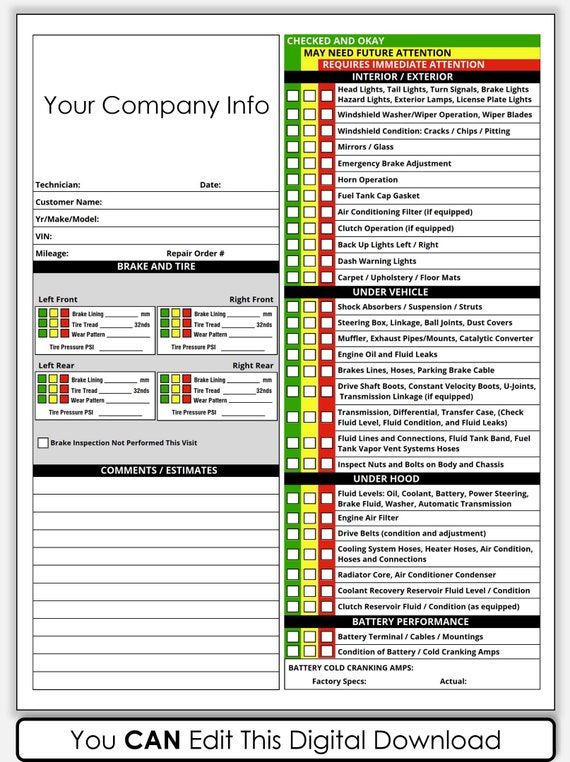
Comprehensive car safety inspection checklist (step-by-step)
Follow this practical car safety inspection checklist from outside to inside, top to bottom.
Exterior and body
- Check all lights: headlights, high beams, low beams, turn signals, brake lights, reverse lights, and fog lights. Replace burnt bulbs and clean lenses.
- Inspect windshield and windows for cracks or large chips. Small chips can spread and reduce visibility.
- Look for rust spots or sharp edges that could grow into structural problems.
Tires and wheels
- Check tire pressure and adjust to the manufacturer’s specs. Low pressure reduces control and increases wear.
- Inspect tread depth across the tire. Use a tread depth gauge or the penny test to ensure safe grip.
- Look for sidewall cuts, bulges, or uneven wear that suggest alignment or suspension issues.
- Check wheel nuts for tightness and inspect rims for damage.
Brakes and suspension
- Test brakes for firm pedal feel, no grinding, and minimal vibration. Any squeal or pull to one side needs a check.
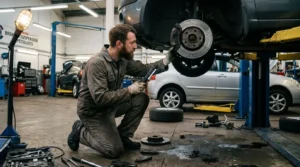
- Inspect brake pads and rotors through the wheel if possible. Thin pads need replacement.
- Check shock absorbers and struts for leaks or poor damping. Bounce test the car at each corner; it should settle quickly.
Lights and electrical
- Verify instrument cluster lights and dash warning lights work and turn off correctly after startup.
- Test horn, windshield wipers, and washer fluid system.
- Inspect battery terminals for corrosion and ensure the battery holds charge.
Engine bay and fluids
- Check engine oil level and look for leaks. Change oil per schedule.
- Inspect coolant level and the condition of hoses and clamps.
- Check brake fluid, transmission fluid, and power steering fluid levels.
- Look for loose belts, cracks, or glazing on serpentine and timing belts.
Undercarriage and exhaust
- Inspect the exhaust for holes, rust, or loose hangers.
- Look for fluid leaks: oil, coolant, transmission fluid.
- Check for rust on frame components and inspect protective shields.
Interior safety features
- Confirm seat belts latch and retract properly. Check for frayed webbing.
- Test airbags indicator light for faults on startup.
- Inspect mirrors for proper alignment and clean visibility.
Emergency kit and documentation
- Carry a first-aid kit, flashlight, basic tools, jumper cables, and a spare tire or repair kit.
- Keep vehicle registration, insurance, and owner’s manual accessible.
Final road check
- Drive the car for a few miles and listen for unusual sounds. Check steering alignment, braking response, and suspension feedback.
- Re-check lights and fluid levels after the test drive.
Use this car safety inspection checklist as your routine guide. It’s meant to catch low-cost fixes before they become major repairs.
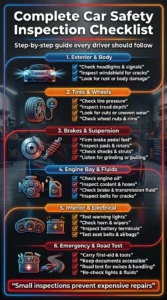
Tools and supplies for a car safety inspection checklist
Keep a small kit handy so inspections are quick and effective.
- Tire pressure gauge
- Tread depth gauge or coin
- Flashlight
- Basic socket set and screwdrivers
- Gloves and rags
- Multimeter for simple electrical checks
- Small mirror for undercarriage views
- Jump starter or jumper cables
A few simple tools make a big inspection easier and more accurate.
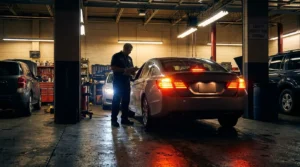
DIY vs Professional car safety inspection checklist
DIY inspections are great for catching visible issues and small problems. You can do most checks at home with basic tools. DIY saves money and gives you hands-on knowledge of your car.
Professional inspections are needed for complex systems like ABS, airbags, transmission, and emissions. A technician has diagnostic tools and training to find hidden failures. Use professionals for annual checks or when you find something unusual during your car safety inspection checklist.
Common problems found during car safety inspection checklist and quick fixes
Here are frequent issues and what to do about them.
- Dim or failed bulbs: Replace bulbs and clean connections.
- Low tire pressure: Inflate to spec and inspect for punctures.
- Worn brake pads: Replace pads before rotors are damaged.
- Fluid leaks: Trace the leak source; tighten clamps or replace hoses.
- Battery corrosion or weak battery: Clean terminals and test battery voltage.
Addressing these problems early prevents bigger damage and keeps your car safe.
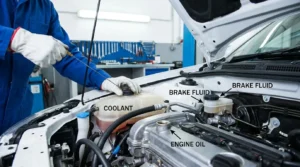
Maintenance schedule and record keeping for your car safety inspection checklist
A simple log helps track inspections and repairs.
- Record date, mileage, and items checked each time.
- Note parts replaced and next recommended check.
- Keep receipts and photos of issues.
Good records help mechanics diagnose problems faster and preserve resale value.
Tips, mistakes to avoid, and personal experience
Tips
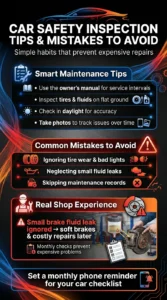
- Use the manufacturer’s manual for specs and intervals.
- Inspect in daylight and on a flat surface for accurate tire and fluid checks.
- Take photos of issues to track progress over time.
- Neglecting tires and lights until they fail.
- Ignoring small fluid leaks that grow over time.
- Skipping records and then forgetting when parts were replaced.
Personal note from my shop experience
- Once I ignored a slow brake fluid leak on a work van because it didn’t affect braking yet. Weeks later the braking felt soft and costlier repairs were needed. Now I check brake fluid every month. A short car safety inspection checklist would have saved time and money.
Practical tip: set a phone reminder to run the checklist monthly. A few minutes prevents big headaches.
People also ask (PAA-style questions)
What should be checked during a basic car safety inspection checklist?
- Check tires, lights, brakes, fluids, and seat belts. These items cover the most common safety risks.
How often should I use a car safety inspection checklist?
- Do a quick monthly check and a full checklist every 3 months or at each major service.
Can I perform a full car safety inspection checklist at home?
- You can do most visual and basic functional checks at home. For diagnostics, ABS, or emissions, see a pro.
Does a car safety inspection checklist help with resale value?
- Yes. Well-documented checks and repairs show buyers the car was maintained, often improving sale price.
What’s the biggest safety gain from using a car safety inspection checklist?
- Early detection of faults like worn brakes or tire damage. Fixing these prevents accidents and costly repairs.
Frequently Asked Questions of car safety inspection checklist
What is the easiest way to start a car safety inspection checklist?
Start with lights, tires, and fluid levels. These quick checks show common issues and take only a few minutes.
How long does a full car safety inspection checklist take?
A thorough DIY inspection usually takes 30 to 60 minutes. Professional checks vary from 1 to 2 hours depending on depth.
Do I need special training to follow a car safety inspection checklist?
No. Basic checks are straightforward. For complex systems, basic training or a mechanic’s help is recommended.
Will a car safety inspection checklist find hidden electrical problems?
Not always. Visual checks can spot corrosion or loose wires. For hidden issues, a professional diagnostic scan is best.
How much does a professional car safety inspection checklist cost?
Costs vary by shop and depth but expect a basic professional inspection to range from a modest fee to a more detailed paid diagnostic. Prices depend on location and services.
Conclusion
A clear car safety inspection checklist keeps you safer, saves money, and reduces stress on the road. Use the checklist regularly, fix what you find fast, and keep records to track your car’s condition. Start today: set a monthly reminder, grab a tire gauge, and run through the checklist before your next trip. Share this guide, subscribe for more tips, or leave a comment with your inspection questions.