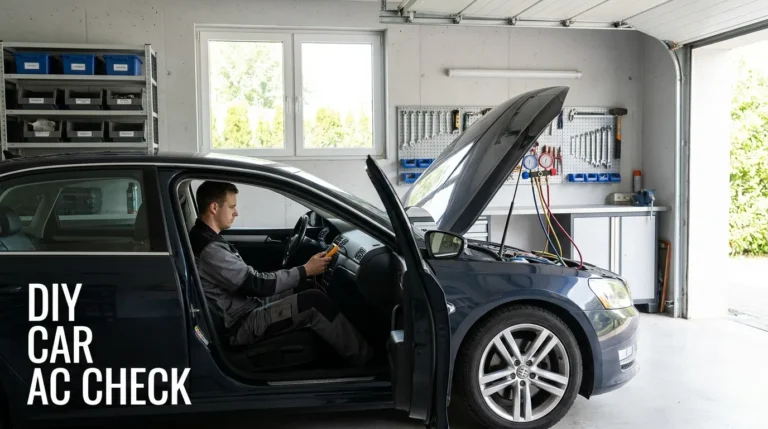
A failing car AC compressor usually shows weak cooling, strange noises, and visible clutch or leak issues.
I’ve spent years fixing car air conditioning systems and training techs on diagnostic steps. This guide covers car ac compressor failure symptoms in plain language. You will learn what to look for, why each symptom matters, how to test the compressor, and what to do next. Expect clear checks, real-world tips, and cost ranges so you can act with confidence.

How a car AC compressor works
The compressor is the heart of the car AC. It pumps refrigerant as a gas and raises its pressure. This allows the system to move heat away from the cabin. The compressor clutch engages and disengages to run the pump only when needed.
Knowing this helps spot compressor problems early. Many symptoms come from lost pressure, mechanical wear, or clutch failure. A bad compressor often looks like other AC problems at first. Proper checks separate compressor failure from leaks, low charge, or electrical faults.
Common car ac compressor failure symptoms
Below are the most common car ac compressor failure symptoms. Watch for one or several at the same time.
- Weak cooling or no cold air
- The AC blows warm or only slightly cool air even at max settings.
- This usually means the compressor is not building pressure or the system has lost refrigerant.
- Loud grinding or knocking noises
- A failing compressor often makes metal-on-metal sounds.
- These noises can mean seized bearings or broken internal parts.
- Compressor clutch not engaging
- You can see or hear the clutch fail to engage when AC is switched on.
- This stops refrigerant circulation and causes warm air.
- Visible refrigerant oil leaks near the compressor
- Oil around the compressor body or fittings signals a seal failure.
- Leaks reduce refrigerant and cause poor cooling over time.
- Intermittent cooling performance
- Cooling works sometimes and fails at other times.
- This can indicate a failing clutch, bad relay, or internal compressor damage.
- Burning smell or smoke near the dash or engine bay
- A seized compressor can overload the belt and cause smells or smoke.
- Stop driving if you notice smoke to avoid fire risk.
- Higher engine RPM or belt slippage
- A dragging compressor can increase engine load.
- You may hear belt squeal or feel less power under load.
- Tripped AC fuses or circuit breaker issues
- Electrical shorts inside the compressor can blow fuses.
- Repeated fuse failures point toward compressor electrical faults.
Each symptom should be checked with basic tests. For example, warm air plus low refrigerant pressure might be a leak, not compressor failure. Use a gauge set or get a pro to confirm.
Causes and risk factors behind compressor failure
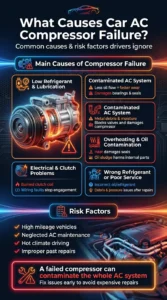
Common root causes for car ac compressor failure include mechanical wear, contamination, and neglect.
- Low refrigerant and lubricant
- Low refrigerant means less oil flow and poor lubrication.
- This speeds wear on bearings and seals.
- Contaminants in the system
- Metal shards or moisture can block valves and ruin the compressor.
- A failed compressor often contaminates the entire system.
- Electrical and clutch problems
- Burned clutch coils or wiring faults stop compressor engagement.
- Age and heat accelerate electrical failures.
- Overheating or engine oil contamination
- Excess heat damages sealing materials.
- Engine oil or sludge in the system damages internal parts.
- Improper service or use of wrong refrigerant
- Using the wrong refrigerant or oil causes poor lubrication and performance.
- Poor repair practices can leave debris or incorrect pressures.
Risk factors that raise failure odds:
- High mileage vehicles
- Long-term neglect of AC maintenance
- Driving in hot climates with heavy AC use
- Previous system repairs without proper flushing
Diagnosing and testing the compressor
A clear diagnosis prevents wasted repairs. Follow these steps to test for car ac compressor failure symptoms.
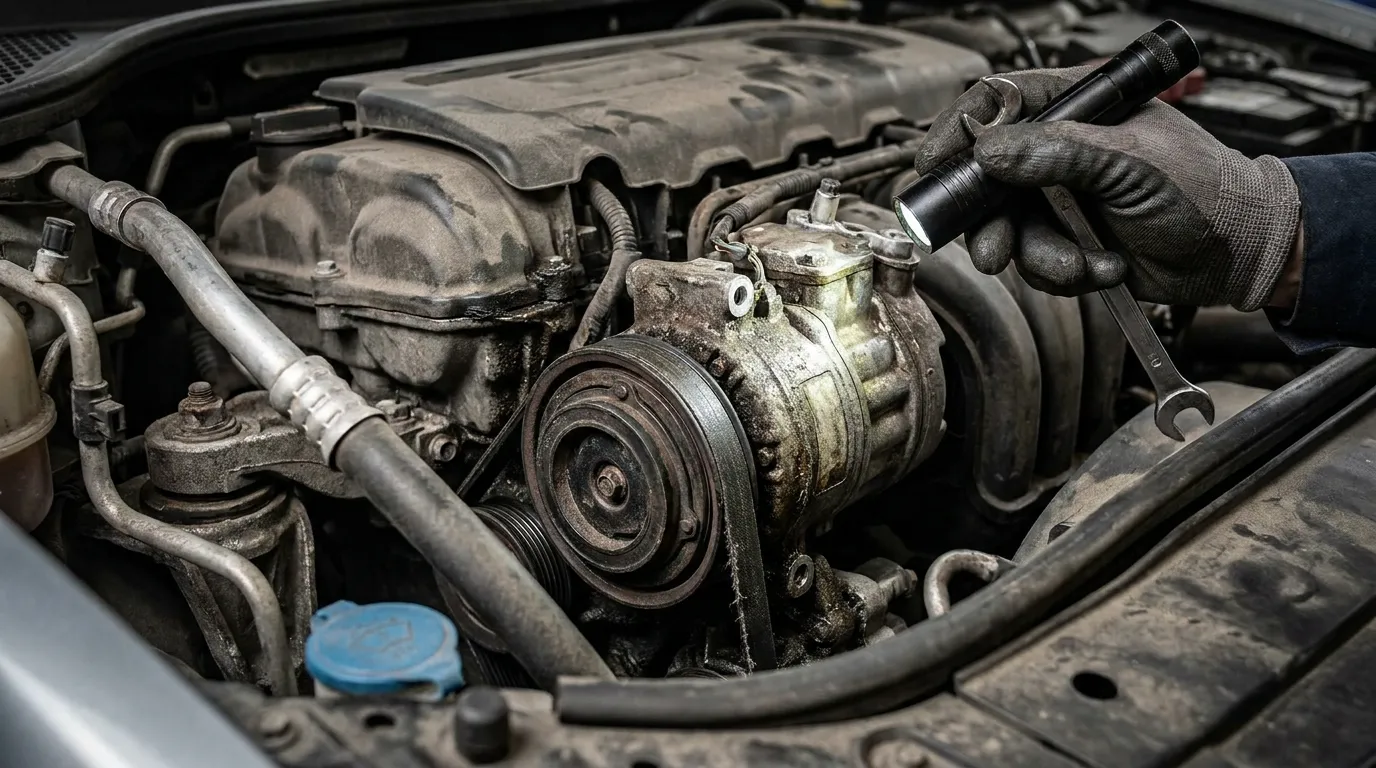
- Visual inspection
- Look for oil or dye leaks, damaged hoses, and belt condition.
- Check the compressor clutch for signs of wear.
- Listen for unusual noises
- Run the AC and listen near the compressor.
- Grinding or rattling usually means internal failure.
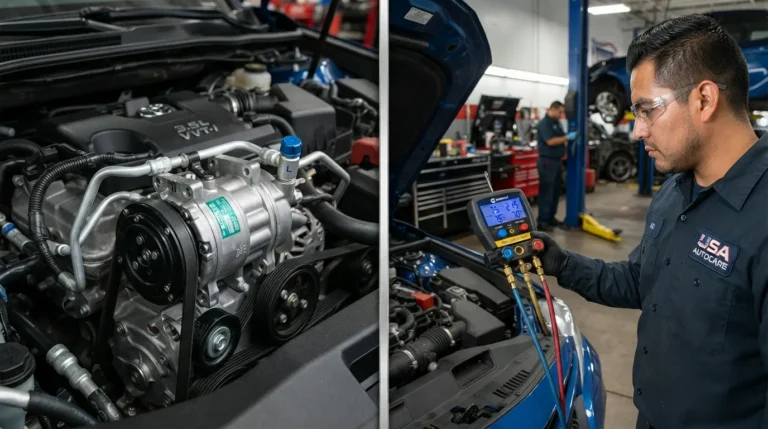
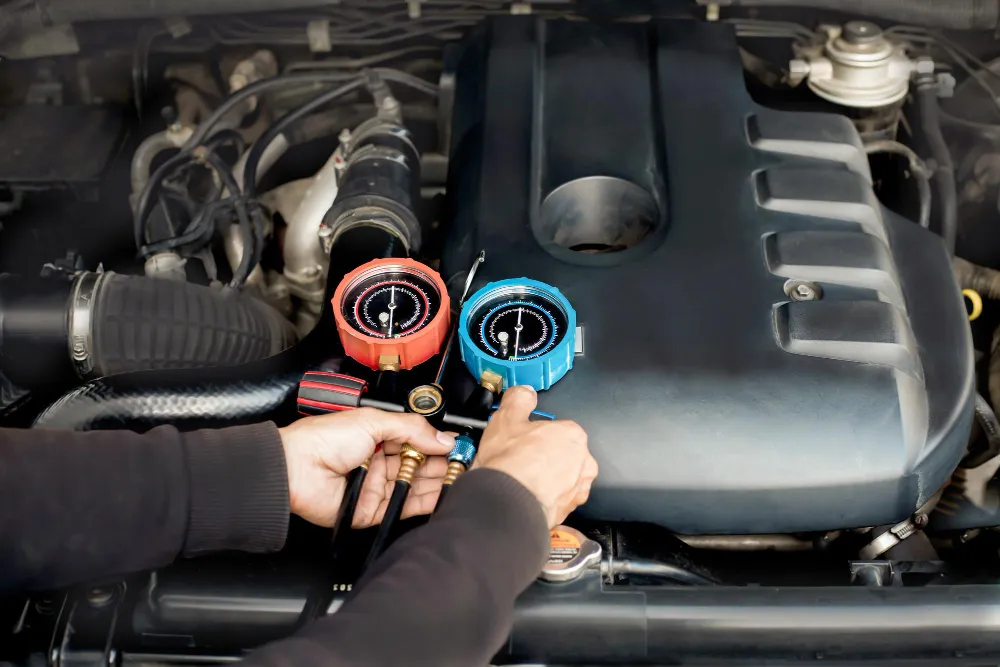
- Check pressures with gauges
- Use low and high side gauges to read system pressure.
- Abnormal readings can indicate a stuck valve or weak pump.
- Observe clutch engagement
- With engine running and AC on, watch the clutch cycle.
- No engagement could be electrical, low charge, or clutch failure.
- Scan for codes and electrical tests
- Use an OBD-II scanner for HVAC-related codes if available.
- Check fuses, relays, and clutch coil continuity.
- Leak and contamination checks
- Use UV dye or electronic leak detectors to find leaks.
- Flush and inspect for metal particles after compressor failure.
PAA-style question: How do you know if the compressor is making noise?
Answer: Run the AC and listen closely near the compressor. Grinding or metal noises typically mean internal damage.
PAA-style question: Can low refrigerant cause compressor failure?
Answer: Yes. Low refrigerant reduces oil return and can cause the compressor to overheat and wear out.
Repair options, replacement, and cost guide
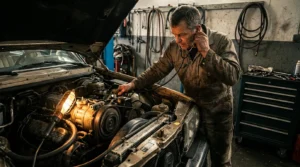
Options depend on severity and contamination level.
- Repair or rebuild
- Best for minor clutch or seal issues without contamination.
- Rebuilding costs vary but can be lower than full replacement.
- Replace the compressor
- Needed for seized or heavily damaged compressors.
- Always replace the receiver/drier or accumulator and orifice tube if contaminated.
- Full system flush
- Mandatory when the compressor fails internally and sends metal debris into the system.
- Flushing removes debris before installing a new compressor.
- Recharge and test
- After repair or replacement, add the correct oil and refrigerant amount.
- Run and test pressures and temperatures.
Typical cost ranges (approximate)
- Diagnostic fee: modest flat rate
- Compressor replacement: mid-range to high depending on car model and OEM vs aftermarket
- Full system service with flush and parts: higher cost
Remember that prices vary by region and vehicle. Choosing quality parts helps avoid repeat failures.
Source: ericscarcare.com
Prevention and maintenance tips
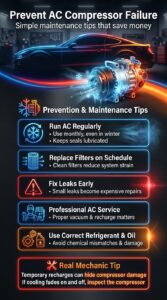
Small steps extend compressor life and reduce the chance of car ac compressor failure symptoms.
- Run the AC regularly
- Use AC monthly in winter to keep seals lubricated.
- Replace cabin and system filters per schedule
- Clean filters help reduce strain on the system.
- Address leaks quickly
- Small leaks grow into bigger problems if ignored.
- Service by professionals
- Proper evacuation, vacuuming, and recharge matter.
- Use correct refrigerant and oil
- Follow manufacturer specs to avoid chemical mismatches.
Personal tip from experience: I once saw a car with intermittent cooling for months. A cheap quick recharge masked a damaged clutch. Proper diagnosis saved the owner a second repair. If cooling fades and returns, push for a compressor check.
Frequently Asked Questions of car ac compressor failure symptoms
What are the first signs a car AC compressor is failing?
Weak cooling and a clutch that won’t engage are early signs. Small noises and occasional warm air also show up early.
Can a bad compressor damage other AC parts?
Yes. A failed compressor can send metal debris through the system. That debris damages the condenser, dryer, and expansion valve.
Is it safe to drive with a failing AC compressor?
Short trips are usually safe, but avoid driving if there is smoke or a burning smell. A seized compressor can break belts or cause engine damage.
How long does compressor replacement take?
A typical replacement takes 2 to 4 hours for most cars. Full flush and testing add time.
Will adding more refrigerant fix compressor problems?
Not usually. Extra refrigerant may mask symptoms temporarily. It does not fix mechanical or electrical failure.
Conclusion
You can spot many car ac compressor failure symptoms early by watching for weak cooling, odd noises, clutch issues, and oil leaks. Test with simple checks and get a professional diagnosis when in doubt. Take preventive steps like regular use, timely service, and correct refrigerant to prolong compressor life. Act quickly if you notice symptoms to avoid bigger repairs and higher costs. If this helped, try the troubleshooting steps on your car, subscribe for more guides, or leave a comment about your experience.