
Every four-stroke engine needs something to keep the crankshaft and camshafts turning in perfect step. That job is done by either a timing belt or a timing chain.
Which one your engine has changes your maintenance costs and the risks of skipping service. Here is how they differ and what each needs.
What you’ll learn
- How belts and chains differ
- Replacement intervals and costs
- Warning signs of wear
- Why interference engines matter
Quick answer
A timing belt is a toothed rubber belt that is quiet and cheap to make but must be replaced at a set interval, often 60,000 to 105,000 miles or every 5 to 10 years. A timing chain is a metal chain lubricated by engine oil and is designed to last much longer, often the life of the engine, though its guides and tensioners can wear, especially with poor oil changes. On an interference engine, a broken belt or jumped chain can bend valves, so never skip the interval.
In this article
What a timing belt and a timing chain do
Both connect the crankshaft to the camshafts so the valves open and close at exactly the right moment for each piston. If they slip even one tooth, the engine runs badly or not at all.
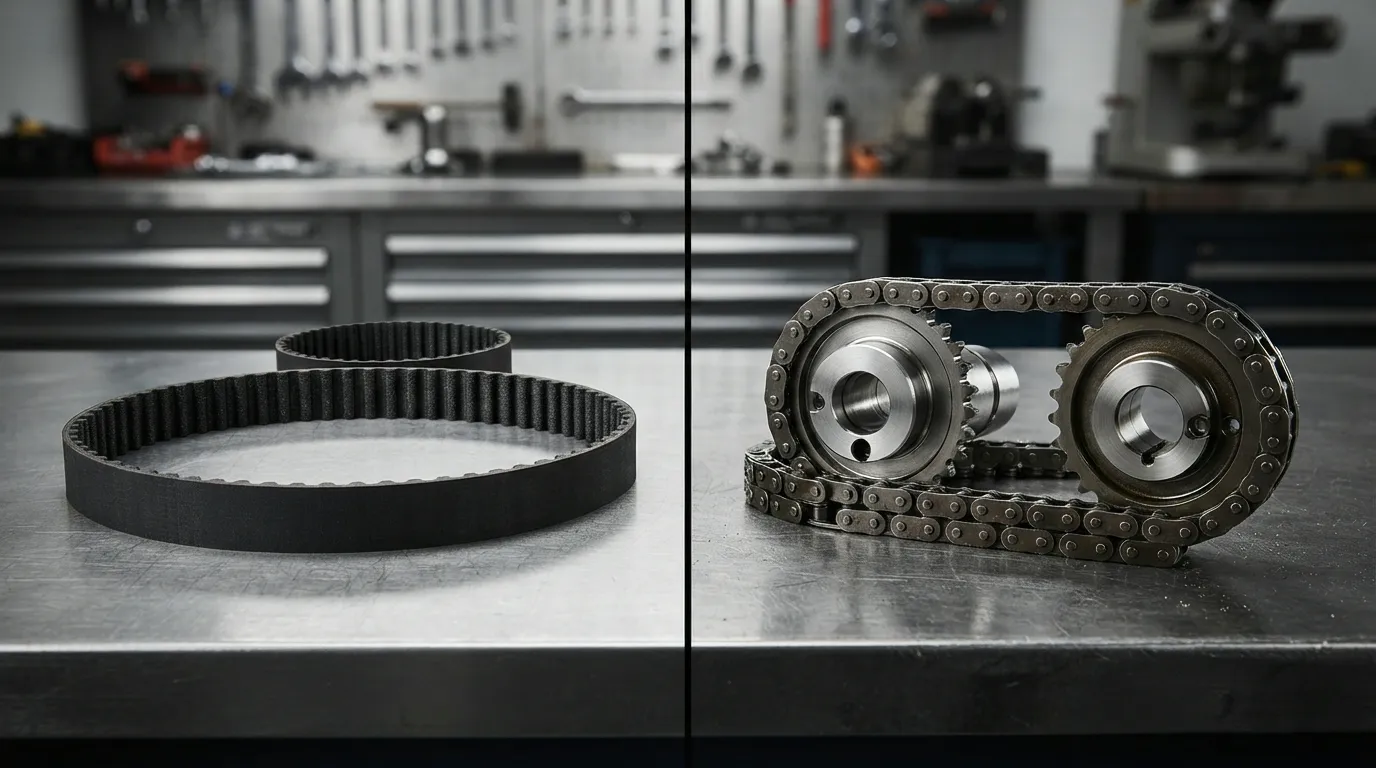
- Timing belt: rubber with fiber reinforcement and teeth, running dry behind a plastic cover. Some newer engines use a “wet” belt that runs in oil.
- Timing chain: a metal roller chain inside the engine, behind a metal cover, lubricated by engine oil and kept tight by a tensioner and guides.
Belt vs chain side by side
- Lifespan: belts have a fixed replacement interval. Chains are designed to last much longer but are not always lifetime parts.
- Noise: belts are quieter. A worn chain can rattle, especially at cold start.
- Maintenance: belts need scheduled replacement, usually with the tensioner, idlers and often the water pump. Chains need regular oil changes with the correct oil.
- Repair cost: a belt job often costs about $500 to $1,000. A chain replacement usually costs more, often $1,000 to $2,500 or more, because the engine front must come apart.
- Failure: belts tend to snap with little warning. Chains usually give warning signs first.

How to tell which one your engine has
- Check the maintenance schedule in your owner’s manual. A timing belt replacement interval means you have a belt.
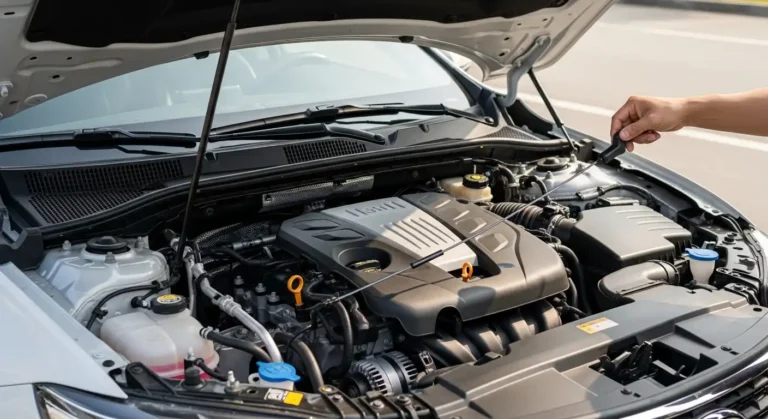
- Look at the front of the engine. A plastic cover bolted to the side often hides a belt; a chain sits behind a metal cover sealed to the engine.
- Ask a dealer or parts store with your VIN.
If your engine has a belt and you do not know when it was last changed, treat it as due.
Warning signs of wear
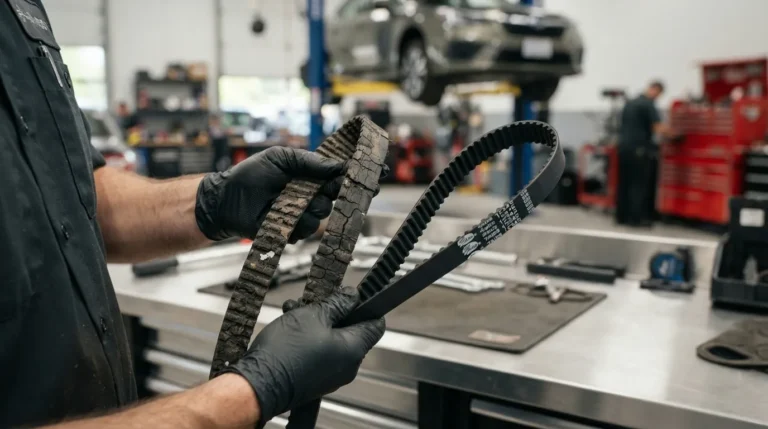
- Belt: cracks, missing teeth or oil contamination seen during an inspection; a ticking or whining from the front cover; an engine that cranks but will not start (a broken belt).
- Chain: rattle at cold start that fades as oil pressure builds; camshaft and crankshaft correlation codes such as P0016 or P0017; rough running or a check engine light. See engine timing issues.
- Both: misfires, loss of power or metal particles in the oil.
For more detail on belts, see timing belt failure symptoms.
Why interference engines matter
In an interference engine, the valves and pistons share the same space at different times. If the belt breaks or the chain jumps, the pistons can hit open valves, bending them and sometimes damaging pistons. The repair can cost thousands. In a non-interference engine, the engine simply stops.
Many modern engines are interference designs, which is why replacing a belt on time is so important.
How to make either one last
- Replace a timing belt at the interval in your manual, by mileage or age, whichever comes first.
- Replace the tensioner and idlers with the belt; many owners also replace the water pump if it is driven by the belt.
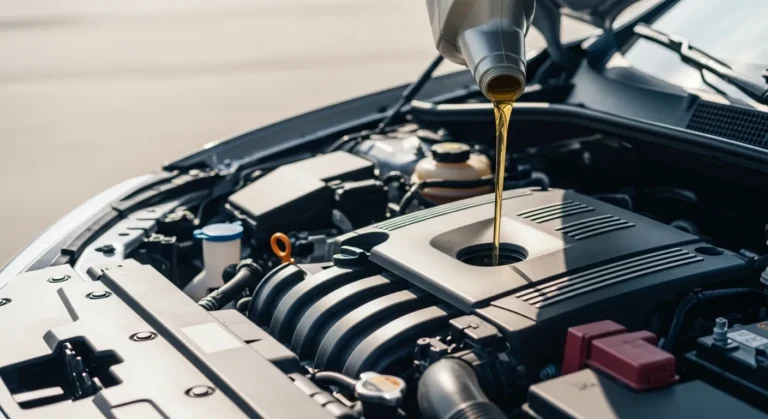
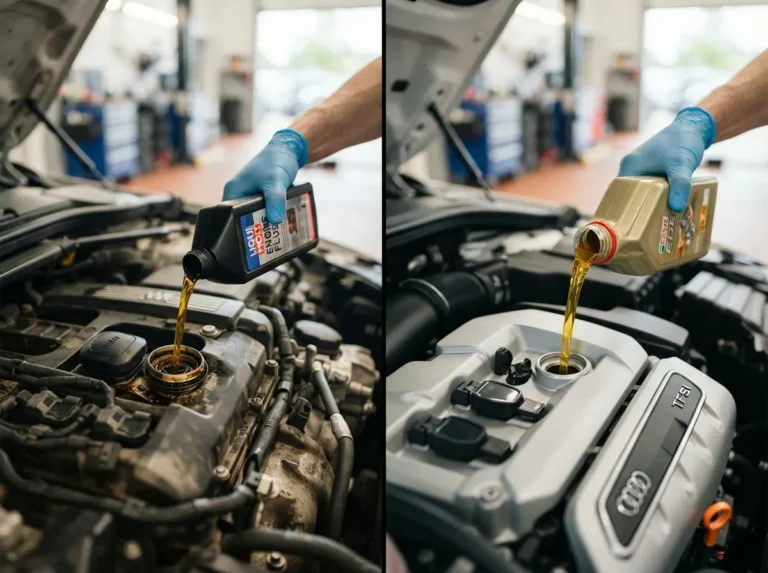
- For chains, change the oil on time with the grade and specification in the manual. Sludge and low oil wear chain tensioners.
- Fix oil leaks onto a timing belt quickly; oil softens the rubber.
- Use a quality timing belt kit with all the parts.
Related guides: best timing belt kit, best automotive timing lights and best harmonic balancer installer tool.