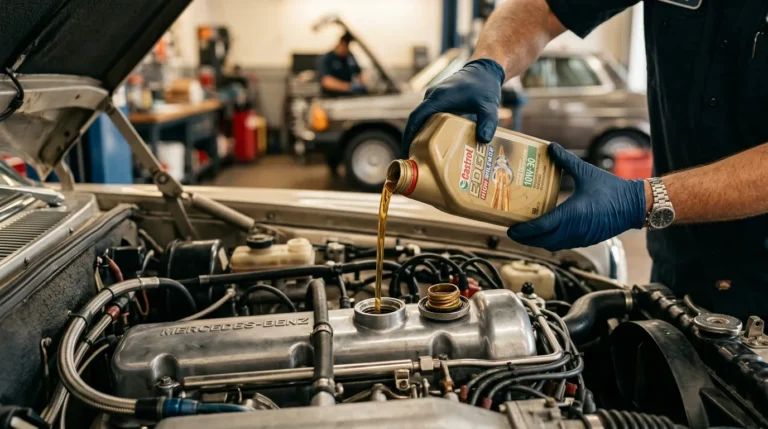

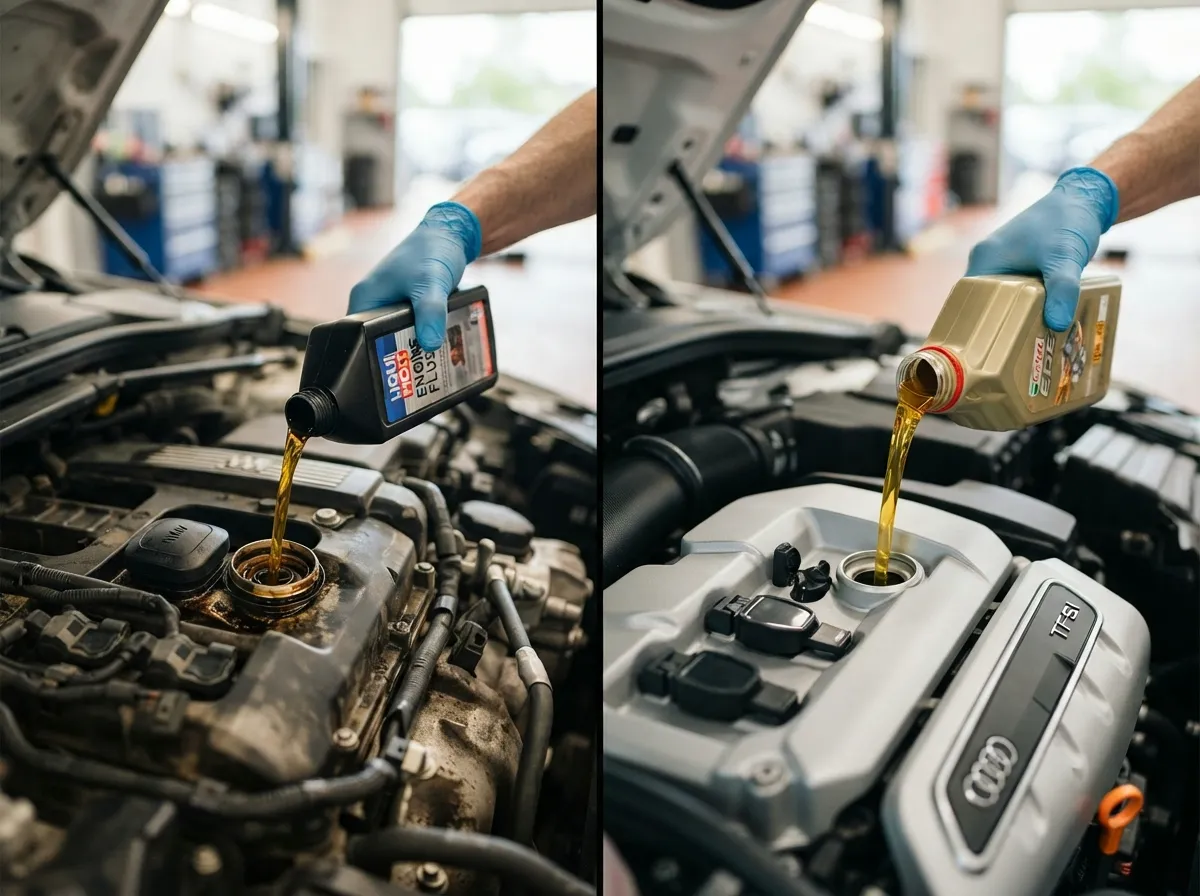
An oil change replaces the oil and filter. An engine flush goes a step further: a solvent is added to the old oil and the engine idles for a few minutes to loosen deposits before draining. Shops often offer a flush as an add-on, so it’s fair to ask whether your engine needs one.
This guide explains the difference, when a flush can make sense, the risks, and the safer alternatives.
What you’ll learn
- What an oil change and a flush each do
- When a flush can help
- The risks on high-mileage engines
- A safer way to clean a dirty engine
Quick answer
Most engines don’t need an engine flush. Regular oil changes with the oil grade in your owner’s manual keep an engine clean. A flush may help an engine with an unknown or neglected service history or visible sludge, but on high-mileage engines it can loosen deposits that block the oil pickup or upset worn seals. A gentler option is two or three short oil-change intervals with a quality detergent oil.
In this article
What an oil change does
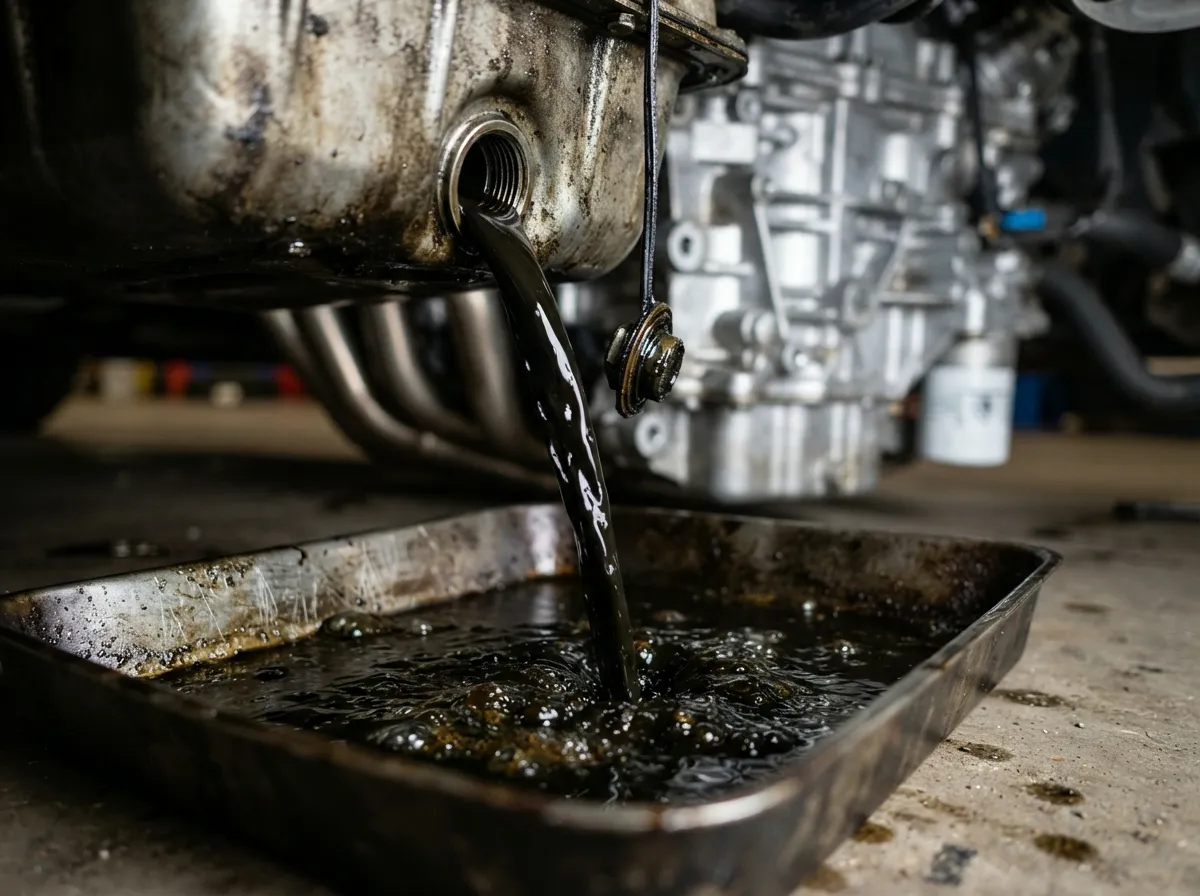
An oil change drains the used oil, replaces the filter, and refills the engine with fresh oil of the grade and specification in your owner’s manual. Modern oils contain detergents and dispersants that keep contaminants suspended so they leave with the old oil. Follow your carmaker’s interval, using the “severe” schedule if you do lots of short trips, towing or dusty driving. See how often to change engine oil.
What an engine flush does
A flush product is a strong solvent added to the old oil just before an oil change. The engine idles for the time stated on the product, usually several minutes, then the oil and filter are changed as normal. You should never drive with flush in the engine, because it thins the oil.
Some shops use machine flushes instead, which circulate cleaning fluid through the engine. The principle is the same.
When a flush can make sense
- You bought a used car with no service records and the oil looks very dark and thick.
- You can see sludge under the oil filler cap or on the dipstick. See engine oil sludge symptoms.
- An engine has been badly neglected and a mechanic recommends it as part of a cleanup.
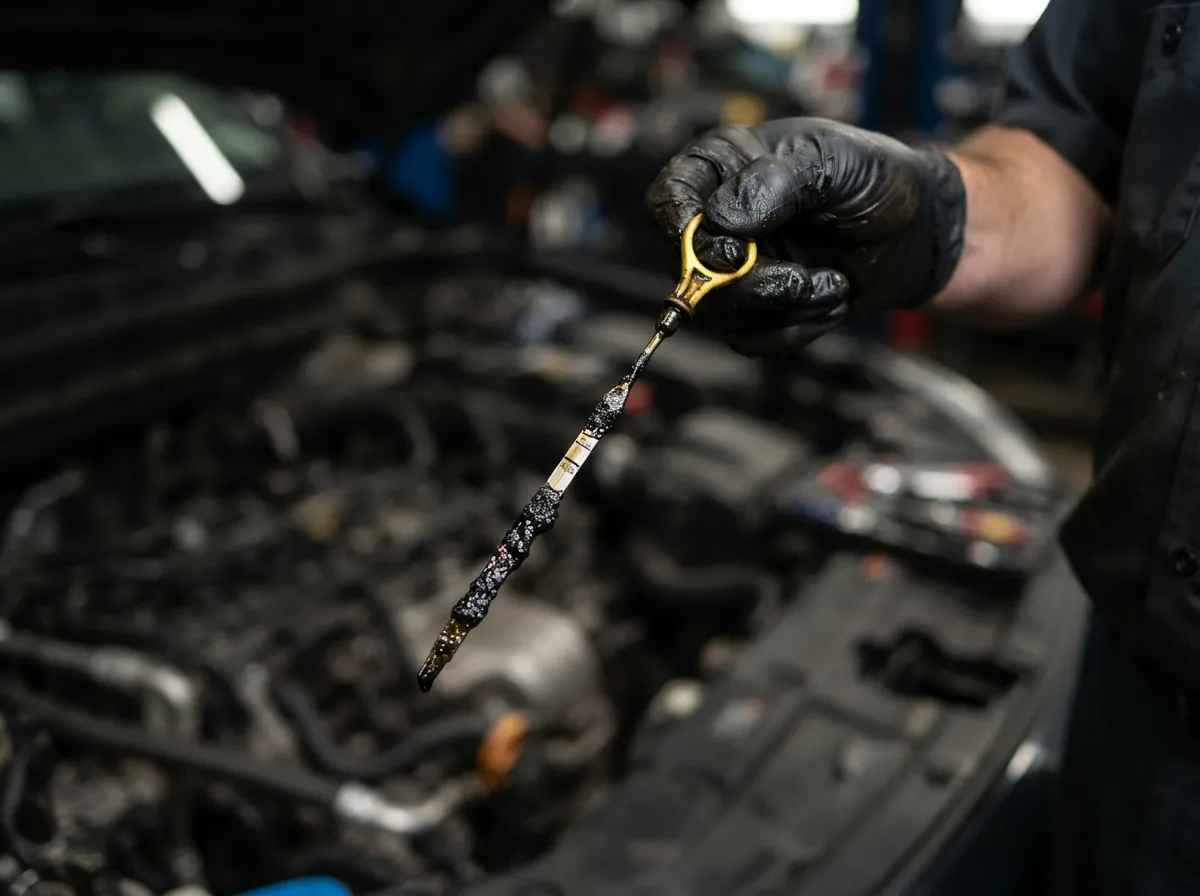
If your car has been serviced on schedule, a flush is usually unnecessary. Check whether your owner’s manual mentions flushes at all; most don’t.
The risks
- Loosened deposits: sludge that breaks free can block the oil pickup screen or small oil passages, lowering oil pressure. If the oil pressure light comes on, stop the engine; see low oil pressure causes.
- Seals: on high-mileage engines, deposits can be helping worn seals seal. Strong solvents can lead to new leaks.
- Leftover solvent: some flush always stays in the engine and slightly thins the fresh oil.
A gentler way to clean a dirty engine
- Change the oil and filter using a quality oil that meets your manual’s specification.
- Drive normally, then change the oil and filter again after a short interval, for example about 1,000 miles.
- Repeat once more if the oil still darkens quickly.
- Check the PCV valve, which helps prevent sludge, and fix any coolant or oil leaks.
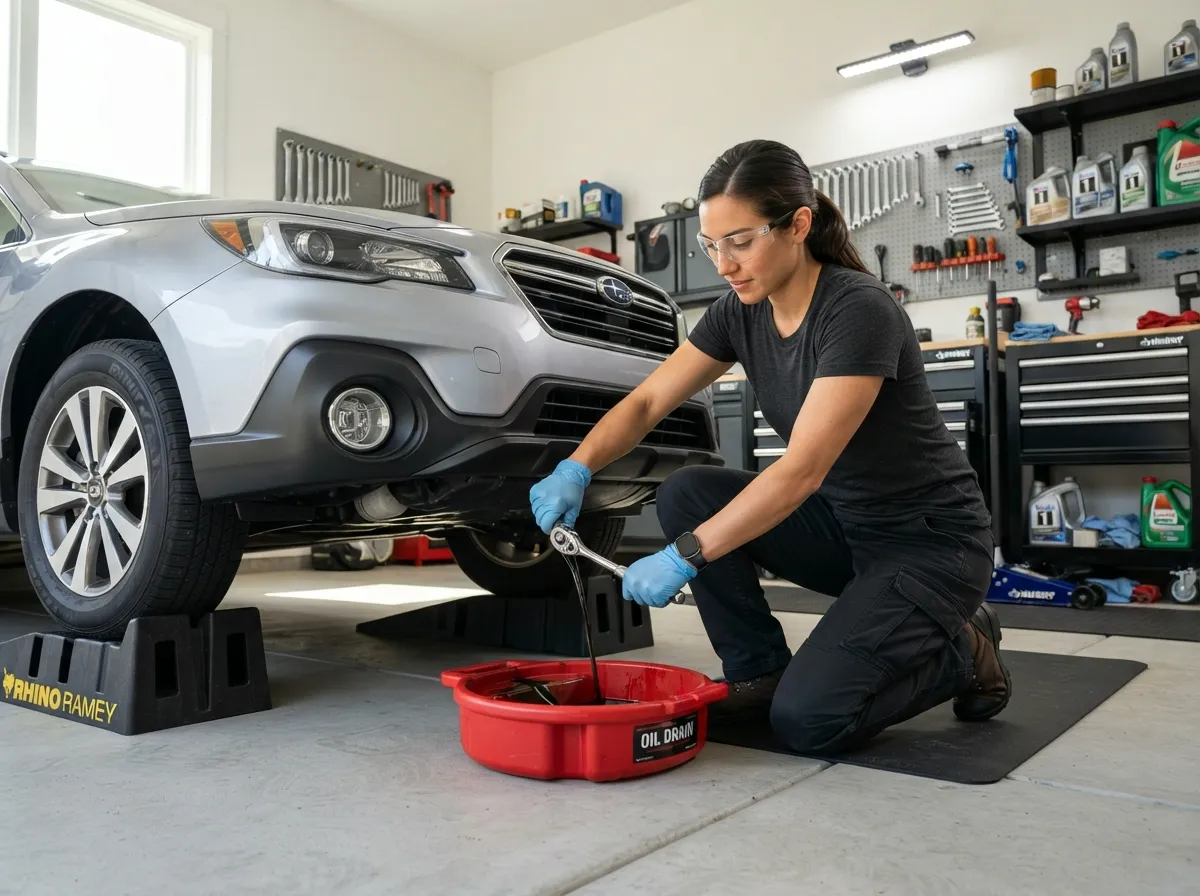
If you do use a flush, choose a product suited to high-mileage engines and follow its directions exactly; our engine flush guide for high-mileage engines compares options. For oil choice, see synthetic vs conventional oil.
Related guides: best engine flush for high mileage and OEM vs aftermarket oil filter.