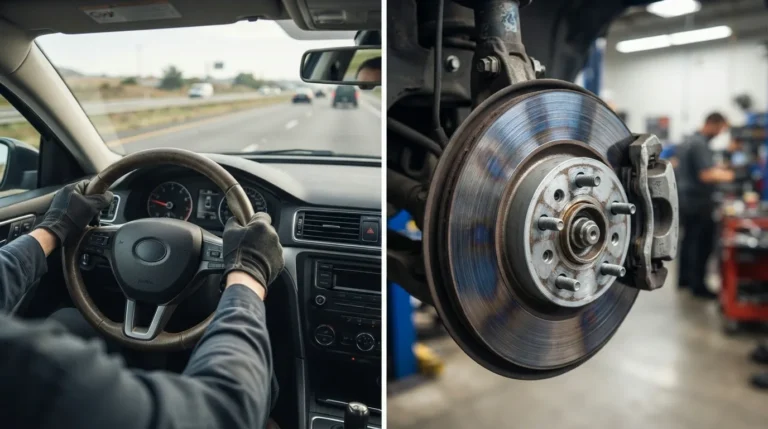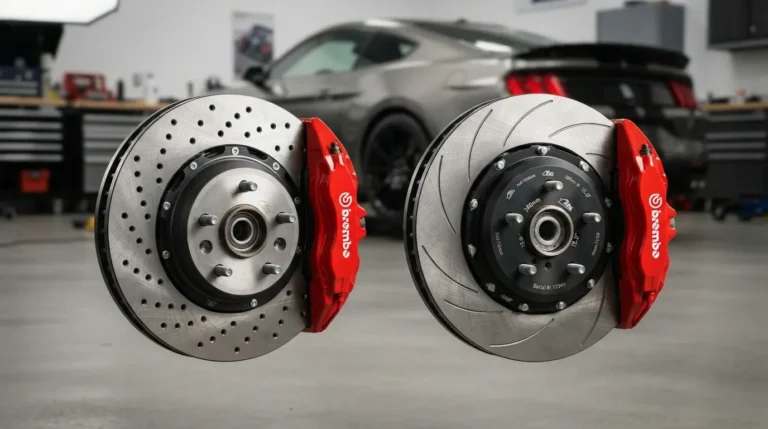
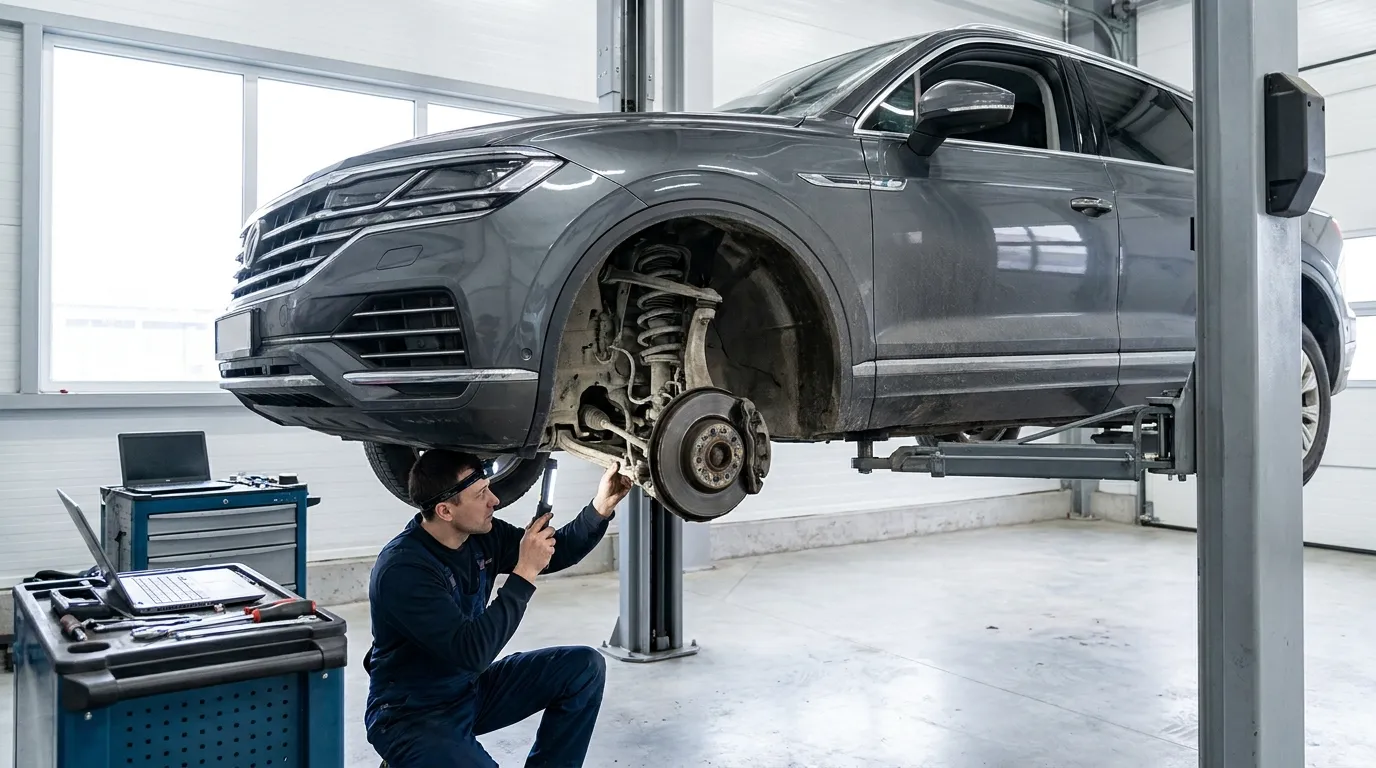
Regular inspections, timely shock replacement, alignment, and careful driving keep suspension healthy.
I’ve worked on cars for years and helped many drivers learn how to maintain car suspension. This guide walks you through what suspension parts do, how to spot wear, simple checks you can do at home, when to call a shop, and real tips from hands-on experience. Read on to keep your ride comfy, safe, and reliable.
Why suspension matters for safety and comfort
The suspension links the wheels to the car body. It soaks up bumps, keeps tires on the road, and helps you steer. A bad suspension makes the car feel loose, uneven, or noisy. Knowing how to maintain car suspension means better handling, fewer tire costs, and a safer drive.
Common results of poor suspension include:
- Faster tire wear from poor contact with the road.
- Reduced braking performance and longer stopping distances.
- Steering pull, body roll, and uncomfortable rides.
I once drove a car with worn shocks that bounced badly over speed bumps. After replacing the shocks and doing an alignment, braking felt much tighter and the ride was calm again. That change shows how maintenance helps safety and comfort.
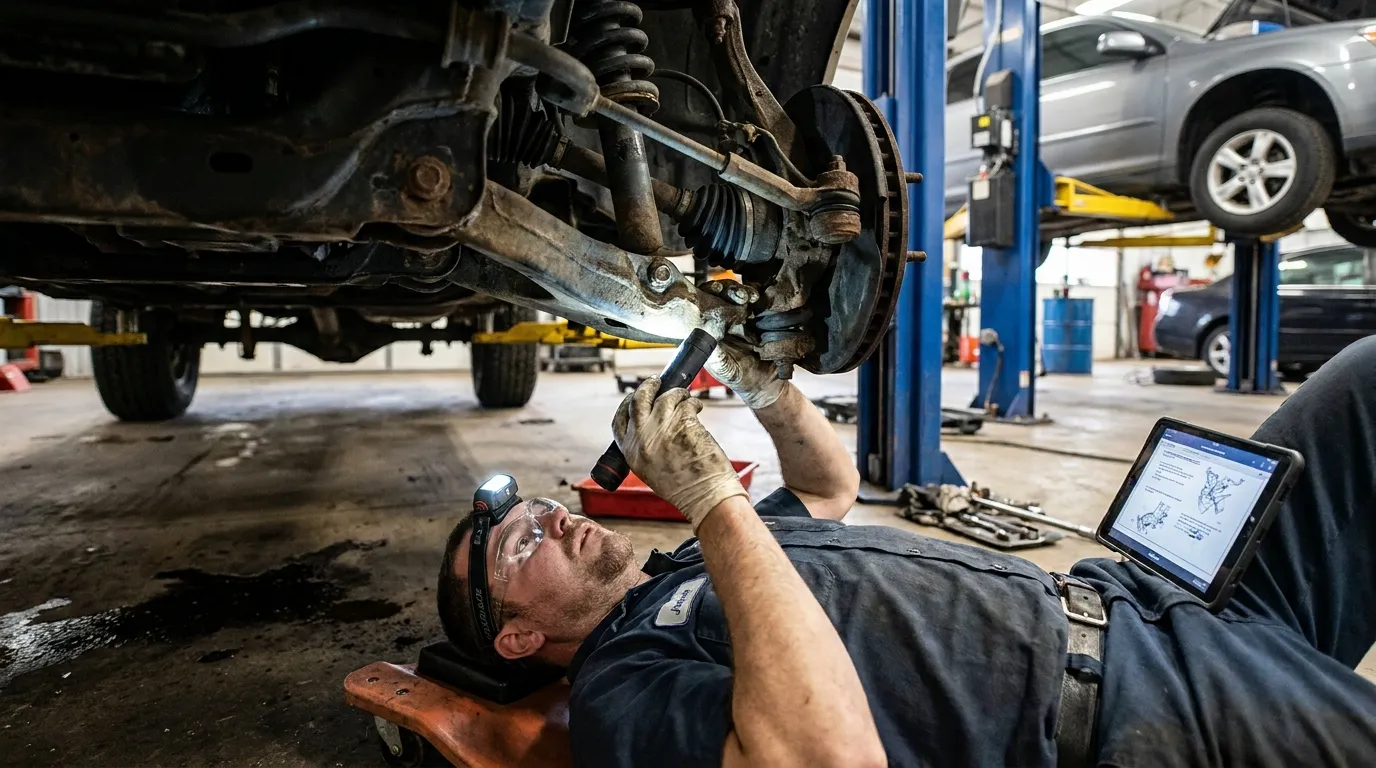
Key suspension components and how they wear
Basic parts you’ll see on most cars:
- Springs: coil or leaf springs hold ride height. They sag or break with age.
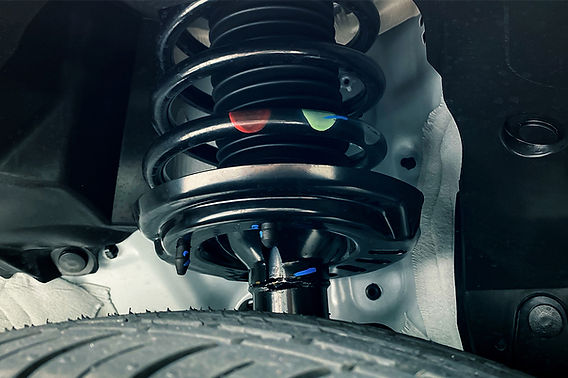
- Shock absorbers and struts: control bounce. They leak oil or lose damping.
- Control arms and bushings: keep wheels aligned. Bushings crack and metal parts bend.
- Ball joints and tie rods: link steering to wheels. They wear and get loose.
- Sway bars and links: reduce body roll. Links can snap and bushings fail.
- Mounts and bearings: isolate vibration. They degrade and make noise.
How parts fail:
- Corrosion from salt and water weakens metal.
- Heat and friction wear bushings and joints.
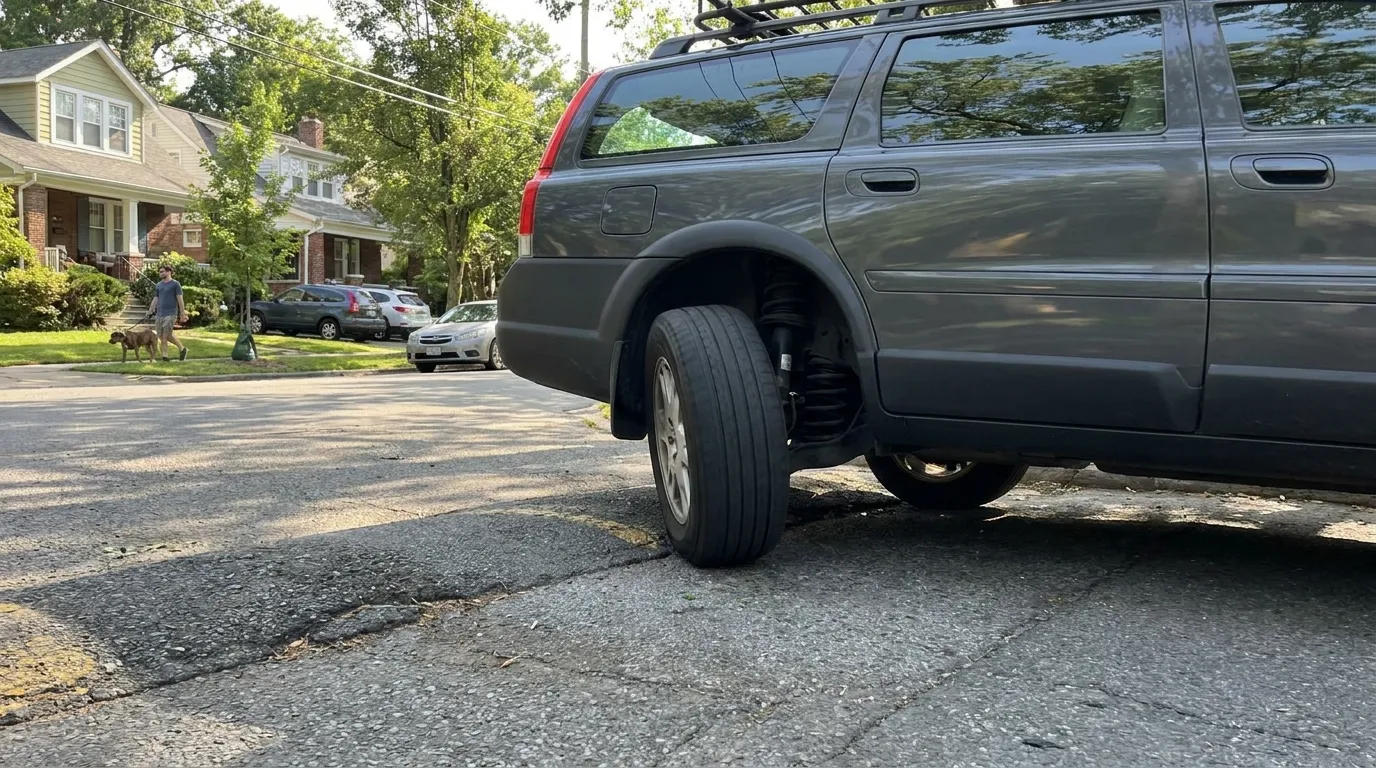
- Impact damage from potholes bends parts.
- High miles compress springs and wear shocks.
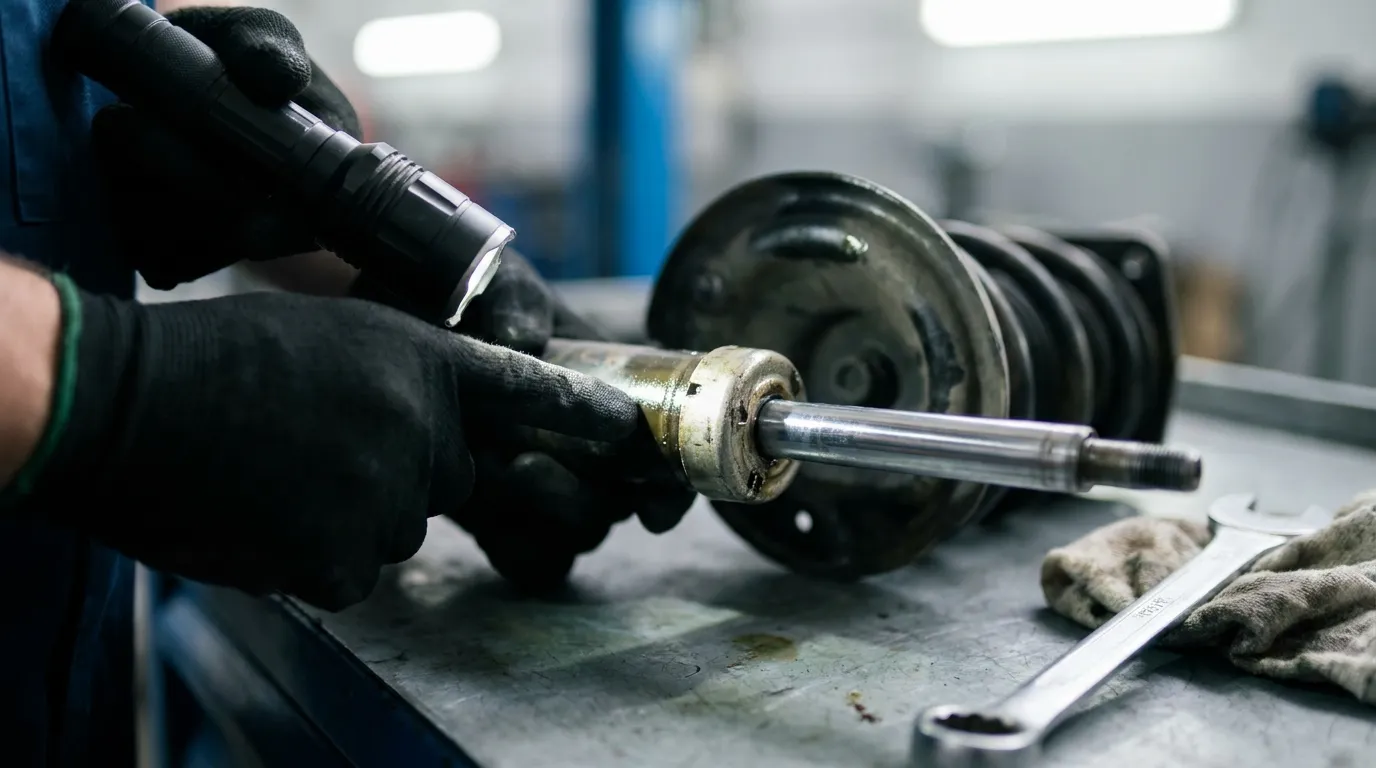
Knowing how to maintain car suspension starts with knowing these parts and what failure looks like. Look for leaks, rust, and play in joints often.
Regular maintenance checklist for how to maintain car suspension
Do these checks every 6 months or after heavy use:
- Visual inspect shocks and struts for oil or dents. Replace if leaking or damaged.
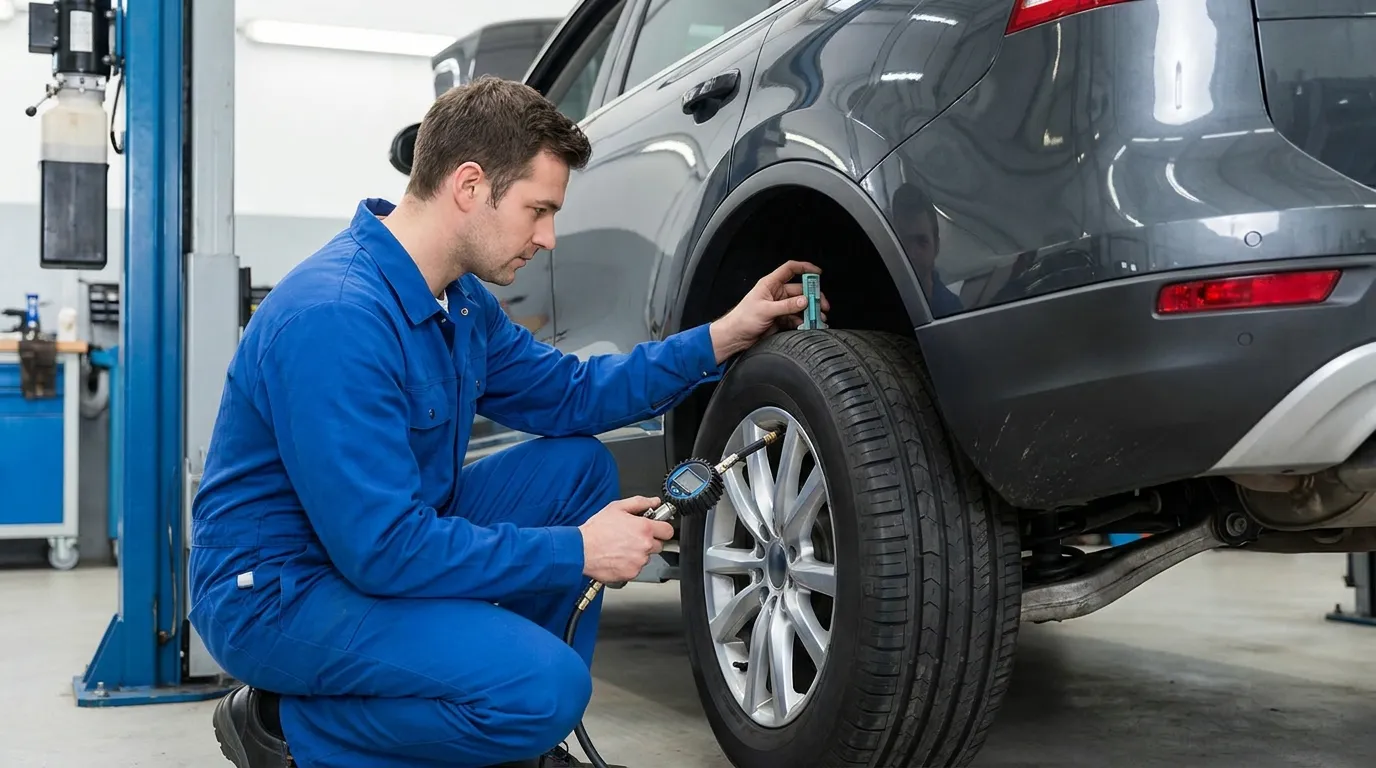
- Check tire wear patterns for cupping, feathering, or inner edge wear.
- Test bounce: push down on each corner and release. Two good bounces means shocks are OK.
- Inspect bushings, ball joints, and tie rods for cracks or looseness.
- Check wheel alignment and steering for pull to one side or off-center steering wheel.
- Look for sagging ride height compared to spec or opposite side.
- Tighten loose nuts to factory torque specs after inspection.
Small routine steps prevent big repairs. I check shocks and bushings every oil change. That habit caught a worn tie rod before it failed on the highway.
Step-by-step inspection guide (do-it-yourself)
Follow these steps to inspect at home safely:
- Park on level ground and use wheel chocks.
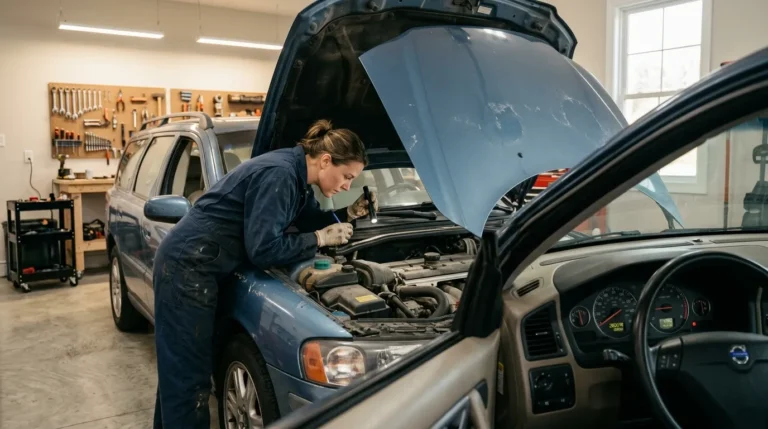
- Do a visual walkaround. Look for fluid, rust, and broken components.
- Do the bounce test on each corner. Note how many bounces occur.
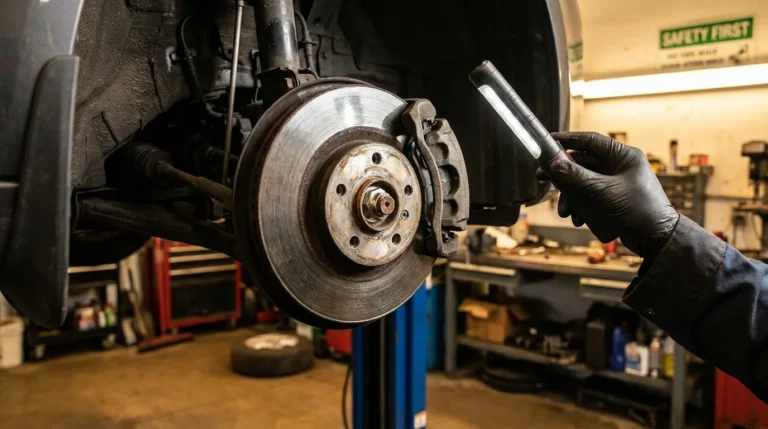
- Jack one corner and support on a stand. Wiggle the wheel at 12 and 6 o’clock to feel for play in wheel bearings.
- With the wheel off, inspect brake lines, control arms, bushings, and mounts. Look for torn rubber or leaks.
- Rotate tires and compare wear. Uneven wear can signal alignment or suspension faults.
- Record findings and schedule repairs if you see leaks, heavy rust, or loose joints.
If you find fluid on shocks or one corner bounces more than the rest, the shock or strut needs replacement. This is a core part of how to maintain car suspension: catch issues early.
Common repairs and DIY vs professional work
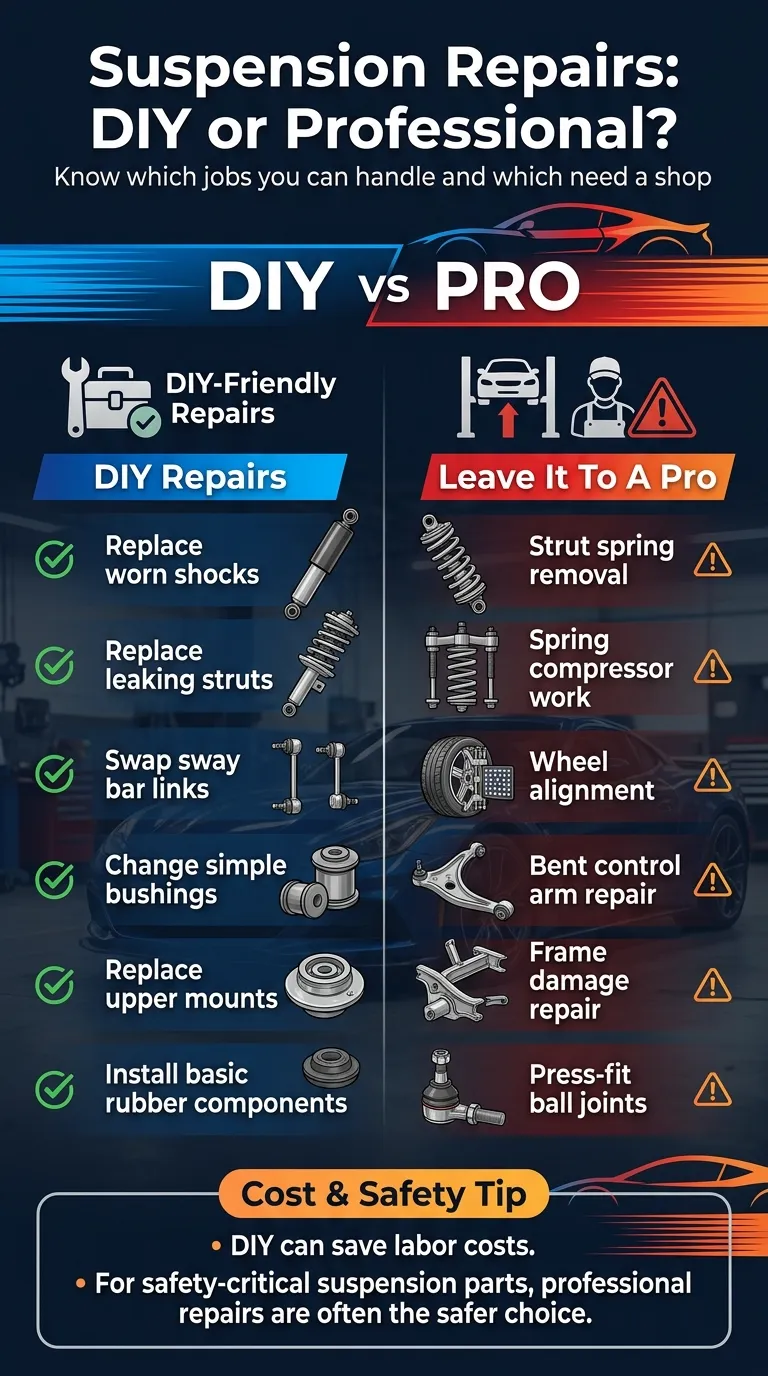
Routine repairs you can do:
- Replace shocks and struts when leaking or worn.
- Swap sway bar links and simple bushings.
- Change upper mounts and basic rubber parts.
When to go to a pro:
- Complex strut assembly spring removal needs a spring compressor.
- Alignment after suspension work requires alignment machine.
- Bent control arms or frame damage needs shop tools and experience.
- Replacing ball joints on certain cars requires press tools.
Costs vary by vehicle and part quality. You can save on labor by handling simple swaps. But for safety-critical parts, professional work is safer and often required.
Tools and parts you’ll need
Basic garage kit for suspension work:
- Jack and sturdy jack stands.
- Torque wrench to factory specs.
- Spring compressor for strut springs.
- Ball joint press or separator for tight joints.
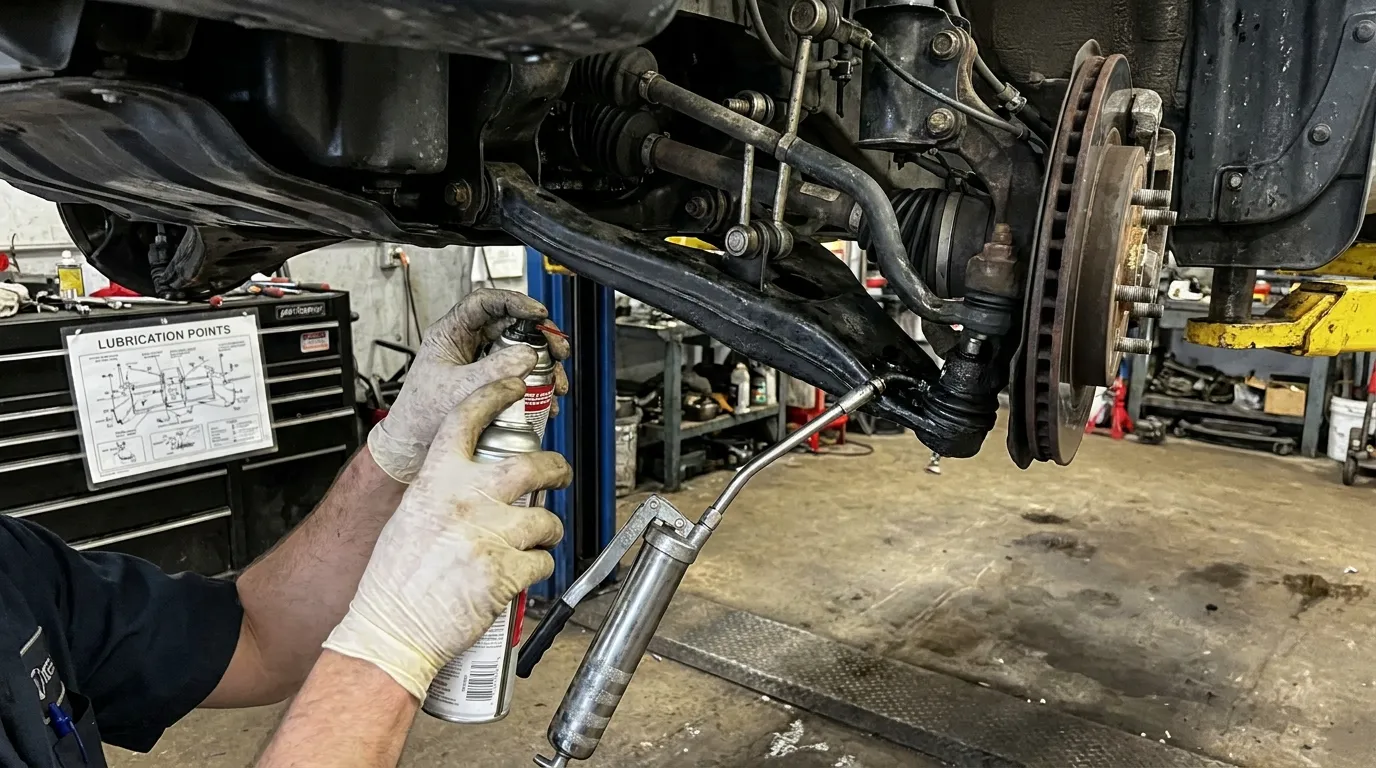
- Ratchets, sockets, wrenches, and penetrating oil.
- New parts: shocks/struts, bushings, sway links, ball joints.
Quality parts matter. Cheap shocks wear fast. Use OEM or good aftermarket parts. I buy two sets of tools and a spring compressor. The right tool keeps work safe and fast.
Driving habits that protect suspension
Your driving style affects how long parts last. Tips to reduce wear:
- Slow down for potholes and avoid curb hits.
- Avoid heavy loads and distribute weight evenly.
- Use smooth steering and braking to lower stress on links.
- Keep tire pressure correct to reduce impact shock.
- Wash underside to remove road salt and prevent rust.
How to maintain car suspension includes changing how you drive. I taught a friend to slow into dips. That simple change extended his shock life and avoided an early repair.
Cost, timeline, and when to replace components
Typical service timelines:
- Shocks and struts: 50,000–100,000 miles, depending on use.
- Bushings and ball joints: 60,000+ miles or when worn.
- Springs: replace when sagging or broken.
- Full inspection: at least once a year.
Typical costs (rough estimates):
- Single shock or strut: low to mid hundreds installed.
- Full set of four shocks: several hundred to over a thousand with parts and labor.
- Alignment: modest fee, usually under $200.
Limitations and trade-offs:
- Higher mileage vehicles may need more parts replaced at once.
- Cheap parts lower short-term cost but may fail sooner.
- Some replacements require alignment and extra labor.
Knowing how to maintain car suspension helps you plan expense and avoid emergency failures.
Personal experience and common mistakes to avoid
From years of working on cars, I learned a few simple truths:
- Ignoring small noises turned into big fixes. A rattle is often a failing bushing.
- Replacing only two shocks instead of all four can make the car handle unevenly. Always replace in pairs or sets.
- Skipping alignment after suspension work ruins new parts faster.
A mistake I made early on was reusing old mounts with new struts. The noise returned quickly. Now I change related parts as a set. That saves time and gives better results.
PAA-style quick questions
How often should I inspect my suspension?
- Inspect visually every six months and do a full check yearly or after rough driving.
What does worn suspension sound like?
- You may hear clunks, rattles, or squeaks when going over bumps or turning.
Can I drive with a bad shock?
- Short trips are possible, but handling and braking suffer. Repair soon for safety.
Does tire rotation help suspension life?
- Yes. Regular rotation evens wear and can reveal suspension problems early.
When should I get an alignment?
- After any suspension repair, new tires, or if the car pulls to one side.
Frequently Asked Questions of how to maintain car suspension
How often should I check my suspension at home?
Check visually every six months and do a hands-on inspection once a year or after rough roads. Look for leaks, loose parts, and uneven tire wear.
What are the signs of a bad shock or strut?
Common signs are excessive bouncing, fluid leaks, uneven tire wear, and poor braking stability. You may also hear clunks over bumps.
Can I replace shocks myself?
Many shocks are DIY-friendly, but strut assemblies often need a spring compressor and alignment after replacement. Use caution and proper tools.
How does alignment affect suspension?
Alignment keeps wheels pointed correctly. Poor alignment causes uneven tire wear and adds stress to suspension parts, shortening their life.
Will bad suspension cause tire wear?
Yes. Worn shocks, misaligned wheels, and bad bushings change contact patches and cause cupping, feathering, or inner-edge wear.
Is it worth replacing only front or rear shocks?
It’s best to replace in pairs or all four when possible. Mismatched damping leads to uneven handling and faster wear on other parts.
How much does a full suspension check cost?
Prices vary by shop and vehicle, but a basic inspection may be free or under $100. Detailed checks are often $75–$150 depending on labor and tests.
Can I prevent suspension corrosion?
Regularly wash the undercarriage, especially after winter. Apply rust inhibitor where metal is exposed and check mounts for rusted bolts.
Are aftermarket parts as good as OEM?
Quality varies. Good aftermarket parts can match OEM at lower cost. Avoid very cheap components and choose reputable brands.
What should I tell my mechanic when I book service?
Describe noises, handling symptoms, when they occur, and any recent impacts or rough roads. Clear information speeds diagnosis.
Final thoughts and action steps
Maintaining a smooth, safe ride is within reach. Regular checks, timely shock replacement, correct alignment, and gentle driving are key to how to maintain car suspension. Start with a simple visual inspection and the bounce test. Keep records of service and replace worn parts in pairs when possible. Take action today: inspect your car, note any odd tire wear or noises, and schedule needed repairs. If this guide helped, subscribe, leave a comment, or share your suspension story below.