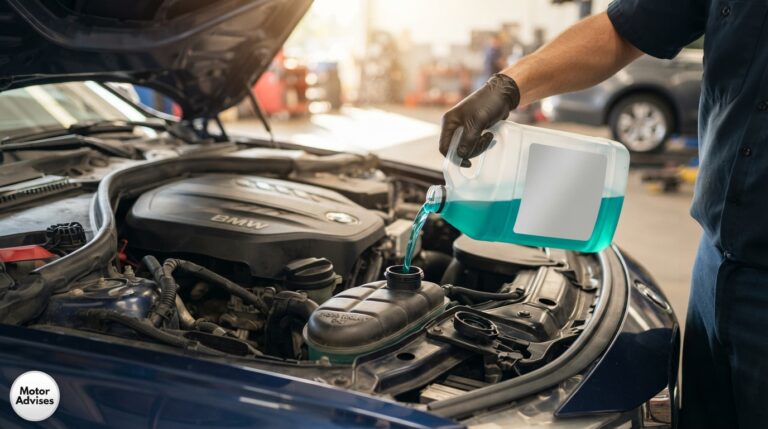

When a radiator fails, the replacement choice usually comes down to two designs: a standard radiator with plastic end tanks, or an all-aluminum radiator.
Both use an aluminum core to move heat, so the difference is mostly in the tanks. Here is how they compare and which makes sense for your car.
What you’ll learn
- What “plastic radiator” really means
- Cooling performance differences
- Durability and repair
- Which to choose
Quick answer
Most modern car radiators have an aluminum core with plastic end tanks, which is cheap, light and good enough for normal driving. An all-aluminum radiator has welded aluminum tanks, so it resists cracking, can often be repaired and suits towing, performance or hot-climate use, but it costs more. For a daily driver, a quality OEM-style plastic-tank radiator is usually the sensible choice; choose all-aluminum if you tow, race or keep cracking plastic tanks.
In this article
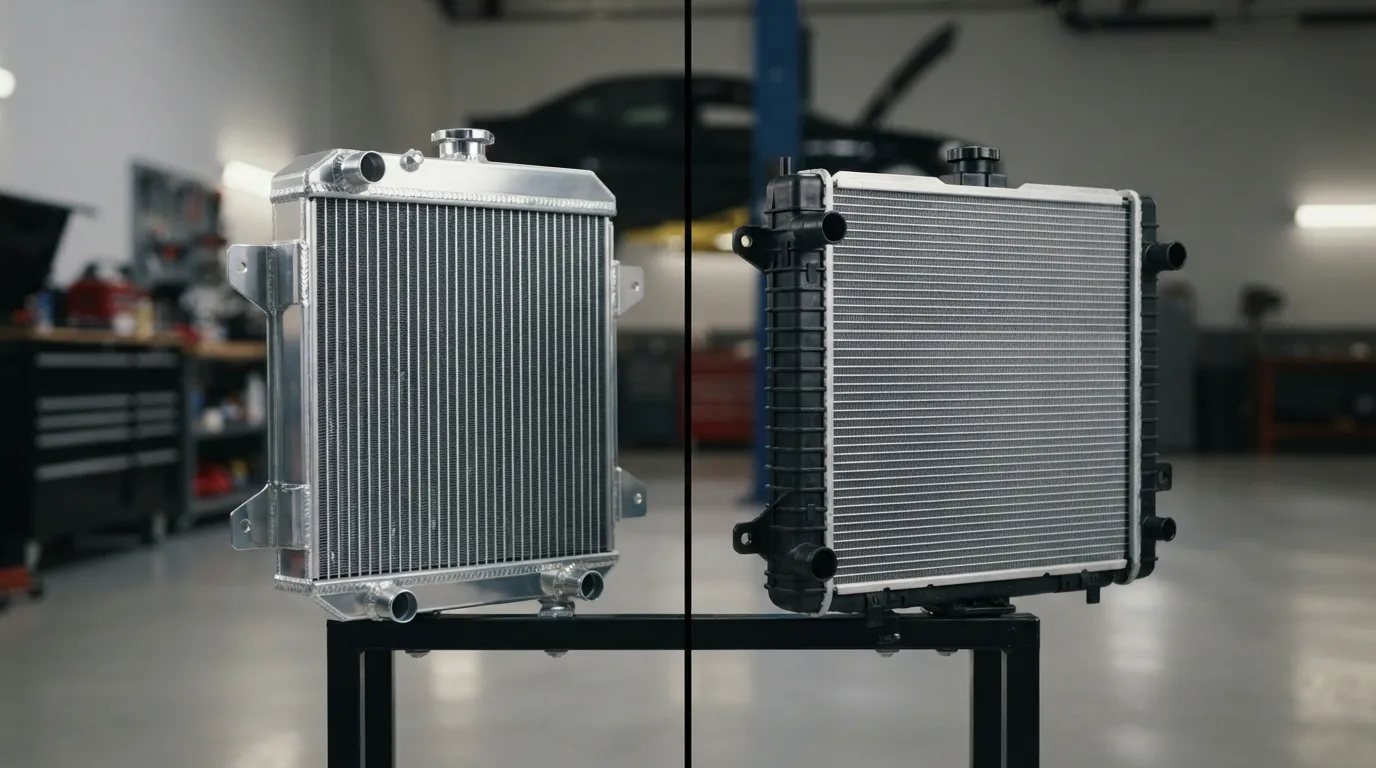
How radiators are built
A radiator has a core of thin tubes and fins, where heat passes from the coolant into the air, and two tanks at the ends that collect and distribute the coolant.
- Plastic-tank radiator: aluminum core with nylon plastic tanks crimped on over a rubber gasket. The standard factory design on most cars.
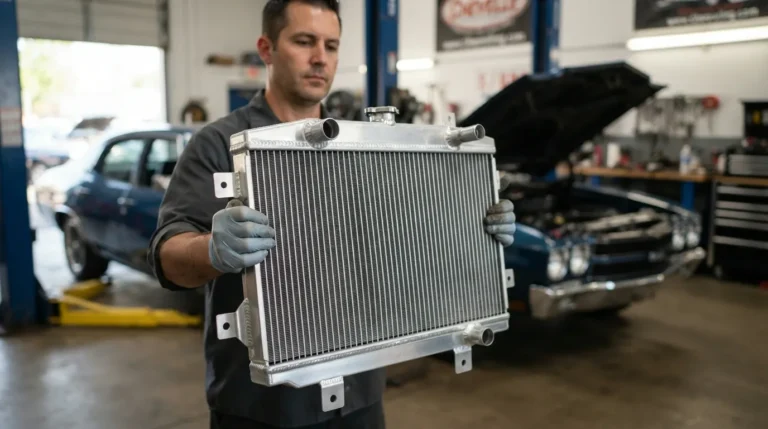
- All-aluminum radiator: aluminum core with aluminum tanks welded on. Common as an upgrade and on performance vehicles.
- Copper-brass: an older design found on classic cars and some heavy trucks.
Aluminum vs plastic tanks compared
- Cooling: the core does almost all the cooling. An all-aluminum radiator often has a thicker core with more or larger tubes, which is where any cooling gain comes from.
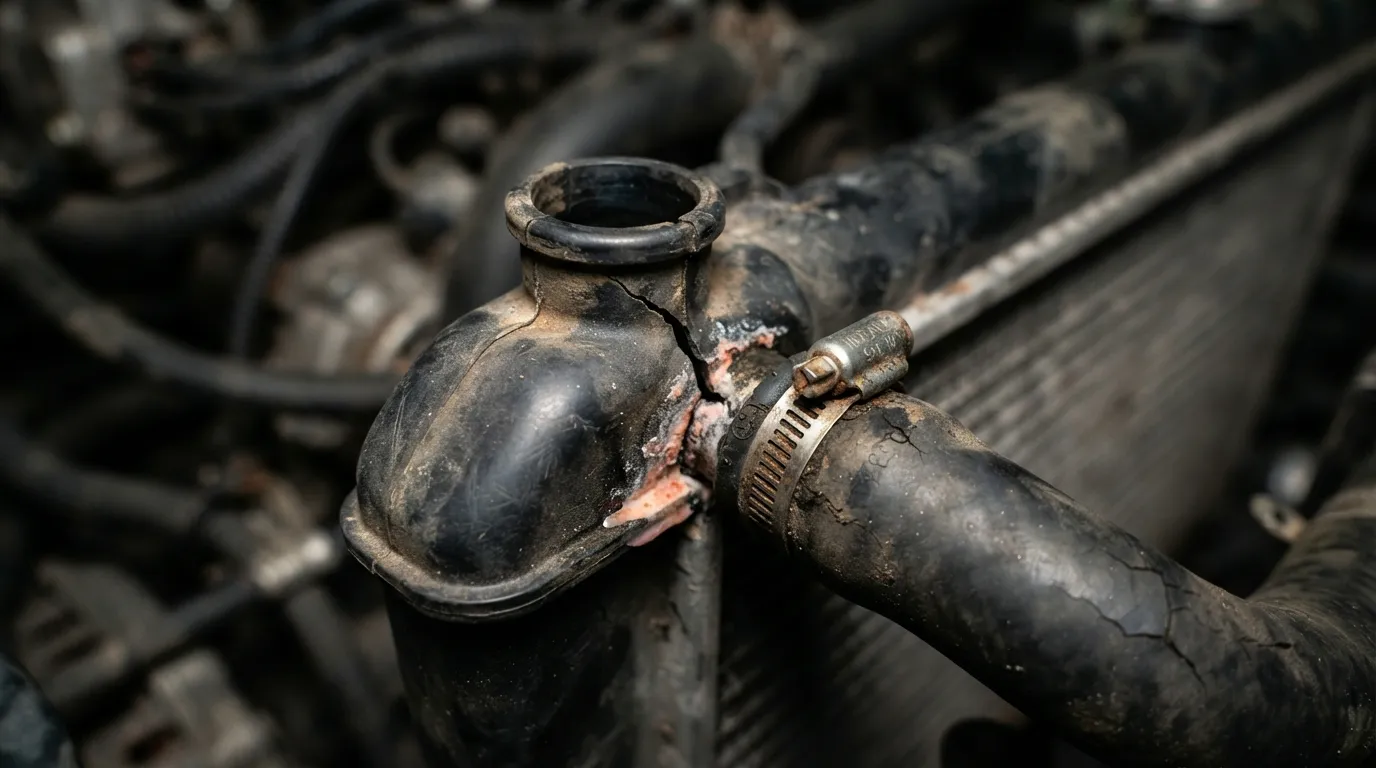
- Durability: plastic tanks become brittle with age and heat cycles and can crack at the seam. Welded aluminum tanks are much less likely to crack.
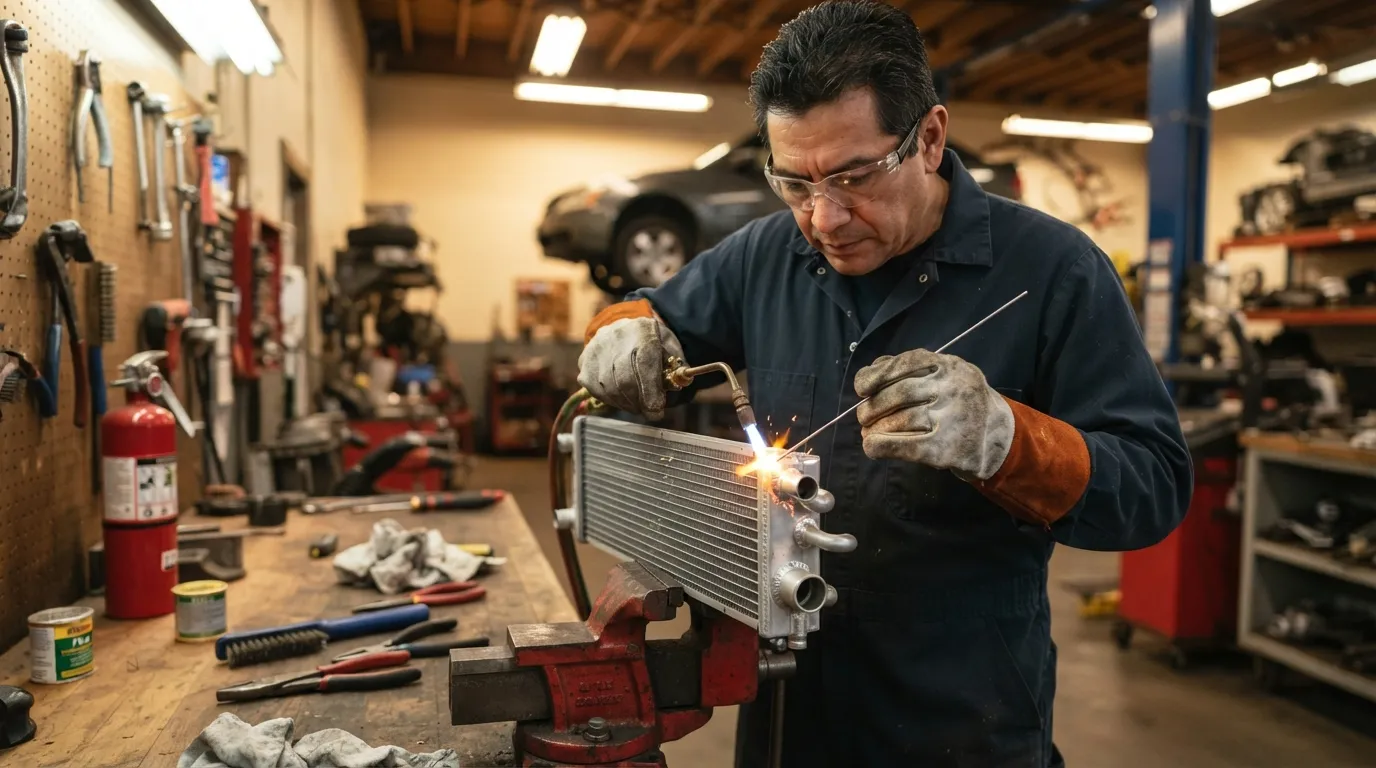
- Repair: aluminum can often be repaired by a radiator shop. A cracked plastic tank usually means a new radiator.
- Weight: both are light; the difference is small.
- Cost: plastic-tank radiators are usually much cheaper.
- Fit: OEM-style plastic-tank radiators match the original mounting and sensors exactly. Check that an aluminum one fits your fan shroud, hoses and transmission cooler lines.
Which should you choose?
- Daily driver in a mild climate: a quality OEM-style plastic-tank radiator.
- Towing, hauling or very hot climates: an all-aluminum radiator with a thicker core can add a margin.
- Performance or track use: all-aluminum.
- Older car with repeated tank cracks: all-aluminum may last longer.
- Tight budget: plastic-tank, from a reputable brand.
For specific options, see the best radiators for high-mileage cars.
Care and common failures
- Use the coolant type your manual specifies; the wrong coolant can corrode aluminum. See what engine coolant is.
- Change the coolant on schedule, and bleed air from the system after any repair.
- Do not overtighten hose clamps on plastic tank necks.
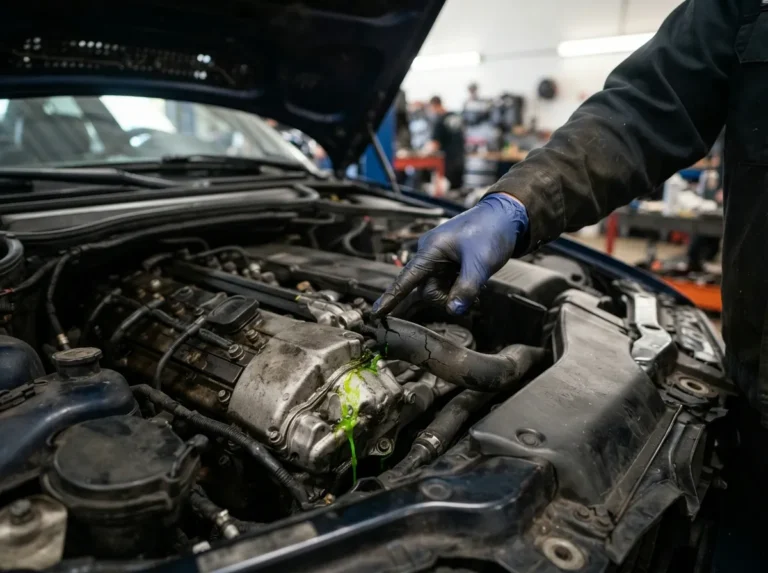
- Watch for coolant crust at the tank seams, a common early sign of a plastic-tank leak.
- Stop-leak products can seal tiny leaks but may clog the core; see radiator stop leak.
If the engine is overheating, start with what causes a car engine to overheat.