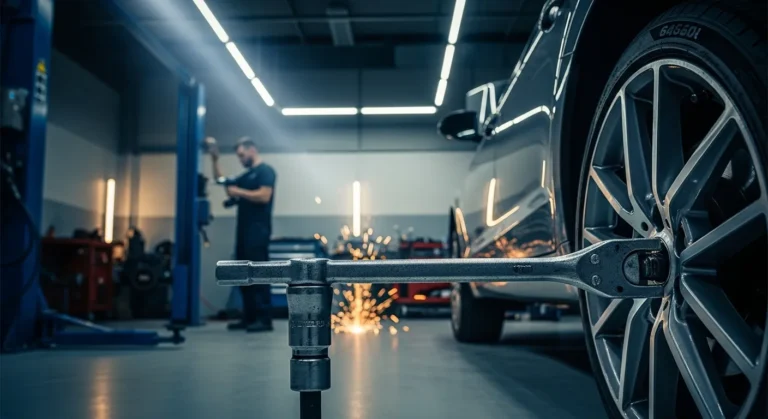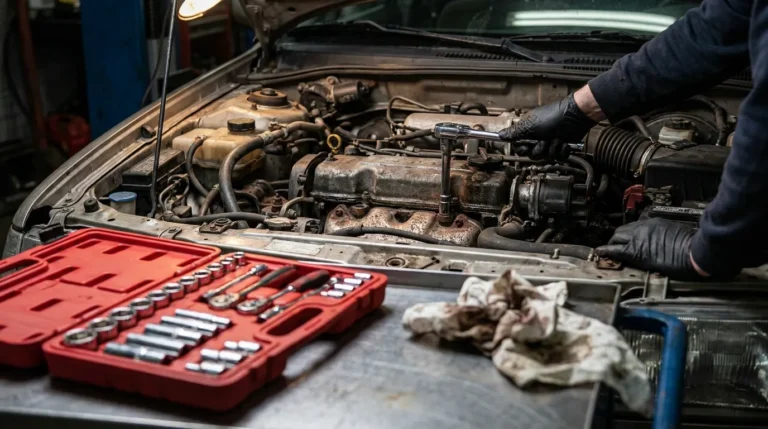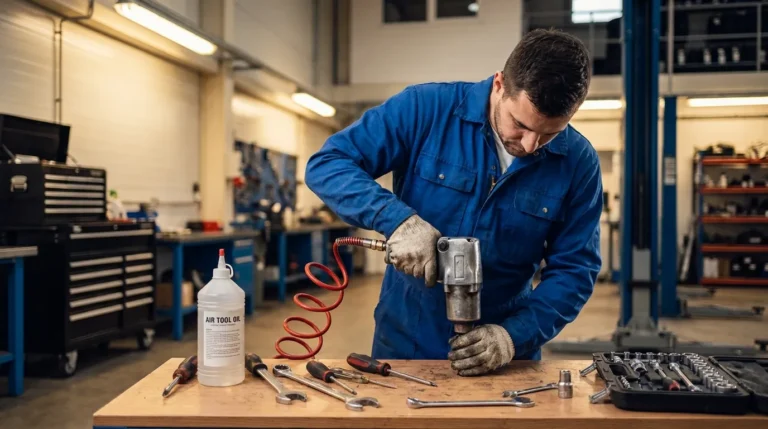
Plug in or charge, choose the right socket, pull trigger, finish with torque wrench.
You want to know how to use electric impact wrench the right way, without broken studs or stripped threads. I have used these tools for years in shops and driveways. In this guide, I show smart steps, safe habits, and pro tips that make the job smooth and fast. Stick with me and you will handle wheels, bolts, and stubborn fasteners like a pro.
What Is an Electric Impact Wrench and When to Use It
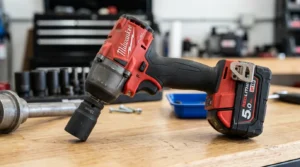
An electric impact wrench is a power tool that gives high torque. It uses a hammering action to spin stubborn nuts and bolts. It can be corded or cordless. Cordless models use lithium-ion batteries. Corded tools plug into the wall and give steady power.
Use it for lug nuts, suspension bolts, mower blades, anchors, and large fasteners. Do not use it for small screws or soft metals. For final torque, move to a torque wrench. The impact wrench gets things loose and snug. The torque wrench sets exact clamping force.
Safety First
Treat the tool with respect. High torque can hurt you or damage parts.
Follow these basics:
- Wear safety glasses and hearing protection.
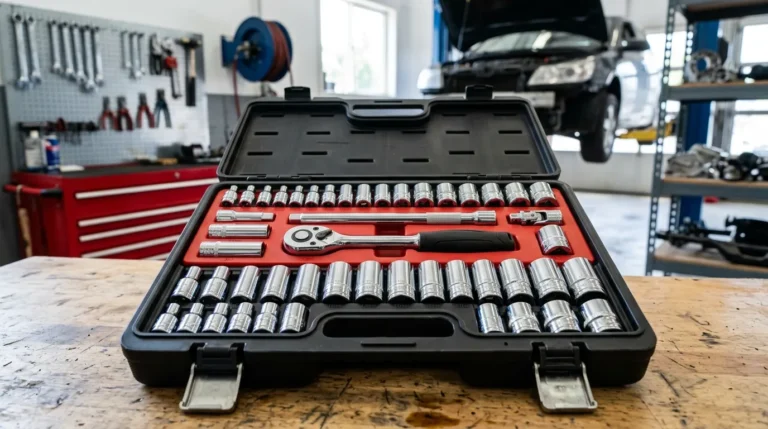
- Use impact-rated sockets. Never use shiny chrome sockets.
- Keep hands clear of rotating parts.
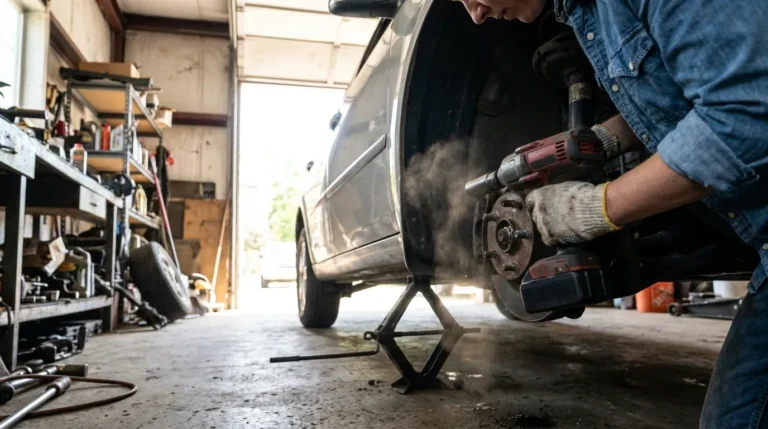
- Secure the work. Chock wheels and use jack stands.
- Set the tool to reverse or forward before you start.
- Do not hold the trigger wide open on small fasteners.
- Let the tool rest if it gets hot.
Before you try how to use electric impact wrench on wheels, crack the lugs on the ground. Then lift and support the car. Follow maker specs. This protects studs, rotors, and you.
Tools and Setup
Have the right gear ready. This makes the job fast and safe.
You will need:
- Electric impact wrench, corded or cordless
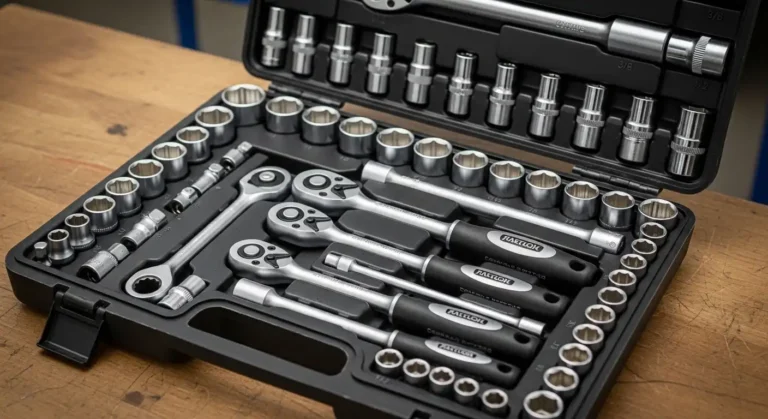
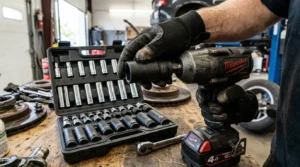
- Impact sockets in common sizes
- Extensions and a wobble or universal joint for angles
- A torque wrench for final torque
- Penetrating oil for rusted parts
- Thread locker or anti-seize as required by the maker
- A sturdy work light
- Gloves and eye protection
If you ask how to use electric impact wrench correctly, start with a snug fitting impact socket. Loose fits round fasteners. Use a mid-length extension to clear hubs or studs when needed.
Step-by-Step: How to Use Electric Impact Wrench
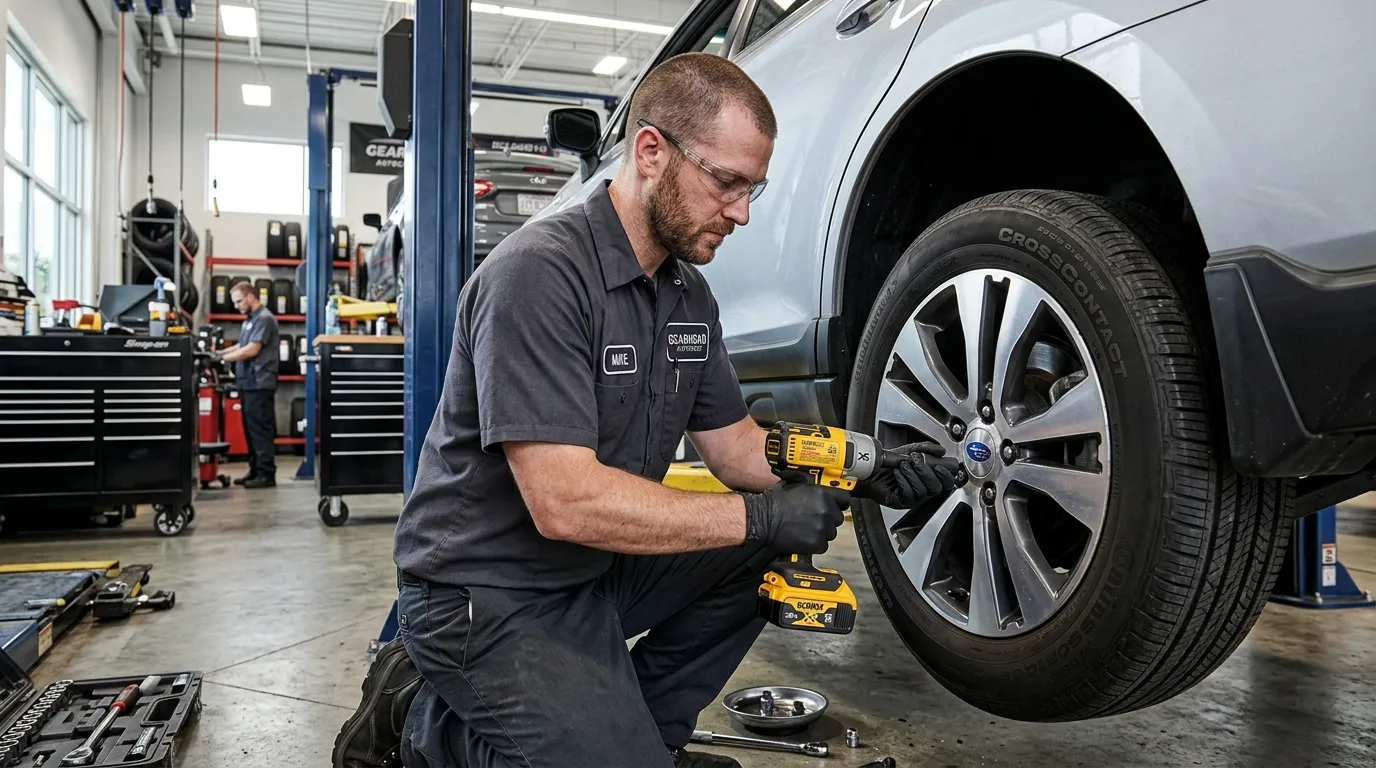
Here is the short, clear system I teach new techs. It works in a shop or at home. This is the core of how to use electric impact wrench on any common task.
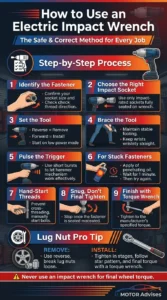
- Identify the fastener. Confirm size and thread direction. Most are right-hand threads.
- Choose an impact socket that fits tight. Seat it all the way.
- Set the tool. Pick reverse to remove or forward to install. Start on a low speed or torque mode if you have it.
- Brace the tool. Keep wrists straight and your stance stable.
- Pulse the trigger. Use short bursts. Let the hammer do the work.
- For stuck parts, add penetrating oil. Give it a minute. Then pulse again.
- When installing, spin the nut by hand first. This avoids cross-threading.
- Use the tool to snug only. Stop once the fastener seats.
- Finish with a torque wrench to spec. Follow a star or cross pattern on wheels.
- Recheck after a short drive for wheel jobs.
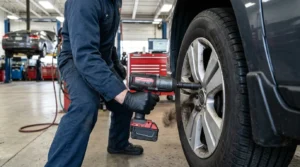
To learn how to use electric impact wrench on lug nuts, use reverse to break them free. When you install, snug in stages. Then set final torque with a torque wrench. That habit saves studs and rotors.
Torque, Sockets, and Accessories
Torque is twisting force. Impact wrenches list two numbers. Fastening torque and nut-busting torque. The second is higher. It shows breakaway power on stuck nuts.
Pick the right drive size:
- 1/2 inch for cars, trucks, and general shop work
- 3/8 inch for lighter jobs and tight spaces
- 3/4 inch for heavy equipment
Use impact sockets. They are carbon steel and dull black. Chrome sockets can crack and shatter. Use torque sticks only with air tools. With electric tools, they can be less accurate. Finish with a torque wrench.
Know your battery and motor. Brushless motors run cooler and last longer. High amp-hour batteries give longer run time. Higher RPM and impacts per minute remove nuts faster. But control matters more than raw power when you learn how to use electric impact wrench on mixed jobs.

Real-World Tips, Mistakes to Avoid, and Troubleshooting
Here is what years in the bay taught me.
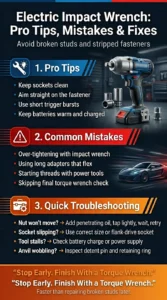
Practical tips:
- Keep sockets clean. Dirt makes them slip.
- Aim straight on the fastener. Angles cause cam-out.
- Use short bursts. This gives control and reduces damage.
- Warm batteries work better. Keep a spare on the charger.
Common mistakes:
- Over-tightening with the impact. Always finish with a torque wrench.
- Using adapters that are too long. They twist and waste torque.
- Cross-threading by starting with power. Always start by hand.
Troubleshooting:
- If the nut will not move, add oil. Tap the head. Wait. Try again.
- If the socket keeps slipping, step down a size or switch to a flank-drive impact socket.
- If the tool stalls, check the battery or cord. Low voltage kills torque.
- If the anvil wobbles a lot, stop. Inspect the detent pin and ring.
When people ask me how to use electric impact wrench without breaking studs, I say this. Stop early, and torque by hand. It feels slow at first. It is faster than fixing broken parts later.
Maintenance and Storage
A little care keeps your tool strong.
Do this often:
- Wipe the tool after each use.
- Check the anvil, detent pin, and ring for wear.
- Keep vents clear. Dust makes heat.
- Store batteries at mid-charge in a cool, dry place.
- Update chargers or batteries per the maker as needed.
- Lightly oil the hog ring and extension ends.
If you want to master how to use electric impact wrench for years, follow the manual. Service intervals and grease points matter. Small routine care saves big repairs.

Source: rtrmax.com
Buying Guide Basics
Match the tool to the job. Specs help, but feel matters too.
Key factors:
- Fastening torque and nut-busting torque that meet your tasks
- Weight and balance that fit your hand
- Variable speed trigger and multiple modes
- Drive size and anvil style that fit your sockets
- Battery system you already own, if cordless
- Warranty and service network
Corded tools give steady power at low cost. Cordless tools give freedom and speed. If your main need is wheels and brakes, a mid-torque 1/2 inch brushless model is ideal. For DIY users who search how to use electric impact wrench at home, a mid-torque kit with two batteries is a great start.
Frequently Asked Questions of how to use electric impact wrench
What size impact wrench is best for lug nuts?
A 1/2 inch drive is the standard for cars and light trucks. It gives enough torque and fits common lug sockets.
Can I fully tighten lug nuts with an impact wrench?
Do not set final torque with an impact wrench. Snug with the impact, then finish to spec with a torque wrench.
How to use electric impact wrench without cross-threading?
Start every nut by hand for a few turns. Then use short trigger bursts and stop once the nut seats.
What’s the difference between an impact wrench and an impact driver?
An impact wrench uses a square drive and higher torque for nuts and bolts. An impact driver uses a hex chuck and lower torque for screws and small bolts.
How to use electric impact wrench on rusted bolts?
Soak with penetrating oil and wait a few minutes. Use short bursts and support the socket straight to avoid rounding.
Do I need special sockets?
Yes, you need impact-rated sockets. They are stronger and resist shattering under hammer blows.
Is corded or cordless better?
Corded gives steady power and low cost. Cordless gives freedom and speed, which helps on cars and outdoor work.
Conclusion
You now know how to use electric impact wrench with control and care. Pick the right socket, pulse the trigger, and finish with a torque wrench. Follow specs, stay safe, and protect your parts.
Try the steps on a simple job, like a tire rotation. Feel the tool, learn the sound, and build skill. Want more tips and tool tests? Subscribe, ask a question, or share your experience in the comments.