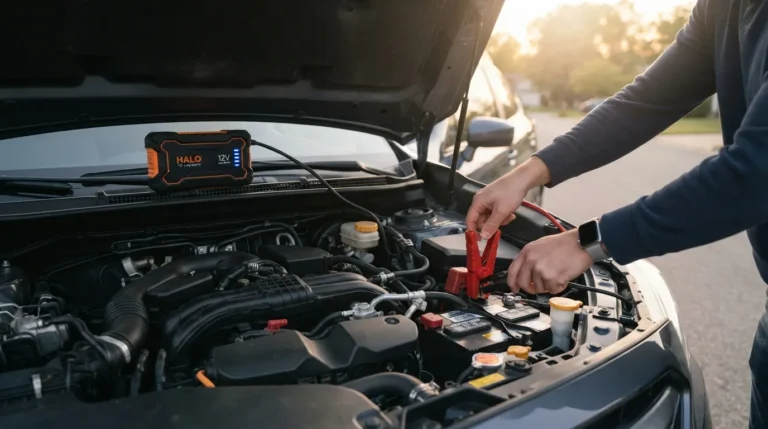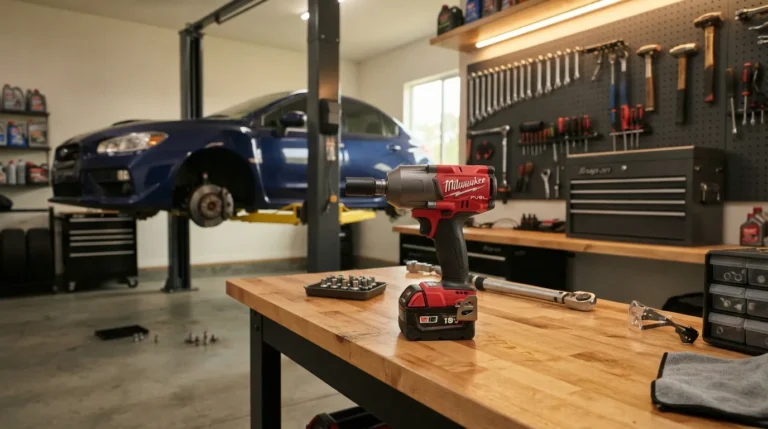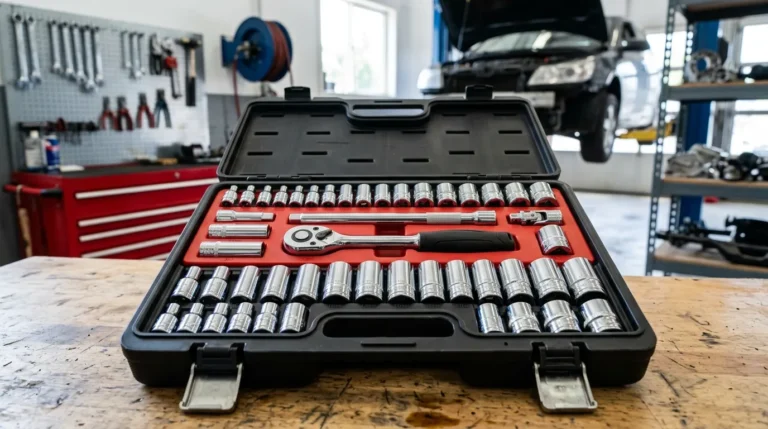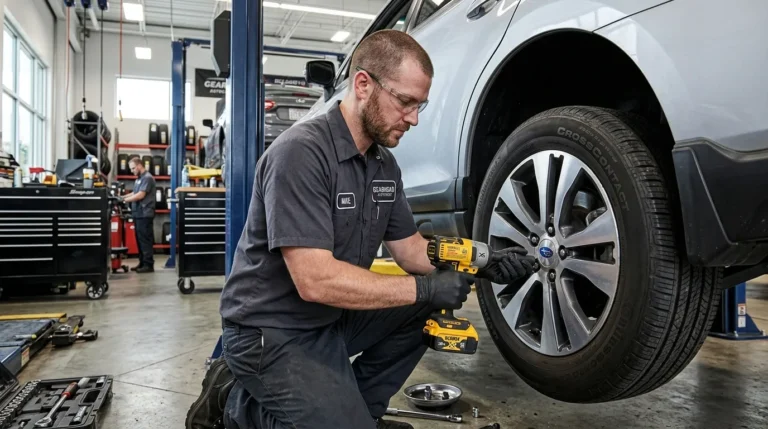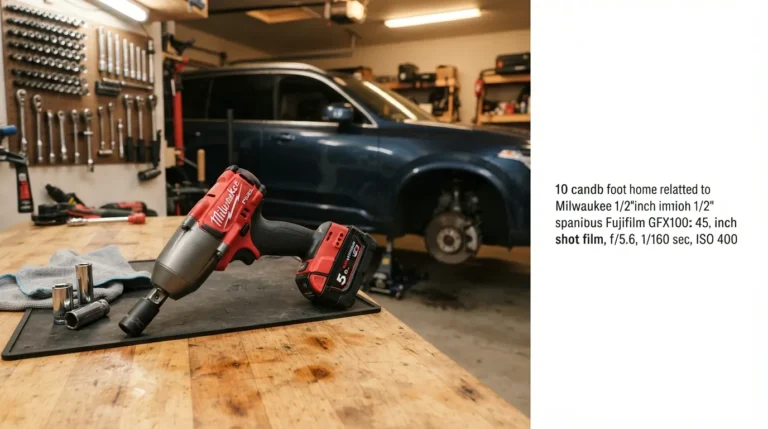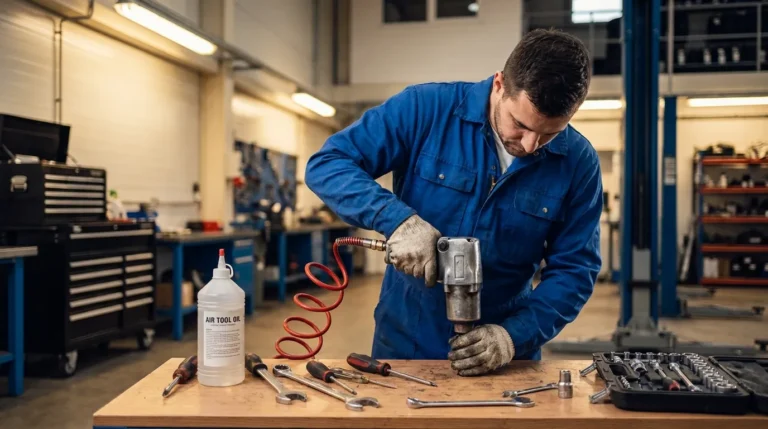
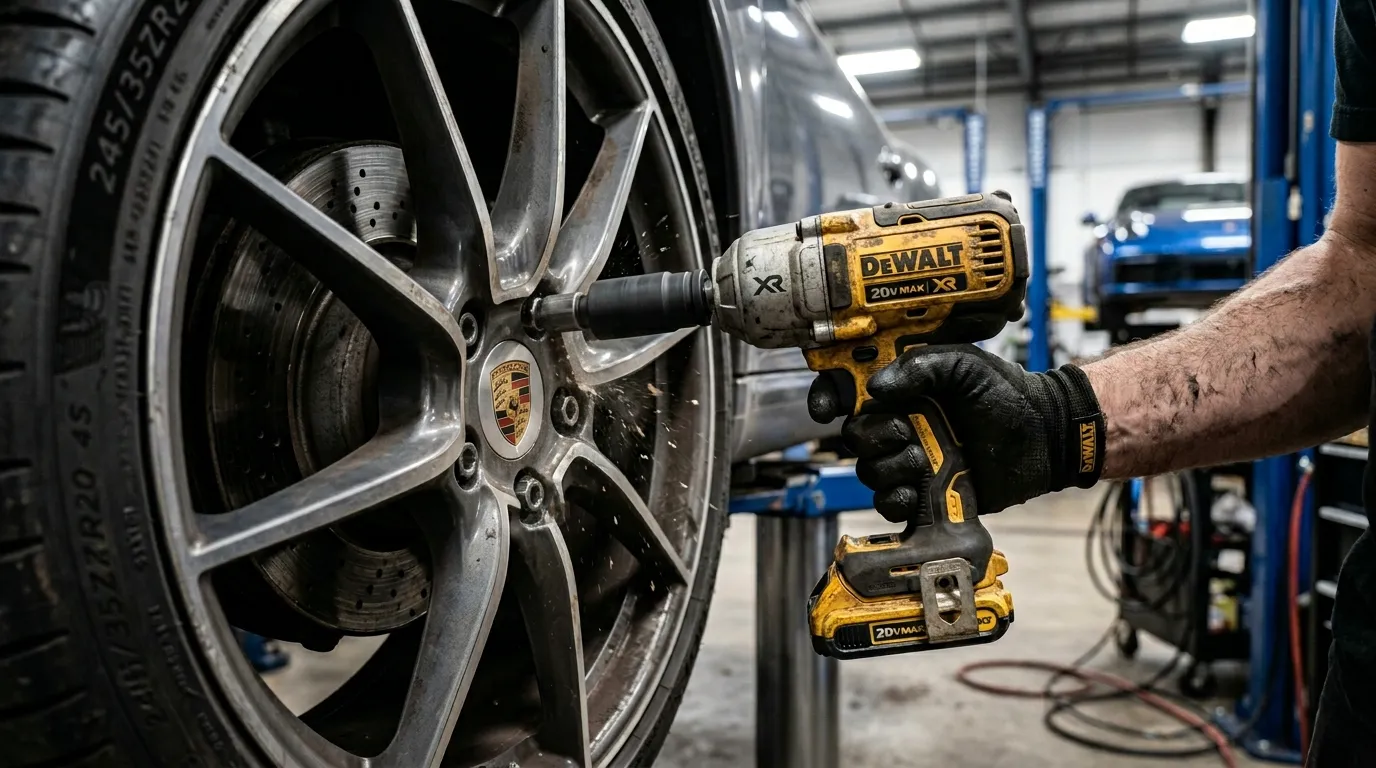
An impact wrench is used to drive or break loose tough fasteners fast.
If you want the clearest guide on what is impact wrench used for, you’re in the right place. I’ve spent years wrenching on cars, building decks, and setting anchors on jobsites. In this guide, I’ll explain how an impact wrench works, where it shines, when not to use it, and how to choose the right one. You’ll get real examples, pro tips, and plain talk so you can pick and use the right tool with confidence.
What Is an Impact Wrench?
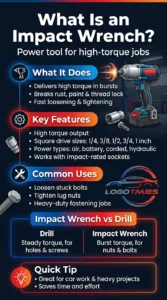
An impact wrench is a power tool that delivers high torque with quick hammering bursts. It uses a square drive to spin impact‑rated sockets. The bursts let you break rust, paint, or thread lock without long, steady force.
Here is what is impact wrench used for in simple terms: it tightens and loosens nuts and bolts that are stuck or need strong clamping force. It does this faster and safer than a hand wrench.
Key traits:
- High torque in a short time
- Square drive sizes like 1/4 inch, 3/8 inch, 1/2 inch, 3/4 inch, and 1 inch
- Powered by air, battery, corded electric, or hydraulics
- Best with impact‑rated sockets and accessories
Quick Q&A:
- Is an impact wrench the same as a drill? No. A drill is for holes and screws with steady torque. An impact wrench is for bolts and nuts with burst torque.
- Do you need one at home? If you work on cars, decks, or larger builds, yes. It saves time and strain.
How an Impact Wrench Works
Inside, a hammer spins and then strikes an anvil that turns the drive. The tool builds momentum, then hits in pulses. That action breaks friction and moves the fastener.
Important specs:
- Torque measured in ft‑lb or Nm
- Impacts per minute for speed under load
- No‑load speed in RPM
- For air tools, air pressure and CFM
If you ever asked what is impact wrench used for, the answer ties to this action. The hammering frees stuck threads and seats hardware with less arm effort.
Common Uses Across Industries
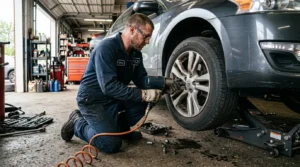
If you ask what is impact wrench used for day to day, here are the top jobs.
Automotive and motorsports:
- Lug nuts and wheel swaps
- Suspension arms and control arms
- Crank pulley bolts and axle nuts
Construction and carpentry:
- Ledger bolts and structural screws with hex heads
- Wedge anchors and sleeve anchors
- Tightening scaffold and formwork hardware
Metalwork and fabrication:
- Frame assembly and shop jigs
- Machinery install and base plates
- Flange bolts and structural steel
Home and DIY:
- Deck posts and carriage bolts
- Pergolas, sheds, and swings
- Trailer hitches and roof racks
Heavy equipment and agriculture:
- Loader buckets and blade hardware
- Tractor implements and PTO guards
- Combine maintenance
HVAC and facility work:
- Rooftop units and curb bolts
- Vibration isolators
- Support brackets
Each case shows what is impact wrench used for: fast, strong fastening and removal under tough loads.
Types of Impact Wrenches
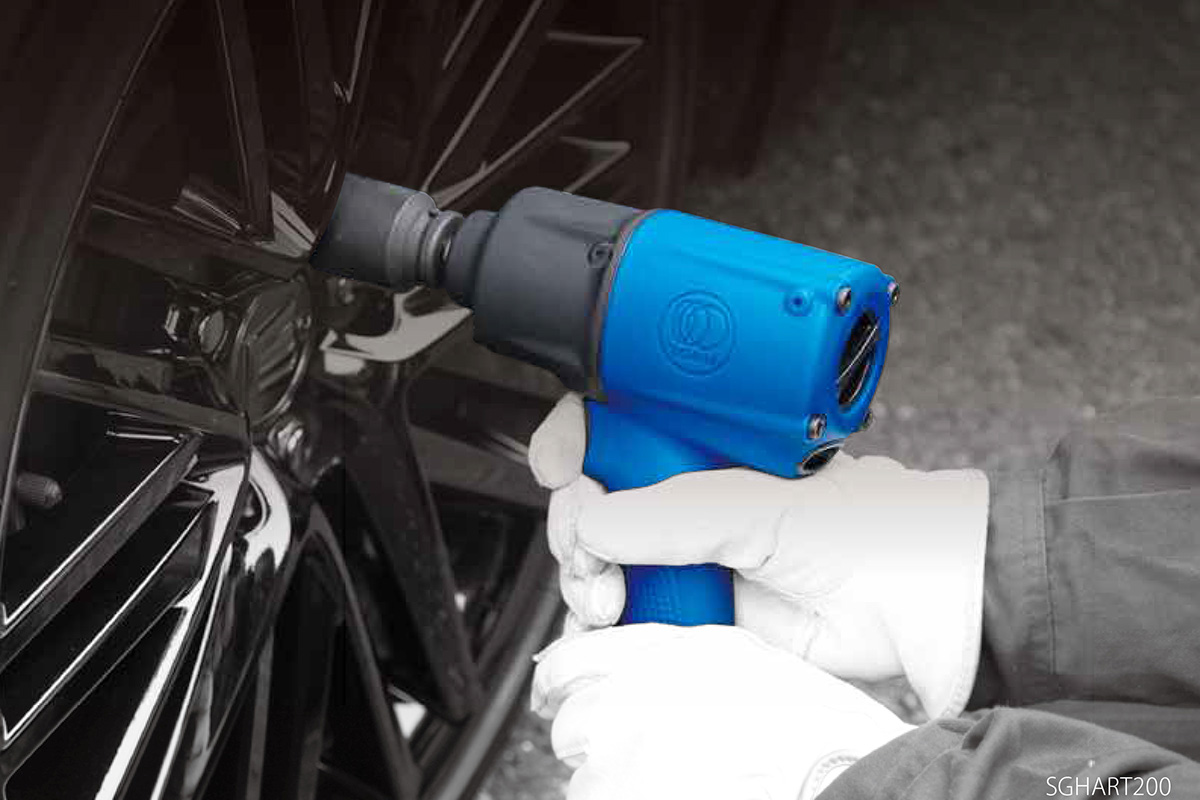
Air (pneumatic):
- Most common in shops
- Light, strong, and cool running
- Needs a compressor with enough CFM
Cordless (battery):
- Great mobility and growing power
- Choose high output cells for heavy work
- Good for field and home jobs
Corded electric:
- Stable power, no battery care
- Less common today
- Best near outlets
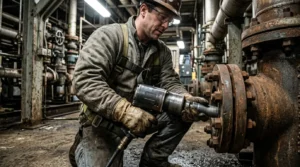
Hydraulic:
- For high torque in industry
- Used on rigs, turbines, and heavy plant
Understanding types helps you answer what is impact wrench used for in your world. The job and site power decide the tool.
Selecting the Right Impact Wrench
Match the tool to the task with these steps.
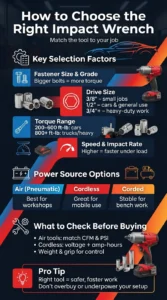
- Define fastener size and grade. Larger, harder bolts need more torque.
- Pick a drive size. 3/8 inch for small hardware. 1/2 inch for cars and general jobs. 3/4 inch or 1 inch for heavy gear.
- Check torque. For lug nuts, a mid‑torque 200–600 ft‑lb tool works. For trucks, look at 800+ ft‑lb.
- Look at speed and impacts. More is faster under load.
- Choose power source. For shops, air is great. For mobile work, cordless wins. For steady bench work, corded is fine.
- For air tools, size your compressor. Check CFM at the tool’s PSI rating.
- For cordless, compare voltage and amp‑hours. High output packs keep torque under load.
- Weight and grip matter. A lighter tool is easier to control and safer on long jobs.
This is the practical way to solve what is impact wrench used for in your garage, truck, or site.
Sockets and Accessories That Matter
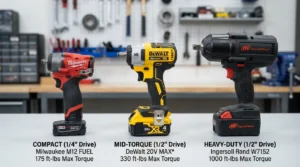
Use impact‑rated gear. Standard chrome sockets can crack under impacts.
Must‑haves:
- Impact sockets in key sizes for your work
- Deep sockets for studs
- Extensions and wobble adapters for access
- Torque sticks for wheel lugs
- A breaker bar for final alignment or when you need feel
- A quality torque wrench for final torque
Tip: An impact wrench gets you close. A torque wrench sets it right. That is the safe answer to what is impact wrench used for in wheel service and critical joints.
Safety, Handling, and Best Practices
Use the power, but keep control.
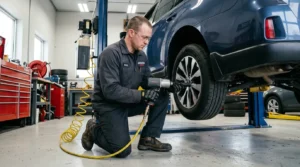
- Wear eye and ear protection
- Use both hands when possible
- Start slow to seat the socket
- Keep the tool square to the fastener
- Do not hold the trigger if the socket slips
- Let the hammering work; do not lean hard on the tool
- Stop and use heat or penetrant if a bolt will not move
- Final‑torque with a torque wrench
If you wonder what is impact wrench used for with safety in mind, it is for fast work that avoids strain, not for brute force at all costs.
Real‑World Tips and Mistakes to Avoid
From my own bench and driveway:
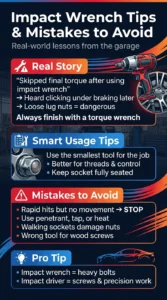
- Story: I once zipped on lug nuts with a high‑torque gun and skipped final torque. A week later, I heard a click under braking. The nuts had seated more and lost clamp. Since then, I always finish with a torque wrench. Lesson: speed first, precision last.
- Use the smallest tool that does the job. It is easier on your wrists and threads.
- If you hear many rapid hits but no movement, stop. Add penetrant, tap the head, or add heat.
- Keep the socket on the fastener before you pull the trigger. Walking sockets round off nuts.
- On wood builds with structural screws, use an impact driver, not a wrench. Know what is impact wrench used for versus an impact driver.
These habits shape a smart answer to what is impact wrench used for without broken studs or damaged parts.
Maintenance and Troubleshooting
Care keeps the tool strong and safe.
- For air tools, add a few drops of air‑tool oil each day
- Drain water from the compressor and lines
- Check hoses and fittings for leaks
- For cordless tools, keep batteries between 20% and 80% when stored
- Clean and inspect sockets for cracks
- If power drops, check air CFM, battery charge, or internal wear
Good upkeep supports every case of what is impact wrench used for, from wheels to anchors.
Limitations and When Not to Use
Know the lines so you do not break parts.
- Do not use on small, delicate fasteners
- Avoid on plastic parts or thin sheet metal
- Do not rely on impacts for final torque on safety‑critical joints
- Skip hammering on cross‑threaded bolts; fix the threads first
- Avoid using chrome sockets; they can shatter
Understanding limits keeps the answer to what is impact wrench used for clear and safe.
Frequently Asked Questions of what is impact wrench used for
What’s the difference between an impact wrench and an impact driver?
An impact wrench uses a square drive for sockets and high torque. An impact driver uses a hex collet for bits and is better for screws and small bolts.
Can an impact wrench over‑tighten bolts?
Yes, it can if you hold the trigger too long. Use torque sticks or finish with a torque wrench to hit the spec.
What size impact wrench is best for lug nuts?
A 1/2 inch drive is the go‑to for most cars and light trucks. Check torque specs and use a torque wrench for final tightening.
Do I need special sockets for an impact wrench?
Yes, use impact‑rated sockets. They are tougher and reduce the chance of cracking or rounding.
Will a cordless impact wrench remove rusted bolts?
Often yes, if the tool has enough torque and a good battery. Use penetrant, heat, or a breaker bar if it still will not move.
Is more torque always better?
No. More torque can add weight and risk damage. Choose torque that matches your most common fasteners.
Can I use an impact wrench on wood screws?
No. Use an impact driver for screws. An impact wrench is for bolts and nuts with sockets.
Conclusion
An impact wrench is a fast, strong tool for bolts and nuts that fight back. You now know what is impact wrench used for, how it works, which type to pick, and how to use it right. Use it for speed, then finish with a torque wrench for safety.
Pick one that matches your work, get impact‑rated sockets, and practice on low‑risk tasks first. Ready to power through stuck hardware? Explore more tool guides, ask a question, or share your own tips in the comments.