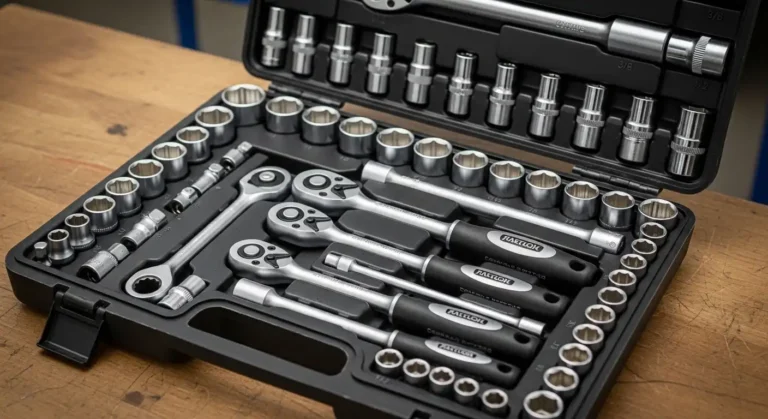
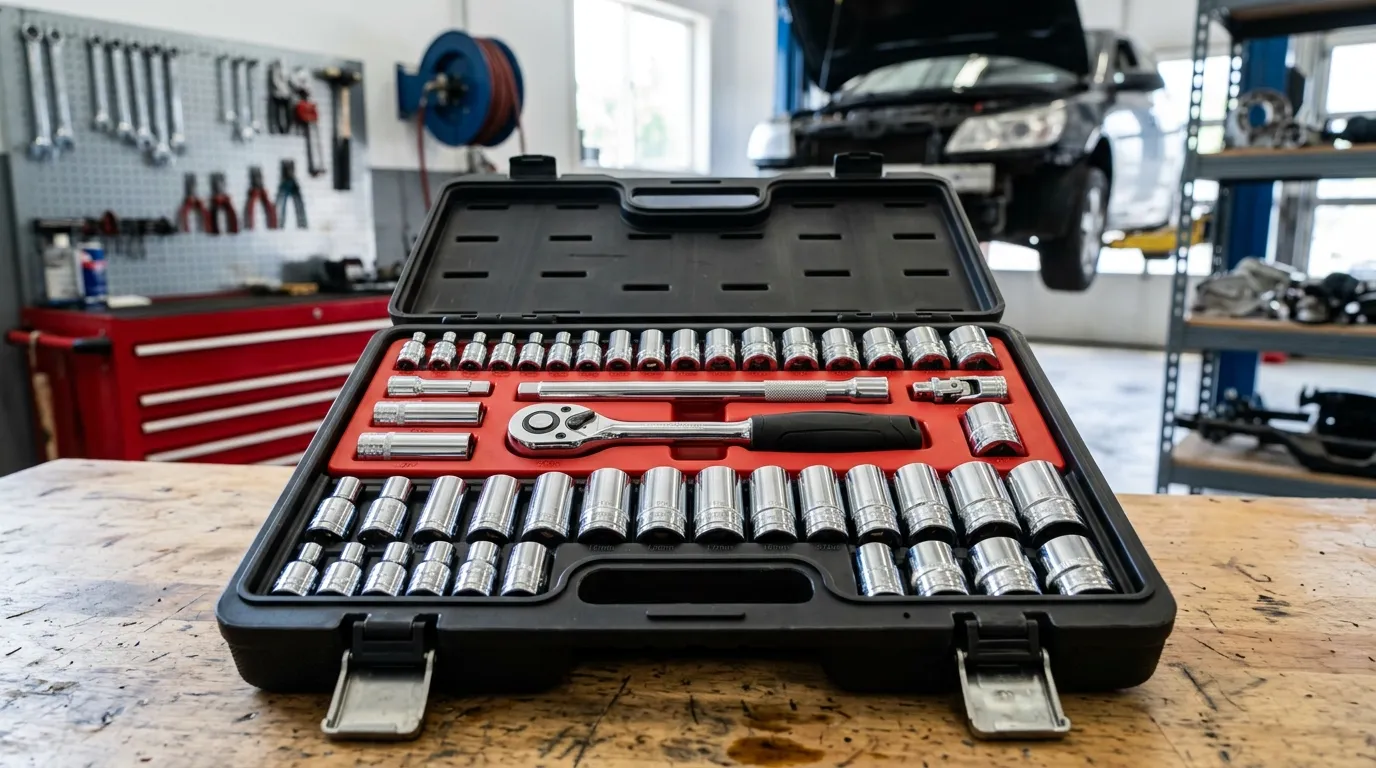
A socket set is a toolkit of sockets and drivers for nuts and bolts.
If you have ever wondered what is socket set and why it matters, you are in the right place. I have spent years fixing cars, bikes, and home gear, and I reach for a socket set on almost every job. In this guide, I will explain what is socket set, when to use it, and how to choose the best one for your needs. The goal is simple: give you clear, expert advice you can use today.
What Is a Socket Set?
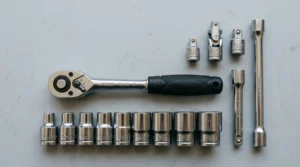
A socket set is a matched kit of sockets and tools that tighten or loosen fasteners. The sockets slip over a nut or bolt head. A ratchet turns the socket fast with little effort, even in tight spots.
If you are asking what is socket set from a user’s view, think speed and control. You get a range of sizes, plus add-ons like extensions, adapters, and special sockets. This mix lets you handle many jobs with one compact kit.
Many people type what is socket set when they start DIY or buy their first tool kit. The answer is not just “a box of sockets.” It is a system that helps you apply torque the right way. It protects fasteners and saves your hands and time.
Is a socket set the same as a wrench set?
No. A wrench set has fixed tools sized for each fastener. A socket set uses one handle and many sockets, so it is faster and fits tight spaces better.
Can one socket set cover cars and home repairs?
Yes, if it has both metric and SAE sizes, plus 1/4-inch and 3/8-inch drives. Look for deep and shallow sockets to cover more tasks.
Core Components and How They Work
A good socket set has a few key parts that work as a team.
- Ratchet handle turns sockets fast with a click. A lever changes direction for tighten or loosen.
- Sockets grip the fastener. Six-point sockets grip flats better. Twelve-point fit more angles in tight spaces.
- Extensions add reach. A wobble or universal joint helps around bends.
- Breaker bar adds leverage to free stuck bolts. Do not use your ratchet as a breaker bar.
- Adapters change drive size. For example, 3/8-inch ratchet to 1/4-inch socket.
- Bit sockets drive screws and specialty heads like Torx, hex, and E-Torx.
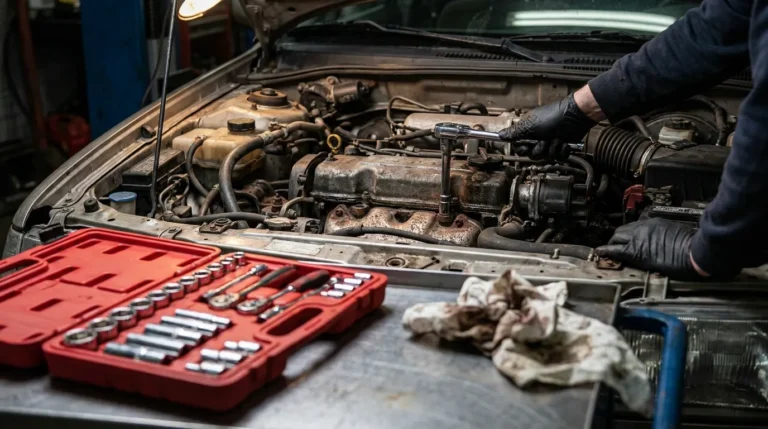
Here is where what is socket set turns into real power. You mix parts to match the job. On my last brake job, a 3/8-inch ratchet, a 6-inch extension, and a 6-point socket fit perfect and saved knuckles.

Source: powerbuilt.com
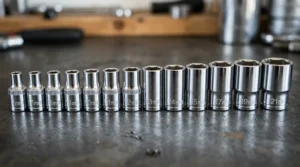
Sizes, Drives, and Types
Fasteners come in many sizes. Your socket set should match them.
- Measuring systems
- Metric uses millimeters, like 10 mm or 17 mm.
- SAE uses inches, like 3/8 inch or 1/2 inch.
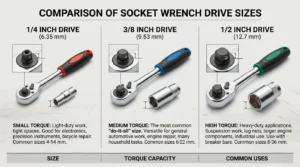
- Common drive sizes
- 1/4 inch for small work, electronics, and trim.
- 3/8 inch for general use on cars and home gear.
- 1/2 inch for larger bolts and higher torque.
- Socket depth
- Shallow for most tasks.
- Deep for tall nuts and bolts with long studs.
- Socket points
- Six-point grips flats and lowers risk of rounding.
- Twelve-point fits more angles and works fast in tight spots.
- Materials and finish
- Chrome vanadium sockets for hand tools. Smooth and rust resistant.
- Chrome moly sockets for impact tools. Stronger and made for hammering.
- Special types
- Spark plug sockets with rubber insert.
- Pass-through sockets for long studs.
- Spline, Torx, and hex sockets for special fasteners.
If you still think what is socket set in a buying sense, this is the core. Match drive size and socket style to the jobs you do most.
Do I need metric or SAE?
Most people need both. Cars and bikes often use metric. Older US gear and plumbing can use SAE.
Can I use impact sockets with a hand ratchet?
Yes. Impact sockets work fine with hand tools. Do not use chrome hand sockets on impact tools.
Real-World Uses and Examples
A socket set shows its value in daily tasks.
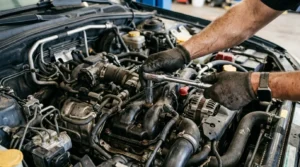
- Car work
- Battery clamps, alternators, brake calipers, spark plugs, and skid plates.
- Home and furniture
- Bed frames, flat-pack furniture, deck bolts, and lawn gear.
- Bikes and scooters
- Stems, axles, and brake mounts.
- Plumbing and appliances
- Pump housings, water heaters, and appliance mounts.
Here is a quick story. I once fought a stuck caliper bolt with a small ratchet. I switched to a 1/2-inch drive breaker bar and a six-point deep socket. The bolt broke free clean. That is the edge a smart socket set gives you.
Many folks who search what is socket set want to know if it replaces other tools. Often, yes. It can do more than a basic wrench set in less time.
How to Choose the Right Socket Set
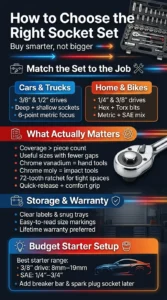
Pick a set that fits your work, not just a big piece count.
- Define your main jobs
- Cars and trucks need 3/8-inch and 1/2-inch drives, deep and shallow, 6-point, metric focus.
- Home and bikes need 1/4-inch and 3/8-inch, hex and Torx bits, both metric and SAE.
- Check coverage, not just count
- Look for fewer gaps and more useful sizes. A well-curated 60-piece set can beat a messy 150-piece set.
- Material and rating
- Chrome vanadium for hand use. Chrome moly for impact use. Seek sets that meet common industry standards.
- Ratchet quality
- Fine-tooth ratchets (72-tooth or more) work better in tight spaces.
- A quick-release button and a comfort grip help speed and control.
- Case and organization
- Clear labels, snug trays, and size markings you can read.
- Warranty and support
- Lifetime replacement is common on quality sets.
If you ask what is socket set for someone on a budget, here is a plan. Start with a 3/8-inch drive set from 8 mm to 19 mm plus SAE from 1/4 inch to 3/4 inch. Add a breaker bar, a few deep sockets, and a spark plug socket later.
Will a 3/8-inch drive cover most jobs?
Yes. It is the best all-around drive. Add 1/4-inch for small work and 1/2-inch for high torque.
Is a big piece count always better?
No. Coverage and quality matter more. Many huge sets pad the count with bits you will not use.
A final note for searchers of what is socket set: plan for growth. Buy a solid core, then add pieces as you learn.
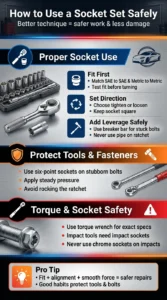
How to Use a Socket Set Safely and Well
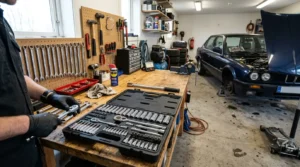
Good habits protect parts and tools.
- Fit first
- Match metric to metric and SAE to SAE. Check the fit by hand before you crank.
- Set direction
- Use the ratchet lever to choose tighten or loosen. Hold the socket square to the fastener.
- Add leverage the right way
- Use a breaker bar for stuck bolts. Never add a pipe to a ratchet handle.
- Protect fasteners
- Use six-point sockets on stubborn or soft bolts. Keep steady pressure and avoid rocking.
- Control torque
- Use a torque wrench for parts that need exact spec, like wheels or engine parts.
- Use the right socket type
- Do not use chrome hand sockets on impact tools. Use impact-rated sockets only.
If your goal is to understand what is socket set in action, this is it. Fit, align, and apply smooth force. Your bolts and tools will thank you.
Common Mistakes and How to Avoid Them
These errors can cost time and parts.
- Mixing sizes
- Do not force a metric socket on an SAE bolt or the other way around.
- Using the wrong point style
- A 12-point on a seized bolt can round it. Use a six-point for tough jobs.
- Abusing the ratchet
- A ratchet is not a breaker bar. Use the right tool for high torque.
- Poor storage
- Tossing sockets in a bin wastes time and loses sizes. Keep them in the case or on rails.
- Skipping lube and prep
- A drop of oil on the ratchet and a shot of penetrant on rusty threads can save you.
When people ask what is socket set, they often mean “how do I avoid damage?” The fix is simple: match size, use the right tool, and take your time.
Care, Storage, and Maintenance
A little care keeps your set ready.
- Clean after use
- Wipe sockets and ratchets. Remove grit that can wear teeth.
- Lube the ratchet
- A light oil keeps the pawl smooth. Do not overdo it.
- Prevent rust
- Keep tools dry. Add a silica pack in the case if you live in a humid area.
- Stay organized
- Return each socket to its slot. Mark missing sizes on a checklist.
- Replace worn parts
- Swap rounded sockets and get rebuild kits for good ratchets.
If you value long life and ask what is socket set upkeep, this is the answer. Clean, lube, and store right, and your set can last a lifetime.
Frequently Asked Questions of what is socket set
What sizes should a beginner buy first?
Start with 1/4-inch and 3/8-inch drive sets. Cover metric 8–19 mm and SAE 1/4–3/4 inch to handle most tasks.
What is the difference between six-point and twelve-point sockets?
Six-point grips the flats and is best for high torque and stuck bolts. Twelve-point fits more angles and works faster in tight spaces.
Can I use a torque wrench like a ratchet?
Use a torque wrench only for final tightening to spec. Do not use it to break bolts loose or as a general ratchet.
Are impact sockets worth it if I do not own an impact wrench?
Yes, they are tough and safe on power tools later. But for hand-only use, chrome sockets are lighter and have a smooth finish.
How do I know if a socket set is good quality?
Look for clear size markings, tight fit, fine-tooth ratchets, and a solid case. A strong warranty and compliance with common tool standards are also good signs.
What is socket set best for home users on a budget?
Pick a mid-size 3/8-inch drive kit with deep and shallow sockets in both metric and SAE. Add a breaker bar and a few bit sockets as you grow.
Conclusion
A socket set is the backbone of fast, safe, and clean repair work. Now you know what is socket set, what to buy, and how to use it well. Start with a core set that fits your jobs, build skills with safe habits, and add pieces as your needs grow.
Try one small project this week. Swap a car battery clamp, tighten a loose chair, or service a bike. If this guide helped, share it, subscribe for more tips, or leave a comment with your next project.