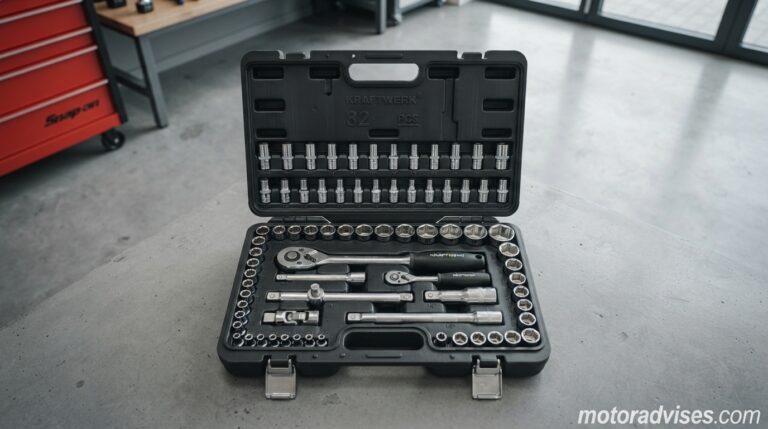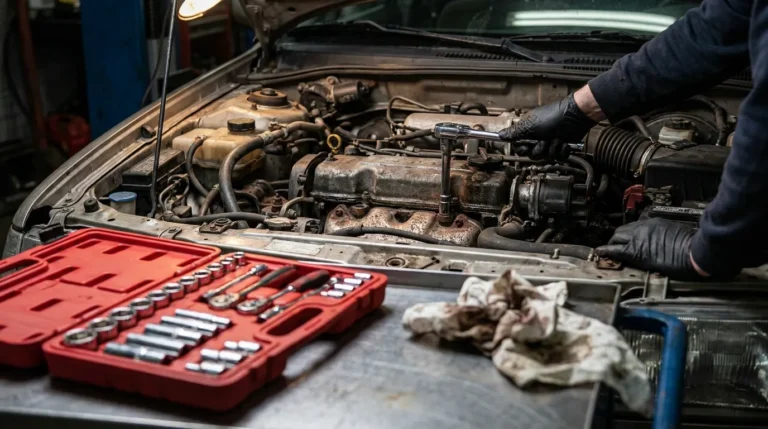
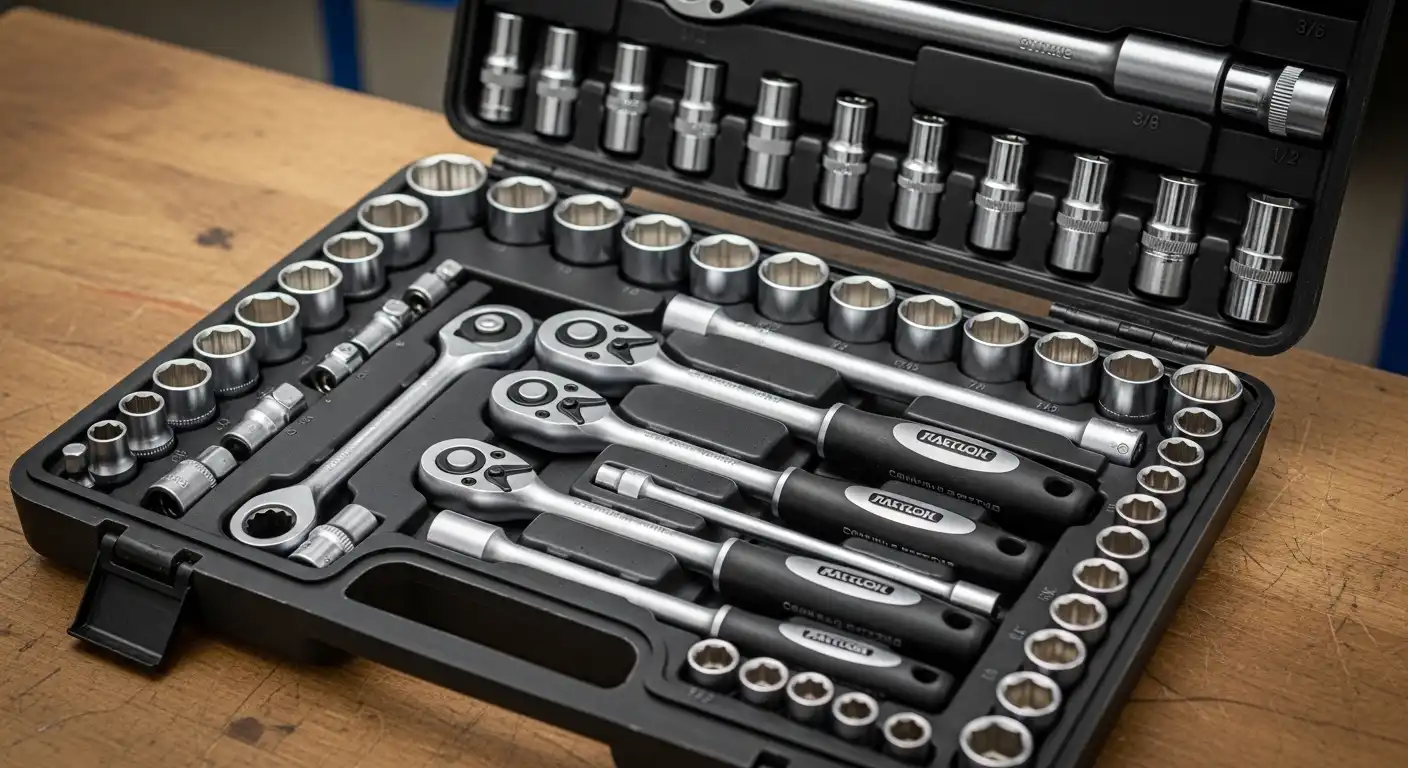
A good ratchet set combines tough sockets, smooth ratchets, and the right sizes.
If you have ever wondered what is a good ratchet set, you are in the right place. I have spent years turning fasteners on cars, bikes, furniture, and home projects. In this guide, I explain what is a good ratchet set from real hands-on use and trusted standards. You will learn what to buy, what to skip, and how to make it last. Read on for clear tips that save money and time.
The core answer: What makes a good ratchet set
If you ask what is a good ratchet set, start with the basics: fit, strength, and range. The ratchet should feel smooth with little play. The sockets should fit snug and mark sizes clearly. The set should cover common sizes, drive sizes, and include smart accessories.
Look for steel quality. Chrome vanadium is the norm for hand sockets and ratchets. Chrome molybdenum is best for impact sockets. A good ratchet meets or exceeds ASME or ISO standards for torque and hardness. Clear size markings, a sturdy case, and a strong warranty seal the deal.
In real work, a good set helps you hit tight spots and spin fasteners without slips. It should not round nuts. It should not make you fight the tool. That is what is a good ratchet set for busy DIYers and pros.
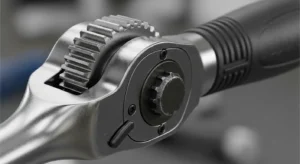
Ratchet mechanism, tooth count, and strength
The ratchet is the heart of the set. When people ask what is a good ratchet set, I point to the ratchet’s mechanism first. A higher tooth count, like 72, 84, or 90 teeth, gives a short swing arc. That helps in cramped spaces. The trade-off is tiny teeth can be weaker if the build is poor. Reputable makers design around this with strong pawls and heat treatment.
Key features to check:
- Low backdrag so the head turns fasteners without fighting you.
- Sealed or well-fitted head to keep out dirt.
- Quick-release button to drop sockets with one hand.
- Solid selector lever that will not flip under load.
Most quality ratchets meet ASME B107 standards for torque. If a brand states testing to ASME or ISO 1711-1, that boosts trust. Do not use a cheater bar on a fine-tooth ratchet. Use a breaker bar for stuck fasteners.
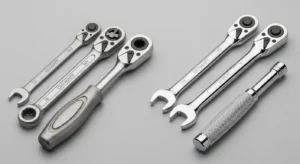
Sockets: fit, materials, and finishes
If you wonder what is a good ratchet set, the sockets tell the truth. Good sockets grip the flats, not the corners. Six-point sockets are best for high torque. Twelve-point sockets are handy in tight angles and for lighter loads. Deep and shallow sockets both have a place.
What to look for:
- Chrome vanadium for hand sockets with a smooth chrome finish.
- Chrome molybdenum for impact sockets with a black phosphate finish.
- Knurled or etched bands for finger grip.
- Large, readable size markings that do not fade.
Special sockets can be worth it. Thin-wall sockets help on alloy wheels. Spark plug sockets with rubber inserts protect plugs. Flank-drive style profiles reduce rounding. That is the level of detail in what is a good ratchet set that lasts.
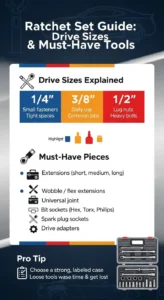
 Drive sizes and must-have pieces
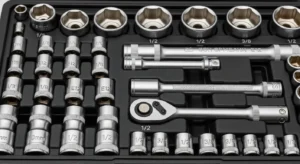
A clear way to answer what is a good ratchet set is by looking at coverage. A solid starter kit has three drives: 1/4 inch, 3/8 inch, and 1/2 inch. The 1/4 inch is for small fasteners and tight spaces. The 3/8 inch is your daily driver. The 1/2 inch handles lug nuts and heavy bolts.
Helpful pieces to include:
- Extensions in short, medium, and long lengths.
- Wobble or flex extensions for off-angle access.
- Universal joint for awkward angles.
- Bit sockets for hex, Torx, and Phillips.
- Spark plug sockets in common sizes.
- Adapters to step up or down between drives.
A smart case keeps each piece in place and labeled. It should close tight and survive drops. Loose sockets in a flimsy case waste time and parts.
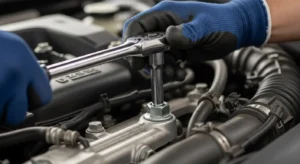
Ergonomics, storage, and usability
When folks ask what is a good ratchet set, they often skip comfort. Do not. Grip, balance, and head size matter in long jobs. A smooth chrome handle cleans fast. A contoured grip reduces strain. A compact head gets between hoses and brackets.
Practical touches I value:
- Quick-release ratchets save time when swapping sockets.
- Direction levers that click with clear feel.
- Locking extensions keep sockets from falling off in engine bays.
- Cases with clear size maps and spare slots.
Good tools let you focus on the job, not the tool. That is the quiet win you feel day to day.
Value, warranty, and brand tiers
Price matters, but the cheapest set often costs more in the end. If someone asks what is a good ratchet set on a budget, I say buy mid-tier with a real warranty. Many quality brands offer lifetime replacement on hand tools. That is a big trust sign.
General tiers:
- Entry: Fine for light home use. Expect fewer sizes and basic finish.
- Mid-tier: Best value for most people. Good tooth count, clear marks, solid case.
- Pro: Top materials, tight tolerances, and smooth action. Higher price, but daily-use ready.
Check parts support. Can you get a new ratchet under warranty without hassle. Do they sell spare parts. Look for sets tested to ASME or ISO standards. Those claims, paired with a strong warranty, point to what is a good ratchet set for long-term use.
How I test ratchet sets in real work
Friends often ask me what is a good ratchet set, and I test like this. I start with feel: backdrag, selector lever, and socket fit. I then run tasks I know well. Brake jobs, battery trays, under-dash panels, and spark plugs. I note any slips or skinned knuckles.
My quick tests:
- Fit test: Try sockets on fresh fasteners and worn ones.
- Torque check: Break loose lug nuts with the 1/2 inch ratchet, then switch to a breaker bar if needed.
- Speed test: Use the 1/4 inch drive on hose clamps and interior panels.
- Access test: Use wobble extensions on hard-to-reach bolts.
Mistakes to avoid:
- Using chrome sockets on impacts.
- Cheater bars on ratchets.
- Skipping lube and cleaning on the ratchet head.
These simple checks reveal what is a good ratchet set fast, without a lab.
Care, maintenance, and safety
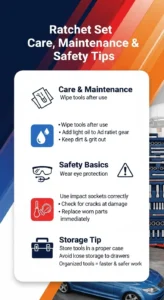
A clean ratchet lives longer. If you want what is a good ratchet set to stay good, care is simple. Wipe tools after use. Add a drop of light oil to the gear now and then. Keep grit out of the head.
- Wear eye protection with extensions and adapters.
- Use impact sockets on impact tools only.
- Inspect sockets for cracks or warping.
- Replace damaged parts at once.
Store the set in its case. Do not toss tools in a drawer. A tidy set is faster and safer.
Quick PAA-style answers
Is a 72-tooth ratchet strong enough?
Yes, from a reputable maker. Many 72-tooth ratchets meet ASME torque specs and balance strength with a short swing arc.
Do I need both six-point and twelve-point sockets?
If budget allows, yes. Six-point grips better under load, while twelve-point helps with tight angles and specialty fasteners.
Are wobble extensions worth it?
Absolutely. They save time in cramped spaces and reduce the need to remove extra parts. They are a small cost with a big payoff.
Frequently Asked Questions of what is a good ratchet set
What sizes should be in a starter set?
Look for 1/4 inch, 3/8 inch, and 1/2 inch drives. Include common metric and SAE sockets, both shallow and deep.
How many teeth should a ratchet have?
Seventy-two teeth is a good baseline for most work. Eighty-four or ninety teeth give a shorter swing arc but need quality build to stay strong.
What is the difference between chrome and impact sockets?
Chrome hand sockets are for hand tools and have a shiny finish. Impact sockets are thicker, made from chrome moly, and have a matte finish for power tools.
How do I know if sockets meet standards?
Check for claims that meet or exceed ASME or ISO standards. Reputable brands publish testing info and back it with a warranty.
Should I get a set with bit sockets?
Yes, if you work on modern cars, bikes, or furniture. Hex and Torx bit sockets cover many fasteners you see every day.
How much should I spend on a good set?
Expect to spend a fair amount for mid-tier quality. You get better fit, stronger ratchets, and a real warranty that saves money over time.
Can I mix brands in my toolbox?
Yes. Many pros mix brands to get the best ratchets, sockets, and accessories. Just keep sizes and drives organized.
Conclusion
When you break it down, what is a good ratchet set comes down to fit, strength, coverage, and support. Choose fine-tooth ratchets with low backdrag, six-point sockets with clear markings, and smart add-ons like wobble extensions. Add a strong warranty and standards testing, and you have a set that earns its spot.
Use these tips on your next buy. Handle a few sets, check the action, and compare coverage. When you are ready, pick the kit that matches your work and budget. Share your go-to picks or questions in the comments so we can all wrench smarter.