
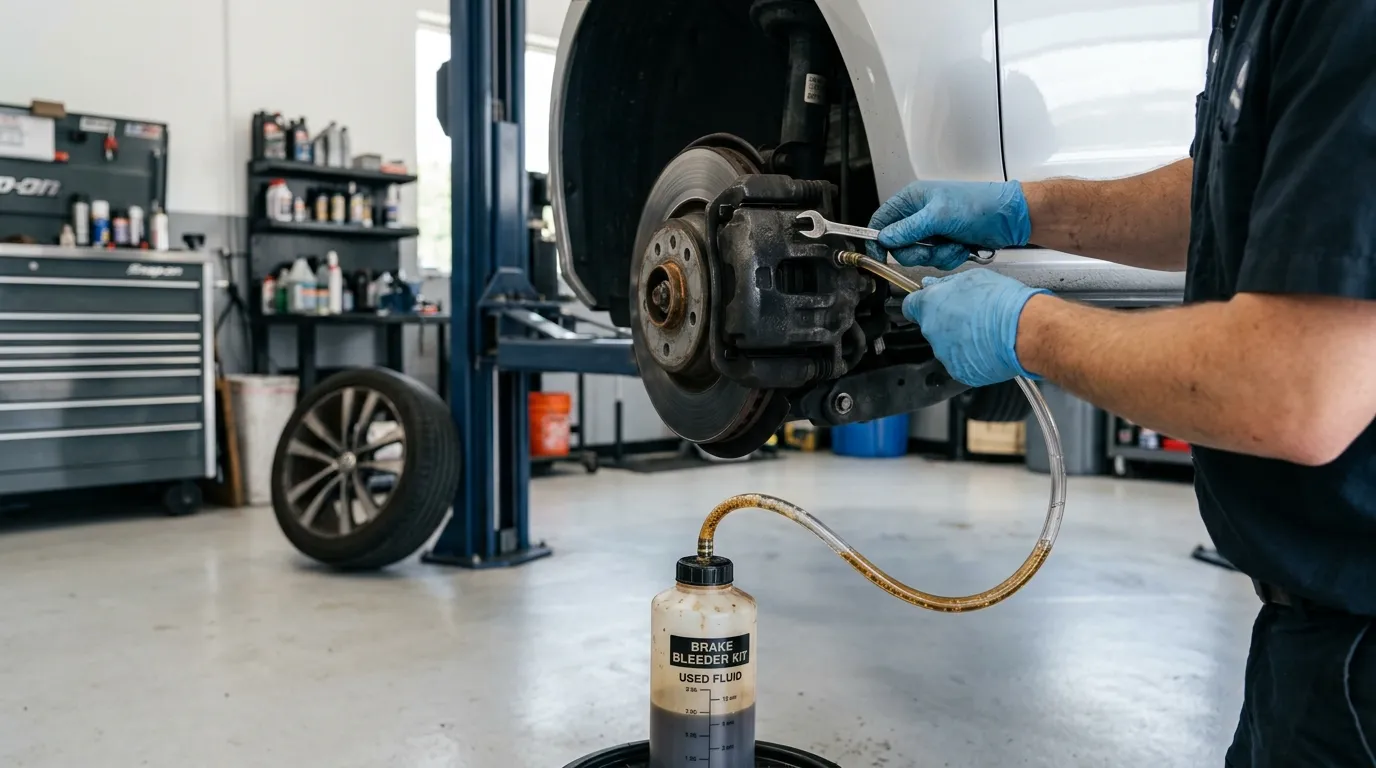
Air in the brake lines makes the pedal feel soft or spongy, because air compresses and brake fluid doesn’t. Old fluid also absorbs moisture over time, which lowers its boiling point and can corrode parts. Bleeding the brakes pushes the air and old fluid out through the bleeder screws at each wheel.
A brake bleeder kit makes that job easier, and often lets one person do it without a helper pumping the pedal. This guide explains the types and how to use them.
What you’ll learn
- Why brakes need bleeding
- One-person, vacuum and pressure bleeders
- Step-by-step bleeding
- Mistakes and safety
Quick answer
A brake bleeder kit is a set of tools for removing air and old fluid from the brake system through the bleeder screws. One-person kits use a hose and a check valve while you pump the pedal; vacuum bleeders pull fluid out with a hand or air pump; pressure bleeders push fluid in from the reservoir. Use the brake fluid type on your reservoir cap, never let the reservoir run dry, follow your car’s bleeding sequence, and test the pedal before driving.
Brakes are safety-critical
If the pedal is still soft after bleeding, or sinks to the floor, don’t drive the car. Some cars with ABS need a scan tool procedure to bleed the ABS unit; check the service information.
In this article
Why brakes need bleeding
- After replacing calipers, hoses, lines or the master cylinder, or after the reservoir has run low.
- When the pedal feels spongy or soft. See soft brake pedal causes.
- As routine maintenance: many carmakers call for a brake fluid change every 2 to 3 years, because the fluid absorbs moisture. A brake fluid tester can show when it’s due.
Types of brake bleeder kits

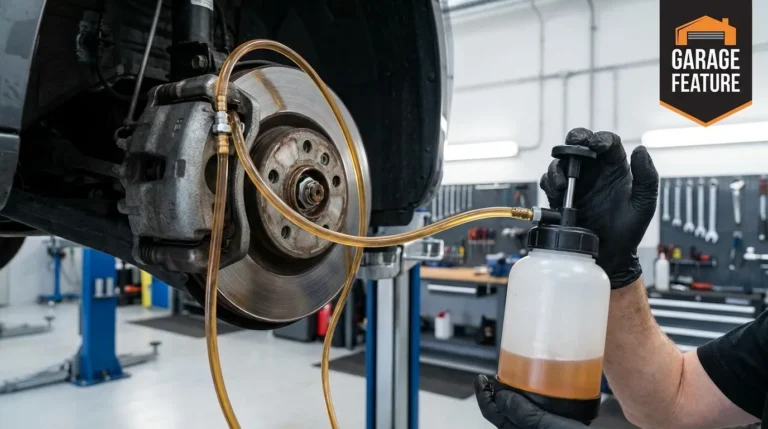
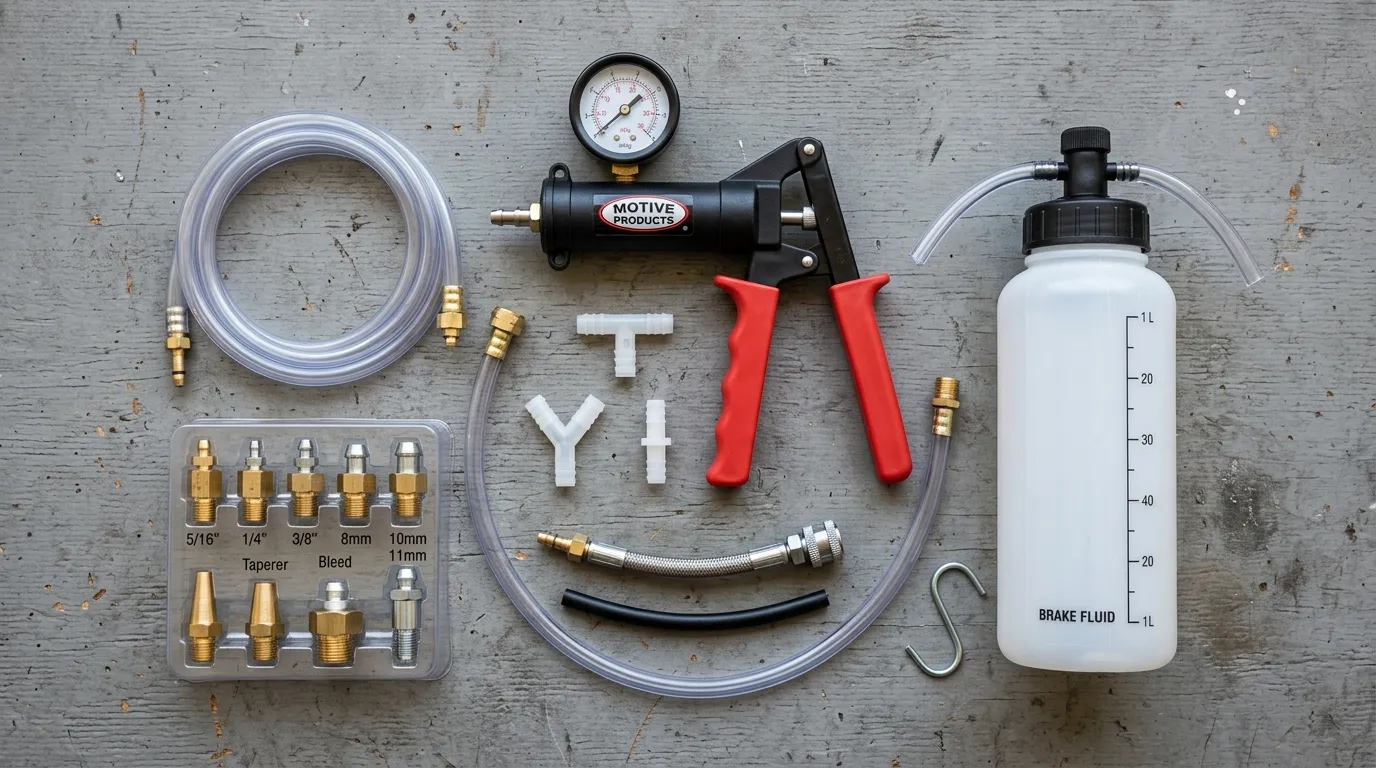
- One-person (check-valve) kits: a hose with a one-way valve and a catch bottle. You open the bleeder and pump the pedal; the valve stops air going back in. Cheapest and simplest.
- Vacuum bleeders: a hand pump or compressed-air pump creates vacuum at the bleeder to pull fluid through. Good for one person, but air can be drawn in around the bleeder threads, so you may see bubbles that aren’t in the brakes.
- Pressure bleeders: a pressurized tank connects to the master cylinder reservoir with an adapter and pushes fluid through the system. Quick and consistent, but you need the right adapter for your car.
- Two-person method: no kit; one person pumps and holds the pedal while the other opens and closes the bleeder.
How to bleed brakes with a kit
- Check the fluid type on the reservoir cap (for example DOT 3 or DOT 4) and buy fresh, sealed fluid. See DOT 3 vs DOT 4 brake fluid.
- Raise the car safely on jack stands and remove the wheels if needed.
- Find the bleeding sequence in the service information. Many cars start at the wheel farthest from the master cylinder, but some differ.
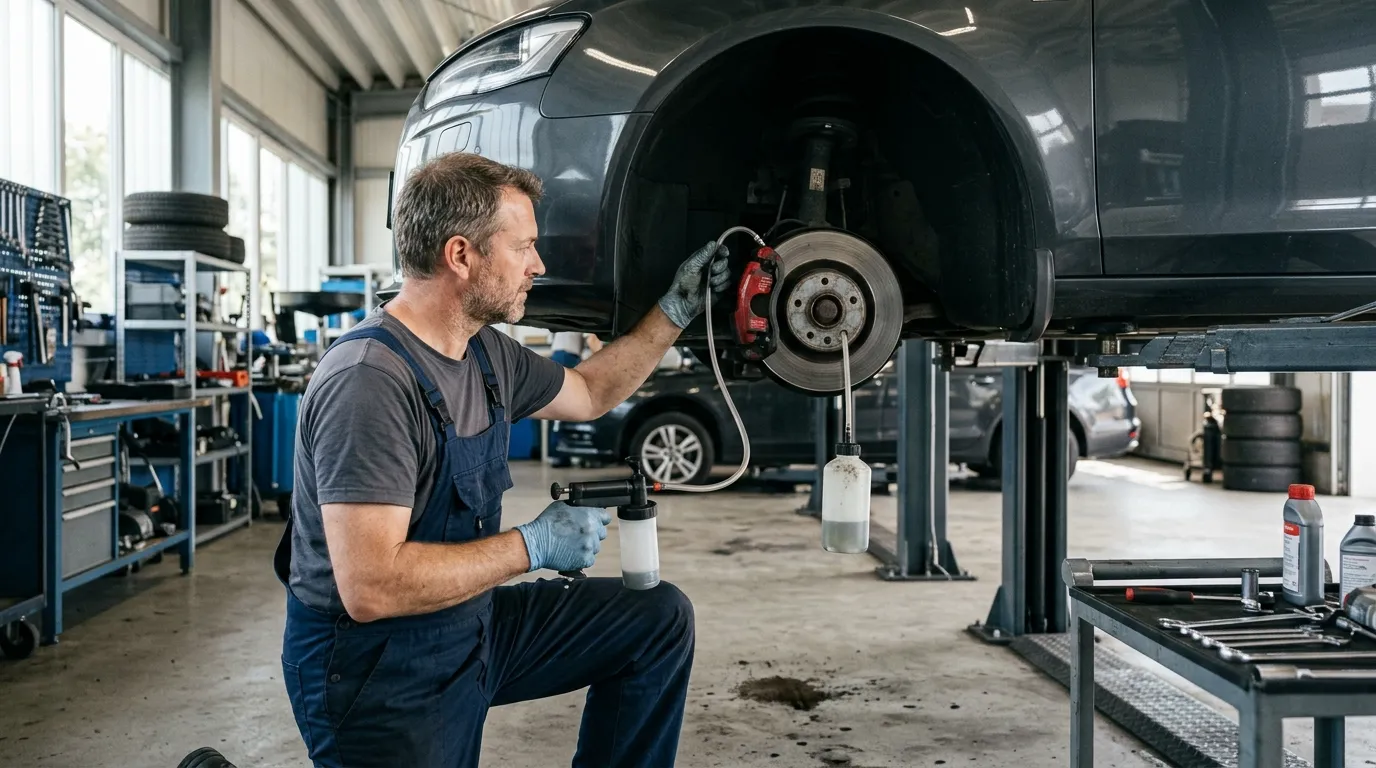
- Fit a box wrench on the bleeder screw, then push the clear hose onto it, leading to the catch bottle.
- Open the bleeder and bleed with your kit until the fluid runs clear and free of bubbles, then close the bleeder.
- Keep the reservoir topped up throughout; if it runs dry, air enters the system and you have to start again.
- Repeat at each wheel in order, tighten the bleeder screws snugly, and top the reservoir to the MAX line.
- Pump the pedal with the engine off: it should be firm and high. Test the brakes at low speed before normal driving.
Mistakes and safety
- Mixing fluid types. DOT 3, 4 and 5.1 are glycol-based and compatible, but DOT 5 is silicone and must not be mixed with them.
- Reusing old fluid from the catch bottle.
- Letting the reservoir run dry.
- Spilling fluid on paint: brake fluid damages it, so wipe spills immediately with water.
- Overtightening and snapping bleeder screws. Use penetrating oil on rusty ones.
- Disposing of old fluid down a drain. Take it to an auto parts store or recycling center.
If the fluid level drops without a repair, look for leaks; see signs of low brake fluid.
Tools that help
A low-cost vacuum kit for one-person bleeding, and a pressure bleeder for faster, more consistent results.
How we chose: we picked these using the details each maker lists on Amazon (checked in November 2026). We have not tested them ourselves.
1. OMT One-Man Brake Bleeding Kit with Hand Vacuum Pump

An aluminum hand vacuum pump with a dial gauge, silicone tubes and adapters. Orion Motor Tech says it also works on other hydraulic systems and for vacuum testing.
Why it’s a good pick
- One person can bleed alone
- Low price
- Also a vacuum tester
Keep in mind
- Air can enter around bleeder threads
- Pumping takes effort
2. Motive Products 0100 European Power Bleeder

A 2-quart pressure tank that pushes fluid into the master cylinder through a 45 mm threaded adapter that fits most European cars. Other adapters for US and Asian cars are sold separately.
Why it’s a good pick
- Fast, consistent one-person bleeding
- Rust-proof tank
- Popular with enthusiasts
Keep in mind
- Needs the right adapter for your car
- Costs more than vacuum kits
Frequently asked questions
Sources
- Product details from manufacturer listings on Amazon, checked November 2026
- Brake bleeding (Wikipedia)
- Brake fluid (Wikipedia)