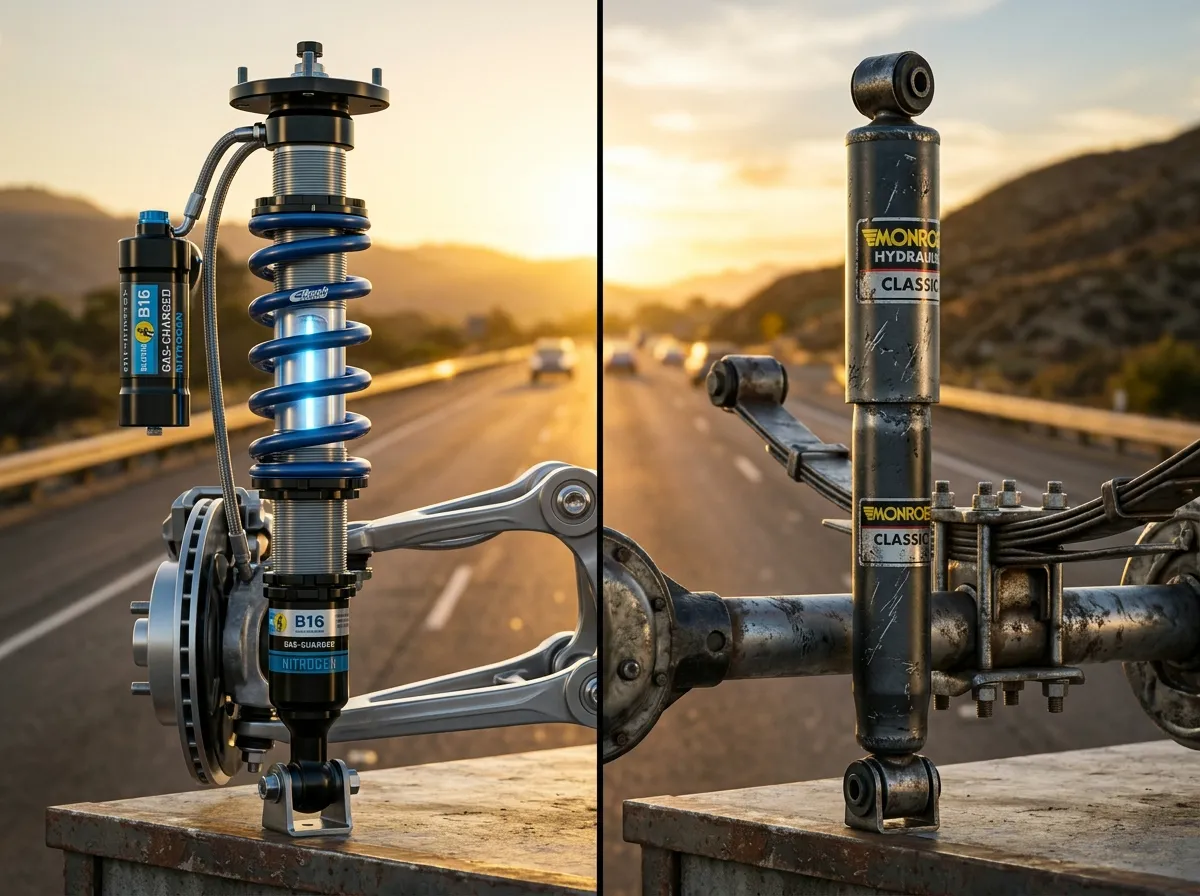
Gas charged shock absorbers offer firmer control and faster response; hydraulic shocks feel smoother and simpler to maintain.
I’ve spent years working on cars and testing suspension parts. In this article I break down gas charged shock absorbers vs hydraulic systems with clear facts, easy examples, and hands-on tips. You will learn how each type works, where each shines, real-world pros and cons, and how to choose the right shock for your ride. Read on for a practical guide based on experience and industry knowledge.
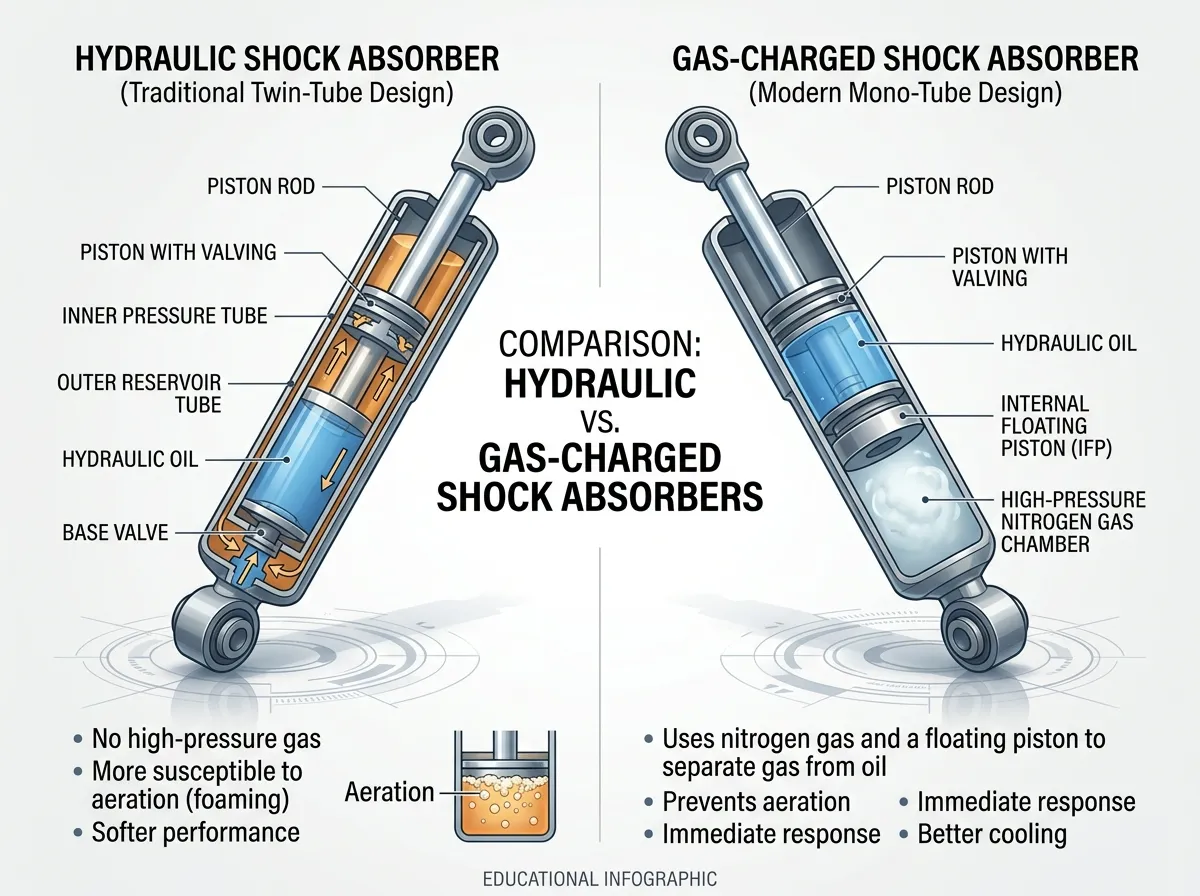
What are gas charged shock absorbers and hydraulic shock absorbers?
Gas charged shock absorbers use compressed nitrogen gas alongside hydraulic oil. The gas keeps the oil from foaming. This reduces fade and keeps damping more consistent under heavy use.
Hydraulic shock absorbers use only hydraulic fluid and a piston to slow suspension movement. They are simple and reliable. They can be softer and more comfortable on everyday roads.
Both styles aim to control spring motion. The debate often comes down to comfort versus control. Many drivers ask about gas charged shock absorbers vs hydraulic performance when upgrading their suspension.
How each type works: simple mechanics
Gas charged shock absorbers
- Have a sealed chamber with nitrogen gas and oil.
- Use a floating piston or pressurized chamber to keep oil under pressure.
- Reduce cavitation and oil aeration during rapid motion.
Hydraulic shock absorbers
- Rely on oil moving through valves and piston ports.
- Slow motion by forcing fluid through narrow passages.
- Can heat up and aerate under heavy, repeated use.
Understanding the basic function helps when you shop for shocks. Knowing the differences makes it easier to match shocks to your driving style and vehicle needs.
Performance comparison: comfort, control, and heat
Ride comfort
- Hydraulic shocks often give a softer, cushioned ride on smooth roads.
- Gas charged shock absorbers feel firmer and more controlled over bumps.
Handling and control
- Gas charged shock absorbers usually improve steering response and reduce body roll.
- Hydraulic shocks can feel less precise but may be preferred for casual daily driving.
Heat and fade resistance
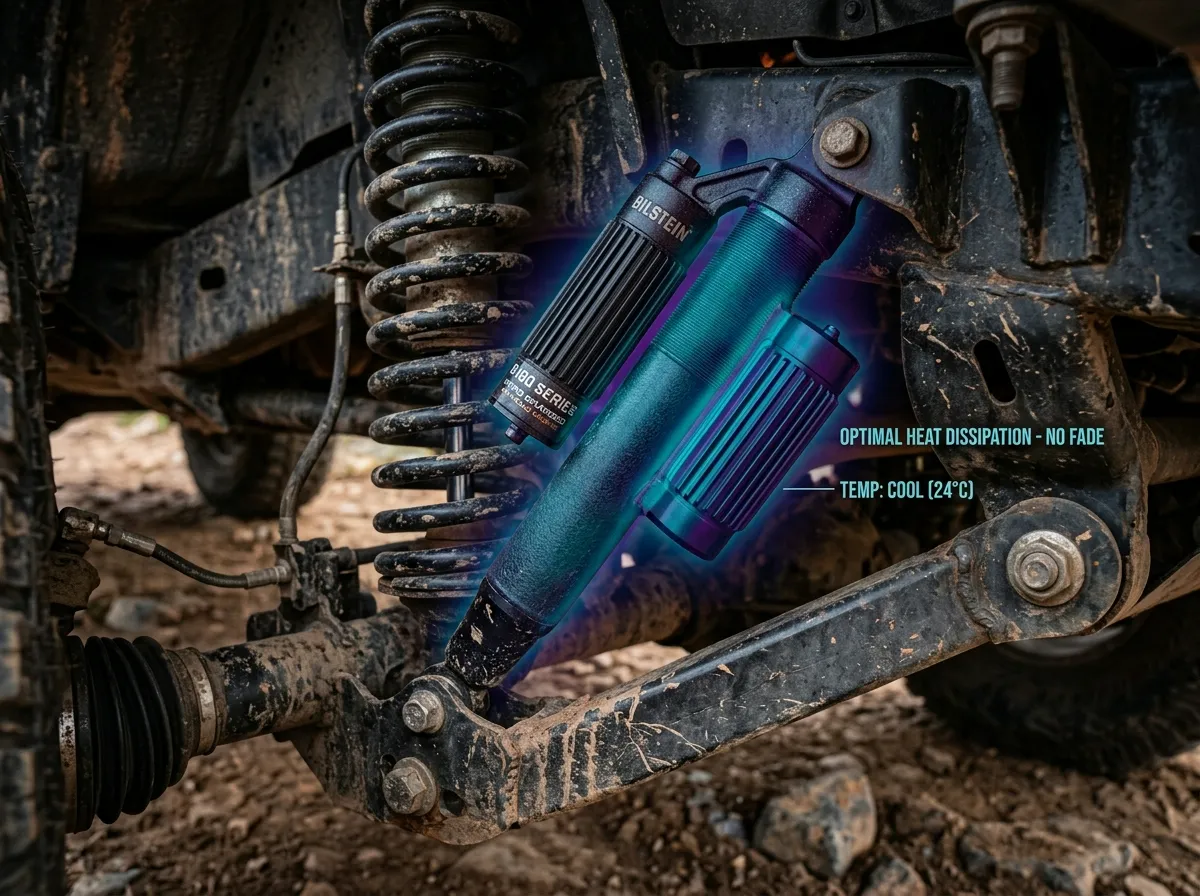
- Gas charged designs resist fade better during long, heavy use because oil stays de-aerated.
- Hydraulic shocks can suffer from foaming and reduced damping if they overheat.
If you tow, track, or carry heavy loads, gas charged shock absorbers vs hydraulic is a key choice. For calm daily commutes, conventional hydraulic shocks often work well.

Durability, maintenance, and failure signs
Durability
- Both types last years when matched to vehicle use.
- Heavy-duty gas charged shock absorbers often have stronger mounts and seals.
Maintenance tips
- Check for leaks, strange noises, or oil on the body of the shock.
- Replace in pairs front or rear for balanced handling.
Failure signs
- Excessive bounce, nose dive under braking, and uneven tire wear signal worn shocks.
- Heat-related fade or sudden loss of damping points to internal wear or aeration.
From hands-on work, I learned that simple checks catch most issues early. Regular visual checks save money and prevent risky handling surprises.

Cost, availability, and real-world applications
Cost and budget
- Hydraulic shocks are usually cheaper up front.
- Gas charged shock absorbers cost more but can save money if they reduce wear on other parts.
Common uses
- Daily drivers and light city use: hydraulic shocks are common and cost-effective.
- Sporty cars, trucks, and SUVs with heavy loads: gas charged shock absorbers often perform better.
Availability
- Both types are widely available in OEM and aftermarket lines.
- Many manufacturers offer gas charged versions as performance or heavy-duty options.
When weighing price, factor in driving style, climate, and load. I’ve swapped out cheap shocks twice when a one-time upgrade to gas charged shock absorbers vs hydraulic paid off.

Choosing the right shock: a practical checklist
Decide based on how you use the vehicle
- If you tow or drive spiritedly, favor gas charged shock absorbers.
- If you mainly commute on smooth roads, hydraulic shocks are fine.
Match shock valving and travel to your springs
- Pair shocks to spring rate and ride height for best performance.
- Don’t mix old springs with new high-performance shocks without testing.
Consider warranties and brand support
- Look for good warranty terms and easy returns.
- Check that replacement parts are available.
Simple test tip
- Push down on a corner of the car and watch rebound. Slow, controlled rebound indicates healthy damping. If it bounces two or more times, inspect the shocks.

Personal experience: lessons, mistakes, and tips
From my garage work, a few clear lessons stand out. One time I installed economy hydraulic shocks on a loaded van. They overheated on long hauls. The ride became floaty and steering felt loose. Upgrading to gas charged shock absorbers solved the problem and improved safety.
Tips I use
- Replace shocks in pairs to keep balance.
- Prefer gas charged shock absorbers if you tow, carry cargo, or drive hills often.
- Use OEM mounts and bushings when you upgrade to avoid extra noise or wear.
These tips come from hands-on fixes and years of road testing. Small choices in shocks change how a car feels and how safe it is.

Installation, testing, and care
Installation basics
- Support the vehicle safely on stands before removing wheels.
- Follow torque specs for mounts and fasteners.
Break-in and testing
- Drive gently for the first 100 miles to let seals seat.
- Test braking, acceleration, and cornering for changes in handling.
Care routine
- Inspect after off-road or hard use.
- Clean mounts and check for rust on older cars.
If you are not comfortable installing shocks yourself, use a trusted mechanic. Proper installation protects you and extends shock life.
Environmental and safety considerations
Environmental impact
- Shock absorbers contain oil that must be disposed of properly.
- Recycle old units at a certified facility to avoid spills.
Safety
- Worn shocks increase braking distances and reduce steering control.
- Upgrading to appropriate gas charged shock absorbers vs hydraulic units can improve safety under load.
Be aware of local disposal rules. A small repair can help the planet and protect drivers.
Common myths and clarifications
Myth: Gas charged shocks are always stiff and ride harsh.
- Clarification: Some gas charged shock absorbers are tuned for comfort. The gas prevents fade; valving sets ride feel.
Myth: Hydraulic shocks are obsolete.
- Clarification: Hydraulic shocks are still common and work well for many drivers.
Myth: More expensive always means better.
- Clarification: Proper fit and valving matter more than price alone. Choose based on use, not just cost.
Myth busting helps you make better choices. Ask for a test drive before committing to a new shock type.
Frequently Asked Questions of gas charged shock absorbers vs hydraulic
What are the main benefits of gas charged shock absorbers?
Gas charged shock absorbers resist oil foaming and fade. They give firmer control and better performance under heavy use.
Are hydraulic shocks better for daily driving?
Hydraulic shocks are often softer and more comfortable for normal city and highway driving. They are also typically less costly.
How long do gas charged shock absorbers last?
With normal use, they can last many years, often similar to hydraulic shocks. Heavy use, towing, or off-road work can shorten life.
Can I install gas charged shock absorbers myself?
Basic installation is possible with tools and experience. If you lack tools or knowledge, have a qualified mechanic do it.
Do gas charged shock absorbers reduce maintenance on other parts?
They can reduce stress on springs and mounts by keeping damping consistent under load. This may lower some wear but does not remove the need for routine checks.
Conclusion
You now have a clear, practical view of gas charged shock absorbers vs hydraulic shock absorbers. Gas charged options shine under heavy use, towing, and sport driving. Hydraulic shocks remain a solid, cost-effective choice for daily commuting and comfort. Use the checklist here to match shocks to your needs, inspect components often, and replace in balanced pairs for safe handling. Try a careful test drive after any change and choose the option that fits your driving style and budget. If this helped, leave a comment, subscribe for more hands-on guides, or share your own shock upgrade story.