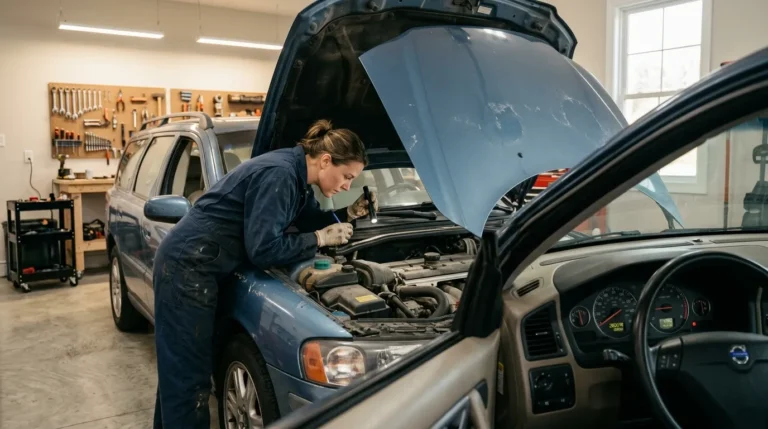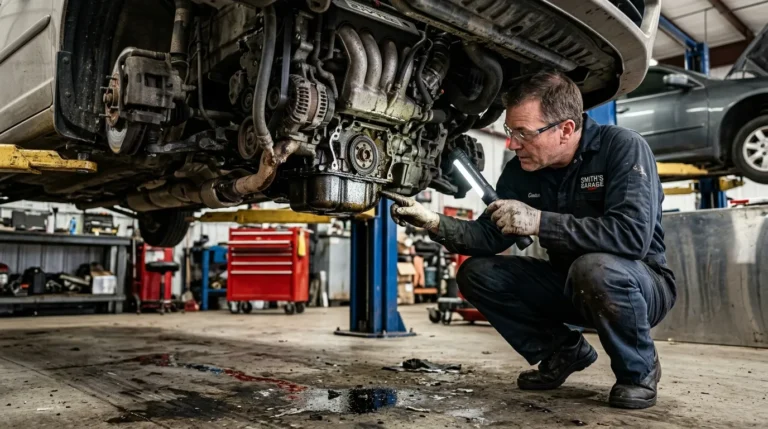
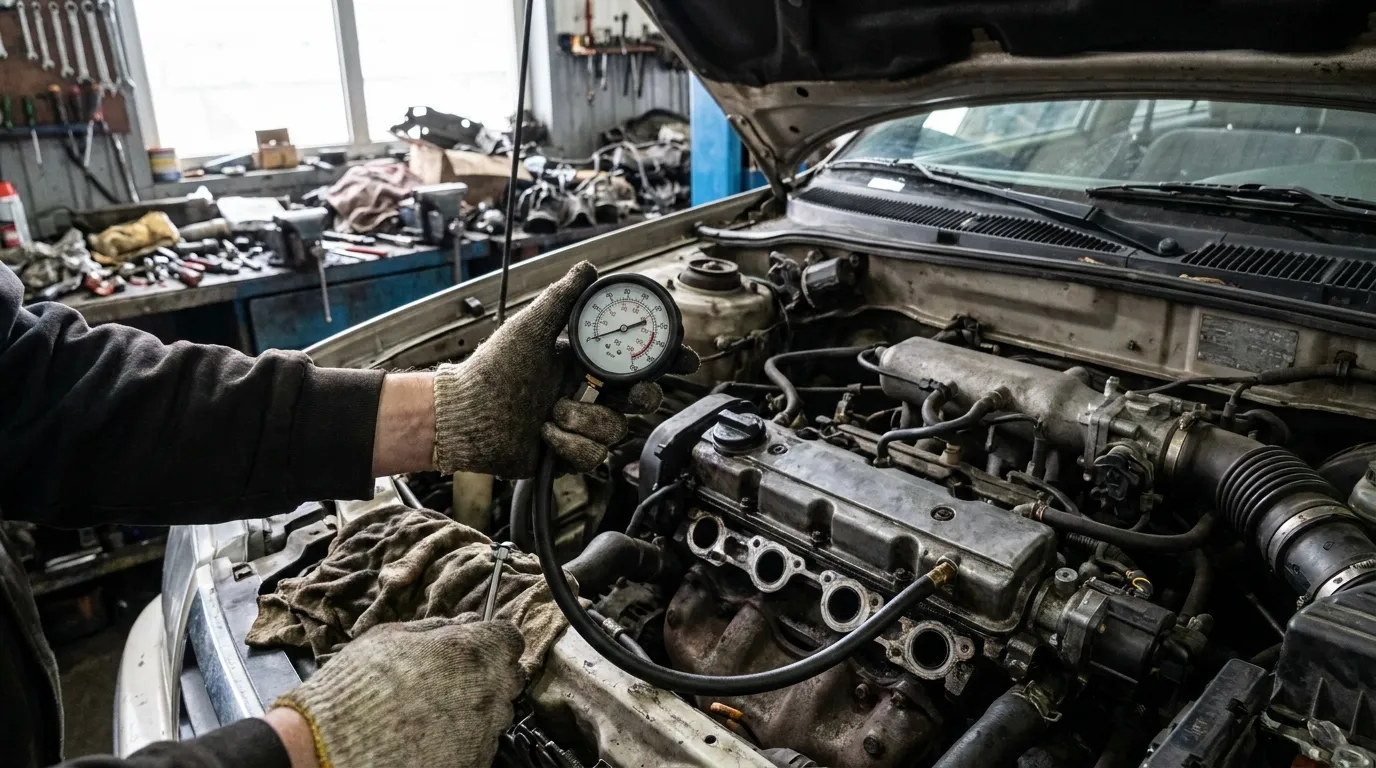
It checks cylinder sealing and pressure to find wear, leaks, and timing faults.
If you’ve ever chased a rough idle, a hard start, or low power, you know guesswork is costly. In this guide, I break down the purpose of compression test on engine with simple steps, real numbers, and shop tips from years under the hood. You’ll learn what the readings mean, when to test, and how to use results to fix problems fast.
What a Compression Test Is and Why It Matters
A compression test measures peak pressure in each cylinder while the engine cranks. It checks how well air seals in the chamber as the piston rises. Good pressure means rings, valves, and head gasket are doing their job. Low or uneven pressure points to leaks or wear.
The core purpose of compression test on engine is to reveal the health of your cylinders. It turns vague symptoms into clear data. That is why pros use it for misfires, loss of power, or pre-purchase checks.
Key ideas you should know:
- Compression pressure builds from sealed air and proper valve timing.
- Consistency across cylinders often matters more than the exact number.
- The test is quick, low-cost, and tells you where to look next.
The Purpose of Compression Test on Engine, Explained
Here is what the test helps you do:
- Confirm the source of a misfire or shake at idle.
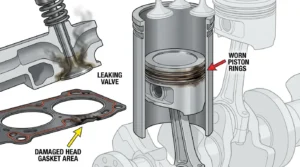
- Spot early wear of piston rings and cylinder walls.
- Find bent or burned valves after a timing event or backfire.
- Catch a blown head gasket between cylinders or into a coolant passage.
- Avoid wasted money on sensors or fuel parts that are not at fault.
In short, the purpose of compression test on engine is to diagnose the base of power. If the foundation is weak, no tune-up can fix it.
When You Should Run a Compression Test
Run the test when you see:
- Hard starting, low power, or poor fuel economy.
- A steady misfire that does not move with coil or plug swaps.
- Oil use, blue smoke, or heavy blow-by from the oil cap.
- White smoke, rising coolant level, or sweet smell in the exhaust.
- A used car inspection before you buy.
I run it any time a code P030X appears and the swap test fails. The purpose of compression test on engine is to rule in or out a bad cylinder fast.
Quick answers to common searches:
Is a compression test worth it for used cars?
Yes. It gives a fast health check on rings, valves, and head gasket, and can save you from a bad buy.
Do I test cold or hot?
Warm is best for real-world sealing, but cold is fine if the engine cannot start. Note the test state in your notes.
How often should I test?
Only when symptoms show, or after major work like timing chain service. Some shops add it to a high-mile tune-up.
Tools and Prep You Need
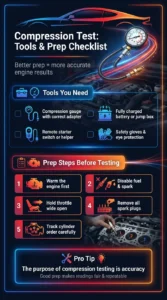
You need a few items:
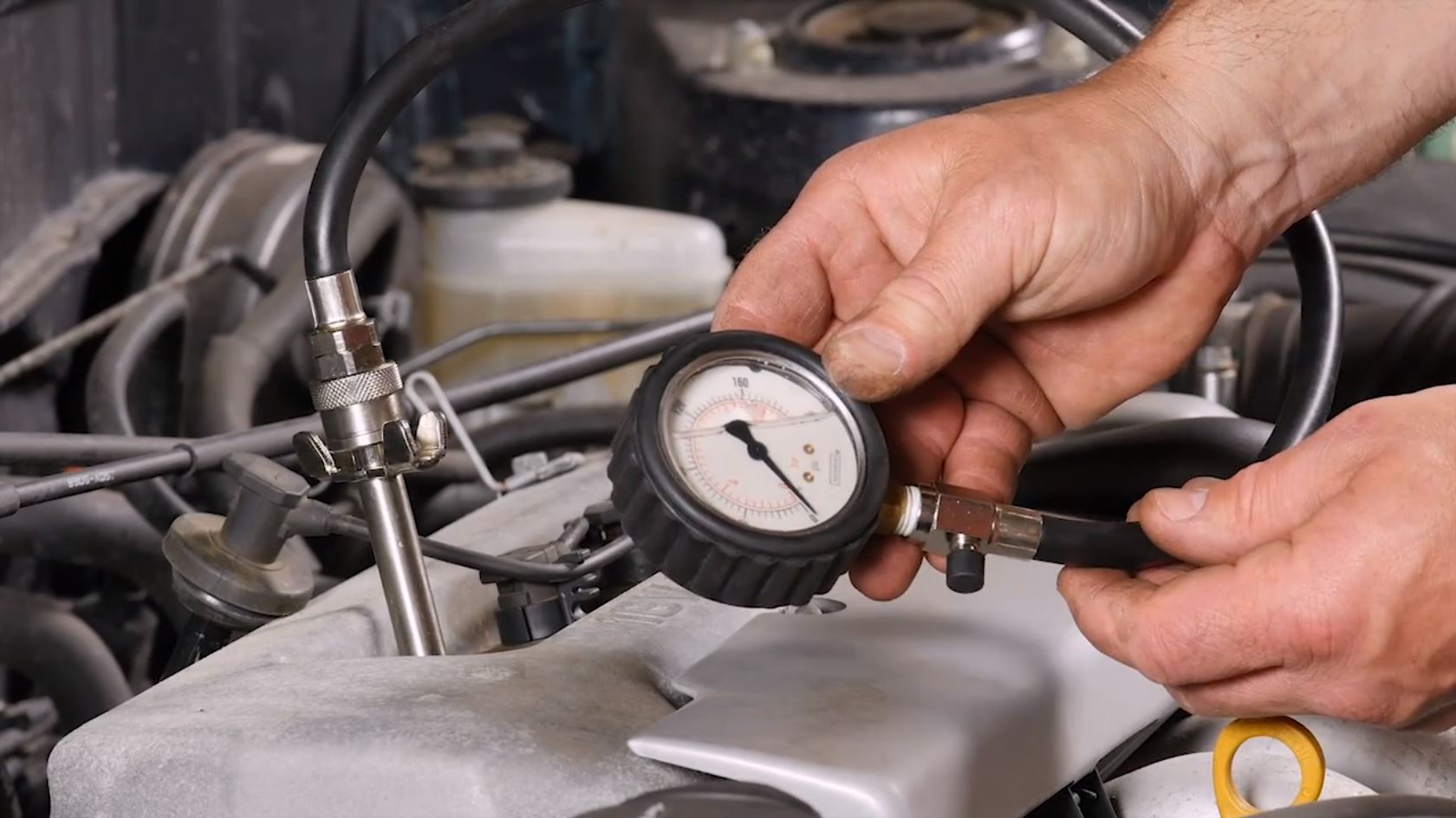
- A quality compression gauge with the right spark plug or glow plug adapter.
- A fully charged battery or jump box to keep cranking speed steady.
- A remote starter switch or a helper to crank.
- Safety gear for eyes and hands.
Prep steps:
- Warm the engine if it runs. Heat helps rings seal like normal.
- Disable fuel and spark. Pull EFI and coil fuses, or disable with a scan tool.
- Hold the throttle wide open to let in full air.
- Remove all spark plugs to cut drag and speed up cranking.
- Note cylinder order so records are clean.
Following prep well matters. The purpose of compression test on engine is accuracy. Good prep makes numbers fair and repeatable.
Step-by-Step: How to Do a Compression Test
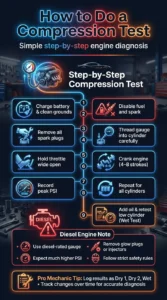
Use this simple process for a gas engine:
- Charge the battery. Clean grounds and clamps.
- Disable fuel and spark.
- Remove all spark plugs. Number them if needed.
- Thread the gauge into cylinder one by hand. Do not cross-thread.
- Hold the throttle wide open.
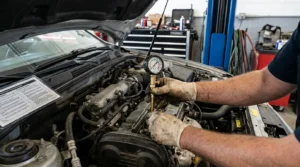
- Crank the engine for 4 to 8 compression strokes. Watch peak psi.
- Record the number. Repeat for each cylinder.
- If a cylinder is low, add a teaspoon of clean oil and retest it. This is the wet test.
For diesels, use a diesel-rated gauge and the correct adapter. Remove glow plugs or injectors as the maker says. Expect much higher psi. Follow safety rules. Cranking forces are large.
I like to log each test as Dry 1, Dry 2, Wet. Time stamps help if you share data with a shop. The purpose of compression test on engine is not just a number. It is a process you can track and repeat.
What Numbers Mean: Gas vs Diesel, Dry vs Wet
There is no one “perfect” number. It depends on the engine. These are general guides:
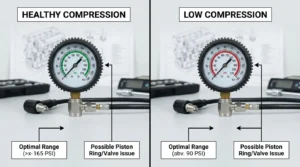
- Gas engines often read 140 to 200 psi when healthy.
- Diesel engines often read 350 to 450 psi or more when healthy.
- More important than the exact psi is balance. Keep cylinders within about 10% of each other.
Dry vs wet:
- If a low cylinder jumps up a lot after adding oil, ring seal is weak.
- If it does not change, think valve sealing or a head gasket issue.
- If two side-by-side cylinders are both low, a head gasket leak between them is likely.
Use your ear too. Smooth cranking suggests even compression. A fast-fast-slow rhythm hints at a dead hole. The purpose of compression test on engine is to show patterns, not just pass or fail.
Common Causes of Low or Uneven Compression
Low or uneven compression can come from:
- Worn piston rings or cylinder walls. Often worse on high-mile engines.
- Burned, bent, or tight valves. Tight valves can burn over time.
- Leaking head gasket. Often shows as two adjacent cylinders low.
- Cracked head or block. Can also push air into coolant.
- Wrong valve timing from a jumped chain or belt.
- Heavy carbon build-up. Can raise or lower readings and cause hot spots.
Clues I use in the bay:
- Oil in the plug tube and low psi suggests ring or wall wear.
- Coolant loss and milky oil point to a gasket or crack.
- Backfiring and low psi hint at valve timing or a bent valve.
- A single low cylinder with normal wet test may be a valve issue.

Benefits and Limitations You Should Know
Benefits:
- Fast, low-cost, and needs simple tools.
- Great first step for misfire and power loss.
- Helps you plan repairs or budget for a used car.
Limits:
- It is a cranking test, not a running load test.
- It may miss small leaks that open only when hot.
- Carbon can fake good numbers.
- It will not name the exact part. It shows the area to inspect.
The purpose of compression test on engine is to guide your next move. Often that next move is a leak-down test, borescope check, or timing check.
Related Tests That Complete the Picture
To go deeper, pair the test with:
- Cylinder leak-down test. Pressurized air shows where it leaks. Listen at intake, exhaust, crankcase, or radiator.
- Vacuum test. A steady needle means good sealing and timing.
- Relative compression with a scope or scan tool. Uses starter current or CKP data to show balance without pulling plugs.
- Borescope exam. See valves, cylinder walls, and piston tops.
- Cooling system pressure test. Checks for gasket leaks into coolant.
Using these together turns a hunch into proof. The purpose of compression test on engine fits into a full plan, not a one-off guess.
Real-World Lessons From the Shop
A few cases stand out:
- A four-cylinder with a hot misfire had 175, 172, 170, and 110 psi. Wet test raised the low hole to 160. Worn rings. The owner chose a used engine and saved weeks of part darts.
- A V6 came in with white smoke and two middle cylinders at 90 psi. Leak-down hissed into the coolant neck. Head gasket confirmed.
- After a timing chain jump, a sedan showed even but low psi across all holes. Cam timing was late. Reset timing and power came back.
Tips and mistakes to avoid:
- Do not skip wide open throttle. It will drag numbers down.
- Charge the battery. Low cranking speed lowers psi.
- Use the right adapter depth. Some heads are deep and need longer reach.
- Write readings down. Your memory will lie to you after the third cylinder.
- If results look odd, test again. The purpose of compression test on engine is repeatable data you can trust.
Troubleshooting Patterns and Decisions
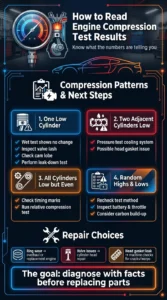
Use these patterns to choose your next step:
- One low cylinder, wet test no change. Inspect valve lash, cam lobe, and do a leak-down test.
- Two adjacent cylinders low. Pressure test cooling system and check for gasket issues.
- All cylinders low but even. Check timing marks and perform a relative compression test.
- Random highs and lows. Recheck your method, battery, and throttle. Then consider carbon build-up.
Repair choices:
- Ring or wall wear often means overhaul or a used engine.
- Valve issues can be fixed with head work.
- Head gasket leaks need machine checks for warps and cracks.
The purpose of compression test on engine is to set a clear path to fix, based on facts you can explain to a customer or a buyer.
Cost, Time, and Value for DIY and Pros
Time and tools:
- DIY time is about 45 to 90 minutes for a gas four-cylinder.
- Pros do it faster with shop tools and a helper.
- Diesel tests take longer and need special gear.
Value:
- One clean test can save hundreds on parts that will not help.
- It builds trust with customers and protects buyers from bad cars.
If you do only one base engine test, make it this one. The purpose of compression test on engine pays for itself many times over.
Frequently Asked Questions of purpose of compression test on engine
What is the ideal compression reading for my engine?
Most gas engines fall between 140 and 200 psi. Always check that cylinders are within about 10% of each other.
Can a compression test hurt my engine?
Not if done right. Disable fuel and spark, use the correct adapter, and avoid over-cranking.
Does a compression test show a blown head gasket?
It can suggest it, especially if two side-by-side cylinders are low. Confirm with a leak-down or cooling system pressure test.
Why are my numbers low on all cylinders?
Cranking speed may be low, the throttle may be closed, or cam timing may be off. Fix the method first, then recheck.
Is a wet compression test always accurate?
It is a guide, not proof. A big jump points to ring seal, but follow up with a leak-down test to be sure.
Can I do a compression test on a diesel?
Yes, but you need a diesel-rated gauge and the right adapter. Follow maker steps for glow plug or injector removal.
Will new spark plugs raise compression?
No. Plugs affect spark, not cylinder sealing. Compression only improves after fixing leaks or wear.
Conclusion
A compression test tells you if the engine can make power before fuel and spark join the party. Use it to confirm ring health, valve seal, head gasket integrity, and timing. Keep notes, compare cylinders, and pair the test with leak-down or a scope when needed.
If your car stumbles, starts hard, or drinks fuel, run the test first. The purpose of compression test on engine is simple: stop guessing and start fixing. Try it on your next diagnosis, share your results, and subscribe for more step-by-step guides.