
Quick answer
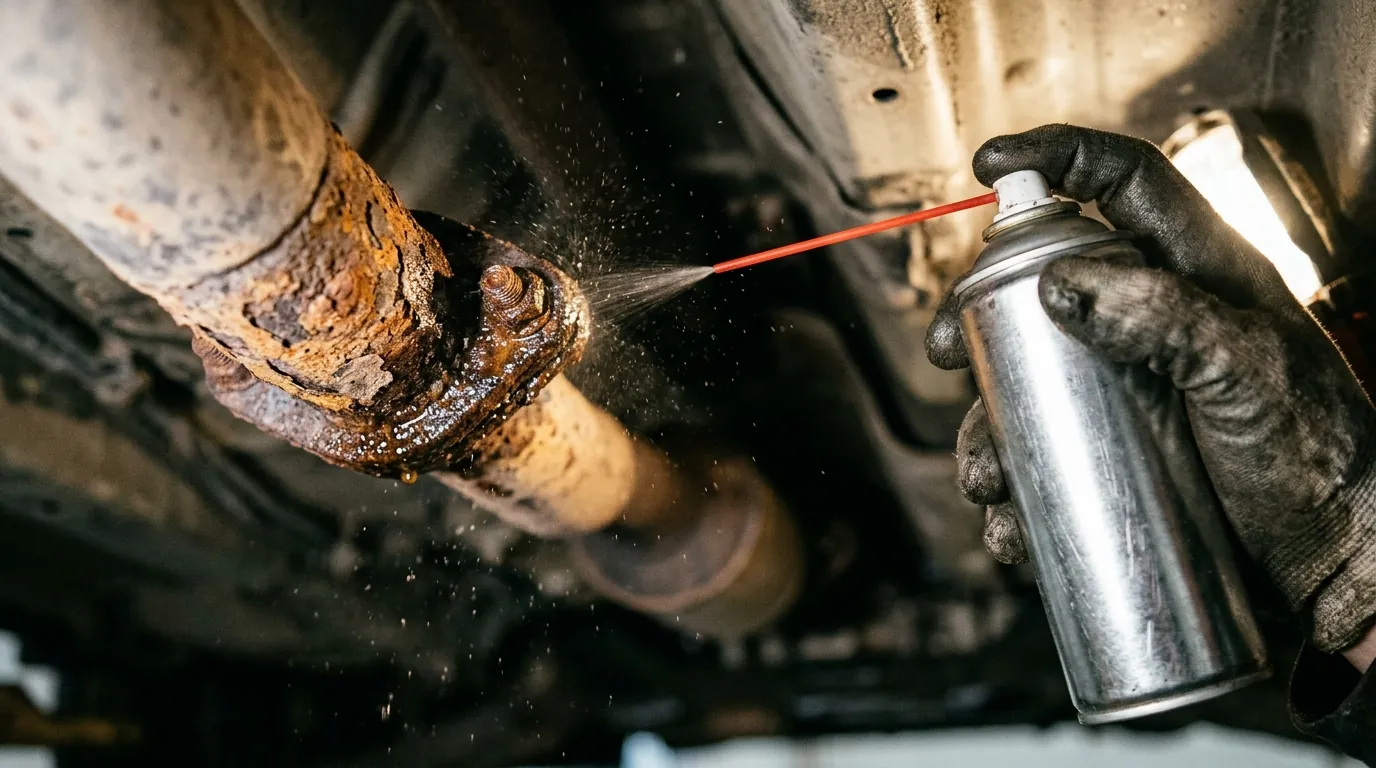
For a rusted or seized bolt, use a dedicated penetrating oil. Original WD-40 Multi-Use Product is mainly a water displacer and light lubricant. It has some penetrating ability, but WD-40 itself recommends its separate Specialist Penetrant for stuck parts. Keep the regular can for squeaks, light rust prevention and drying out wet parts.
In this guide
A seized lug nut, exhaust bolt or suspension fastener is one of the most common DIY roadblocks. Most garages have a blue-and-yellow can of WD-40 on the shelf, so it is the first thing people reach for. Sometimes it works. Often it doesn’t, and the reason is that it was never designed mainly as a penetrant.
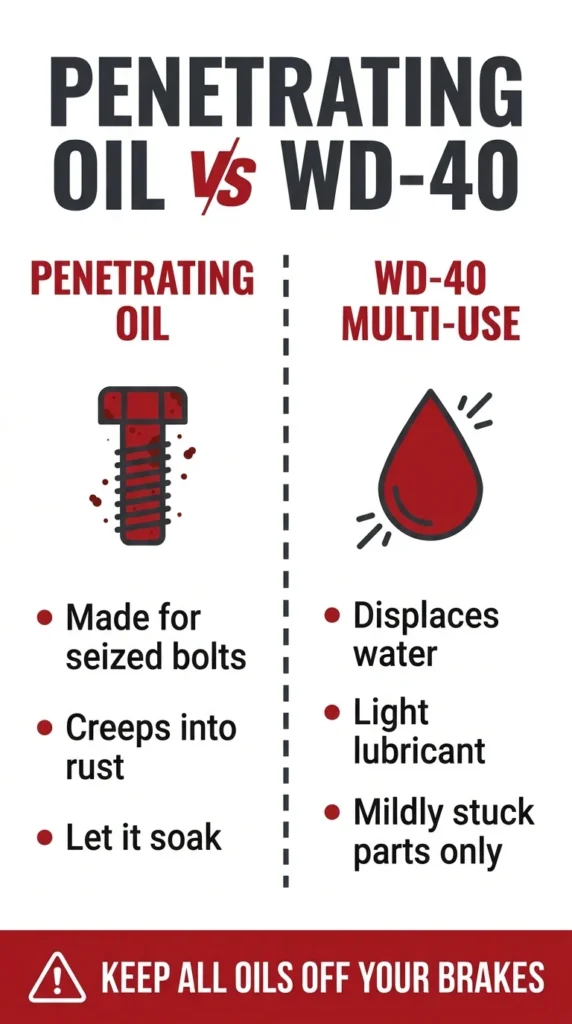
Penetrating oil vs WD-40 at a glance
| Point | Penetrating oil (PB Blaster, Kroil, WD-40 Specialist Penetrant) | WD-40 Multi-Use Product (the original can) |
|---|---|---|
| Main job | Creep into tight threads and rust to free seized parts | Displace water, light lubrication, loosen grime, light rust protection |
| How it works | Very thin, low surface-tension oil carried by solvents that wicks into gaps by capillary action | Mostly solvent with a light oil that remains after the solvent evaporates |
| On a seized, rusty bolt | The right tool; designed to soak in over time | Weak to modest; may free lightly stuck parts |
| Long-term lubrication | No; it is meant to loosen, not to lubricate for months | Light and short-lived |
| Water displacement | Some products do this too | Its original purpose |
| Typical car uses | Exhaust and O2 sensor bolts, rusted lug studs, suspension bolts, spark plug removal on old engines | Drying a wet distributor or connectors, squeaky hinges in the short term, cleaning tools |
Is WD-40 a penetrating oil?
Partly. The company describes WD-40 Multi-Use Product as a multi-purpose product, and it does have some ability to creep into tight spaces. For seized parts specifically, WD-40 sells a separate product, WD-40 Specialist Penetrant, and says it penetrates faster and farther than the original. The name WD-40 itself stands for “Water Displacement, 40th formula”, which reflects its original purpose.
So if the original can is all you have, it is worth a try on a lightly stuck part. On a bolt that has been rusting for years, a dedicated penetrant gives you a much better chance.
How to free a seized bolt with penetrating oil
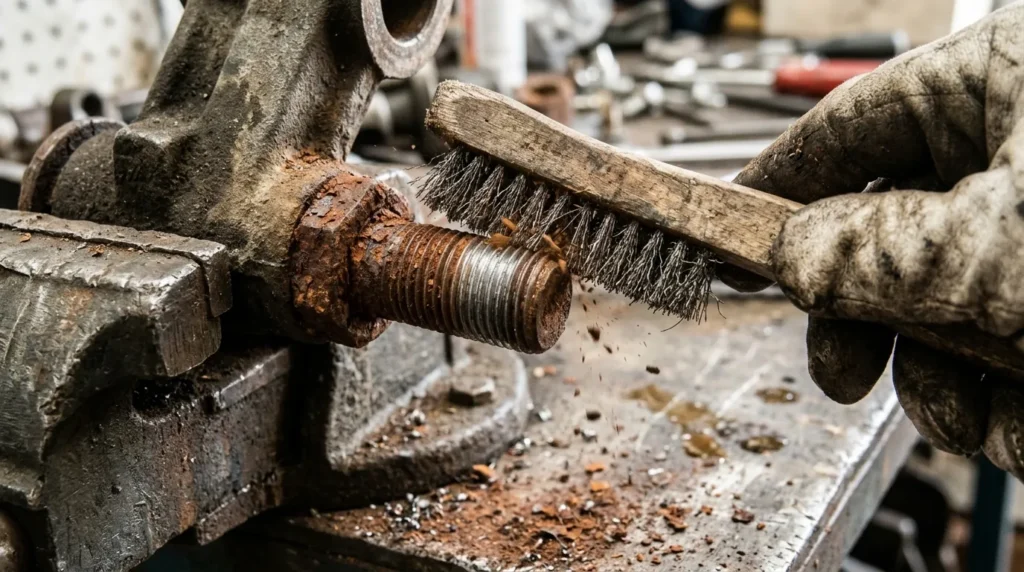
- Clean the area. Wire-brush loose rust and dirt off the threads and the joint so the oil can reach the gap.
- Spray and wait. Soak the threads where they meet the nut or the part. Give it at least 10 to 15 minutes. For badly rusted parts, reapply several times or leave it overnight.
- Shock the joint. A few sharp taps with a hammer on the bolt head or nut (not the threads) can crack the rust and help the oil wick in.
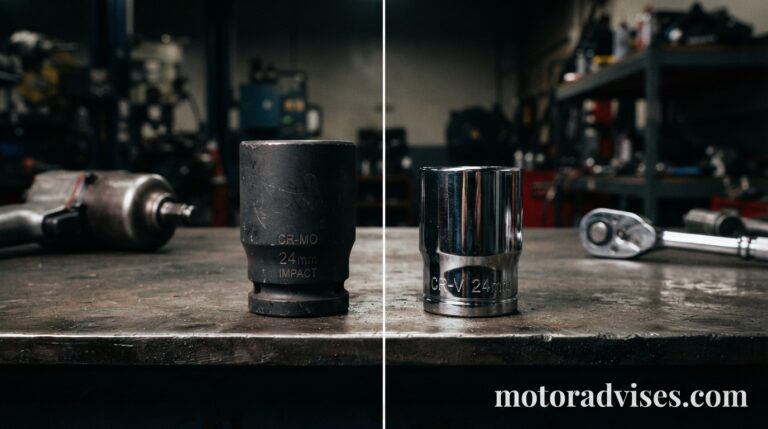
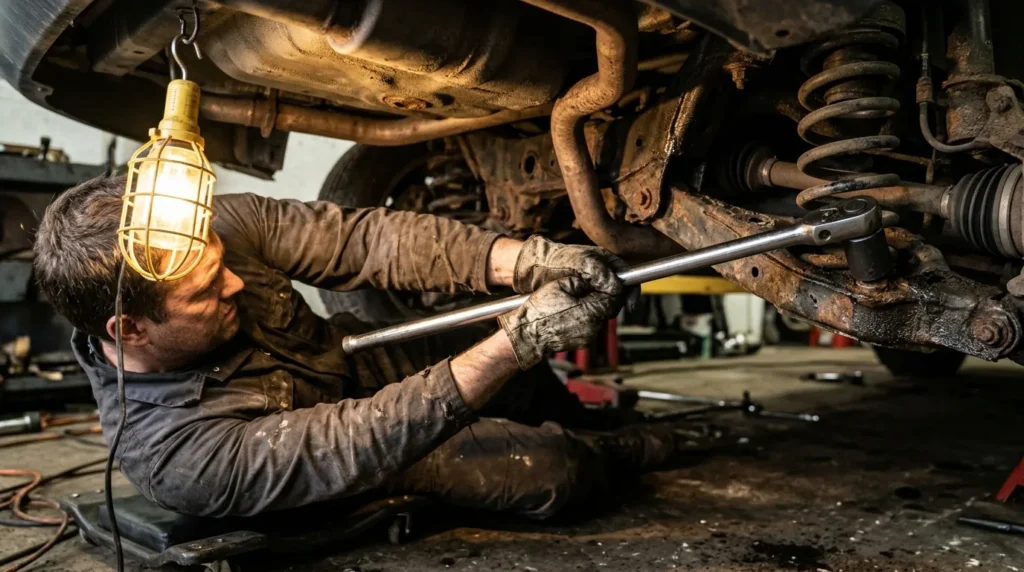
- Use the right tool. A six-point socket grips better than a twelve-point socket or an open-end wrench and is less likely to round the head. For more leverage, use a breaker bar with steady pressure rather than jerking.
- Try the “tighten slightly” trick. A tiny turn in the tightening direction can break the rust bond, then turn to loosen.
- Know when to stop. If the bolt starts to twist or the head starts to round, stop. A snapped bolt is much more work than a slow, patient soak.
Safety: penetrants and WD-40 aerosols are flammable. Never spray them near a flame, a torch, or a hot exhaust, and let the can’s propellant clear before any work that makes sparks. If you heat a part, do it before applying any spray and let it cool first, or skip the heat entirely.
When you should not use WD-40
- On brakes. Keep any oil off pads, rotors and brake shoes. If overspray gets on them, clean them with brake cleaner (see brake cleaner vs degreaser).
- As a grease substitute. Hinges, latches and moving metal parts last longer with a proper grease, such as white lithium grease.
- On bicycle or motorcycle chains as the only lube. It cleans but does not stay; use a dedicated chain lube.
- On live electrical equipment. Disconnect power before spraying.
Common questions
What’s an alternative to penetrating oil?
If no penetrant is available, WD-40 Multi-Use or another light oil can help on mildly stuck parts, especially with more soak time. Heat, careful hammer taps and the right tool also do a lot of the work. For a badly seized fastener, buying a dedicated penetrant is the cheapest way to avoid a broken bolt.
Is WD-40 penetrating oil?
The original WD-40 is a multi-use product with some penetrating ability, not a dedicated penetrant. WD-40 Specialist Penetrant is the company’s product made for that job.
Can I use WD-40 to lubricate my garage door?
It works as a cleaner and a short-term lubricant, but garage-door makers usually recommend a lithium or silicone lubricant for hinges, rollers and springs because it lasts longer. The same idea applies to car door hinges and hood latches.
Does penetrating oil damage paint or rubber?
Many penetrants are safe on most metal, rubber and plastic for short contact, but they can soften some rubber and stain paint if left on. Wipe off overspray and check the label for the specific product.
Penetrating oils worth considering
How we chose: we looked at penetrants on Amazon on November 18, 2026 and kept only items rated 4.7 stars or higher with at least 3,000 ratings. Details come from the makers’ listings. We have not tested these products ourselves. As an Amazon Associate we earn from qualifying purchases.
1. WD-40 Specialist Penetrant

WD-40’s dedicated penetrant for stuck and rusted parts. The company says it penetrates faster and farther than the original Multi-Use Product.
Why it’s a good pick
- About 19,700 ratings at 4.8 stars
- Smart Straw for tight spots
Keep in mind
- Flammable aerosol; keep it away from heat and flames
2. PB Blaster Penetrating Oil Spray (2-pack)

A two-pack of PB Blaster, a long-established penetrant sold for rusted nuts, bolts and parts.
Why it’s a good pick
- About 3,700 ratings at 4.8 stars
- Two cans for bigger jobs
Keep in mind
- Strong smell; use it with good ventilation
- Flammable aerosol
3. Kroil Original Penetrant

Kroil Original is a liquid penetrating oil sold for loosening stuck metal parts and inhibiting corrosion. It suits long soaks on badly seized parts.
Why it’s a good pick
- About 8,000 ratings at 4.8 stars
- Also sold as a corrosion inhibitor
Keep in mind
- Usually costs more per ounce than common aerosols
Bottom line
WD-40 Multi-Use Product is a useful can to keep in the garage, but it is a generalist. For a seized or rusted fastener, use a dedicated penetrating oil, give it time to soak, and combine it with the right tool and steady force. Keep all oils away from brakes.
Related guides: What is a breaker bar used for? · Impact socket vs regular socket · Brake cleaner vs degreaser · What is a lug wrench?
Sources
- WD-40 Company: Unlock stubborn parts with WD-40 Specialist Penetrant
- WD-40 Company FAQ: Multi-Use Product vs Specialist Penetrant
- Wikipedia: WD-40
- Wikipedia: Penetrating oil
- The safety data sheet and label of the product you use