
Quick answer
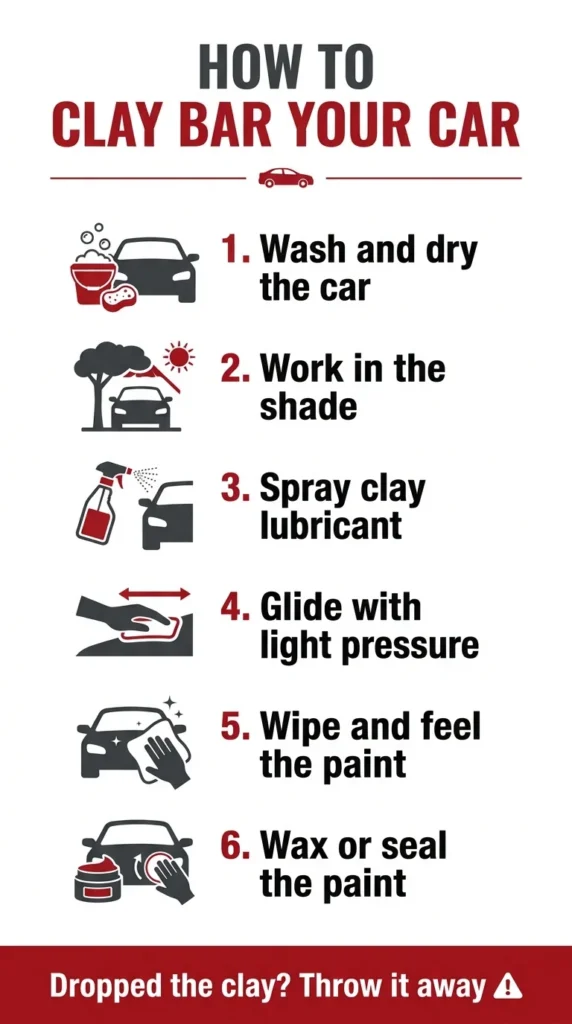
Wash and dry the car, then work in the shade on cool paint. Flatten a piece of clay into a palm-sized pad, spray a small section with clay lubricant, and glide the clay back and forth with light pressure until it moves smoothly. Wipe the section with a microfiber towel, check it with your fingertips, fold the clay to a clean side, and move on. Throw away any clay you drop on the ground. Finish with polish if needed, then wax or sealant, because claying removes old protection.
In this guide
Even after a careful wash, paint can feel rough. That roughness comes from bonded contamination: tiny particles of brake dust, industrial fallout, tree sap mist and road tar that stick to the clear coat and don’t rinse off. A detailing clay bar lifts those particles off the surface so the paint feels smooth again and wax or sealant can bond properly.
This guide covers when to clay, what you need, the step-by-step method, and the mistakes that cause scratches.
Does your car need claying?
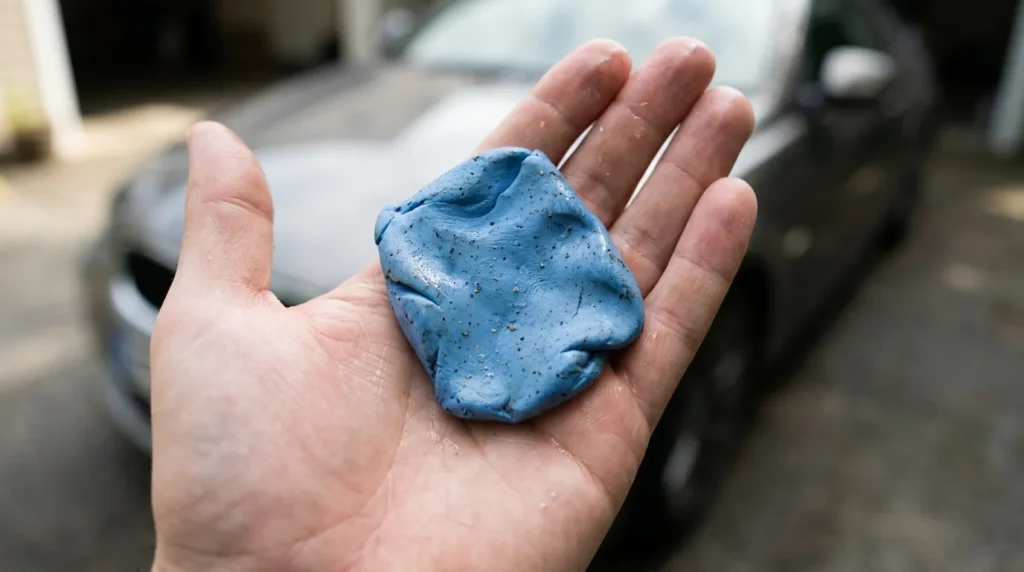
A simple test: after washing, put your hand inside a thin plastic sandwich bag and lightly run your fingertips over the paint. The bag makes small bumps easier to feel. If the hood, roof or lower doors feel gritty, a clay treatment will help. If the paint already feels glass-smooth, skip it.
Most cars that are driven daily only need claying once or twice a year, often before a polish or a fresh coat of wax.
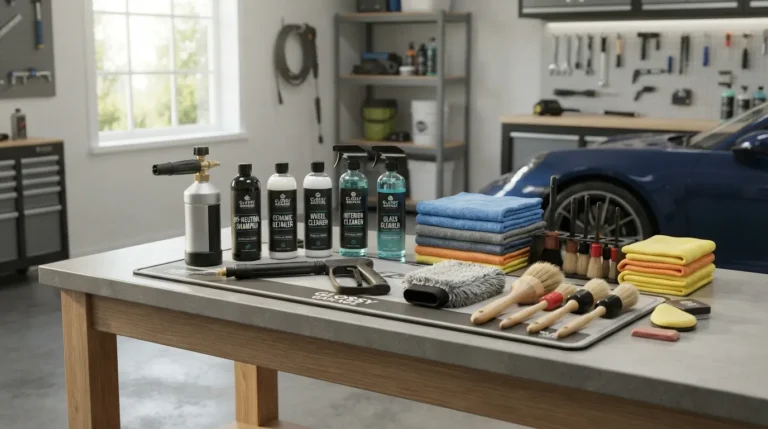
What you need
- A clay bar (fine or medium grade for most cars) or a synthetic clay mitt or towel.
- Clay lubricant. A dedicated clay lube or a quick detailer spray. Clay must never be used on dry paint.
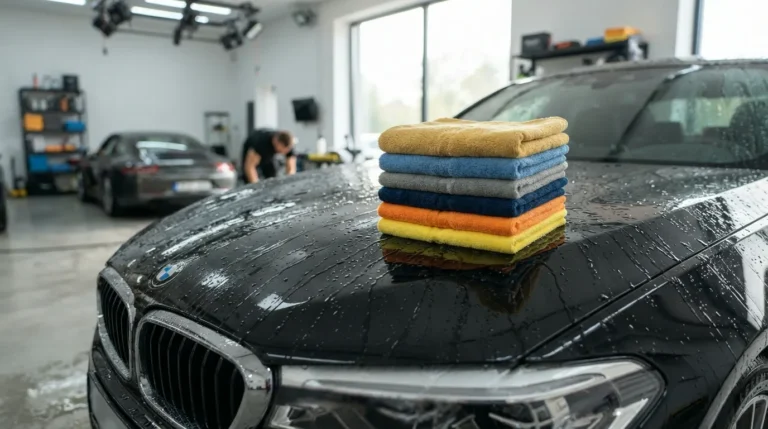
- Two or three clean microfiber towels (see our guide to microfiber towels for cars).
- Car wash soap, buckets and a wash mitt for the wash beforehand.
- Wax, sealant or polish for afterward.
How to use a clay bar, step by step
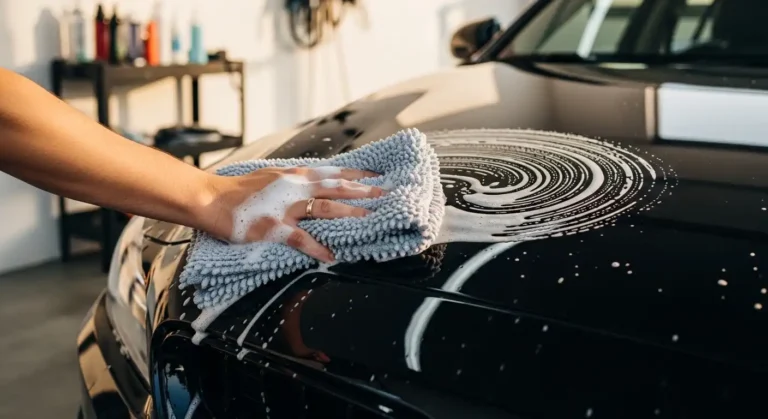
- Wash and dry the car. Loose dirt left on the paint will be dragged around by the clay and can scratch. Our guide on how to wash a car without scratching covers the two-bucket method.
- Work in the shade on cool paint. Lubricant dries quickly on hot panels, and dry spots make the clay grab.
- Prepare the clay. Cut or tear off a piece (many people use a third or half of a 100 g bar), warm it in your hands, and flatten it into a palm-sized pad.
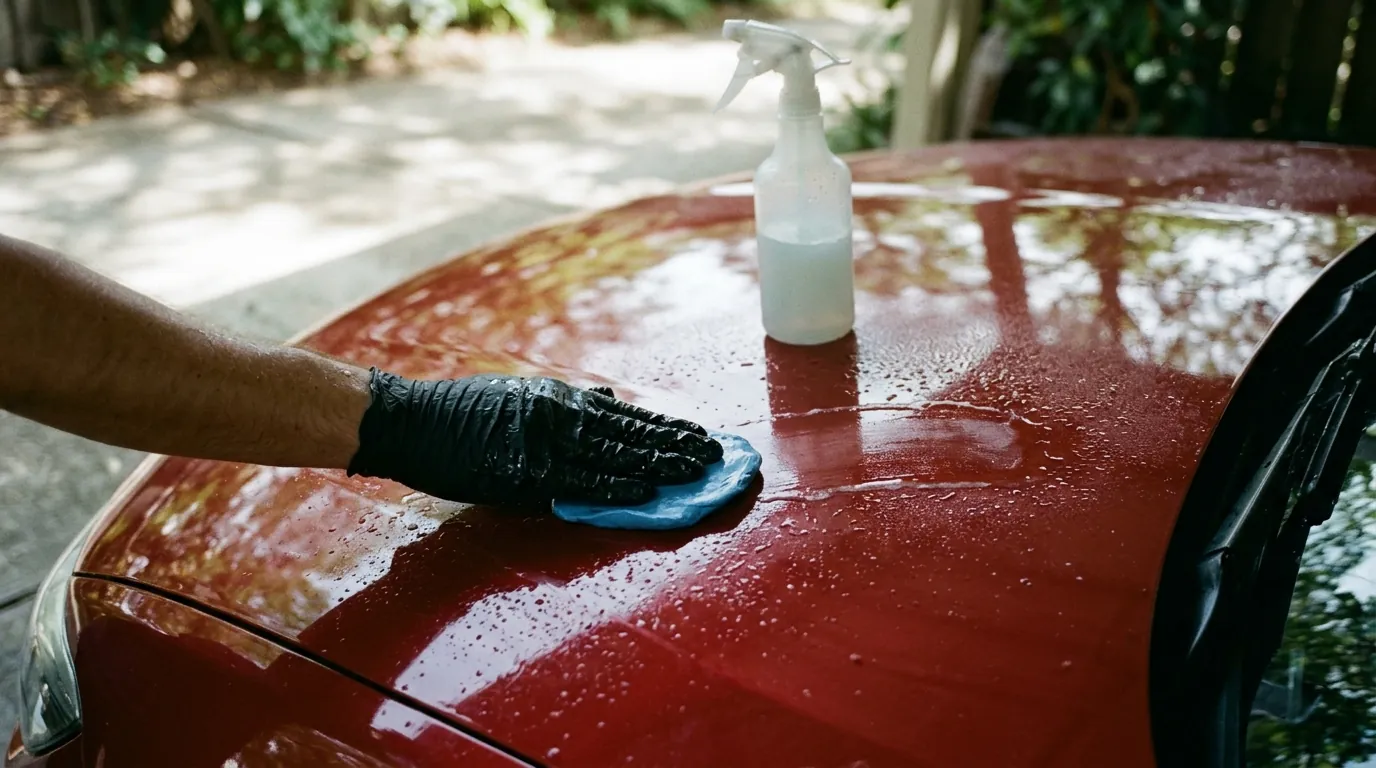
- Lubricate a small section. Work about 2 by 2 feet at a time. Spray the panel generously; the surface should be wet, not just misted.
- Glide, don’t scrub. Move the clay back and forth in straight lines with light pressure. At first you will feel and hear some drag. When the clay glides silently, that section is clean.
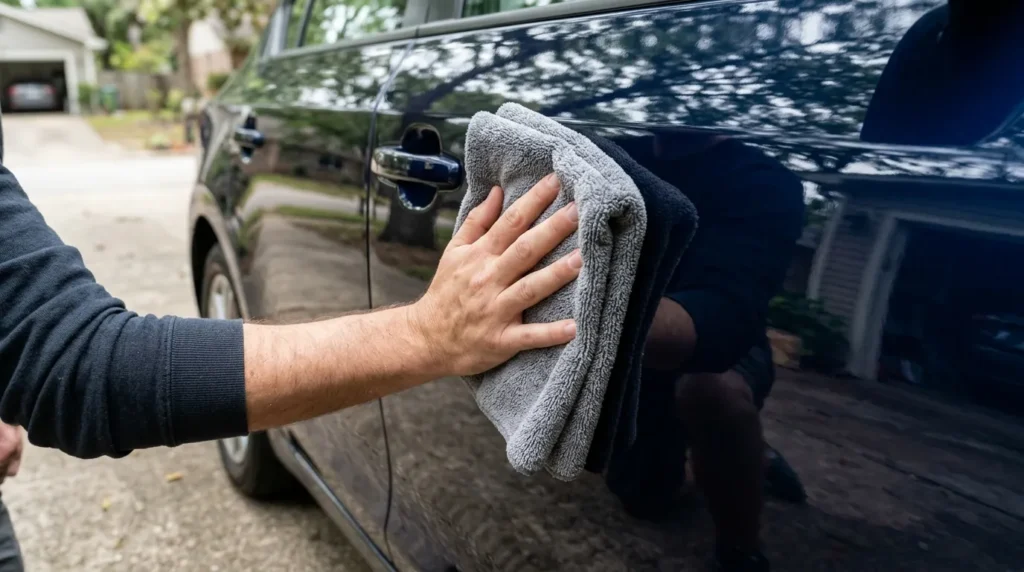
- Wipe and check. Wipe the residue off with a clean microfiber towel and feel the surface. If it still feels rough, repeat.
- Fold the clay often. Look at the face of the clay after each section. When it looks dirty, fold it over and knead it to expose a clean surface.
- Drop it, bin it. If the clay falls on the ground, throw it away. It will pick up grit that can scratch the paint.
- Repeat panel by panel, working from the roof down. The lower panels usually hold the most contamination.
- Protect the paint. Claying removes wax and sealant. Polish first if there are swirl marks, then apply wax, sealant or a coating.
Clay bar vs clay mitt
| Point | Traditional clay bar | Synthetic clay mitt or towel |
|---|---|---|
| Speed | Slower; you work with a small pad | Faster on large panels |
| If dropped | Must be thrown away | Can usually be rinsed clean |
| Feel and control | Good feedback; easy to feel when the paint is clean | Less feedback |
| Risk of marring | Low with plenty of lube and a fine grade | Some mitts can leave light marring on soft paint |
| Good for | First-timers, small areas, glass | Large vehicles, frequent use |
Common mistakes
- Too little lubricant. This is the main cause of clay marring. If the clay grabs or skips, add more lube.
- Pressing hard. Let the clay do the work. Pressure pushes trapped particles into the paint.
- Using a dirty face. Fold the clay as soon as it looks contaminated.
- Claying in the sun. Hot panels dry the lube and can leave residue spots.
- Skipping protection. Bare clear coat after claying should be waxed or sealed.
Common questions
Can you just use soapy water with a clay bar?
Some detailers use a mix of car wash shampoo and water as clay lubricant, and it can work if the surface stays very wet. A dedicated clay lube or quick detailer is slicker and dries more slowly, which lowers the risk of marring. Avoid dish soap, which can dry out rubber and plastic trim and strips protection.
Do you polish or clay bar first?
Clay first, then polish. Claying removes bonded particles that would otherwise get caught in the polishing pad. If you are polishing by machine, see how to use a car polisher, and what car polish is for the difference between polish and wax.
Can clay bars be used on glass?
Yes. Clay works on glass with the same lubricant, and it removes overspray, sap and water-spot residue that make wipers chatter. Use a separate piece of clay for glass so you don’t drag glass grit onto paint.
Does a clay bar remove scratches?
No. Clay removes contamination sitting on top of the paint. Scratches and swirl marks are damage in the clear coat and need polishing.
How often should you clay a car?
Usually once or twice a year, or whenever the paint feels rough after washing. Claying more often than needed only removes protection.
Clay kits worth considering
How we chose: we looked at clay kits on Amazon on November 18, 2026 and kept kits from established car-care brands rated 4.6 stars or higher with at least 1,500 ratings. Details come from the makers’ listings. We have not tested these kits ourselves. As an Amazon Associate we earn from qualifying purchases.
1. Meguiar’s Smooth Surface Clay Kit

Meguiar’s kit includes clay, Quik Detailer spray to use as the lubricant, and a microfiber towel, so everything for a first clay treatment comes in one box.
Why it’s a good pick
- Complete kit from a well-known car-care brand
- About 1,600 ratings at 4.7 stars
Keep in mind
- On large vehicles the spray can run out before the clay does
2. Mothers California Gold Clay Bar Kit

Three 80 g clay bars in one kit, enough for several cars or several treatments a year.
Why it’s a good pick
- About 14,700 ratings at 4.6 stars
- Several bars, so a dropped piece is not a disaster
Keep in mind
- Check the listing for the lubricant included and buy more if you need it
3. Chemical Guys OG Clay Bar & Luber Kit (medium duty)

A medium-duty clay bar paired with Chemical Guys’ synthetic clay lubricant, for paint that feels rough after washing.
Why it’s a good pick
- About 10,300 ratings at 4.7 stars
- Medium grade for rougher paint
Keep in mind
- Medium clay can leave light marring on soft paint; polish afterward if needed
Bottom line
Claying is simple: clean paint, plenty of lubricant, light pressure, and a clean face on the clay. Do it once or twice a year when the paint feels rough, and always follow it with wax or sealant. The instructions on your clay kit come first if they differ from this guide.
Related guides: How to wash a car without scratching · What is a car polish? · How to use a car polisher · Best microfiber towels for cars
Sources
- Meguiar’s: Smooth Surface Clay Kit (product page and directions)
- Meguiar’s UK: Smooth Surface Clay Kit
- The directions printed on your clay kit and lubricant