
Quick answer
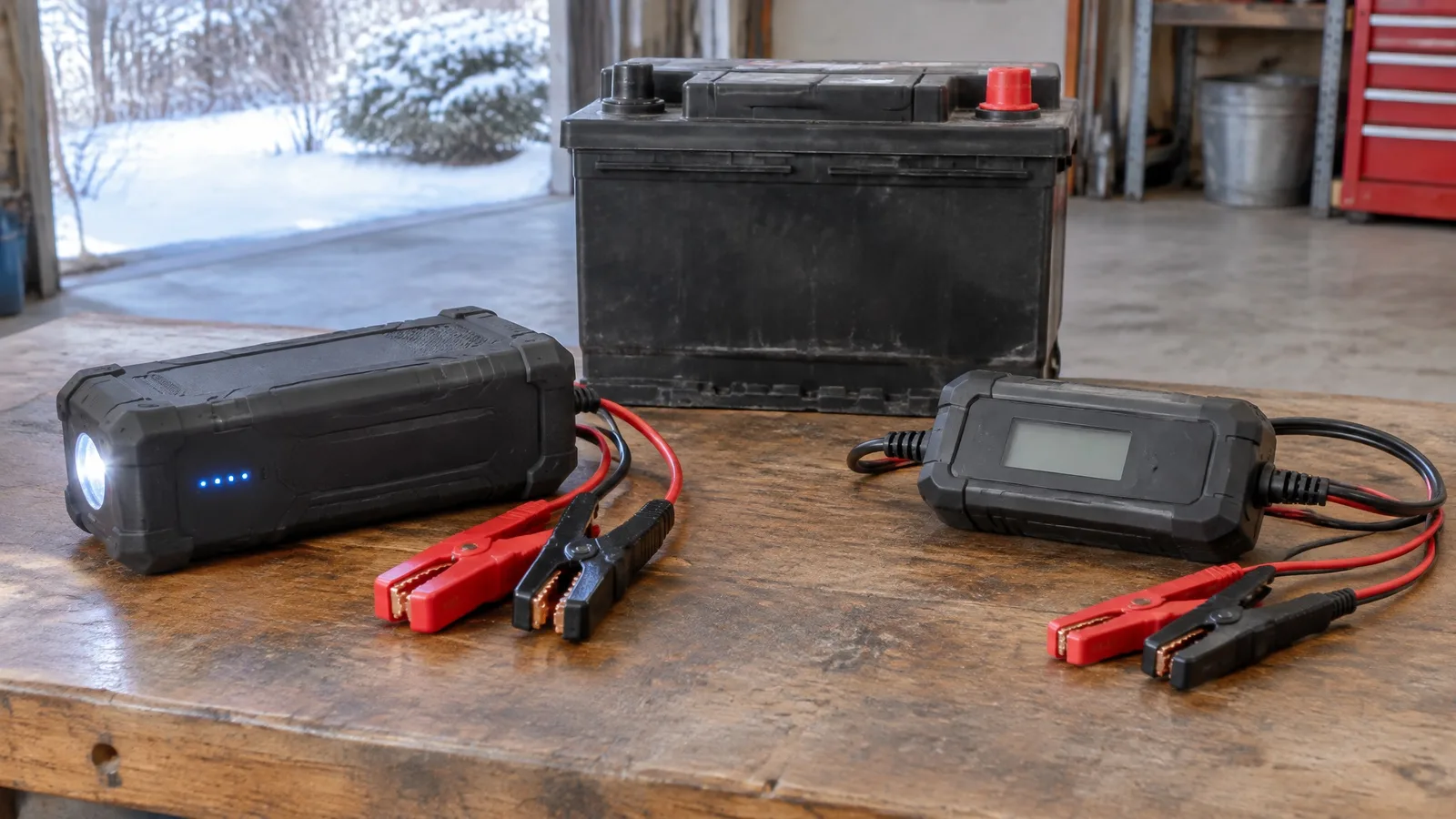
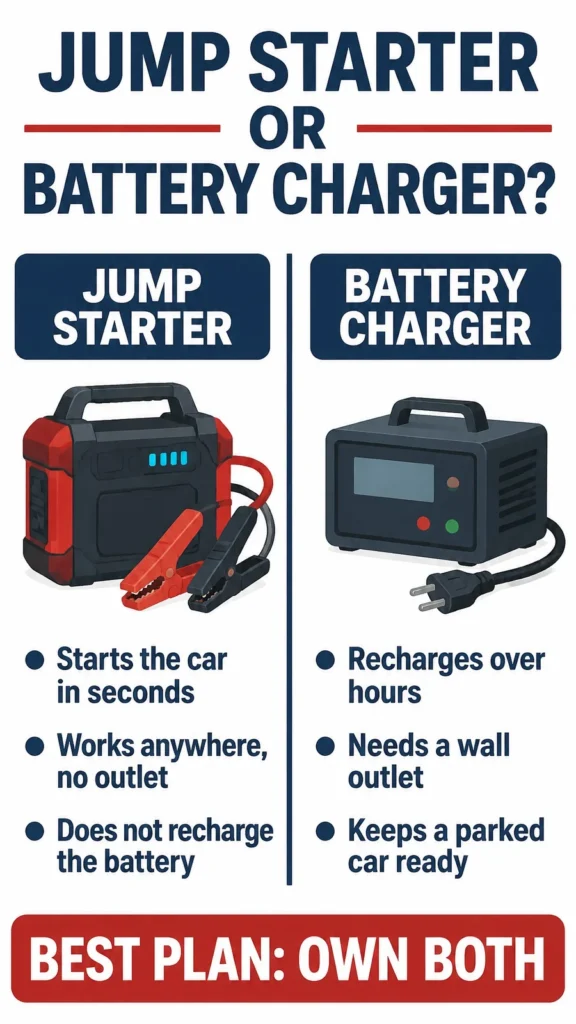
A jump starter gets a car with a weak battery running in seconds, anywhere, but it does not recharge the battery. A battery charger plugs into a wall outlet and slowly puts the charge back over several hours; many also work as maintainers that keep a parked car’s battery full. If you can only buy one: pick a jump starter if you park on the street or drive a lot in winter, and a charger if you park in a garage with an outlet and your car sits for days at a time. Many drivers end up owning both.
In this guide
Both tools deal with a dead or weak car battery, and both come with red and black clamps, so they look like they do the same job. They don’t. One is an emergency tool for getting moving; the other is a maintenance tool for getting the battery healthy again. Knowing the difference saves you from buying the wrong one, or from expecting a jump starter to fix a battery that actually needs charging or replacing.
Jump starter vs battery charger at a glance
| Point | Portable jump starter | Battery charger / maintainer |
|---|---|---|
| Main job | Supplies a short burst of high current so the engine can crank and start | Puts charge back into the battery slowly, then keeps it topped up |
| How long it takes | Seconds | Hours (often overnight), depending on the charger’s amps and how flat the battery is |
| Power source | Its own internal battery (usually lithium), recharged by USB or wall adapter | A wall outlet |
| Where it works | Anywhere: street, parking lot, roadside | Where you have an outlet, usually a garage or driveway |
| Leaves your battery | About as flat as before; the alternator has to recharge it | Charged |
| Best for | Emergencies, winter mornings, cars parked away from home | Cars that sit for days or weeks, winter storage, recovering a drained battery |
| Extra features | USB power bank, flashlight; some include an air compressor | Maintainer mode, temperature compensation, settings for AGM or lithium batteries |
What a jump starter does (and doesn’t do)
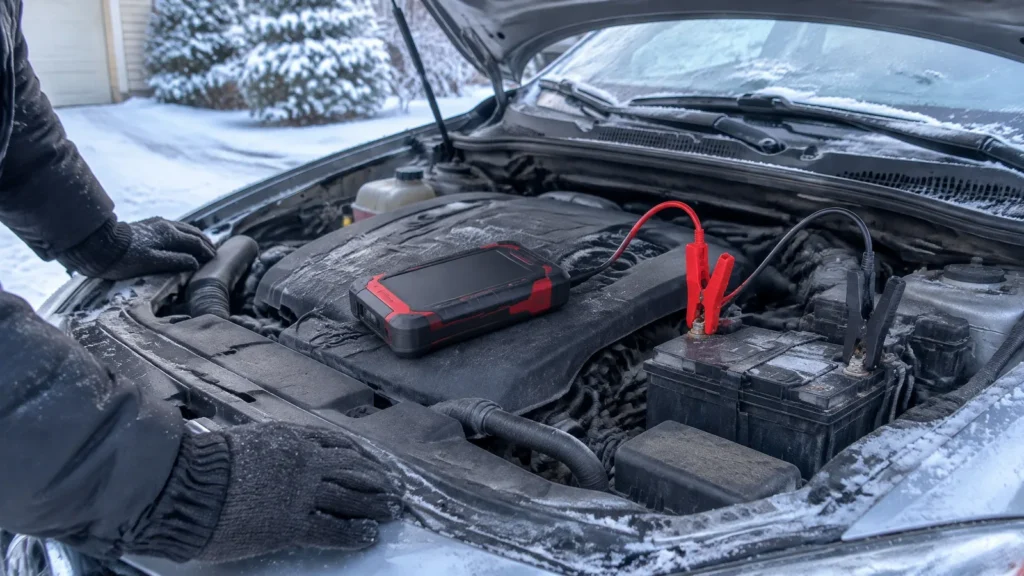
A portable jump starter is a compact battery pack with clamps. You connect it to the car’s battery terminals, turn the key or press start, and the pack supplies the current the starter motor needs for those few seconds. No second car is needed.
What it doesn’t do is recharge your battery. Once the engine runs, the alternator takes over. Driving for at least 30 minutes after a jump, ideally at steady speeds, gives the alternator a chance to put some charge back, but a short trip around the block may not be enough and you could need another jump the next morning.
Good to know before you buy one:
- Size it to your engine. Makers list which gas and diesel engine sizes each model can start. Bigger engines, diesels and very cold weather need a stronger unit.
- Keep it charged. A jump starter that has been sitting in the trunk for a year may be flat when you need it. Top it up every few months, following the maker’s instructions.
- Safety features help. Most current lithium models have reverse-polarity and spark protection, which makes them easier to use than jumper cables.
What a battery charger does (and doesn’t do)
A battery charger plugs into a wall outlet and pushes a controlled current into the battery over hours. “Smart” chargers adjust the charge in stages and switch to a maintenance (float) mode when the battery is full, so you can leave them connected to a parked car for long periods.
A charger is the right tool when:
- the car sits for days or weeks, especially in cold weather;
- you drive mostly short trips that never fully recharge the battery;
- the battery was drained (lights left on) and you want it properly recharged, not just started;
- you store a car, motorcycle or boat for the winter.
What it can’t do is help you on the side of the road, and it can’t save a battery that is worn out. AAA notes that car batteries typically last about three to five years, and less in hot climates. If an older battery keeps going flat even after a full charge, it is time to have it tested and probably replaced.
Which one should you buy?
| Your situation | Better first buy |
|---|---|
| You park on the street or at work, with no outlet nearby | Jump starter |
| Your car sits in a garage for days at a time | Charger / maintainer |
| Mostly short trips in winter | Charger / maintainer (plus a jump starter for backup) |
| You store a car or motorcycle for the winter | Maintainer |
| You drive long distances or in remote areas | Jump starter |
| Battery is more than 4 to 5 years old and keeps dying | Have it tested; neither tool fixes a worn-out battery |
Can a jump starter be used as a battery charger?
No. A jump starter’s job is a short, strong burst. Leaving one connected will not meaningfully recharge a car battery, and most makers tell you to disconnect it once the engine starts. Some packs can charge phones and laptops over USB, but that is a different feature. If you want to recharge the car battery itself, you need a charger or a long drive.
Jump starters and chargers worth considering
How we chose: we looked at Amazon listings on November 27, 2026 and kept only products rated 4.6 stars or higher with at least 2,400 ratings, then picked two jump starters and two chargers. Details come from the makers’ listings. We have not tested these products ourselves. As an Amazon Associate we earn from qualifying purchases.
1. NOCO Boost GB40 12V 1000A UltraSafe Jump Starter

A compact 12V lithium jump starter, one of the most-rated jump starters on Amazon, sized for typical cars and smaller engines.
Why it’s a good pick
- About 130,900 ratings at 4.6 stars
- Small enough for a glove box or under a seat
- Sold with spark-proof, reverse-polarity protection
Keep in mind
- Check the maker’s engine-size rating; large V8s and diesels need a bigger model
- Recharge it every few months so it is ready
2. Hulkman Alpha85 Smart Portable Jump Starter

A 2000A jump starter that the maker lists for gas engines up to 8.5L and diesels up to 6.0L, with an LED display, flashlight and a 74Wh power bank.
Why it’s a good pick
- About 13,400 ratings at 4.7 stars
- Rated for larger gas and diesel engines
- Display shows how much charge the pack has left
Keep in mind
- Bigger and heavier than a compact pack
- Costs more than you need for a small car
3. NOCO GENIUS5 Smart Battery Charger & Maintainer

A 5-amp smart charger for 6V and 12V batteries that can recharge a drained car battery and then stay connected as a maintainer.
Why it’s a good pick
- About 21,400 ratings at 4.6 stars
- Works as both a charger and a long-term maintainer
- Small enough to keep on a garage shelf
Keep in mind
- Needs a wall outlet near the car
- A flat battery can take many hours at 5 amps
4. Battery Tender 3 Amp Battery Charger and Maintainer
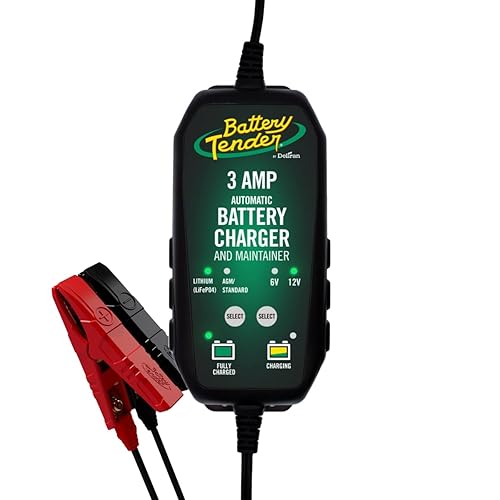
A switchable 6V/12V charger and maintainer that the maker lists for lead acid, AGM, gel and lithium batteries, aimed at cars, SUVs and trucks that sit for a while.
Why it’s a good pick
- About 2,400 ratings at 4.8 stars
- Listed for several battery types, including lithium
- Made to stay connected during storage
Keep in mind
- 3 amps is slow for a completely flat car battery
- Fewer ratings than the NOCO models
Common questions
Is it better to jump start a car or charge the battery?
If you need to leave now, jump start it. If the car can wait, charging is gentler and leaves the battery properly full. After a jump, drive for at least 30 minutes or put the battery on a charger when you get home.
Is it worth buying a jump starter?
For most drivers in cold climates, yes. It lets you start the car without finding another vehicle, and it fits in the glove box or trunk. Remember to keep it charged.
Can a battery charger start a car?
A standard charger or maintainer can’t. Some larger plug-in chargers have an “engine start” mode, but they still need a wall outlet, so they are not a roadside tool.
How long should I drive after a jump start?
At least 30 minutes, preferably at steady speeds. If the car won’t start again the next day, charge the battery fully and have it tested.
Bottom line
A jump starter gets you moving; a charger gets your battery healthy. Buy a jump starter first if you’re often away from an outlet, a charger first if your car sits in a garage, and both if you live where winters are hard on batteries.
Related guides: How to jump start a car safely · Trickle charger vs battery maintainer · Lithium vs lead-acid jump starter · Jump starters under $100 · Car battery keeps dying
Sources
- AAA: How long do car batteries last?
- J.D. Power: How long should a car run after getting a jump?
- AutoZone: How long do you need to drive to charge your car battery?
- Product details from each maker’s Amazon listing (checked November 27, 2026); your jump starter’s and charger’s manuals