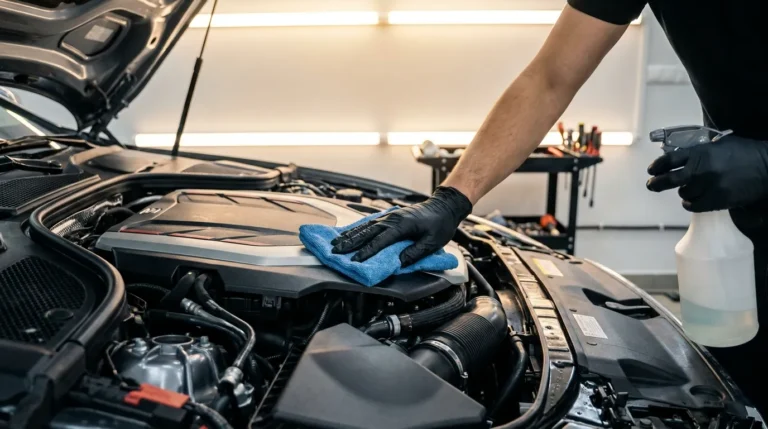
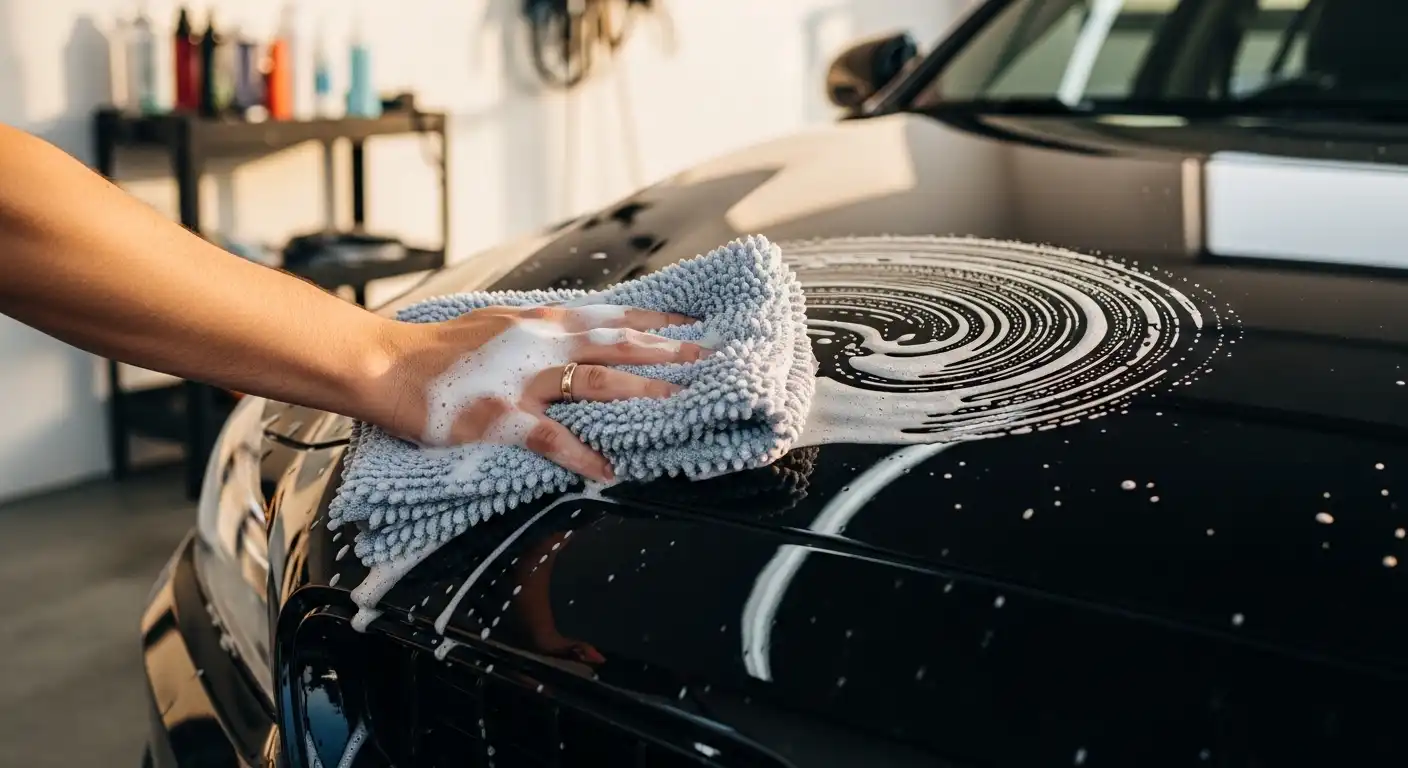
Use the two-bucket method, microfiber mitts, gentle car soap, and lift dirt—don’t scrub.
I’ve washed hundreds of cars and taught neighbors how to wash car without scratching. This guide draws on hands-on experience, industry best practices, and simple science to show you exactly what to do, why each step matters, and how to protect your paint so your car looks great for years. Read on for a clear, step-by-step plan and pro tips that make washing safe, fast, and reliable.
Why paint scratches happen and how to prevent them
Scratches start when abrasive particles move across paint while pressure and friction are applied. Dirt, sand, tree pollen, and road grit act like tiny knives when you rub them with a towel, sponge, or brush. Using the wrong soap, a dirty mitt, or washing in a circular motion can drag debris and etch clear coat.
To learn how to wash car without scratching, think of the surface like glass. You want to lift and rinse debris, not grind it against the finish. Use water and lubricants to float contaminants away and use clean, soft tools to contact the paint. Small habits—like rinsing before you touch—cut risk greatly.
Tools and products you need to wash safely
Use quality tools. Cheap or dirty gear causes scratches more than anything else.
- Two large buckets with grit guards in each bucket to trap particles.
- pH-balanced car wash soap made for automotive paint.
- A large microfiber wash mitt or lambswool mitt for body panels.
- Microfiber drying towels and a soft blower or waffle-weave drying towels.
- Wheel cleaner, soft wheel brush, and separate mitt for wheels.
- Clay bar or clay mitt and a lubricant for decontamination.
- Quick detailer or spray lubricant for spot lubrication.
- Foam cannon (optional) for pre-soak and extra lubrication.
When you know how to wash car without scratching, choosing the right tools is half the job. Separate wheel tools from body tools to avoid cross-contamination. Replace mitts or towels that hold grit or show wear.
Step-by-step method: how to wash car without scratching
Follow these steps slowly and in order. Rushing or skipping steps raises the chance of paint damage.
- Park in shade and cool the car
- Heat dries soap too fast and can trap residue. Park in shade and avoid washing under hot sun.
- Rinse the whole car first
- Use a strong stream to flush loose dirt and grit. This removes most abrasive material before you touch the paint.
- Pre-soak or foam the car
- Apply foam or pre-soak solution to loosen grime. Let it dwell for a minute, but do not let it dry.
- Use the two-bucket method
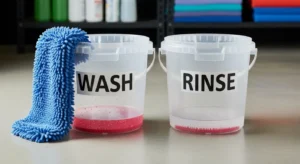
- Bucket A: soap and water. Bucket B: rinse water with a grit guard.
- Submerge mitt in soap, wash one panel at a time, then rinse the mitt in Bucket B until no visible dirt remains. Return to Bucket A for fresh soap.
- Wash top to bottom, panels by panel
- Start from the roof and move down. Dirt accumulates lower on the car; washing top to bottom prevents dragging grit back upward.
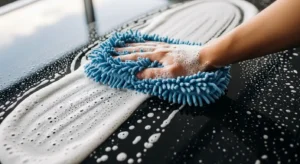
- Use straight, gentle strokes
- Avoid circular scrubbing. Use long, straight passes and let the mitt carry the dirt to the edges.
- Rinse frequently
- Rinse the entire car again after washing each major section to prevent soap residue and trapped grit.
- Decontaminate with clay if needed
- If the paint feels rough after washing, use a clay bar and lubricant to remove bonded contaminants before drying or waxing.
- Dry with soft towels or blower
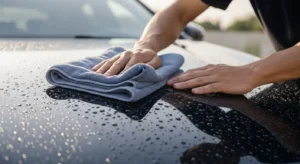
- Pat dry with microfiber towels or use a blower to remove water without contact. If you towel dry, use multiple towels and pat rather than drag.
- Protect the finish
- Apply wax, paint sealant, or ceramic spray to add a sacrificial layer that reduces future scratching risk.
Practical tip from my experience: when I switched from sponges to microfiber mitts and added a grit guard, visible swirl marks dropped by more than half. Small gear upgrades deliver big returns.
How to wash car without scratching works best when you are methodical. Slow, clean, and repeated rinsing are the keys.
Quick PAA-style questions
What is the two-bucket method and does it work?
- The two-bucket method uses one bucket for soap and one for rinsing the mitt. It reduces grit transfer and greatly lowers scratch risk.
Can I use dish soap in a pinch?
- Dish soap strips protective wax and is too harsh for paint when used often. Use a proper car wash soap for regular washing.
Is a foam cannon necessary?
- A foam cannon helps lift dirt and adds lubrication but is optional. You can safely wash without one if you rinse well and use the two-bucket method.
Drying, detailing, and protection after washing
Drying is as important as washing when learning how to wash car without scratching. Water spots form and rubbing wet surfaces can embed grit.
- Use a soft blower or dedicated microfiber drying towels. Blow water from mirrors and crevices first.
- Pat-dry large panels and use separate towels for different areas. Fold towels to use clean sections.
- After drying, inspect the paint under good light. If it feels rough, clay and re-lubricate before sealing.
- Finish with wax, sealant, or ceramic coating to protect the clear coat and make future washes safer.
I favor a quick spray sealant after every wash. It keeps the surface more hydrophobic and makes contaminants slide off, reducing times when you need to scrub.
Common mistakes that cause scratches and how to avoid them
Avoid these common errors when figuring out how to wash car without scratching.
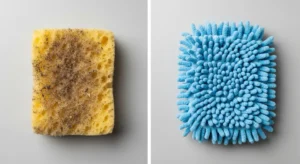
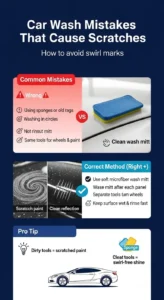
- Using household sponges or old rags
- These trap and drag grit. Use a clean, soft wash mitt instead.
- Washing in circular motions
- Circles show up as swirl marks. Use straight, gentle strokes.
- Not rinsing the mitt often
- A dirty mitt grinds grit. Rinse in the clean bucket until visibly clean.
- Cleaning wheels last with the same tools
- Wheels hold heavy brake dust. Use separate tools and towels for wheels.
- Letting soap dry on the paint
- Dried soap can etch clear coat. Keep the car wet and rinse promptly.
From my mistakes: I once used the same towel for wheels and hood. That single oversight left swirls that took months of polishing to remove. Keep tools separate and replace them when worn.
Maintenance tips to keep your paint scratch-free long term
Small routines reduce long-term damage and make washing safer.
- Wash regularly to prevent embedded grime buildup. Frequent light washes are better than rare heavy scrubs.
- Use a rinse-only quick wash between full washes to remove loose dust.
- Park under cover when possible to reduce tree sap, bird droppings, and pollen.
- Reapply protective wax or sealant every 2–4 months, or follow product guidance.
- Address bird droppings and tree sap quickly with a gentle solvent and detail spray.
When you build these habits, knowing how to wash car without scratching becomes second nature. A five-minute weekly rinse beats an aggressive monthly clean.

Frequently Asked Questions of how to wash car without scratching
How often should I wash my car to avoid scratches?
Wash your car every 1–2 weeks for regular driving conditions. More frequent washing helps prevent grit buildup that causes scratches.
Can I use a pressure washer safely?
Yes, a pressure washer is safe if used at a moderate distance and lower pressure. Avoid blasting paint directly at close range and keep at least 12–18 inches away.
Will a microfiber towel remove scratches?
Microfiber towels can remove light surface swirls when used properly, but deep scratches need polishing or professional repair. Use microfiber gently to avoid adding new marks.
Is hand washing always safer than automatic car washes?
Touchless automated washes are safer than old brush-style car washes. Modern soft-cloth washes can be safe, but hand washing with proper technique is often the gentlest option.
What should I do if I get a scratch anyway?
Assess depth: surface swirl marks can be polished out; deep scratches may need professional touch-up or repainting. Clean the area, then consult a detailer for best repair options.
Final thoughts and a simple action plan
You can protect your car and avoid scratches by using the right tools, following a step-by-step wash routine, and building simple habits. Start with the two-bucket method, rinse well, use soft mitts, and finish with protection. Small changes—like separating wheel tools and adding a grit guard—pay off fast.
Try this: wash one panel at a time, follow the steps above, and commit to a gentle routine for the next month. Share your results or ask questions below to learn faster. If you found this guide helpful, subscribe for more hands-on car care tips and leave a comment with your favorite wash-tip.