
A car vibrates at high speed due to tire, wheel, or alignment faults.
If your car vibrates at high speed, you are not alone. I have diagnosed this issue for years, on daily drivers and track cars. Most cases trace back to a few parts. In this guide, I will show you what causes the shake, how to test it, and what to fix first. Read on to get a clear plan to stop the buzz and make highway trips smooth again.
What it feels like when your car vibrates at high speed
A shake at 60 to 80 mph can show up in many ways. The steering wheel may shimmy side to side. The seat or floor can buzz like a phone on vibrate. The mirror may blur text you could read at low speeds.
Note what changes the shake. If you brake and it gets worse, suspect the brakes. If you speed up and it peaks at one speed, look at tire balance or a bent wheel. If it shows under load but fades when you lift, think drivetrain. These small clues cut hours off the hunt when a car vibrates at high speed.
Main causes of car vibrates at high speed
Most shakes come from parts that spin fast. Tires, wheels, hubs, and shafts are the usual suspects. Here is how each one can make a car vibrates at high speed.
Tires and wheels
- Out-of-balance tires create a speed specific shake. A few grams off can feel huge at 70 mph.
- Cupped or uneven tread causes a growl and a thump that pulses.
- Flat spots from long parking leave a hop that fades after miles.
- Bent or cracked wheels wobble under load and at speed.
- Wrong tire pressure makes small imbalances feel worse.
- Lost wheel weights are common after a pothole or car wash.
Brakes
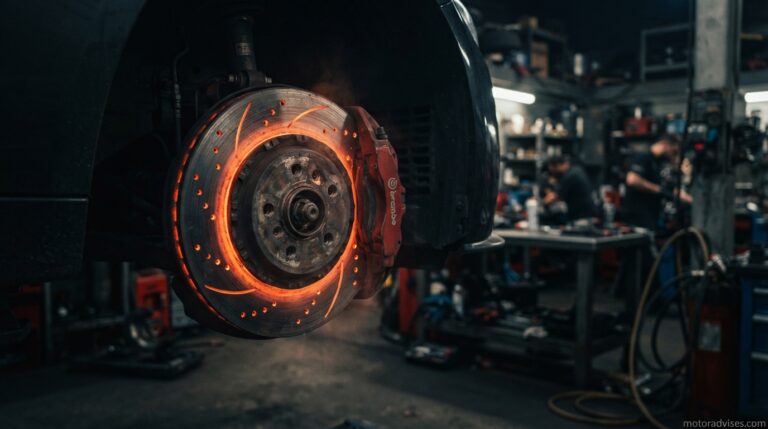
- Warped rotors make the pedal pulse and the wheel shake when you brake at high speed.
- Stuck calipers overheat one corner and can glaze pads, which adds a buzz.
- Rust scale on rotors after rain can mimic warp on the first drive.
Suspension and steering
- Worn tie rods, ball joints, or control arm bushings let wheels shimmy.
- Bad shocks allow tire cupping and wheel hop on rough roads.
- A loose wheel bearing adds a hum that grows with speed and can add play.
Drivetrain and engine
- A bent driveshaft or bad U-joint makes a steady speed vibe in rear or all wheel drive cars.
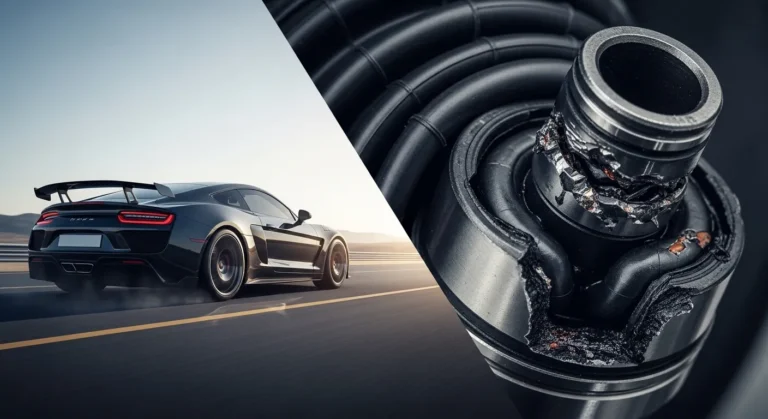
- Inner or outer CV joints can click on turns and vibrate under load.
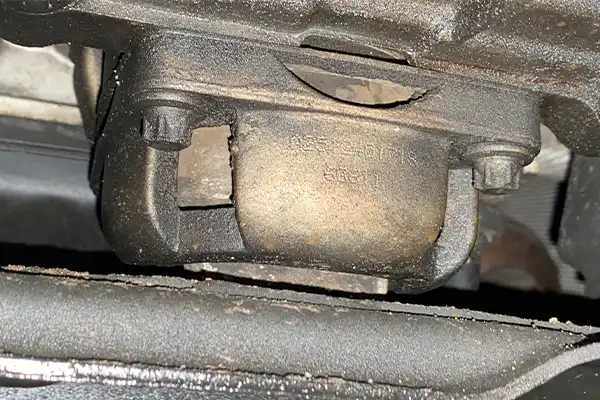
- Worn engine or trans mounts let the powertrain rock and transmit buzz into the cabin.
Aerodynamics and body
- Loose undertrays, wheel well liners, or a missing air dam can flutter and buzz.
- A roof rack or light bar can add a harmonic at highway speeds.
In my shop, nine out of ten times a car vibrates at high speed due to tire or wheel issues. The good news is that these are fast to test and fix.
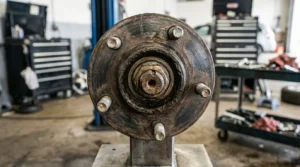
Quick self-diagnosis: step-by-step road test and driveway checks
You can do a lot at home before you book a visit. Use this plan to zero in on the cause.
- Note the speed and condition. Write down if it happens at 60, 70, or 80 mph, under accel, cruise, or brake.
- Check tire pressure cold. Set all four to spec on the door jamb.
- Inspect tread wear. Run your palm around the tire. If it feels saw-toothed, you have cupping.
- Look for missing wheel weights. Clean shiny spots on the rim lip often show where a weight fell off.
- Spin each wheel off the ground. Listen for roughness and side play at the hub.
- Torque lug nuts to spec. Loose or over-tight lugs can warp rotors and cause a wobble.
- Test brake feel. If the wheel shakes only when braking at speed, suspect rotors.
- Rotate tires front to rear. If the shake moves from the wheel to the seat, the tire is the cause.
- Road test on a smooth highway. Smooth roads make patterns clear when a car vibrates at high speed.
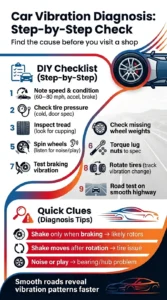
Quick answers during diagnosis
- Why does it peak at one speed only? That is classic balance or a bent wheel.
- Why does it get worse when braking? Likely rotor thickness variation or heat spots.
- Why does it only happen under load? Think CV joints, driveshaft, or mounts.
If you lack tools, most tire shops can balance and check runout in under an hour. This is the best first step when a car vibrates at high speed after hitting a pothole.
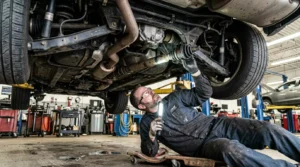
Is it safe to keep driving?
It depends on the cause and how strong the shake is. A mild shimmy from a small imbalance is not an instant risk but can wear parts fast and tire you out. A hard shake can loosen bolts, overheat bearings, and reduce brake grip.
Stop and inspect if the wheel wobbles, there is a loud hum, or the steering pulls. Do not drive if a tire is bulged, a wheel is cracked, or a lug is missing. Safety first if a car vibrates at high speed and the feel gets worse fast.
Proven fixes and typical costs
The right fix depends on the test results. Here are common repairs and fair price ranges in the US.
- Precision wheel balance with road force: 60 to 150 for four wheels.
- Tire replacement and alignment: 400 to 1,200 for four tires, 90 to 150 for alignment.
- Wheel repair or replacement: 100 to 200 to straighten, 150 to 600 for a new wheel.
- Brake rotor and pad service: 250 to 800 per axle, more for performance cars.
- Wheel bearing or hub assembly: 250 to 600 per wheel.
- CV axle replacement: 300 to 900 per axle.
- Driveshaft balance or U-joint: 150 to 300 for balance, 150 to 350 per U-joint.
- Engine or transmission mount: 200 to 700 per mount.
- Suspension refresh, like shocks and bushings: 300 to 1,200 depending on parts and labor.
Use quality parts and a shop with a modern balancer. Cheap fixes can hide the issue and bring the shake back when a car vibrates at high speed.
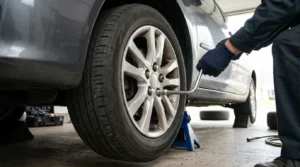
Prevention: simple habits to stop car vibrates at high speed
You can prevent most shakes with a few easy habits.
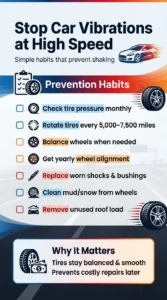
- Check tire pressure monthly and before long trips.
- Rotate tires every 5,000 to 7,500 miles to even out wear.
- Balance wheels when you mount new tires or feel new vibes.
- Get a four wheel alignment yearly or after curb or pothole hits.
- Replace worn shocks and bushings before they hurt your new tires.
- Clean off mud or snow packed in wheels after storms.
- Remove heavy roof gear when you do not need it.
These steps keep tires round and happy. They also protect your wallet when a car vibrates at high speed after months of neglect.
Real-world stories and lessons learned
A client came in with a strong shake at 72 mph after a road trip. The steering wheel danced, but only on smooth highways. We found a bent front wheel and a missing weight in the rear. One straightened wheel and a road force balance later, the car was glass smooth.
On my own track day car, I chased a buzz for weeks. It came and went with throttle. A friend said to check mounts. He was right. A torn engine mount sent more vibe into the cabin at high rpm. A new mount fixed it at once. When a car vibrates at high speed, do not skip mounts and shafts in your checks.
I have also seen rotors blamed for every shake. Many were fine. The real cause was cupped tires from dead shocks. Match symptoms to clues and you will fix it fast and for less.
Frequently Asked Questions of car vibrates at high speed
Why does my car vibrates at high speed after new tires?
New tires still need a precise balance. A small imbalance or a bent wheel can make a fresh set shake.
Can alignment alone cause a highway vibration?
Yes, a bad alignment can create feathered edges on tread. That wear then causes a steady high speed shake.
Why does my steering wheel shake only when I brake at 70 mph?
This points to rotor thickness variation or pad deposits. Service the rotors and pads and retorque the wheels to spec.
How do I know if a wheel bearing is the cause?
A bad bearing hums or growls and changes with slight steering input. You may also feel play when you rock the wheel at 12 and 6 o’clock.
Will a tire balance fix all cases where a car vibrates at high speed?
No. It helps most, but bent wheels, cupped tires, bad mounts, or drivetrain faults may still need repair.
Is road force balancing worth it?
Yes, for tricky cases. It measures tire stiffness and helps match the tire to the wheel to reduce force variation.
Can warped rotors cause vibration at high speed even when not braking?
It is rare. Most rotor issues show under braking. If it happens off brake, look at tires and wheels first.
Conclusion
A smooth car is not luck. It is the sum of sound tires, straight wheels, tight hubs, fresh suspension, and a healthy drivetrain. When a car vibrates at high speed, start with simple checks, read the clues, and fix the root cause, not the symptom.
Take one step today. Check tire pressure, book a balance, or plan an alignment. If you need help, drop your symptoms in the comments and I will guide you to the next move. Subscribe for more clear, hands-on car care tips.