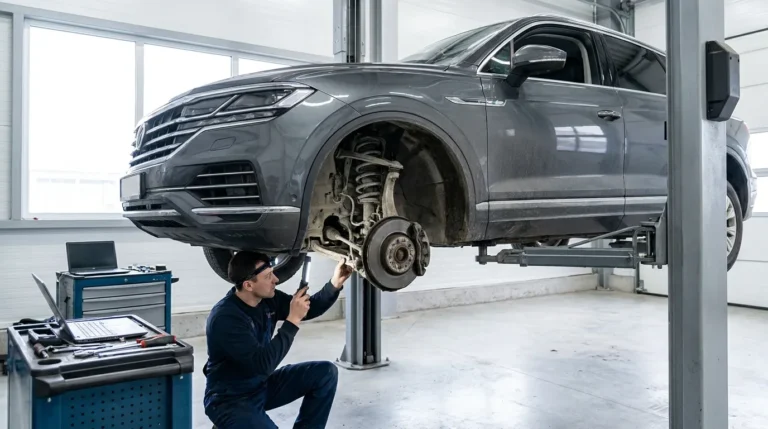
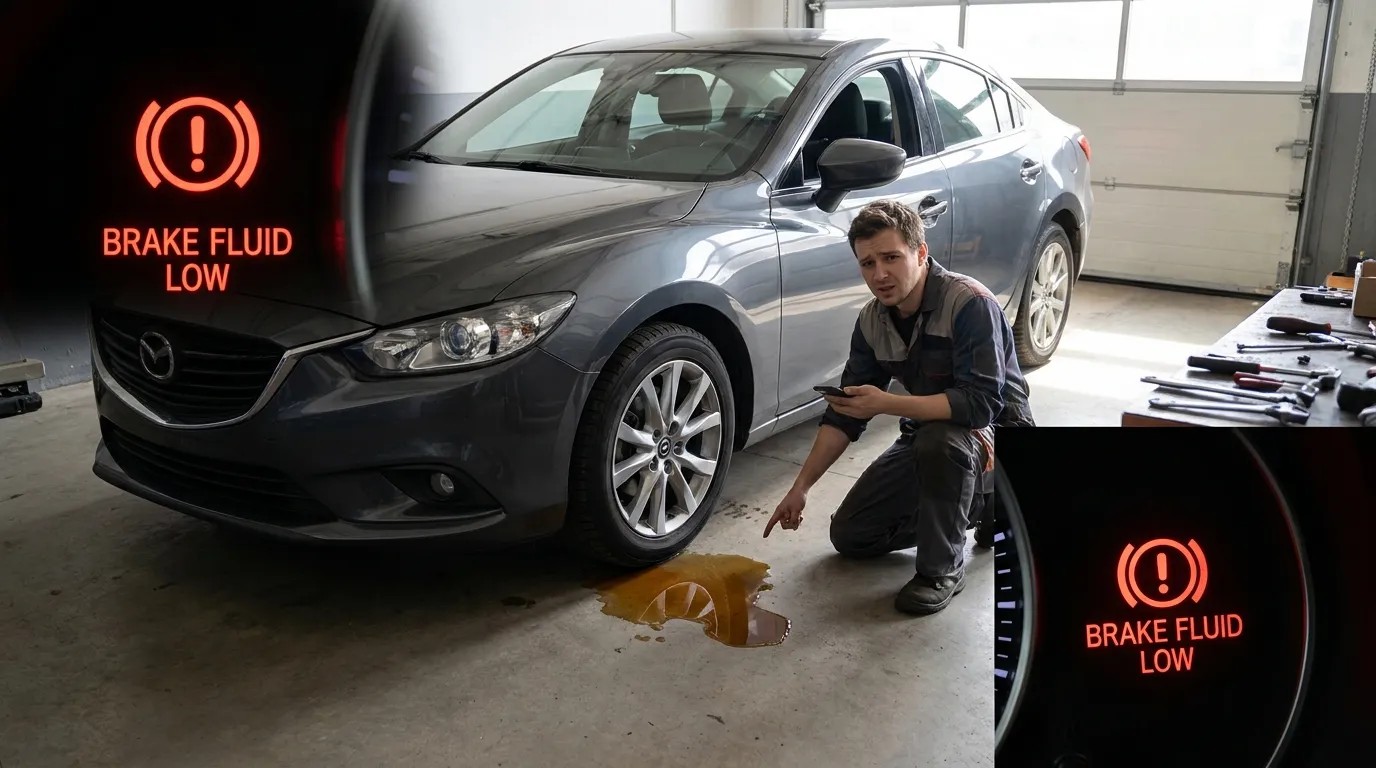
Brake fluid leak symptoms include a soft or sinking brake pedal, visible fluid, and warning lights.
I’ve spent over a decade fixing brake systems, and I know how easy it is to miss early signs. This article explains brake fluid leak symptoms in clear, simple terms. Read on to learn what to watch for, how to check safely, repair choices, and tips that can save you money and keep you safe.
Common brake fluid leak symptoms
Brake fluid leak symptoms often show up as a change in how the brakes feel or look. These signs are simple to spot if you know what to look for.
- Soft or spongy brake pedal: The pedal feels mushy when you press it. You may need to push farther to slow the car.
- Sinking or dropping pedal: The pedal slowly sinks toward the floor when held down. This can mean fluid loss or an internal leak.
- Brake warning light or ABS light: A light on the dash can indicate low fluid or a system fault. Don’t ignore warning lights.
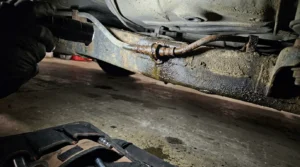
- Visible fluid under the car: Look for clear to amber fluid near wheels or under the engine. Brake fluid is oily and may be slightly brown.
- Low brake fluid reservoir level: If the master cylinder fluid is low without visible pad wear, you may have a leak.
- Brake fade or reduced stopping power: Brakes feel weak or require more force. This is a dangerous symptom.
- Strong, sweet or fishy odor: Contaminated fluid or heated fluid can give off a smell. It’s less common but worth noting.
These brake fluid leak symptoms can point to small or big problems. Catching them early keeps costs down and reduces safety risk.

Why brake fluid leaks happen
Understanding causes helps you prevent leaks. Most leaks come from simple wear and damage.
- Worn seals and rubber hoses: Rubber ages, cracks, and leaks at fittings. This is the top cause of leaks.
- Corroded metal brake lines: Road salt and moisture lead to rust and pinhole leaks.
- Damaged calipers or wheel cylinders: Piston seals can fail and leak fluid at the wheel.
- Loose fittings or damaged banjo bolts: Poor repair or impact can loosen connections.
- Master cylinder failure: Internal or external leaks can lower system pressure.
- Brake hose or ABS module damage after a crash: Impact often causes external leaks or cracks.
From my shop work, worn rubber hoses and corroded lines are the usual culprits. Regular checks catch these before they fail.
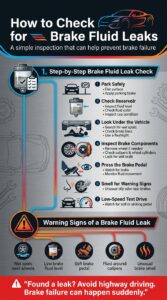
How to check for brake fluid leaks (step-by-step)
A careful check takes little time and can prevent a crash. Use gloves and a rag. Work on a flat, cool car.
- Park safely and use the parking brake.
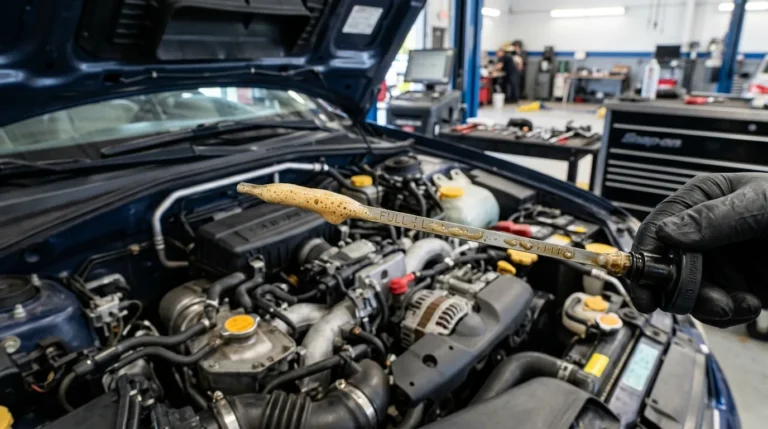
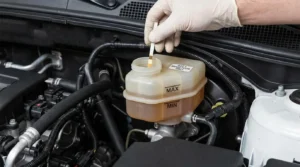
- Check the brake fluid reservoir level and cap. Note the fluid color and level.
- Inspect under the car for wet spots near wheels, under the master cylinder, and along brake lines. Use a flashlight.
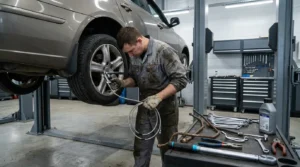
- Remove wheels for a close look at calipers and wheel cylinders. Look for wet seals or fluid on brake parts.
- Press the brake pedal and watch the reservoir while someone holds the pedal. Any rise in level or leaks are a sign.
- Smell for unusual odors near the brakes or reservoir. Fresh fluid has a faint, oily scent.
- Test drive cautiously at low speed. If the pedal feels soft, stop and recheck.
If you find a leak, don’t drive at highway speed. Small leaks can turn into total brake failure quickly.
Risks and dangers of ignoring brake fluid leak symptoms
Brake fluid loss reduces stopping power. That creates real danger.
- Increased stopping distance: Low fluid means less hydraulic force. You need more distance to stop.
- Total brake failure: A major leak can cause partial or full brake loss. This can lead to crashes.
- ABS and traction loss: Low fluid can disable ABS or traction systems. You lose braking control in emergencies.
- Damage to brake parts: Fluid can eat paint and speed up corrosion on metal parts.
- Costly repairs: A small leak ignored becomes a large repair or system replacement.
Trust your senses. If you feel unusual brake behavior or see fluid, act fast.
Repair options and typical costs
Options depend on where the leak is. I’ll show common fixes and cost ranges. Prices vary by region and vehicle.
- Tighten loose fittings: Quick and cheap. Often $0 if you do it yourself, or $20–$50 at a shop.
- Replace brake hose: Hose replacement is common. Expect $50–$150 per hose installed.
- Replace caliper or wheel cylinder: Parts and labor vary. Budget $100–$300 per wheel.
- Replace or rebuild master cylinder: This can be $150–$500 depending on parts and labor.
- Replace corroded lines: Labor can be high for lines. Plan $200–$600 for parts and work.
- Brake fluid flush: Always replace fluid after repairs. A flush is $70–$150.
I once replaced a leaky hose on a commuter car. The part was cheap. The big cost was labor because the line was hard to reach. That taught me to inspect lines before they fail.
Maintenance and prevention tips
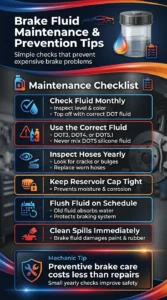
Small checks keep problems away. I share tips I use in the shop and at home.
- Check fluid monthly: Look at the reservoir level and fluid color. Top off with the correct DOT fluid when safe.
- Use the right fluid: Check your owner’s manual for DOT3, DOT4, or DOT5.1. Do not mix DOT5 silicone with glycol-based fluids.
- Inspect hoses yearly: Look for cracks, bulges, or soft spots. Replace aged hoses.
- Keep the reservoir cap tight: A loose cap lets moisture in and speeds corrosion.
- Flush fluid on schedule: Old fluid absorbs water and can damage the system. Replace per the maker’s interval.
- Clean up spills immediately: Brake fluid harms paint and rubber. Wipe it off right away.
A simple yearly brake check saved one of my clients from a roadside failure. Preventive care is cheap compared to repairs and risk.
Personal experience and lessons learned
I remember a winter when a car came in with a soft pedal. The owner had ignored a small puddle under the car. It was a corroded line near the passenger wheel. We replaced the line and flushed the system. That simple fix prevented a likely accident.
Lesson learned: Listen to the pedal and check for drops under the car. Small signs often mean quick fixes. Don’t delay when you see brake fluid leak symptoms.
Frequently Asked Questions of brake fluid leak symptoms
How quickly can a brake fluid leak lead to brake failure?
A small leak can worsen over days or weeks. A major leak can cause brake failure immediately, so inspect and address any fluid loss at once.
Can I top off brake fluid instead of fixing a leak?
Topping off hides the problem. It may restore function briefly, but the leak remains and could get worse. Find and fix the leak.
Is brake fluid color a good indicator of a problem?
Yes. Dark or dirty fluid means contamination and water absorption. Clean fluid is amber or clear. Dark fluid suggests a service is due.
Can I drive with a small brake fluid leak?
It’s risky. Short, slow trips might be possible, but driving at speed is unsafe. Get the car checked as soon as you can.
Will ABS lights always come on with a fluid leak?
Not always. ABS may not show a light for small leaks. However, low fluid often triggers a dash light. Treat any warning light as serious.
How can I tell if the leak is at a wheel or the master cylinder?
Check location of wetness. Fluid near a wheel points to a caliper or hose. Fluid near the firewall or under the master cylinder points to the master unit.
Conclusion
Brake fluid leak symptoms are often clear and fixable if you act quickly. Watch for a soft pedal, visible fluid, low reservoir level, and warning lights. Regular checks and timely repairs keep you safe and cut repair bills. Take action today: inspect your fluid, schedule a service if you see signs, and share your experience or questions below to help others stay safe.