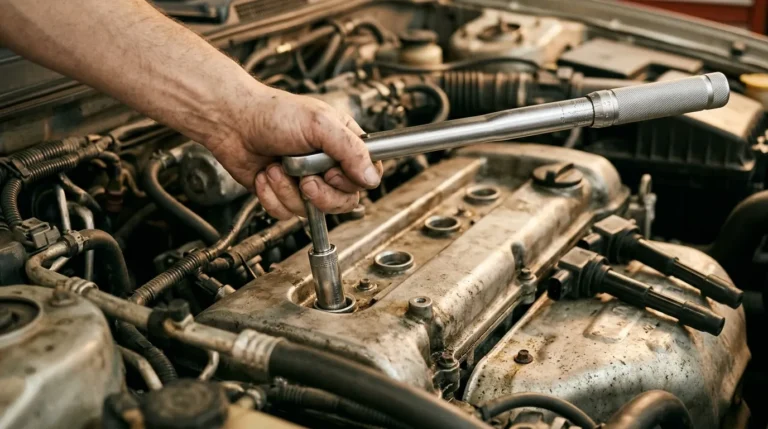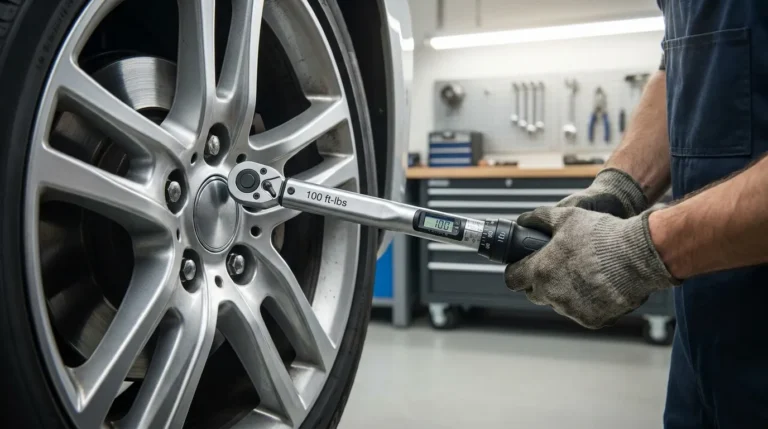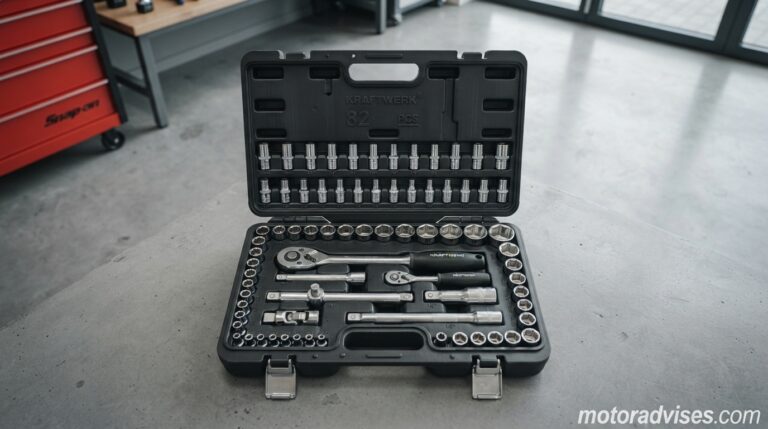

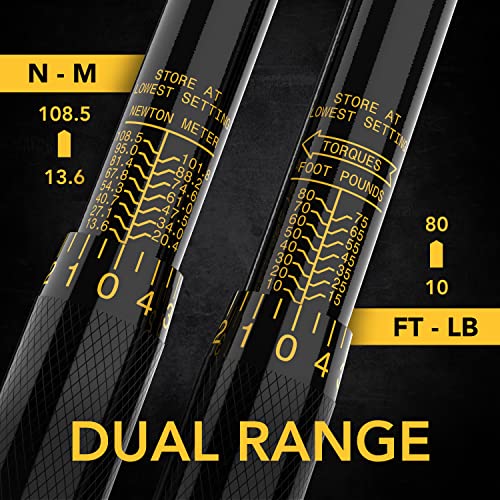
A click-type torque wrench works by compressing a spring. When you set a value, you tighten that spring; when the bolt reaches that torque, the spring lets a mechanism snap over and you feel the click. That spring is the reason storage matters.
This guide explains what happens when a click wrench is left wound up, how to store it, and how to tell when it needs calibrating.
What you’ll learn
- Why the spring matters
- How to store a click wrench
- Habits that knock it out of calibration
- When to have it checked
Quick answer
Yes, it can. Leaving a click torque wrench set to a high value keeps the spring compressed, and over time it can lose tension so the wrench clicks early and under-tightens bolts. Wind it back to the lowest marked setting (not below it) when you finish, and have it checked about once a year or if it’s dropped.
In this article
Why storage affects a click wrench
Springs that stay compressed for long periods can slowly relax, or “take a set”. In a click wrench, a weaker spring means the mechanism releases sooner, so the wrench clicks before the bolt reaches the set torque. The effect is gradual, which is why you won’t notice it until bolts come loose or a calibration check shows it.
Leaving the wrench set between bolts during a job is fine. The problem is storing it set for days, weeks or months.
How to store a click torque wrench
- Wind the handle back to the lowest value on the scale. Don’t wind it below the scale, because that can loosen the mechanism.
- Keep it in its case, away from damp and big temperature swings.
- Before using it after storage, click it a few times at a low setting to settle the mechanism, as many makers recommend.
Beam and split-beam wrenches don’t keep a spring compressed in the same way, so they don’t need winding down; see split-beam vs click-type torque wrenches. Check the maker’s instructions for digital wrenches.
Other habits that ruin calibration
- Using the torque wrench to loosen tight bolts. Use a breaker bar instead.
- Dropping it, even once. Have it checked afterward.
- Pulling past the click or jerking the handle. Pull smoothly and stop at the click.
- Using it outside its range. Click wrenches are most accurate from about 20% to 100% of their scale.
For the full method, see how to use a torque wrench correctly.
When to have it calibrated
A common guideline, from the ISO 6789 standard, is to check a torque wrench every 12 months or every 5,000 uses, whichever comes first, and after any drop or misuse. For occasional home use, every year or two is reasonable. Many tool shops and calibration labs can test and adjust a wrench, and some makers offer a calibration service.
Tools that help
If your wrench is old, dropped or out of calibration and it costs less to replace than to recalibrate, these two well-reviewed click wrenches come with a stated accuracy. For more options, see our guide to the best torque wrench under $100.
How we chose: we picked these using the details each maker lists on Amazon (checked in November 2026). We have not tested them ourselves.
1. EPAuto 1/2-Inch Drive Click Torque Wrench, 10–150 ft-lb

EPAuto’s 1/2-inch wrench covers 10 to 150 ft-lb, is listed as pre-calibrated to ±4%, and comes with a storage case and a 5-inch extension.
Why it’s a good pick
- Comes with a storage case
- Covers lug nuts on most cars
- Low price
Keep in mind
- Wind it down after use
- ±4% stated accuracy
2. LEXIVON LX-182 3/8-Inch Drive Click Torque Wrench

LEXIVON’s 3/8-inch wrench covers 10 to 80 ft-lb for engine work and ships pre-calibrated to ±4% with a calibration certificate and serial number.
Why it’s a good pick
- Calibration certificate
- Clear yellow scale
- Engine-work range
Keep in mind
- Too small for lug nuts
- Wind it down after use