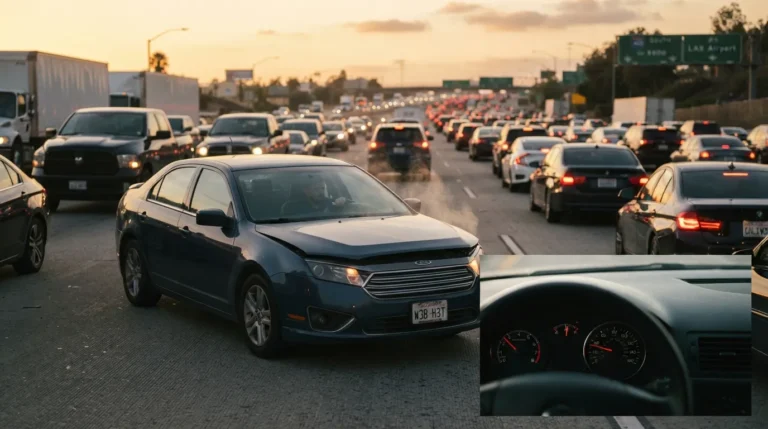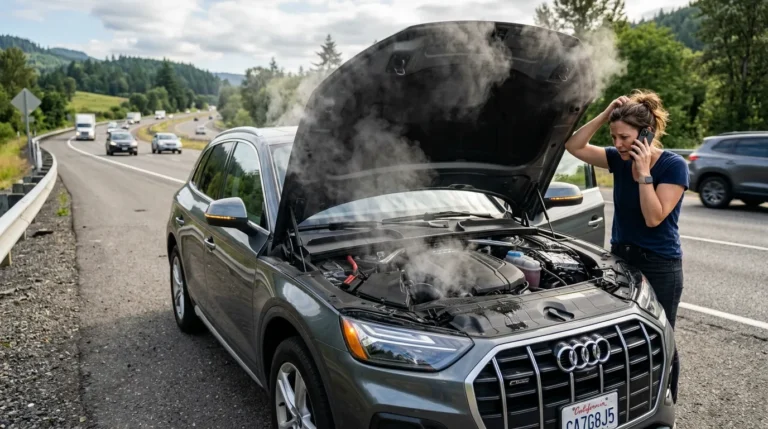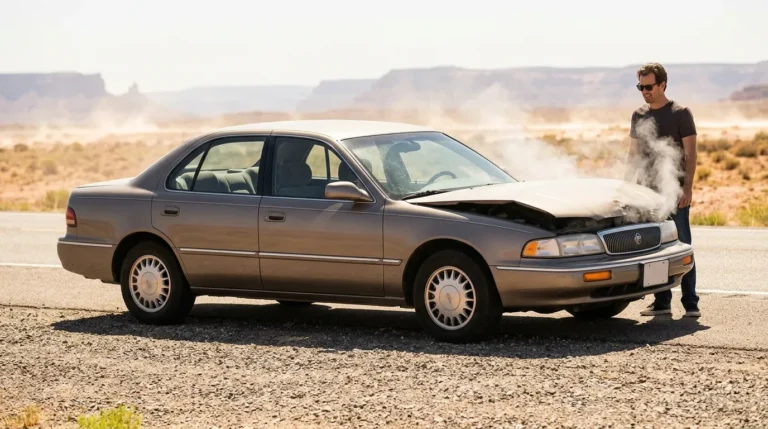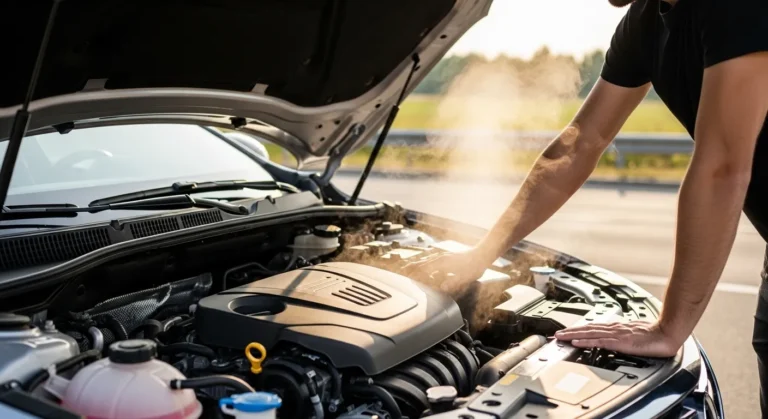
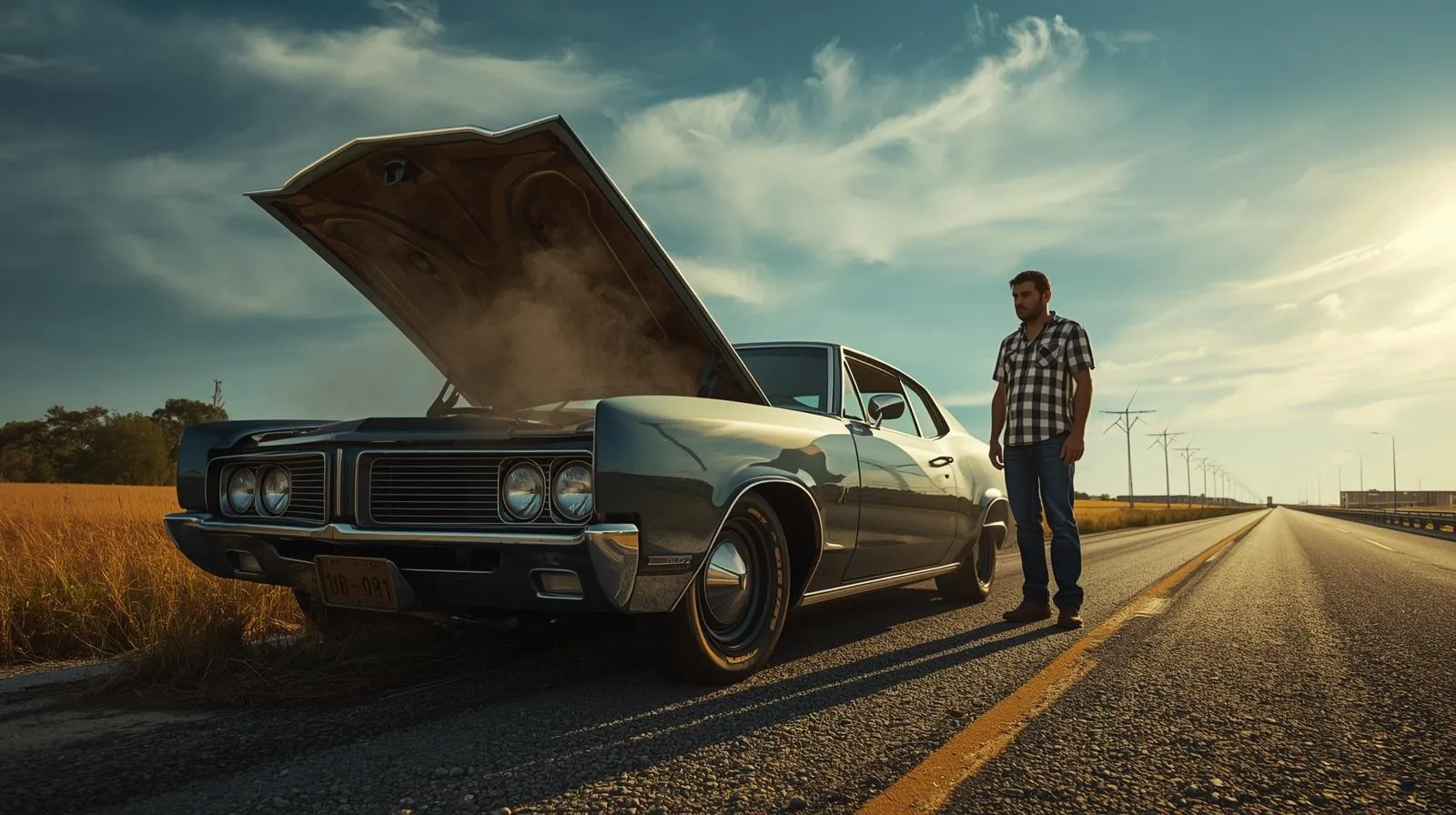
Many cars overheat after long drives due to cooling system faults or low coolant levels.
I’ve worked on cars and written about vehicle care for years, and I know how stressful car overheating after long drive can be. This guide explains why it happens, how to spot the signs, what to do right away, and how to fix and prevent it. Read on for clear, tested advice you can use on the road or at home.
What causes car overheating after long drive?
Car overheating after long drive has many possible causes. Most stem from problems in the cooling system. Some happen only after long runs because heat builds up and weak parts finally fail.
Common causes
- Low coolant level. Small leaks or evaporation let coolant fall under the safe mark.
- Cooling system leaks. Hoses, radiator, water pump, or heater core can leak fluid slowly.
- Thermostat stuck closed. The thermostat can stick and block coolant flow.
- Broken radiator fan. The fan may not run at low speeds or when idle.
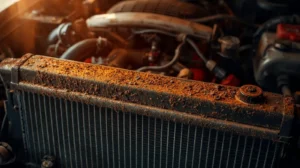
- Clogged radiator. Debris and deposits reduce airflow and coolant flow.
- Failing water pump. Worn bearings or a bad impeller cut coolant flow.
- Blown head gasket. Combustion gases enter the cooling system and raise temps.
- Old or wrong coolant mix. Incorrect or degraded coolant boils sooner.
- Heavy loads and towing. Extra heat under heavy loads stresses the cooling system.
Each issue shows different clues. For example, a stuck thermostat often causes a slow temp rise, while a head gasket can cause white smoke or milky oil. Knowing the cause helps you pick the right fix for car overheating after long drive.
Signs and symptoms of car overheating after long drive
Early signs help you act before severe damage. Watch the gauge and look for visible clues.
Key symptoms
- Rising temperature gauge that stays high.
- Steam from under the hood or a hot sweet smell.
- Loss of engine power or engine knocking.
- Coolant puddles under the car after a stop.
- Heater blows cold when it should blow hot.
If you see any of these, stop driving soon. Let the engine cool before inspecting. Detecting symptoms early reduces repair costs for car overheating after long drive.
Immediate steps to take when your car overheats during or after a long drive
Take quick, safe steps to avoid damage and injury. Short actions can save your engine.
Step-by-step actions
- Pull over to a safe spot and turn the engine off. Stay clear of traffic.
- Turn off the air conditioner and turn on the heater to pull heat from the engine. This lowers engine temp slightly.
- Wait at least 15–30 minutes before opening the hood. Hot steam can burn you.
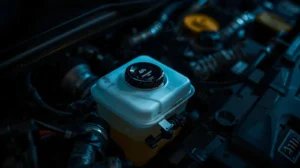
- Check coolant level in the overflow tank once cool. Add coolant or water if needed.
- Look for visible leaks or broken hoses. If fluid pours out, do not drive.
- Call roadside assistance or tow if the problem is severe. Driving while overheated risks engine damage.
These steps limit harm and give you time to get proper help. Acting fast helps prevent costly repairs for car overheating after long drive.
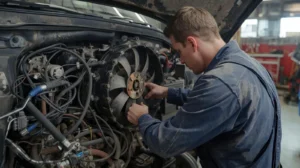
Diagnosing the root cause: step-by-step checks and tools
Finding the exact cause saves money and avoids repeated breakdowns. Use simple checks first.
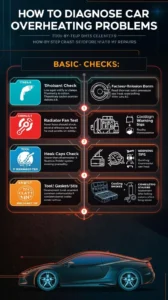
Basic checks
- Check coolant level and color. Dirty or rusty coolant signals corrosion or old fluid.
- Inspect hoses and clamps for cracks or loose fittings.
- Watch the radiator fan run at idle and with A/C on. No fan can mean a bad motor or relay.
- Test the thermostat by feeling the upper radiator hose as the engine warms. If it never gets hot, the thermostat may be stuck closed.
- Check the radiator cap for pressure loss. A bad cap can let coolant boil off.
- Look for white smoke from the exhaust or milky oil. These can point to a head gasket issue.
- Use an OBD2 scanner to read engine codes. Codes can reveal cooling system faults.
Tools that help
- Infrared thermometer to spot hot and cold spots.
- Cooling system pressure tester for leaks.
- OBD2 scanner for fault codes.
- Combustion leak tester to check for head gasket failure.
From my shop experience, a faulty thermostat and a tired water pump are the two most common failures after long highway runs. A quick thermostat swap often fixes car overheating after long drive and gets you back on the road.
Repairs, costs, and what to expect
Repair costs vary by part and labor. Here are typical fixes and rough price ranges.
Common repairs and price ranges
- Thermostat replacement: low to moderate cost. Usually inexpensive parts and a short labor time.
- Coolant flush and refill: low cost. Good preventive step.
- Radiator hose replacement: low to moderate cost.
- Radiator repair or replacement: moderate to high cost depending on part and vehicle.
- Water pump replacement: moderate cost; often replaced with the timing belt on some cars.
- Head gasket repair: high cost and high labor time; can be one of the most expensive fixes.
Expect labor rates to change by region and shop. Always ask for a written estimate and a warranty on parts and labor. Repairs done early often cost far less than fixes after severe damage from car overheating after long drive.
Preventive maintenance to avoid car overheating after long drive
Preventive care is the best way to avoid breakdowns. Simple checks and routine service keep the cooling system healthy.
Routine tasks
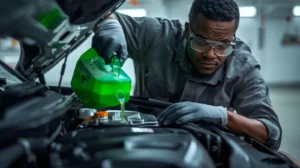
- Replace coolant per the maker’s schedule. Use the correct type and mix.
- Inspect hoses and clamps every oil change.
- Check belts for wear and proper tension.
- Clean the radiator and condenser of bugs and debris.
- Test the thermostat and fan operation annually.
- Replace a failing water pump when noisy or leaking.
- Keep the radiator cap and overflow tank in good shape.
- Avoid extended heavy loads without rest stops or cooling breaks.
Tips for long drives
- Check coolant and oil before you leave.
- Take short breaks on long climbs or in heavy traffic.
- Use cruise control or lower speed to reduce stress on the engine.
- Carry a bottle of appropriate coolant and a basic tool kit.
Do these steps and you lower the risk of car overheating after long drive. Small checks save time and money later.

Personal experience and lessons learned
Once, I drove a friend’s car on a hot interstate run and watched the temp creep up. I pulled over, found a split hose, and fixed it enough to reach a shop. Since then, I always check hoses and carry a spare hose clamp and coolant.
Lessons I share
- Check key parts before a long trip.
- A small kit and calm action prevented a towing bill that day.
- If unsure, stop early rather than push the car and risk severe damage.
People also ask
Why does my car overheat only after long drives?
Long drives let heat build up and reveal weak cooling parts. A marginal water pump, clogged radiator, or a thermostat that sticks under sustained heat often fails only after extended runs.
Can I drive a short distance if my car overheats after a long drive?
Driving a short distance is risky. If the gauge is high or steam appears, it’s safer to stop and cool the engine or get a tow.
Does using the heater help when the car overheats after long drive?
Yes. Turning the heater on transfers heat from the engine to the passenger cabin and can lower engine temperature slightly for short-term relief.
Will topping off coolant fix car overheating after long drive?
Topping off can help if low coolant is the cause. If there’s a leak, topping off only masks the problem until you fix the leak.
Is it safe to open the radiator cap when my engine is hot?
No. Hot coolant and steam can cause serious burns. Wait until the engine cools completely before opening any closed cooling system parts.
Frequently Asked Questions of car overheating after long drive
What should I check first if my car overheats after a long drive?
First check the coolant level and look for visible leaks. Then check hoses and the radiator fan once the engine is cool.
How long should I wait before opening the hood after overheating?
Wait at least 15–30 minutes for the engine to cool. Use caution; steam and hot parts can still burn.
Can a clogged radiator cause overheating only after long drives?
Yes. A partially clogged radiator may handle short trips but fail under sustained heat from long drives.
How often should coolant be replaced to prevent overheating?
Most makers suggest coolant replacement every 2–5 years. Check your owner’s manual for the exact schedule.
Could my car overheat after a drive because of a faulty fan relay?
Yes. A fan or its relay that fails can stop the fan from running, especially at low speeds or idle, causing overheating.
Conclusion
Car overheating after long drive is a common but manageable problem. Know the signs, take safe immediate steps, and diagnose causes with simple checks. Regular maintenance and a small roadside kit cut the risk and cost of repairs. Start by checking coolant and hoses before your next long trip, and consider a preventive service if you plan heavy towing or long highway runs. Share your story, ask a question below, or subscribe for more practical car care tips.