
Rusted brake lines are common on older cars, and replacing a section means making a leak-proof flare on the end of new tubing. Brake lines use specific flare types: most American vehicles use a 45° double (inverted) flare, while many European and Asian vehicles use a bubble (ISO) flare. A wrong or poorly made flare can leak under hard braking.
This guide explains which flare you need and the types of flaring tool, and compares five kits using the details their makers list.
What you’ll learn
- Double vs bubble vs single flares
- Bench (vise) tools vs on-car tools
- Tubing materials and sizes
- Which of five tools suits you
Quick answer
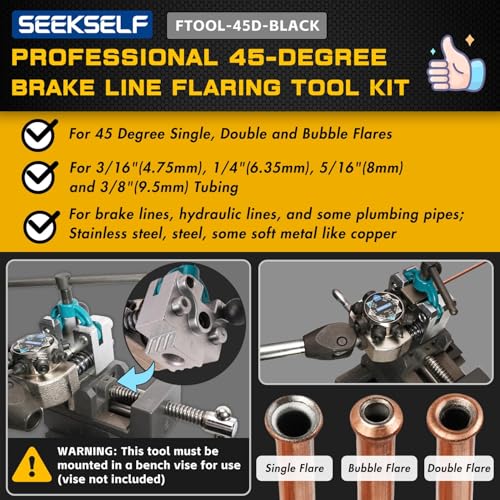
For the best flares in common sizes, a vise-mounted kit such as the SEEKSELF 45° Brake Line Flaring Kit makes double and bubble flares in 3/16, 1/4, 5/16 and 3/8 in tubing. If you need to flare lines still on the car, the compact Capri Tools 3/16 in Double Flaring Tool works in tight spots. On a budget, the TUBPRO yoke-style kit covers five sizes, and the Ailbiuko kit adds 25 ft of tubing and 100 fittings.
Brakes are safety-critical
Use the correct flare type for your fittings, never use single flares on brake lines, and bleed the brakes and check for leaks under pressure before driving. If you’re not confident, have a professional inspect the repair.
In this article
How to choose a brake line flaring tool
Flare type
Match the flare to your fittings: 45° double (inverted) flares for most domestic vehicles, bubble (ISO) flares for many European and Asian vehicles. Single flares are for fuel and other low-pressure lines, not brakes. 37° flares are for AN fittings, not standard brake lines.
Bench or on-car
Vise-mounted (bench) tools with a turret or press make the most consistent flares. On-car tools let you flare a line without removing it, which helps when only one section is rusted.
Tubing size and material
3/16 in is the most common brake line size. Steel and copper-nickel tubing flare well; copper-nickel is easiest to bend and resists rust. Stainless tubing is very hard to double flare with basic tools.
Practice and inspect
Cut the tube square, deburr it, slide the tube nut on first, and practice on scrap. A good flare is smooth, even and centered.
Fittings and tubing
Kits that include tubing and fittings save trips to the parts store; check that the thread sizes match your vehicle.
Quick comparison
| Model | Type | Best for | Key features (from the maker’s listing) | Amazon |
|---|---|---|---|---|
| SEEKSELF 45° Brake Line Flaring Tool Kit | Vise-mounted | Consistent double and bubble flares | 45° single, double and bubble flares; split dies for 3/16, 1/4, 5/16 and 3/8 in; vise-mounted tool body; anti-slip die design | Amazon |
| SEEKSELF 45° and 37° Brake Line Flaring Tool Kit | Vise-mounted | Brake lines plus AN fittings | 45° and 37° turntables; single, double and bubble flares; 3/16, 1/4, 5/16 and 3/8 in dies; vise-mounted | Amazon |
| Capri Tools 3/16 in Double Flaring Tool | On-car | Repairing lines without removing them | 45° double flares in 3/16 in non-stainless steel, nickel and copper tubing; compact for tight spots on or off the vehicle; detachable die for vise use; needs 10 mm and 17 mm wrenches | Amazon |
| TUBPRO Double and Single Flaring Tool Kit | Yoke style | Occasional use on a budget | 45° double and single flares in copper, aluminum and soft steel; flaring bar and forged yoke; 5 adapters (3/16 to 1/2 in); tube cutter; case | Amazon |
| Ailbiuko 3/16 in Brake Line Repair Kit | Repair kit | Replacing a whole line | Flaring tool kit; 25 ft of 3/16 in copper-plated brake line; 100 fittings including inverted tube nuts and unions in 3/8-24, 7/16-24, 1/2-20 and 9/16-18 threads | Amazon |
The five brake line flaring tools compared
How we chose: we compared these tools using the details each maker lists on Amazon (checked in November 2026): flare types, sizes, mounting and what’s included. We removed a near-duplicate 45° bench kit and a second 3/16 in on-car tool. We have not tested these tools ourselves.
1. SEEKSELF 45° Brake Line Flaring Tool Kit

SEEKSELF’s vise-mounted kit makes 45° double and bubble flares (and single flares for non-brake lines) in four common tube sizes, from 3/16 to 3/8 inch.
The split dies have a limiting hole to stop them slipping, which helps produce consistent flares. Clamp the tool firmly in a vise before use.
Why it’s a good pick
- Double and bubble flares
- Consistent results
- Four common sizes
Keep in mind
- Needs a bench vise
- Lines must be off the car
2. SEEKSELF 45° and 37° Brake Line Flaring Tool Kit

The same SEEKSELF design with an extra 37° turntable, so it can also make flares for AN fittings used in performance and racing fuel and brake systems.
If you only work on standard brake lines, the 45° kit is enough.
Why it’s a good pick
- Covers 37° AN flares too
- Consistent bench flares
- Four sizes
Keep in mind
- Higher price
- 37° isn’t needed for standard brake lines
3. Capri Tools 3/16 in Double Flaring Tool
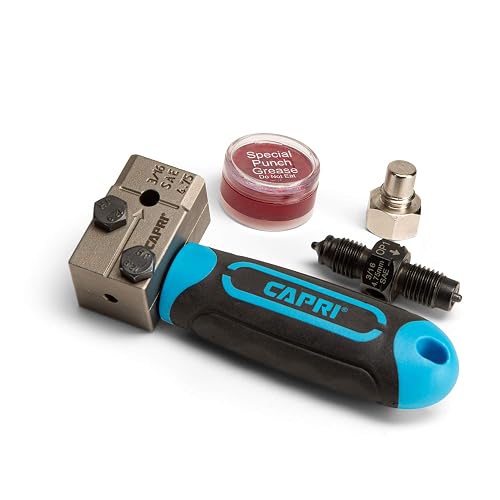
Capri’s compact tool makes 45° double flares in 3/16 inch tubing on or off the vehicle, which is useful when you’re replacing a rusted section without pulling the whole line.
It works with non-stainless steel, nickel and copper tubing, and the die detaches for use in a vise. You’ll need 10 mm and 17 mm wrenches.
Why it’s a good pick
- Flares lines on the car
- Compact
- Good flare quality for its size
Keep in mind
- 3/16 in only
- No bubble flares
4. TUBPRO Double and Single Flaring Tool Kit

A classic yoke-and-bar flaring kit with five adapters from 3/16 to 1/2 inch and a tube cutter, in a blow-molded case.
It makes 45° double and single flares in copper, aluminum and soft steel. Yoke-style tools take more practice to get perfect flares than bench kits.
Why it’s a good pick
- Very low price
- Five sizes
- Tube cutter included
Keep in mind
- No bubble flares
- Harder to get consistent results
5. Ailbiuko 3/16 in Brake Line Repair Kit

This kit bundles a single and double flaring tool with 25 feet of 3/16 inch brake line and 100 fittings, including inverted tube nuts and unions in four common thread sizes.
It’s a convenient way to have everything for a line replacement in one box; check the thread sizes your vehicle uses.
Why it’s a good pick
- Tubing and fittings included
- Four common thread sizes
- Good value
Keep in mind
- Check the flaring tool quality for regular use
- Confirm the line material suits you
Verdict
For consistent, safe flares, the SEEKSELF 45° bench kit is the best choice; get the 45° and 37° version if you also work with AN fittings. The Capri tool is ideal for on-car repairs, the TUBPRO kit is the cheapest option, and the Ailbiuko kit includes tubing and fittings.
After replacing lines, check the fluid: see signs of low brake fluid, DOT 3 vs DOT 4 brake fluid and our brake fluid testers.
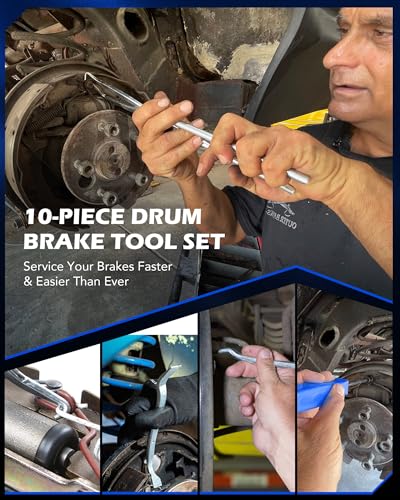
Related guides: best brake spring tool set.
Frequently asked questions
Sources
- Manufacturer product listings on Amazon (contents and specifications), checked November 2026
- Flare fitting (Wikipedia)