
Run the AC weekly, change the cabin filter, clean the condenser, check belts, and fix leaks fast.
If your cabin feels warm, smells musty, or hisses at idle, it is time to learn how to maintain car ac system the right way. I have serviced hundreds of systems in hot summers and freezing winters. In this guide, I show clear steps, pro tips, and safe methods that keep cold air flowing and repair bills low. Read on to master how to maintain car ac system without guesswork.

How a Car AC System Works (So You Maintain It Right)
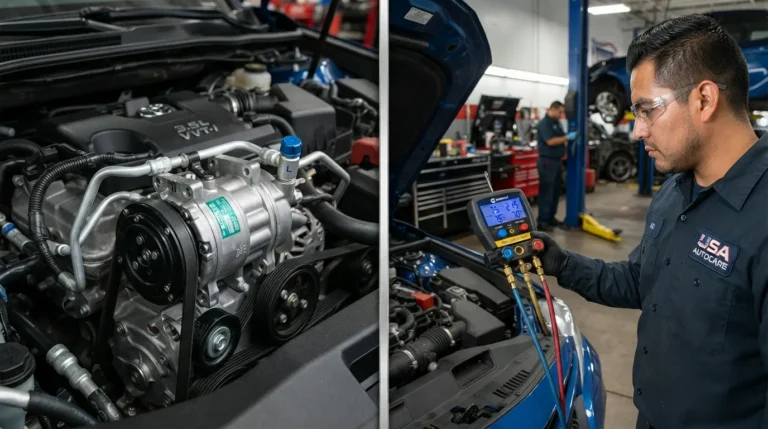
Your AC is a closed loop. The compressor pressurizes refrigerant. The condenser cools it. The expansion device drops the pressure. The evaporator absorbs heat in the cabin. The blower moves air through the evaporator and cabin filter.
Key parts to know:
- Compressor and clutch drive the system and move refrigerant.
- Condenser sits in front of the radiator and sheds heat.
- Expansion valve or orifice tube meters flow.
- Evaporator sits in the dash and chills the air.
- Blower motor and resistor control airflow.
- Cabin air filter keeps dust out and protects the evaporator.
- Pressure switches, sensors, and the HVAC control module manage operation.
Why this matters for how to maintain car ac system:
- A dirty condenser blocks heat and makes warm air.
- A clogged cabin filter reduces flow and strains the blower.
- Low refrigerant causes poor cooling and can damage the compressor.
- Bad belts slip, so the compressor underperforms.
PAA-style quick answers:
- Is it okay to run AC in winter? Yes. Run it weekly to keep seals oiled.
- Do I need to recharge every year? No. If it is low, there is likely a leak.
.jpg)
Source: medlockgulf.com
Why Regular AC Maintenance Pays Off
Done right, how to maintain car ac system saves time and money.
Big wins:
- Better comfort and defogging in heat and rain.
- Lower load on the engine and better fuel use.
- Longer life for the compressor, clutch, and blower.
- Fewer surprise repairs and less downtime.
From experience, most big AC failures I see start with small issues. A $20 cabin filter turns into a burnt blower or iced evaporator. A dirty condenser turns into a failed compressor. Learning how to maintain car ac system stops that slide early.

Tools and Supplies I Actually Use
You can do most basics with simple tools.
Essentials:
- Gloves, safety glasses, and a dust mask.
- Screwdrivers and a socket set.
- Garden hose with a gentle spray nozzle.
- New cabin air filter (OEM spec).
- Fin comb or soft brush for the condenser.
- AC coil cleaner or an evaporator foam cleaner that is AC-safe.
- UV flashlight if dye is present and a leak is suspected.
Advanced tools for trained users only:
- AC manifold gauge set for R-134a or R-1234yf.
- Electronic leak detector.
- Vacuum pump and recovery machine.
Note on refrigerants:
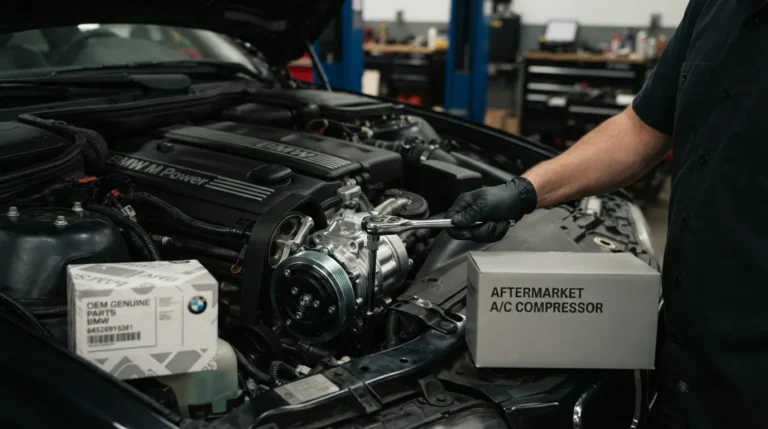
- Many cars use R-134a. Newer cars use R-1234yf. They are not interchangeable.
- Do not mix refrigerants. Do not vent to air. Follow local rules.
Step-by-Step: How to Maintain Car AC System at Home
This is the simple plan I teach new techs and careful DIYers.
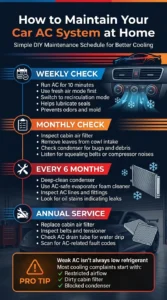
Weekly
- Run the AC for 10 minutes, even in winter. Use fresh air first, then recirculate. This keeps seals oiled and prevents odor.
Monthly
- Inspect the cabin filter. If dirty or musty, replace it.
- Check for leaves and debris at the cowl intake.
- Look at the condenser. Remove bugs and lint with water from the back side.
- Listen for belt squeal or clicks from the compressor clutch.
Every 6 months
- Clean the condenser more thoroughly with a soft brush and water.
- Disinfect the evaporator with an AC-safe foam cleaner through the cabin filter slot or service port.
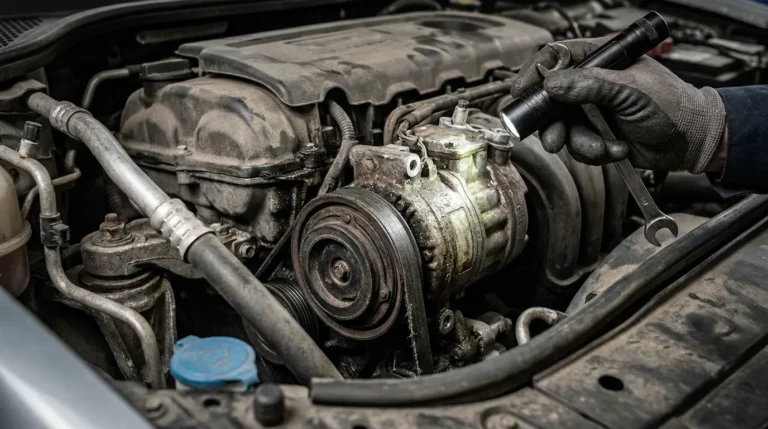
- Check for oil stains on AC lines and at fittings. Oil often marks a refrigerant leak.
Annually or every 12,000–15,000 miles
- Replace the cabin filter.
- Inspect belts, tensioner, and pulleys. Replace if cracked or glazed.
- Check drain tube under the car for steady water drip with AC on. No drip can mean a blocked drain.
- Scan for AC-related trouble codes if your car supports it.
When learning how to maintain car ac system, always start with airflow. Most weak AC complaints are flow, not refrigerant.
Deep Dive Tasks That Make a Big Difference
Cabin air filter
- Access is often behind the glove box. Slide out the old filter. Vacuum the housing. Install the new filter with the airflow arrow correct.
Condenser cleaning
- Spray water from the engine side out to the grille. Use gentle pressure. Straighten bent fins with a fin comb.
Evaporator cleaning
- Apply an AC-safe foam cleaner into the evaporator box via the filter slot or dedicated port. Let it sit, then run the fan to drain. This cuts odor and mold.
Belt and clutch check
- With engine off, inspect the belt for cracks or shiny glaze. With engine idling and AC on, the clutch plate should engage smoothly with a solid click.
Pressure check and recharges
- Without proper tools, do not “top off” refrigerant. Cans with sealant can ruin tools and block valves. If you use gauges, check manufacturer specs for ambient temperature and target pressures. Low on both sides often points to low charge. High head pressure can point to a blocked condenser or fan issue.
Oil and O-rings
- Any time the system is opened, use the correct PAG oil type and amount. Replace O-rings with compatible ones and lube lightly with refrigerant oil before assembly.
These are the parts of how to maintain car ac system that separate quick fixes from lasting results.

Troubleshooting: What That Symptom Really Means
Weak airflow
- Likely a clogged cabin filter or a failing blower resistor.
- Check for a stuck blend door or blocked intake at the cowl.
Cold at speed, warm at idle
- Think airflow and condenser fan. Dirty condenser or a dead fan will do this.
- Also check for belt slip and debris between the condenser and radiator.
Short cycling compressor
- Low refrigerant from a leak is common. A bad pressure switch is possible.
- Measure pressures, confirm fan operation, and look for UV dye.
Musty smell
- Bacteria on the evaporator. Use foam cleaner and replace the filter.
- Run AC on fresh air for a minute before shutoff to dry the core.
Water on floor
- Blocked evaporator drain. Clear the drain tube from under the car with gentle air or a flexible line.
Rattles or squeals
- Loose belly pans, failing belt tensioners, or a bad clutch bearing.
Getting good at how to maintain car ac system means you spot these early and act before parts fail.

When to See a Pro and What It Should Cost
Go to a certified shop if:
- AC is not cold and pressures are unknown.
- You suspect a leak at the evaporator or condenser.
- The system has been opened and needs vacuum and charge by weight.
- Your car uses R-1234yf, which needs special machines.
Typical costs in my shop area:
- AC performance test and leak check: $80–$180.
- Evacuate and recharge by weight: $150–$350 plus refrigerant.
- Condenser replacement: $400–$900 parts and labor.
- Compressor replacement and flush: $900–$1,800 depending on vehicle.
A credible shop will measure vent temps, record pressures, recover refrigerant, pull vacuum for at least 20–30 minutes, and charge by weight to factory spec. That is the gold standard for how to maintain car ac system after a repair.
Safety, Environmental, and Legal Must-Knows
- Refrigerant can cause frostbite and eye injury. Wear gloves and eye protection.
- It is illegal in many regions to vent refrigerant. Use proper recovery.
- Match the exact refrigerant type. Do not convert without the right parts.
- Avoid sealant-in-a-can. It can clog expansion devices and destroy service tools.
- Mind the engine fan. It can start at any time with AC on.
Respect for these rules is part of how to maintain car ac system the right way and protect the planet.
Pro Tips From the Bay
These quick habits help every driver:
- Use recirculate only to cool the cabin fast. Switch to fresh air to reduce fog and odor.
- Park in shade or use a sunshade. Lower cabin temps mean less AC strain.
- Wash the front grille area during each car wash to keep the condenser clear.
- When diagnosing, record ambient temp, humidity, vent temp, and pressures. Data beats guesses.
From my own practice, the biggest win in how to maintain car ac system was simple condenser care. A clean condenser brought vent temps from 58°F to 42°F on a midsize sedan in July. That saved a customer from an unnecessary recharge and a compressor swap.

Frequently Asked Questions of how to maintain car ac system
How often should I change the cabin air filter?
Check it every 6 months and replace yearly, or sooner in dusty areas. A clean filter is the fastest fix for weak airflow.
Can I recharge my AC with a single hose can?
I do not recommend it. You cannot see both pressures or add by weight, and sealants can cause damage.
Why is my AC cold while driving but warm at idle?
Airflow is the usual cause. Clean the condenser and confirm the radiator fan runs when the AC is on.
How do I kill the AC smell for good?
Clean the evaporator with an AC-safe foam and replace the filter. Then run fresh air for a minute before shutoff to dry the core.
What vent temperature is normal?
On a 75–85°F day, many cars hit 40–50°F at the center vent on max with recirculate. Humidity and sun load change results.
Is running AC bad for the engine?
It adds load, but a healthy system is designed for it. Good maintenance lowers that load and helps fuel use.
How do I know if I have a refrigerant leak?
Look for oily spots at fittings, use a UV light, or have a shop do an electronic leak test. Low pressure readings also suggest a leak.
Conclusion
You now know how to maintain car ac system like a pro: keep airflow high, keep the condenser clean, run the system weekly, and fix small leaks fast. These habits extend component life, cut costs, and keep you cool in any season.
Start today: swap the cabin filter, rinse the condenser, and log your vent temps. If you found this helpful, subscribe for more simple car care guides or drop a comment with your AC question.