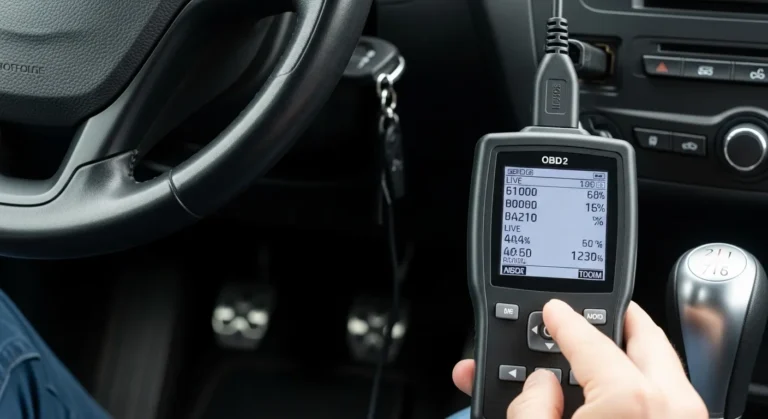
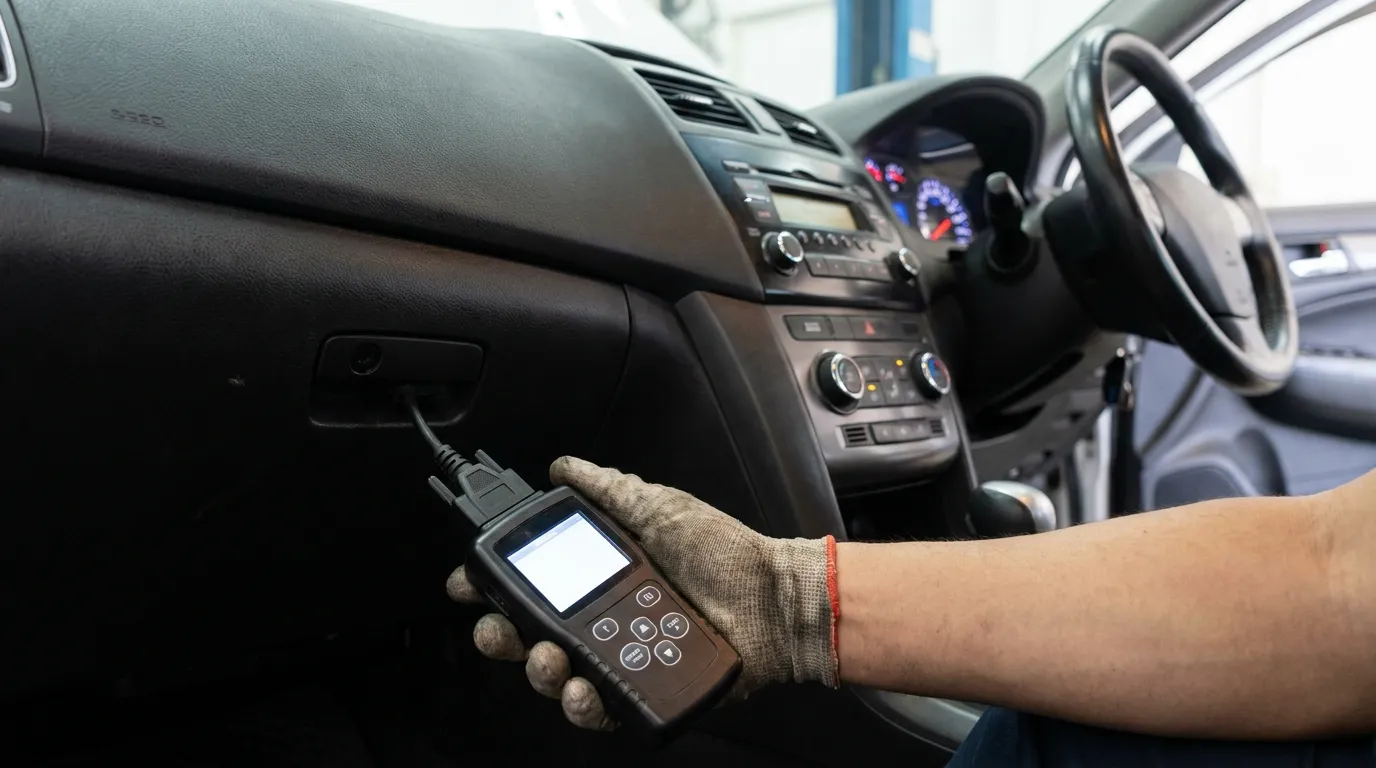
Plug in the OBD-II scanner, read codes, check live data, fix, then clear.
If you want a clear, hands-on guide on how to use diagnostic scan tool, you are in the right spot. I have used these tools in shops and driveways for years. I will show you what works, what fails, and how to read data like a pro. By the end, you will know how to use diagnostic scan tool with skill and confidence.
What a diagnostic scan tool actually does
A diagnostic scan tool talks to your car’s control modules. It reads trouble codes, shows live sensor data, and runs tests. It follows OBD-II rules made by SAE and EPA. This set covers most cars and light trucks from 1996 onward in the US.
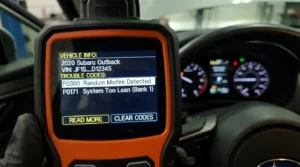
You will see codes called DTCs. They look like P0301 or C0035. P is powertrain. B is body. C is chassis. U is network. Generic codes are the same on most cars. Maker codes vary by brand.
OBD-II has modes. Mode 1 is live data. Mode 2 is freeze frame. Mode 3 is stored codes. Mode 4 clears codes. Mode 5 is oxygen sensor test on older cars. Mode 6 is on-board monitor test results. Mode 7 is pending codes. Mode 8 is active test on some tools. Mode 9 is VIN and info. Knowing these helps you learn how to use diagnostic scan tool the right way.
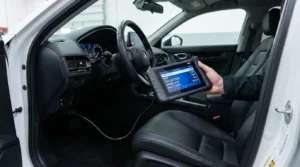
Tools and setup you need
Pick a tool that fits your needs. A basic code reader is cheap and fine for simple faults. A Bluetooth dongle with a phone app is great for live data and logs. A pro handheld tool adds ABS, SRS, and some active tests.
Update your tool firmware and the app. A fresh database helps decode codes. Charge your phone or tablet. Clean the OBD-II port if dusty. It sits below the dash on the driver side on most cars.
Have a plan for safe tests. Park on level ground. Set the brake. Keep a fire extinguisher handy if you will open the hood. This prep sets you up to master how to use diagnostic scan tool in real life.
Step-by-step: how to use a diagnostic scan tool
Follow these steps on any OBD-II car. This process is the core of how to use diagnostic scan tool without stress.
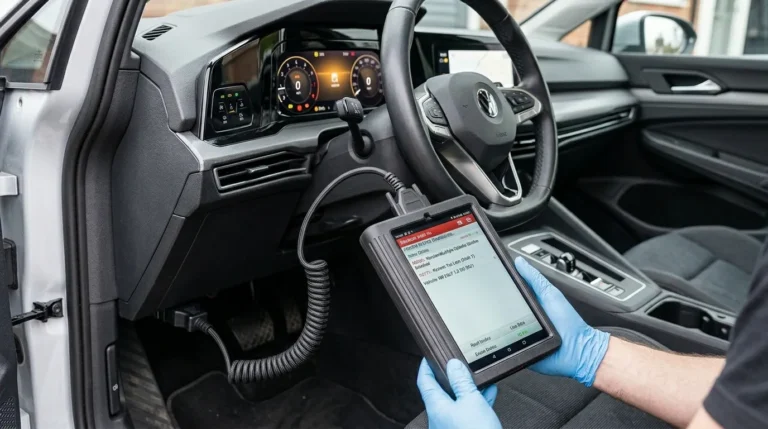
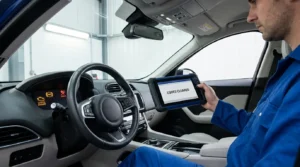
- Find the OBD-II port. Look under the dash near the steering wheel.
- Turn the ignition to ON. Do not start yet unless the tool asks.
- Plug in the scanner. Pair your phone if it is Bluetooth.
- Select the car. Let the tool auto-detect the protocol. Or choose it if needed.
- Read stored codes. Save them. Do not clear yet.
- Read pending codes. These show faults that almost set a code.
- Open freeze frame. Note RPM, load, temp, and speed at the time of the fault.
- Check readiness monitors. See which tests passed or are not ready.
- View live data. Pick key PIDs like fuel trims, O2, MAF, ECT, RPM.
- Graph data. Look for trends and drops. Compare banks on V engines.
- Fix the root cause. Use data to guide checks or parts.
- Clear codes. Then do a drive cycle to set monitors and confirm the fix.
Tips from the bay. Take photos of codes and freeze frame. Label each test drive. If the battery is weak, use a maintainer. Weak voltage can cause false codes.
Reading codes like a pro
Learn how to use diagnostic scan tool to decode DTCs with context. P0301 means a misfire on cylinder 1. P0171 means the mix is lean on bank 1. P0420 points to low catalyst efficiency. The code points to a system, not a part.
Use freeze frame to see what the engine was doing. High load and low RPM with a lean code can hint at a vacuum leak. High speed with a misfire may point to a weak coil that breaks down when hot. This is the story behind the numbers.
Check generic vs maker codes. P0420 is generic. But a Toyota may add a maker code like P2195 for an O2 stuck lean. Your scan tool may show both. Look up maker notes in the app. This is key to how to use diagnostic scan tool with accuracy.
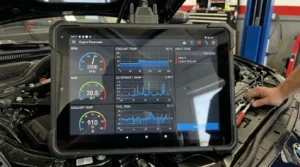
Live data, graphs, and Mode 6
Live data turns guesswork into facts. Start with short term fuel trim and long term fuel trim. Near zero is good. Big positive numbers mean the engine adds fuel to fix a lean mix. Big negative numbers mean it pulls fuel from a rich mix.
Watch the front O2 sensors. They should switch fast at idle. A lazy wave can point to a bad sensor or a rich or lean fault. The rear O2 should be steady if the cat is good.
Use Mode 6 on cars that support it. It shows test counts and limits. You can spot a weak misfire or a slow O2 before a code sets. I use Mode 6 a lot on stubborn P0300 cases. It is a secret weapon in how to use diagnostic scan tool at a higher level.
Special tests and service functions
Some tools can run active tests. You can cycle the EVAP purge valve. You can command a fan on. You can test an ABS solenoid. Use care with these. Read tool prompts. Follow safety steps.
Service functions can save time. You can reset a steering angle sensor after an alignment. You can do a throttle body relearn after cleaning. You can register a new battery on some cars. These features take how to use diagnostic scan tool from basic to pro.
Know limits. Not all cars allow the same tests. Many maker features need a brand-specific tool. Read the tool manual. Check the vehicle support list.
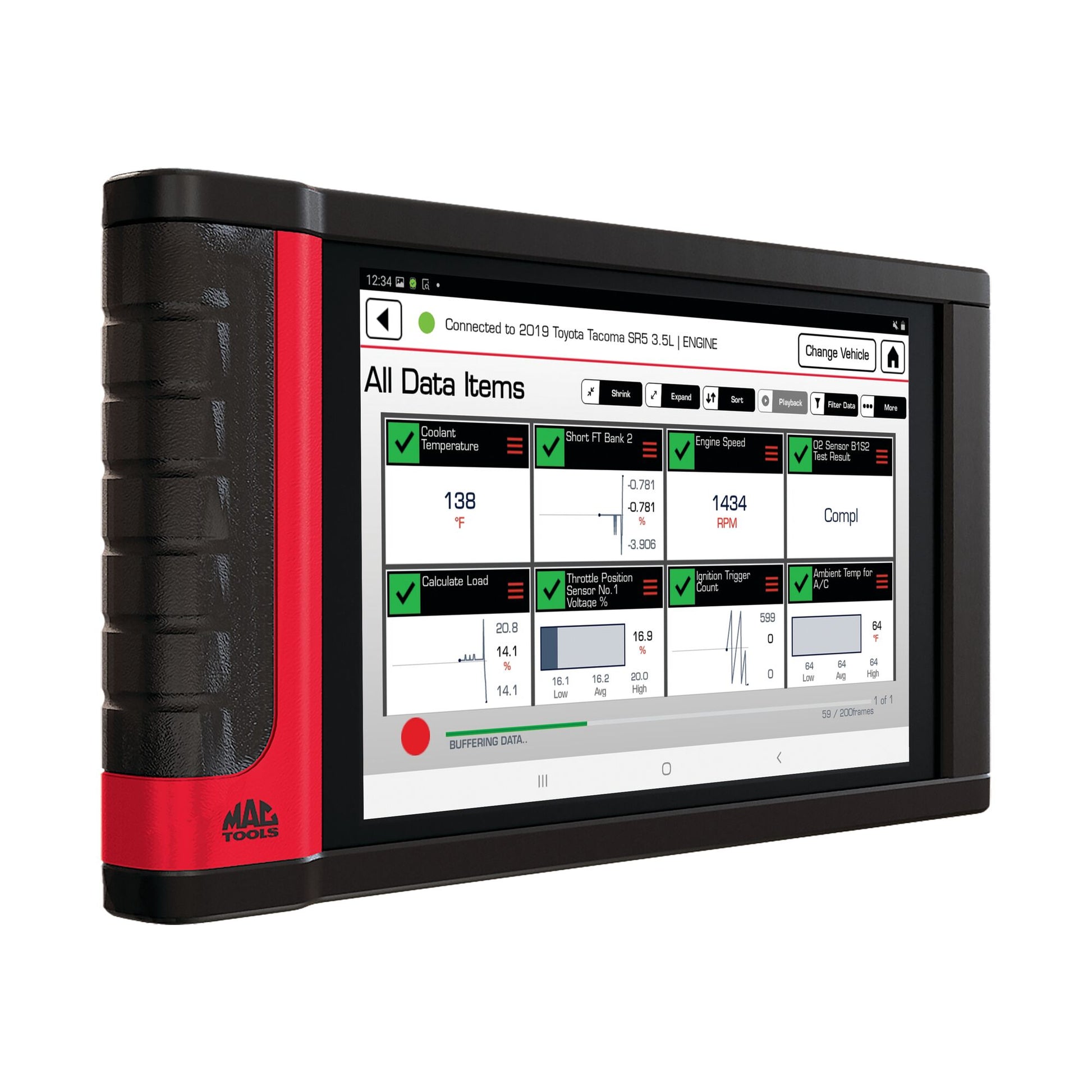
Source: mactools.com
Real-world examples and mistakes to avoid
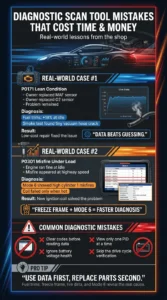
A quick story. A sedan came in with P0171. The owner had changed the MAF and O2. No fix. I graphed fuel trims and MAF grams per second. At idle, trims were +18%. I smoked the intake and found a tiny hose crack. Five bucks to fix. This is how to use diagnostic scan tool to avoid parts darts.
Another case. P0301 at highway speed only. Coils looked fine at idle. Mode 6 showed high misfire counts on cylinder 1 under load. The coil failed when hot. A new coil fixed it. Freeze frame and Mode 6 led the way.
Common mistakes to avoid:
- Clearing codes first. You lose freeze frame and pending data.
- Reading one PID at a time. Group related PIDs to see cause and effect.
- Ignoring battery health. Low voltage can skew sensors and set U codes.
- Skipping the drive cycle. Monitors must run to prove the fix.
Use these lessons to sharpen how to use diagnostic scan tool day to day.
Limitations, safety, and when to call a pro
A scan tool reads what the car reports. It does not replace a scope, a smoke machine, or a pressure gauge. Data can lie if a sensor is biased. Cross-check with simple tests when unsure.
Stay safe. Keep fingers and clothes away from belts and fans. Use jack stands if you must go under the car. Work in a vented area. Gas fumes and exhaust are no joke.
Know when to seek help. Airbag work needs care and the right gear. Some immobilizer and module tasks need dealer-level tools. A good shop has scope waveforms, TSB access, and wiring data. Part of how to use diagnostic scan tool well is knowing its limits.
Frequently Asked Questions of how to use diagnostic scan tool
Do I need the engine running to scan my car?
Most scans use ignition ON with engine off. For live data and misfire checks, start the engine.
Will clearing codes make my car pass emissions?
No. Clearing codes resets monitors to not ready. You must drive a full cycle and pass readiness.
Can a diagnostic scan tool damage my car?
A basic read-only tool will not. Active tests can cause issues if used wrong, so read prompts and use care.
What is the best app or tool for beginners?
A quality Bluetooth OBD-II dongle with a top-rated app is great. Pick one that shows fuel trims, graphs, and readiness.
Why do codes come back after I clear them?
The fault still exists. Use freeze frame and live data to find the root cause before clearing.
How do I find the OBD-II port?
It is usually under the dash on the driver side. Some cars place it behind a small panel.
What is Mode 6 and why should I care?
Mode 6 shows on-board test results before a code sets. It helps catch weak parts early.
Can I use the same tool on hybrid or EV?
You can read basic data and codes. For high-voltage systems, use tools made for those cars and follow safety rules.
Conclusion
You now know how to use diagnostic scan tool from plug-in to proof of fix. Read codes with context. Use freeze frame. Graph fuel trims. Check Mode 6. Confirm with a clean drive cycle. This method saves time and money.
Start small today. Scan your car, save a health report, and learn your baseline. If you found this helpful, subscribe for more step-by-step guides, or drop a comment with your scan tool wins and questions.