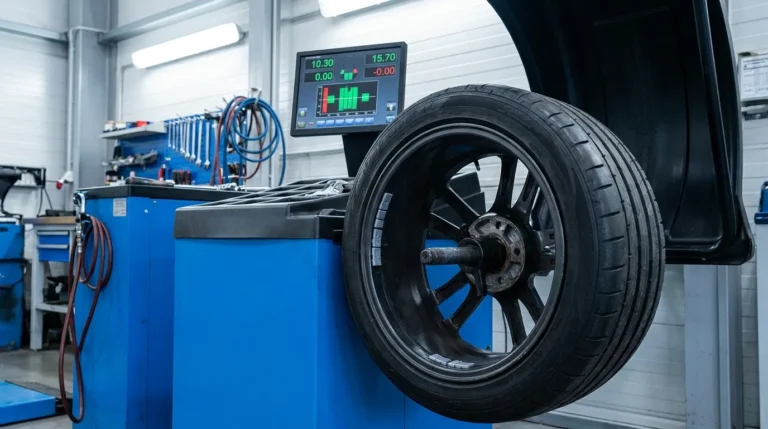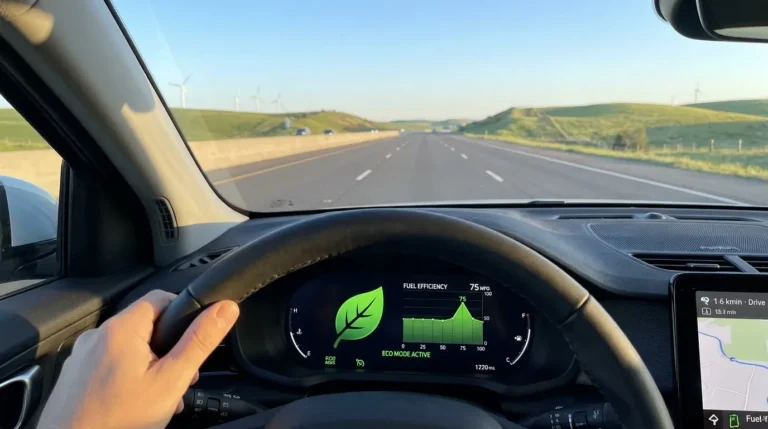
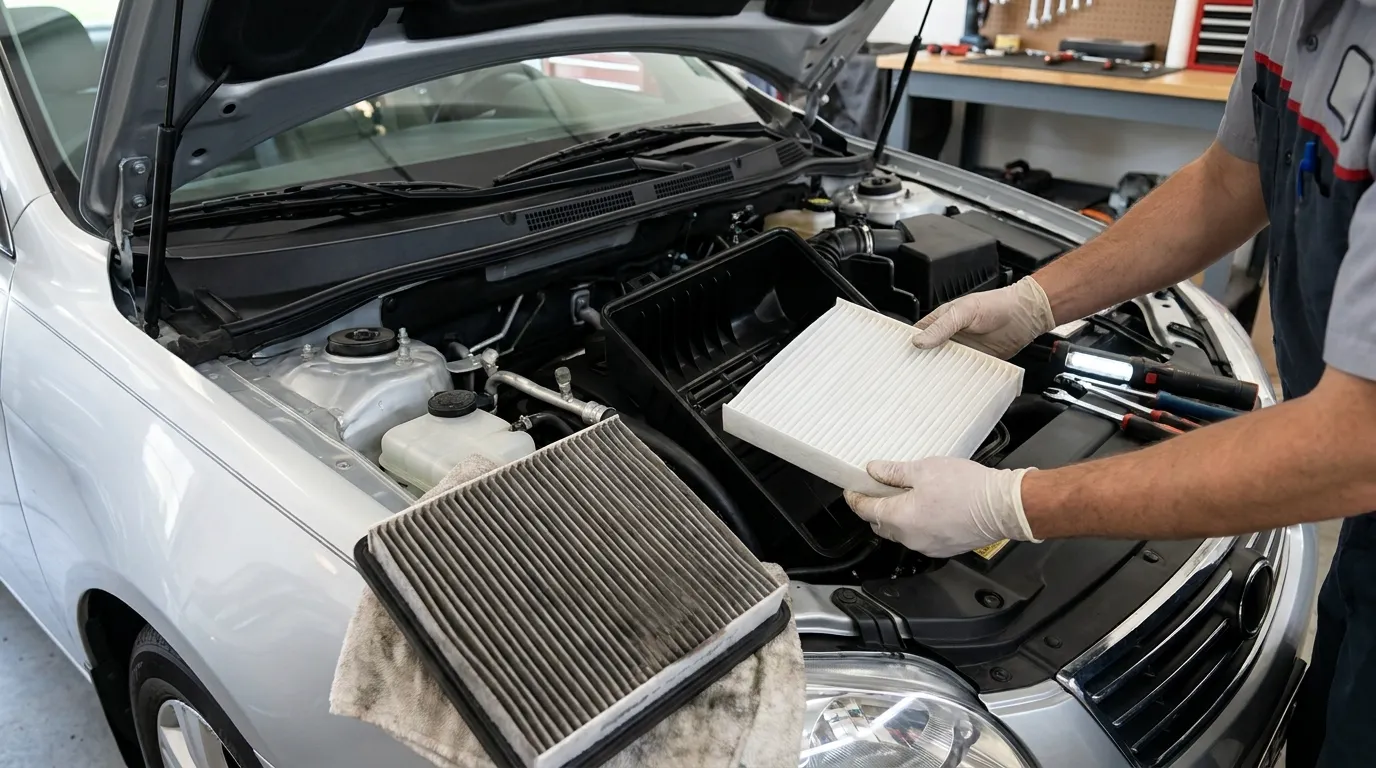
Car air filter replacement improves engine power, fuel economy, and long-term reliability.
Want your engine to breathe clean, cool air and run like it should? You are in the right place. I have done hundreds of car air filter replacement jobs in driveways and shops, and I will show you what matters, what to avoid, and how to get it done fast. This guide breaks down costs, steps, tools, and pro tips so you can make a smart choice and do car air filter replacement with confidence.
What a Car Air Filter Does and Why It Matters
Your engine is an air pump. It mixes clean air with fuel, then burns it. The air filter traps dust, sand, pollen, and bugs before they reach the intake, throttle body, and cylinders.
A clean filter protects the mass airflow sensor and piston rings. It helps keep fuel trims stable and prevents rough idle and lag. Skipping car air filter replacement is like running a marathon with a wet mask on. Your engine will work harder and waste fuel.
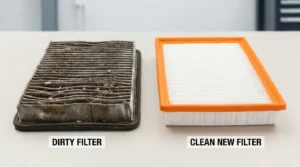
Signs You Need Car Air Filter Replacement
Watch for these common clues. One or more can point to a clogged engine air filter.
- Noticeable drop in power or slow throttle response
- Lower fuel economy over a few tanks
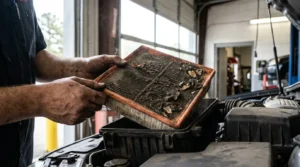
- Dark, dusty, or oily filter media on inspection
- Whistling from the air box or intake tube
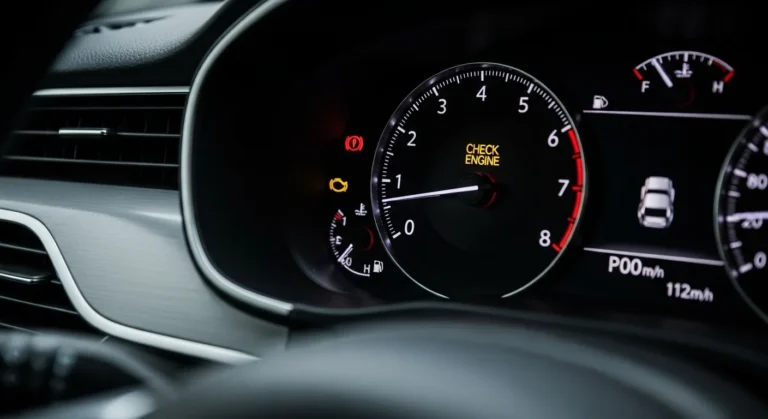
- Check engine light for airflow or MAF codes
- Soot inside the air box or on the intake tube
If you see leaves, sand, or a torn seal, plan a car air filter replacement soon.
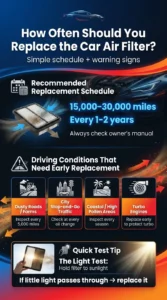
How Often Should You Replace the Car Air Filter?
Most makers suggest 15,000 to 30,000 miles, or about every 1 to 2 years. Always check your owner’s manual. Your driving can cut that time in half.
- Dusty roads or farm areas: inspect every 5,000 miles
- Stop‑and‑go city use: inspect at each oil change
- Coastal or high pollen zones: inspect each season
- Turbo engines: replace on the early side to protect the compressor
Use the light test. Hold the filter up to the sun. If little light gets through, it is time for car air filter replacement.
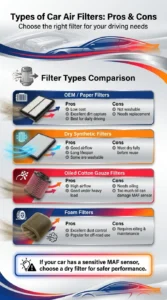
Types of Air Filters: Pros and Cons
The best choice depends on your car, your drive, and your goals. Here is a quick guide.
- OEM or paper filters
Simple, low cost, high capture rate. Great for daily use. Replace, do not wash. - Dry synthetic filters
Good airflow and long life. Some are washable. Keep fully dry before reuse. - Oiled cotton gauze
Higher airflow under load. Needs oiling after wash. Too much oil can foul the MAF sensor. - Foam filters
Often used off‑road. Good dust control. Needs oiling and care.
Tip: If your car has a sensitive MAF sensor, a dry filter is a safe pick for car air filter replacement.
Tools and Prep Before Car Air Filter Replacement
Most jobs take 10 minutes. Have these on hand.
- New engine air filter made for your exact year, make, and model
- Screwdriver or socket for the air box screws or clips
- Shop towel to wipe debris and seal edges
- Small vacuum to clear the air box
- Light gloves and a flashlight
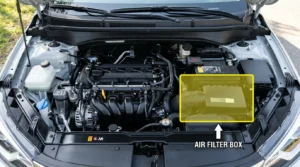
Park on level ground. Let the engine cool. Open the hood and find the air box near the intake snorkel.
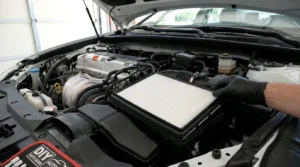
Step-by-Step: Engine Car Air Filter Replacement
Follow these simple steps. This works for most cars and SUVs.
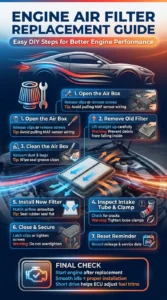
- Open the air box
Release clips or remove screws. Note the MAF sensor wiring nearby. Do not pull on it. - Remove the old filter
Lift it straight up. Watch for leaves or bolts that may fall into the box. - Clean the air box
Vacuum out dust and bugs. Wipe the seal groove so the new filter seats well. - Inspect the intake tube and clamp
Check for cracks and loose clamps. Fix before you close the box. - Install the new filter
Match the airflow arrow or the tab. Seat the rubber seal flat on the rim. - Close and secure
Refit the cover. Latch all clips or tighten screws snug. Do not over‑tighten. - Reset your reminder
Note the mileage and date. Add a phone reminder for the next check.
After car air filter replacement, start the car. The idle should be smooth. A short drive helps the ECU settle fuel trims.
Cabin Filter vs Engine Filter: Know the Difference
The engine air filter feeds the engine. The cabin air filter cleans the air you breathe inside the car. People often mix them up.
- Cabin filter signs: weak airflow from vents, bad smell, dusty dash
- Typical cabin interval: 12,000 to 20,000 miles or once a year
- Common cabin locations: behind the glove box or under the cowl
A fresh cabin filter will not add power, but it will help allergies and clear the fog faster. Do both on the same day to build a simple habit, but use the right parts for each job.

Source: gexhaust.com
Common Mistakes and How to Avoid Them
A few small errors can undo a good car air filter replacement. Avoid these traps.
- Leaving the air box seal pinched or off the rim
- Letting sand fall into the intake tube
- Over‑oiling a gauze filter near a MAF sensor
- Forgetting one clip or screw, which causes leaks and noise
- Using a universal filter that does not fit the box
- Ignoring torn intake boots that pull in unmetered air
Slow down for two extra minutes. Check every clip and the seal all the way around.
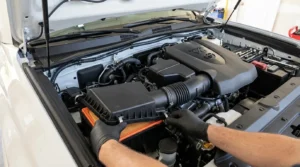
Benefits You Can Feel After Car Air Filter Replacement
A clean filter pays off fast. You may notice gains right away.
- Better throttle response and smoother idle
- More stable fuel trims and fewer random codes
- A small bump in mpg over a few tanks
- Less engine wear from dust and grit
- Longer life for the MAF sensor and turbo
The gains are not magic. But they are real and add up over months and miles.
Cost, Time, and DIY vs Shop
Here is what to expect for car air filter replacement.
- DIY cost: 15 to 45 dollars for most paper or dry filters
- Shop cost: 40 to 120 dollars parts and labor
- Time: 5 to 15 minutes for most cars, longer on tight engine bays
DIY saves money and teaches you your car. A shop is fine if space is tight or the design is tricky. Always ask for the old filter back so you can see its condition.
Quick Q&A: Fast Answers You Can Use
Will car air filter replacement improve gas mileage?
Yes, if your old filter was clogged. A clean filter helps the engine breathe and reduces pumping loss.
Can a dirty air filter cause a check engine light?
Yes. Low airflow can skew MAF readings and fuel trims. That can trigger codes for lean or rich mix.
Should I choose OEM or aftermarket?
OEM is safe and proven. Aftermarket can be great too. Match the filter to your car and driving needs.
Frequently Asked Questions of car air filter replacement
How do I find the right filter for my car?
Use your owner’s manual or the parts catalog for your year, make, and model. Match the shape, size, and part number before you buy.
Is car air filter replacement the same as cabin filter replacement?
No. The engine air filter protects the engine. The cabin filter protects the air inside the car for you and your passengers.
Can I clean and reuse a paper air filter?
No. Paper filters are not made to be washed. Tap out loose bugs if needed, but replace when dirty.
Will an oiled performance filter void my warranty?
Not by itself. But oil on the MAF can cause issues. If it damages parts, that repair may not be covered.
How do I know if the new filter is installed right?
The seal should sit flat all around. The cover should close with even resistance, and all clips or screws should fit without force.
What if I drive in very dusty areas?
Inspect more often. You may need car air filter replacement at half the normal mileage due to dust load.
Can a bad air filter cause rough idle?
Yes. Bad airflow can affect fuel mix at idle and cause stumble or surge. A clean filter helps restore smooth idle.
Conclusion
Car air filter replacement is quick, affordable, and smart for long engine life. It restores clean airflow, helps fuel economy, and protects key parts like the MAF and turbo. With a few tools and the right filter, you can do it in minutes and feel the difference on your next drive.
Mark your mileage today, set a reminder, and make car air filter replacement part of your routine. Want more simple DIY wins? Subscribe for fresh guides, or drop a comment with your car and I will help you choose the right filter.