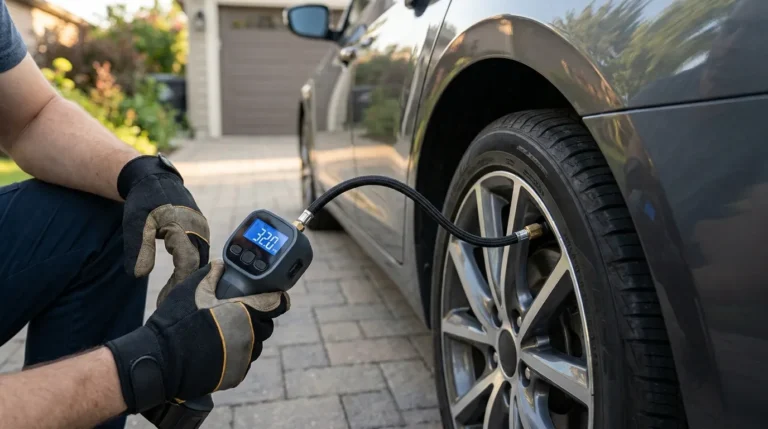
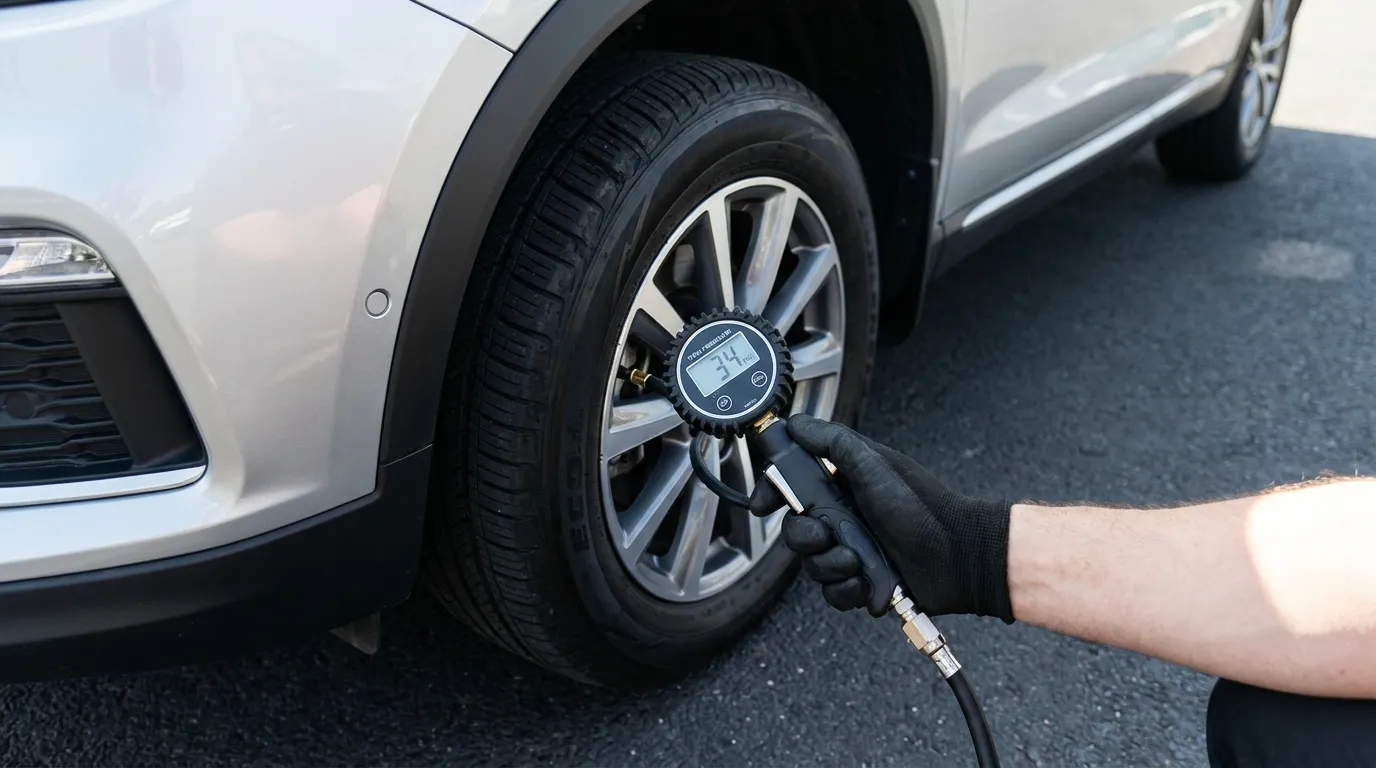
Check the valve, press the gauge firmly, read the PSI, then add or release air as needed.
I have used tire gauges for years on cars, bikes, and trucks. I will walk you through exactly how to use tire pressure gauge in simple steps. This guide blends clear how-to steps, tips from hands-on experience, and the facts you need to keep tires safe and long lasting. Read on and you will feel confident checking tire pressure fast and right every time.
Why tire pressure matters
Tire pressure affects safety, fuel use, and tire life. Low pressure can make tires wear fast and reduce control. Too high pressure cuts traction and makes the ride harsh. Learning how to use tire pressure gauge helps you keep pressure where it should be. That keeps your car safer and your tires lasting longer.
Types of tire pressure gauges
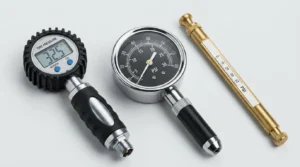
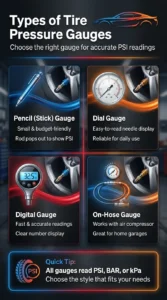
There are a few common gauge styles. Pick one you like and learn how to use tire pressure gauge for that type.
- Pencil (stick) gauge — Small and cheap. Push into the valve and a rod pops out to show PSI.
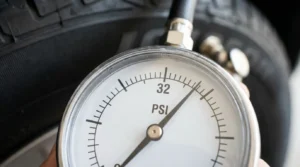
- Dial gauge — Has a round face and needle. Good for easy reading.
- Digital gauge — Shows numbers on a screen. Most are fast and accurate.
- On-hose gauge — Fits on an air hose. Useful at home with a compressor.
Each type reads the same unit: PSI, BAR, or kPa. Choose one that fits your needs and learn how to use tire pressure gauge for that model.
Step-by-step: how to use tire pressure gauge
Follow these clear steps every time you check pressure.
- Check the recommended PSI for your vehicle. Find it on the driver door jamb or owner’s manual.
- Check when tires are cold. Wait at least three hours after driving or check first thing in the morning.
- Remove the valve cap and keep it safe.
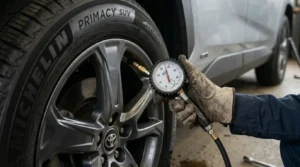
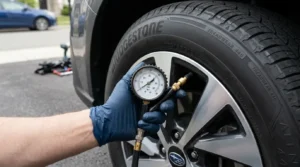
- Place the gauge on the valve stem. Press straight and firm to avoid leaks.
- Read the gauge. Note the PSI on the face or screen.
- Compare to the recommended PSI. If low, add air. If high, release small amounts.
- Re-check with the gauge after adding or releasing air.
- Replace the valve cap and repeat for all tires.
I repeat these steps often when I teach others how to use tire pressure gauge. A firm, steady seal between gauge and valve is the key. If you hear hissing, adjust and press harder.
Tips, common mistakes, and pitfalls
Small habits make checks fast and accurate. Avoid these mistakes when you learn how to use tire pressure gauge.
- Always check tires cold. Heat raises pressure and misleads your reading.
- Don’t rush the seal. A tilted gauge will leak air and give the wrong PSI.
- Use one trusted gauge. Some public gauges are poorly kept and not accurate.
- Avoid over-inflation. Add a little air and test often.
- Replace batteries on digital gauges on a schedule to avoid false lows.
From my experience, the worst mistake is trusting a noisy pump gauge at a gas station. Bring your own gauge when you can.
Maintenance and storage of your gauge
Care keeps a gauge accurate and ready. Here is how to care for it and how to use tire pressure gauge without errors.
- Keep the valve cap on the gauge when not in use to keep dirt out.
- Store in a dry, cool place. Heat can damage plastic and electronics.
- Calibrate or compare your gauge every year against a known good gauge.
- Replace worn seals on dial or on-hose gauges to stop leaks.
- For digital gauges, remove batteries if you won’t use it for months.
Good care keeps readings steady and cuts down on surprises.

Source: oppedahl.com
When to check tire pressure and target PSI
Check pressure at least once a month and before long trips. Check after big temperature swings. Cold weather drops pressure; hot weather raises it.
- Use the vehicle’s recommended PSI, not the number on the tire sidewall.
- Front and rear may have different PSI ratings.
- For towing or heavy loads, follow the higher PSI recommendation.
Knowing when and where to check helps you use the gauge right and keeps tires healthy.
Real-world examples and personal experience
I once drove 200 miles with one tire three PSI low. The car felt soft and fuel use rose. After inflating to the recommended PSI I noticed better mileage and a steadier ride. I learned to check tire pressure before long trips.
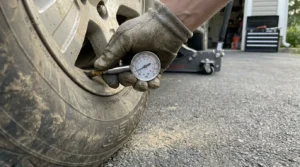
When I teach friends how to use tire pressure gauge, I start with a demo on one tire. I show the correct seal, a bad seal, and how little changes in PSI change handling. Hands-on practice builds confidence fast.

Related concepts and limitations
Knowing how to use tire pressure gauge fits with other tire care tasks.
- TPMS — Tire Pressure Monitoring Systems warn when pressure is very low. They do not replace manual checks.
- Tire wear patterns — Low or high pressure cause different wear marks.
- Seasonal changes — PSI can change several PSI with big temperature shifts.
Limitations: A gauge can fail or read wrong if dirty, damaged, or cold. Always confirm with a second check if readings seem odd.
Frequently Asked Questions of how to use tire pressure gauge(make it h2 tag)
How often should I check my tire pressure?
Check once a month and before long trips. Also check after big temperature changes.
Should I check tire pressure when tires are warm?
No. Check when tires are cold for the most accurate reading. Warm tires can read several PSI higher.
Can I use a gas station gauge to check PSI?
You can, but many public gauges are less accurate. Bring a reliable gauge if you can.
What PSI should I use for my car?
Use the PSI on the driver door jamb or owner’s manual. Ignore the number on the tire sidewall.
How do I fix overinflated tire pressure?
Press the valve stem to release small amounts of air and re-check with your gauge. Do this until you reach the recommended PSI.
Do digital gauges need calibration?
Yes. Check them yearly against a trusted gauge to ensure accuracy. Replace batteries as needed.
Conclusion
Using a tire gauge is quick, safe, and smart. Learn how to use tire pressure gauge by following short steps, checking cold, and keeping a good seal. Small checks save money and keep you safer on the road. Try it this week: check your tires, adjust to the recommended PSI, and make tire care a simple habit. Share your questions or tips below, or subscribe for more practical auto care guides.