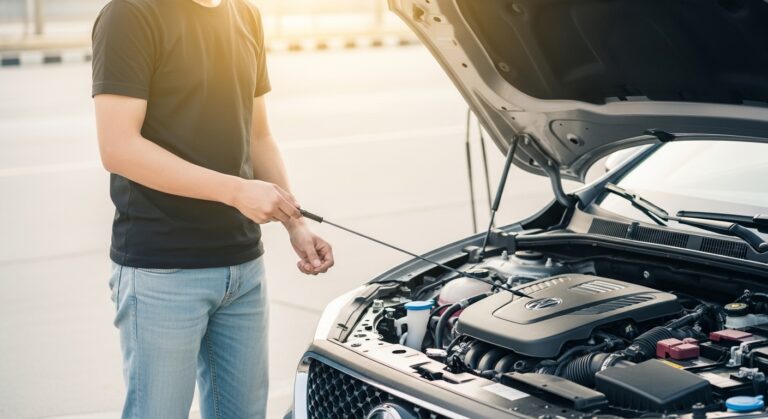

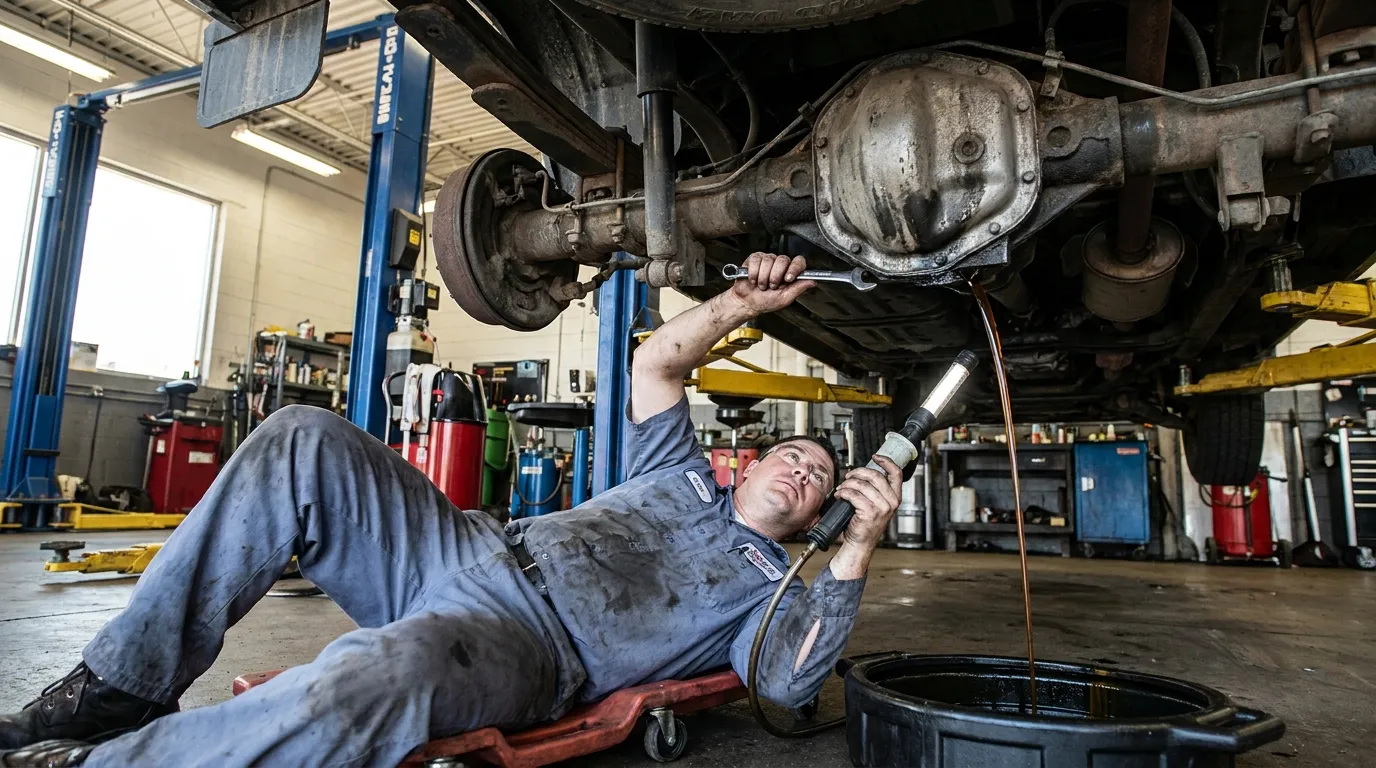
The differential lets the driven wheels turn at different speeds in corners. Its gears run in thick gear oil, and that oil wears out slowly from heat, shear and moisture.
Because differential fluid is easy to forget, many cars go far past the right interval. Here is how to find yours, what shortens it and how the job is done.
What you’ll learn
- Typical change intervals
- What counts as severe service
- Signs the fluid is overdue
- How to change it and which oil to use
Quick answer
There is no single number. Many owner’s manuals list a differential fluid change every 30,000 to 60,000 miles under severe service (towing, hauling, off-road use, frequent short trips or very hot weather) and anywhere from 60,000 miles to “inspect only” under normal driving. Your owner’s manual or maintenance schedule is the only reliable source. Change it sooner if the differential has been under water, if it whines or howls, or if it has been leaking.
In this article
What differential fluid does
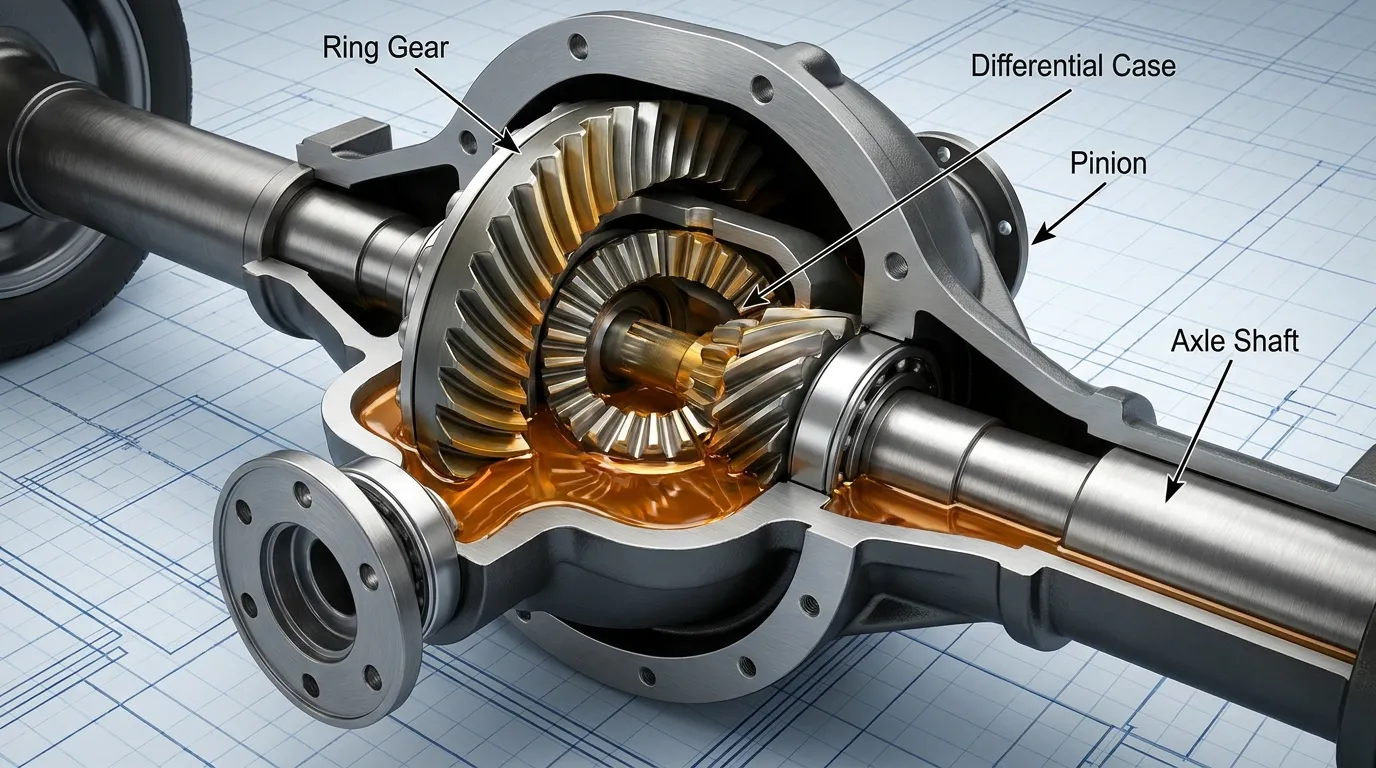
Differential fluid is usually a thick gear oil such as 75W-90 or 75W-85. It lubricates the ring and pinion gears and bearings, carries heat away and protects against wear under very high contact pressure.
Over time the oil breaks down, collects fine metal particles from the gears and can absorb water through the vent. Worn oil protects the gears less well, which leads to whine, wear and eventually gear or bearing failure.
Typical intervals by use
- Passenger cars and AWD crossovers: many list a rear differential (or rear drive unit) change at 30,000 to 60,000 miles under severe service, or inspection only under normal service. Front-wheel-drive cars usually share the fluid with the transmission.
- Pickups and SUVs: often 30,000 to 50,000 miles when towing or hauling, and longer (sometimes 100,000 miles or more) in normal use.
- Off-road and 4×4 use: check after any deep water crossing and change at the severe-service interval. 4x4s also have a front differential and a transfer case with their own fluid.
- Heavy towing and work trucks: follow the severe-service schedule, and consider shorter intervals if the truck tows near its limit in hot weather.
If you bought the vehicle used and have no record of a change, doing it once now is cheap insurance.
Signs the fluid needs changing
- A whine or howl that changes when you accelerate or lift off the throttle. A hum that changes when you turn is more often a wheel bearing; see wheel bearing noise symptoms.
- Chatter or shudder in tight, slow turns on a limited-slip differential.
- Oil wet around the pinion seal, axle seals or cover gasket.
- A burnt smell from the rear of the vehicle after towing.
- Milky or foamy fluid, which means water has got in.
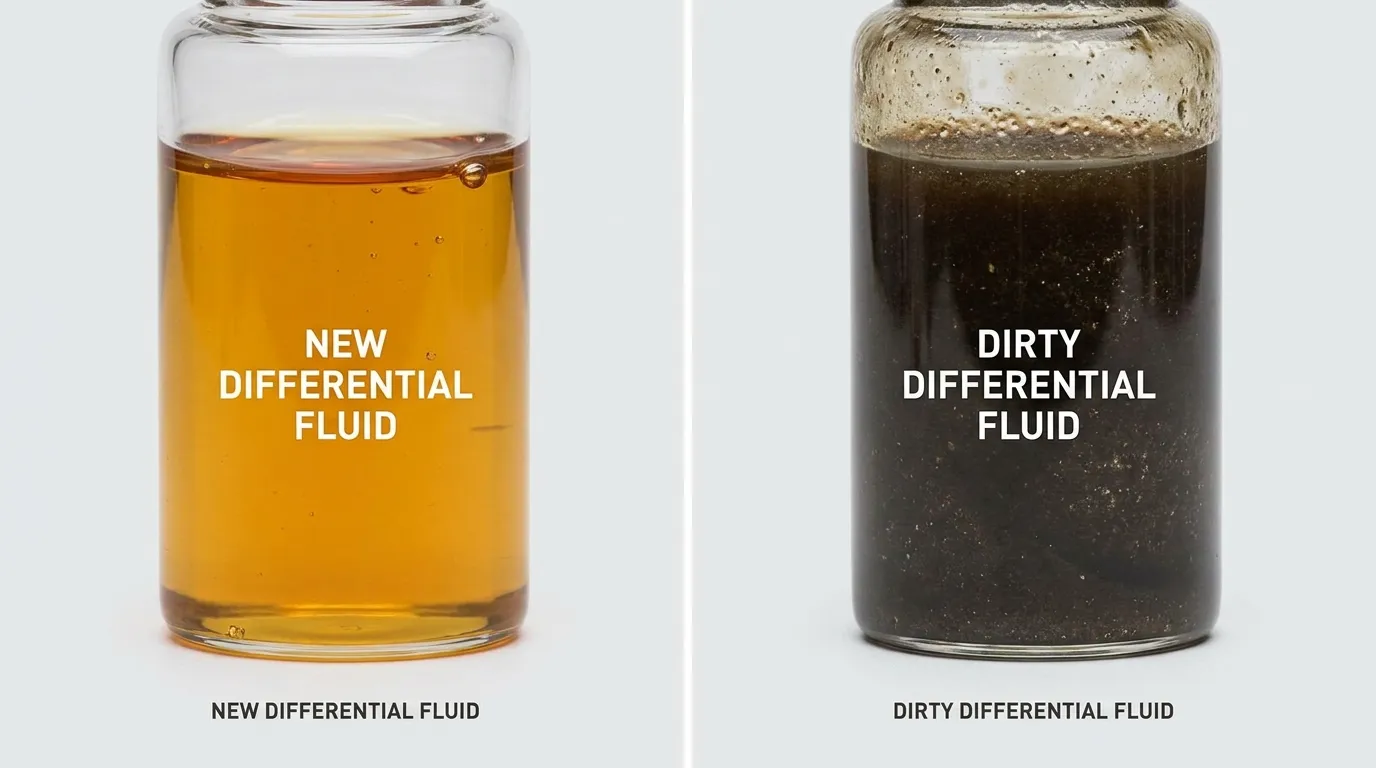
- Fluid that is very dark or full of fine metal when drained.
How a differential fluid change is done
- Park on level ground, or raise the vehicle level on jack stands and a creeper so the fill level reads correctly.
- Remove the fill plug first. If it is seized, you do not want to drain the fluid and then be unable to refill.
- Remove the drain plug (or the cover on axles without one) and drain the oil into a pan. Clean any metal paste from a magnetic plug.
- Refit the drain plug or the cover with a new gasket or sealant, tightened to the specified torque. See how to use a torque wrench correctly.
- Pump in the correct oil through the fill hole until it just starts to run out, or to the level the manual gives.
- Refit and torque the fill plug, then check for leaks after a short drive.
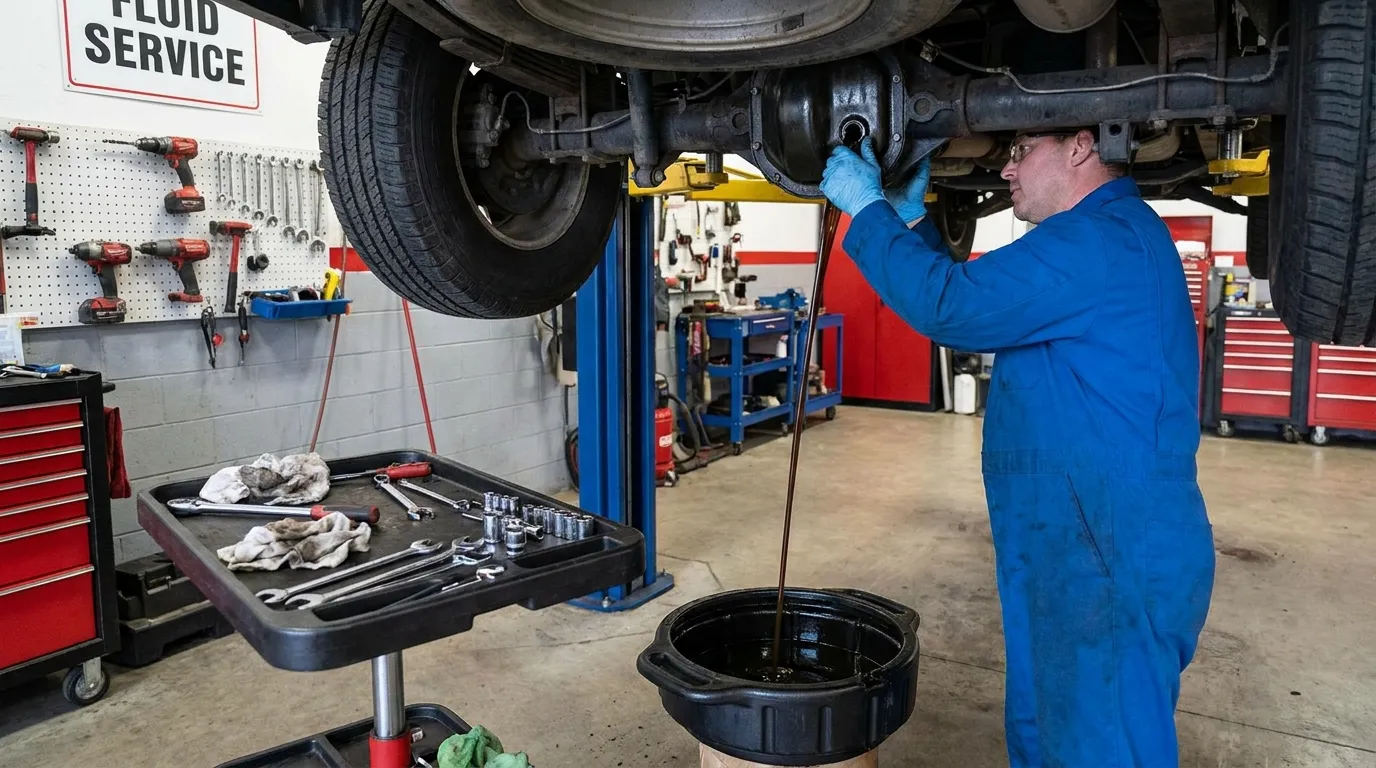
Most differentials take about 1 to 3 quarts. A hand pump that screws onto the bottle makes filling far easier.
Choosing the right fluid
- Viscosity: use the grade your manual lists, such as 75W-90 or 75W-85. Do not guess from what other models use.
- Rating: most differentials need API GL-5 gear oil. Some manual transmissions need GL-4 instead, so do not mix them up.
- Limited-slip: a limited-slip differential usually needs a friction modifier. Some oils include it; others need a separate bottle. Check the manual.
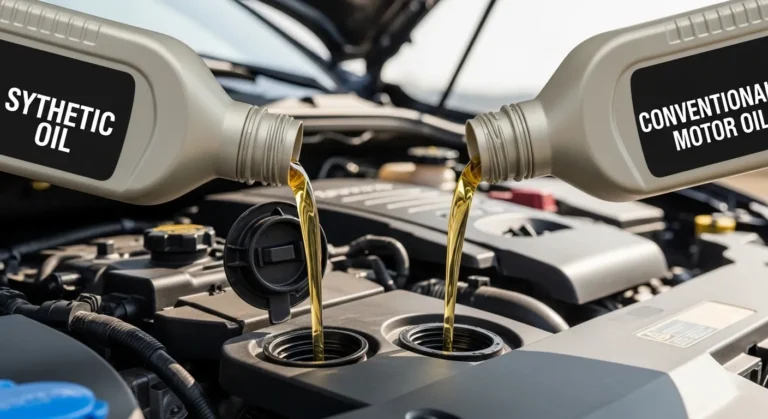
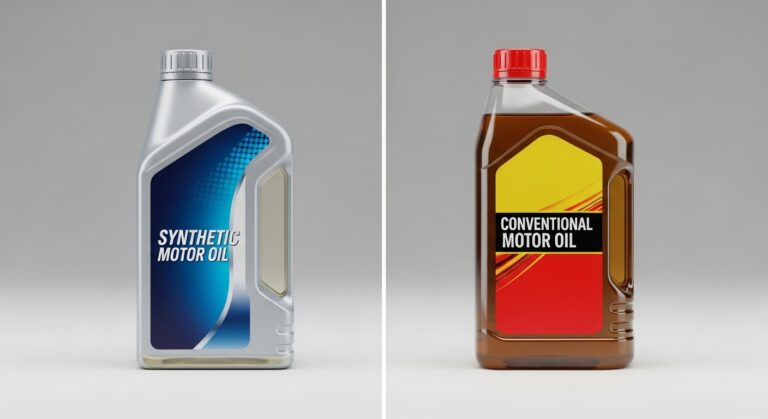
- Synthetic vs conventional: synthetic handles heat better and suits towing, but only use it if it meets the spec. Some carmakers require their own fluid.
For the transmission side of the drivetrain, see synthetic vs conventional transmission fluid.
Supplies that help
Check that the grade matches your manual before buying gear oil.
How we chose: We have not tested these ourselves. We chose a common 75W-90 synthetic gear oil with a limited-slip additive and a simple bottle pump, based on the listed specs and large numbers of Amazon ratings, and checked that both were in stock on November 3, 2026.
1. Valvoline FlexFill Full Synthetic 75W-90 Gear Oil (1 qt pouch)

A full synthetic 75W-90 gear oil in a squeezable pouch, which Valvoline says fills faster than a bottle. The maker says it contains a limited-slip additive.
Why it’s a good pick
- Pouch can often be squeezed straight into the fill hole
- Includes limited-slip additive
- Rated for towing and heavy loads
Keep in mind
- Only use it if your manual calls for 75W-90
- Some carmakers require their own fluid
- Buy enough quarts for your axle (often 2 to 3)
2. Slippery Pete Fluid Pump for Quart Bottles

A hand pump that screws onto a standard quart bottle and pushes the oil through a 17-inch hose into the fill hole. It comes with long and short pickup tubes.
Why it’s a good pick
- Makes filling a differential much less messy
- Fits standard quart bottles
- Also works for manual transmission fluid
Keep in mind
- Does not fit wide-mouth or some brand bottles
- Not needed if you use a pouch you can squeeze
- Clean it between different fluids