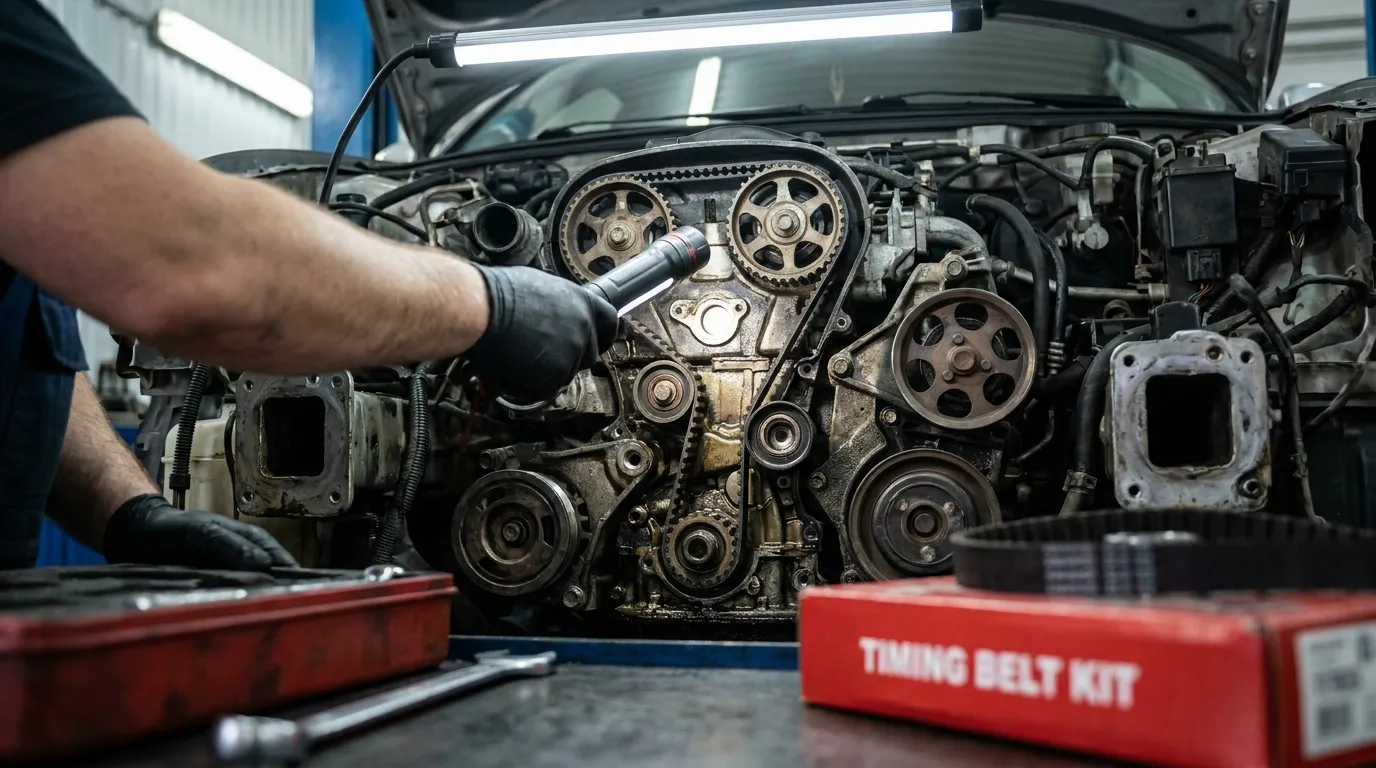
Most timing belts need replacement every 60,000 to 100,000 miles or 5–7 years.
I’ve worked on dozens of cars and read many service guides, so I know how critical the timing belt replacement interval is. This guide explains what that interval means, why it matters, how manufacturers set it, and how to pick the right schedule for your car. Read on for clear, practical advice you can use today.

What is the timing belt replacement interval?
The timing belt replacement interval is the recommended mileage or time when you should replace the belt. It aims to prevent belt failure that can cause major engine damage. The interval is usually given as miles and years. Typical ranges are 60,000 to 100,000 miles or 5 to 7 years, but some cars use different numbers. Understanding this interval helps you avoid costly repairs and roadside breakdowns.

Why the timing belt replacement interval matters
A timing belt controls valve timing and engine sync. If it breaks, valves can hit pistons in many engines. That often means a rebuilt engine. Replacing the belt on schedule prevents this risk. It also keeps your car reliable and resale value higher. Think of the interval as cheap insurance for your engine.

Factors that affect the timing belt replacement interval
- Vehicle make and model: Different engines use different materials and tensioners. Check your owner’s manual for the exact timing belt replacement interval for your car.
- Driving conditions: Short trips and stop-and-go traffic cause more wear. Tough conditions can shorten the timing belt replacement interval.
- Climate and storage: Heat and humidity age rubber faster. Cold can make belts brittle. These factors change the ideal timing belt replacement interval.
- Maintenance history: If other belts, water pumps, or pulleys were neglected, the timing belt may wear sooner. Replace related parts when you change the belt.
- Part quality and upgrades: OEM parts follow the manufacturer’s timing belt replacement interval. Aftermarket parts can vary in longevity.

Source: gov.ng
Manufacturer recommendations vs real-world practice
Manufacturers publish a timing belt replacement interval in the owner’s manual. That figure is a safe baseline. Many mechanics follow it strictly. In practice, you may adjust based on use and condition. For older cars or high-mileage engines, some owners replace the belt earlier than the manual suggests. For low-use vehicles, time (years) can matter more than miles.

Signs you should replace the timing belt sooner
- Visible cracks or fraying: Inspect the belt for wear during service.
- Squealing or unusual noises from the front of the engine: A failing belt or tensioner can make noise.
- Oil contamination on the belt: Oil speeds rubber decay and shortens the timing belt replacement interval.
- Engine misfires or rough idle: Belt slip or timing drift can cause poor running.
- High mileage with unknown history: If you bought a car and the timing belt history is unclear, replace it to be safe.

How timing belt replacement is done (step-by-step)
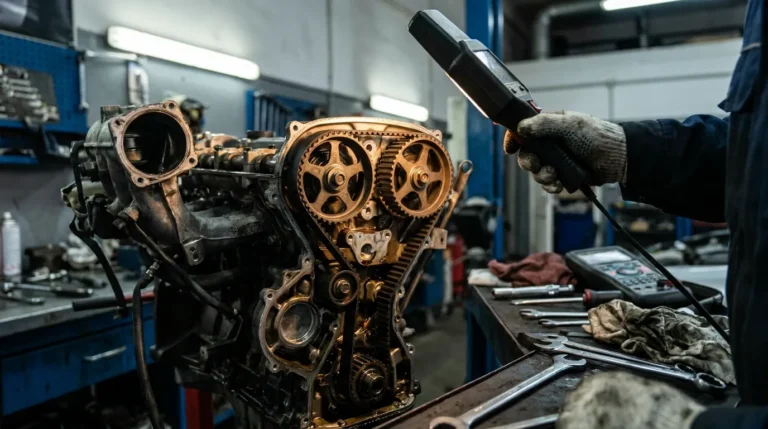
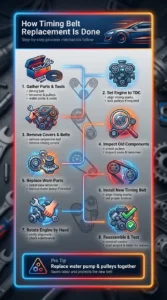
- Gather parts and tools: timing belt, tensioner, idler pulleys, water pump (if recommended), seals, and proper tools.
- Secure the engine: set engine to top dead center and lock pulleys as needed.
- Remove accessories and covers: take off the serpentine belt and timing covers.
- Remove old belt and inspect components: check pulleys, tensioner, and cam/crank seals.
- Replace worn parts: install new tensioner, pulleys, and water pump if needed.
- Install new timing belt: align timing marks and set proper tension.
- Rotate engine by hand: check for interference and ensure timing marks stay aligned.
- Reassemble and test: reinstall covers, start engine, and listen for issues.
Most shops take 3 to 6 hours. Labor varies by engine layout. Replacing related parts at the same time avoids repeat labor and protects the new timing belt.
Cost, time, and common replacement intervals by car type
- Economy cars: Timing belt replacement interval often 60,000 to 90,000 miles. Cost can be $300 to $600.
- Mid-size and luxury cars: Interval may be 70,000 to 100,000 miles. Cost often $500 to $1,000.
- Performance or older engines: Intervals and costs vary widely. Some use timing chains instead of belts.
- Diesel and turbo engines: Watch the interval closely; failures can be more costly.
Always get quotes that include parts and labor. Ask if the water pump, tensioner, and seals are included. Replacing these together saves money long term.
My experience, lessons, and practical tips
I once drove a car that had never had its timing belt changed. The belt snapped on a highway. Repair cost far exceeded the cost of a timely replacement. Since then I follow these rules:
- Replace the timing belt at or before the lower end of the recommended range if you do short trips.
- Always replace the tensioner and water pump at the same time when possible.
- Keep records of the timing belt replacement interval and receipts. This helps for resale and future service.
- If you buy a used car with unknown service history, replace the belt soon. It’s peace of mind.

Frequently Asked Questions of timing belt replacement interval
What is the typical timing belt replacement interval?
Most manufacturers recommend 60,000 to 100,000 miles or 5 to 7 years. Check your owner’s manual for your car’s exact timing belt replacement interval.
Can I drive after the timing belt shows cracks?
Driving with a cracked timing belt is risky. Replace it promptly to avoid sudden failure and engine damage.
Is a timing chain better than a timing belt?
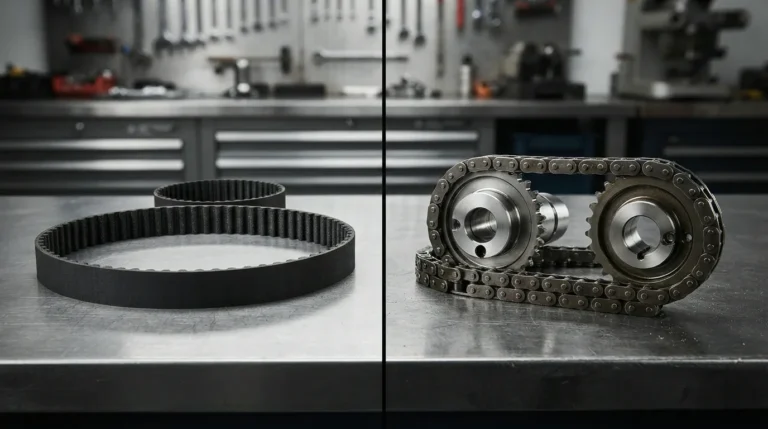
Timing chains often last longer and may not need scheduled replacement. They can be costlier to repair if they fail. The choice affects the recommended timing belt replacement interval for belt-equipped cars.
Should I replace the water pump when changing the timing belt?
Yes. Water pumps often share labor with timing belt jobs. Replacing the pump at the same time is cost-effective and reduces future risk.
How long does a timing belt job take?
A timing belt job usually takes 3 to 6 hours, depending on engine layout and replacement of related parts.
Is the timing belt replacement interval the same worldwide?
No. The interval can vary by market, climate, and model. Always use the interval in your vehicle’s service manual as the primary guide.
Conclusion
Keeping the timing belt replacement interval in mind saves money and prevents engine disasters. Use the manufacturer’s interval as a starting point, adjust for your driving and climate, and replace related parts at the same time. If in doubt, replace the belt sooner rather than later. Take action now: check your owner’s manual, inspect your belt, and schedule service if your car is near its timing belt replacement interval. Share your experiences below or subscribe for more car care tips.