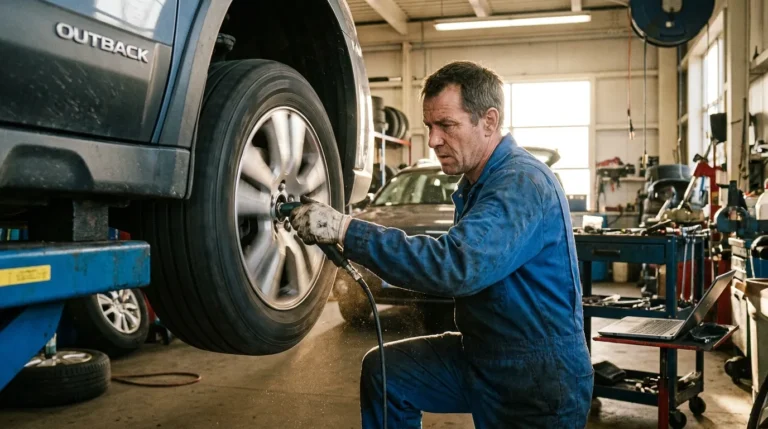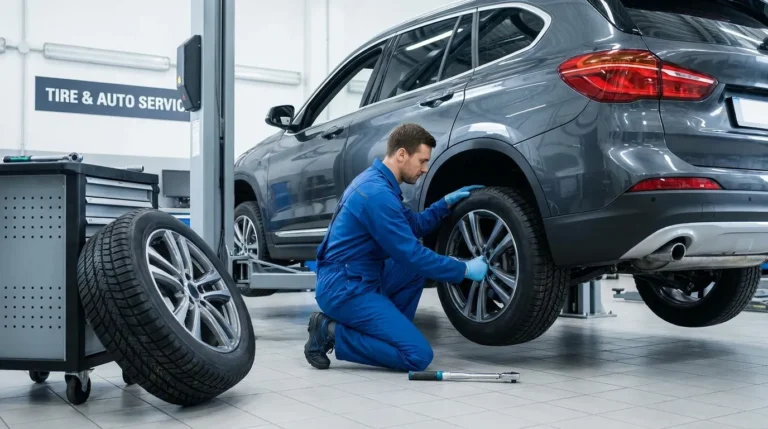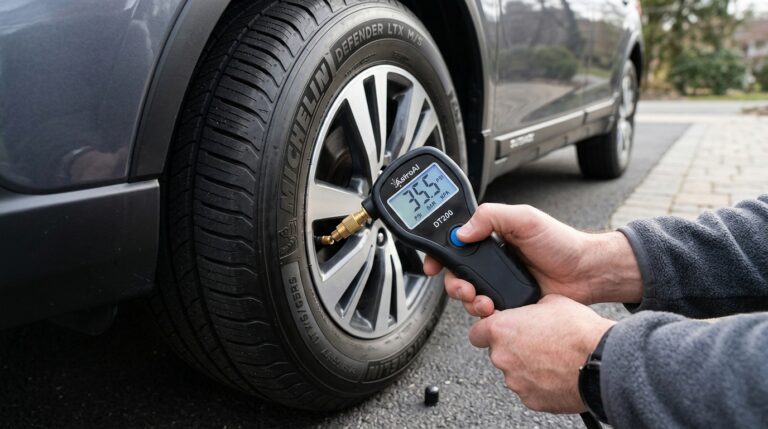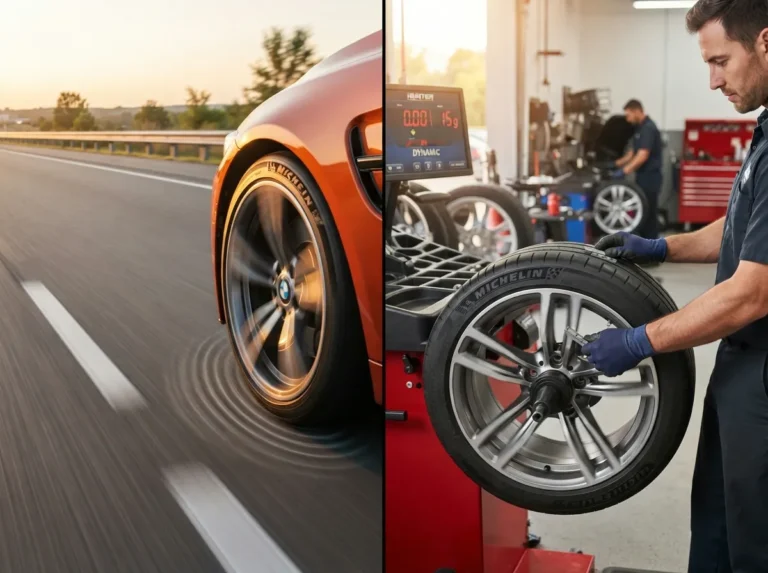
Wheel balancing vs wheel alignment: balancing evens wheel weight; alignment fixes wheel angles for straight tracking.
I’ve worked on cars and in shops for years, and I’ll clearly explain wheel balancing vs wheel alignment so you can tell them apart, spot the signs, and choose the right service. Read on for practical tips, simple checks, and real-life advice to save money and extend tire life.
What is wheel balancing and wheel alignment?
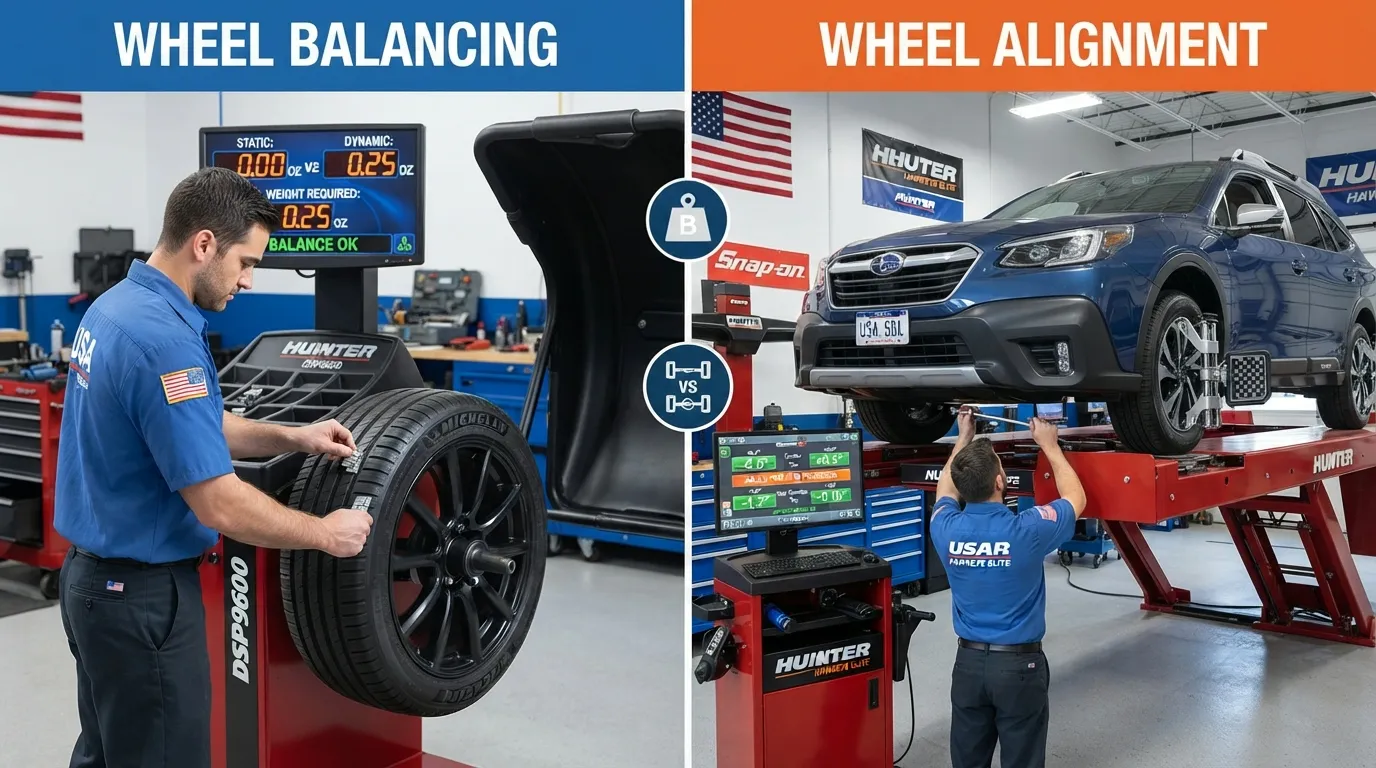
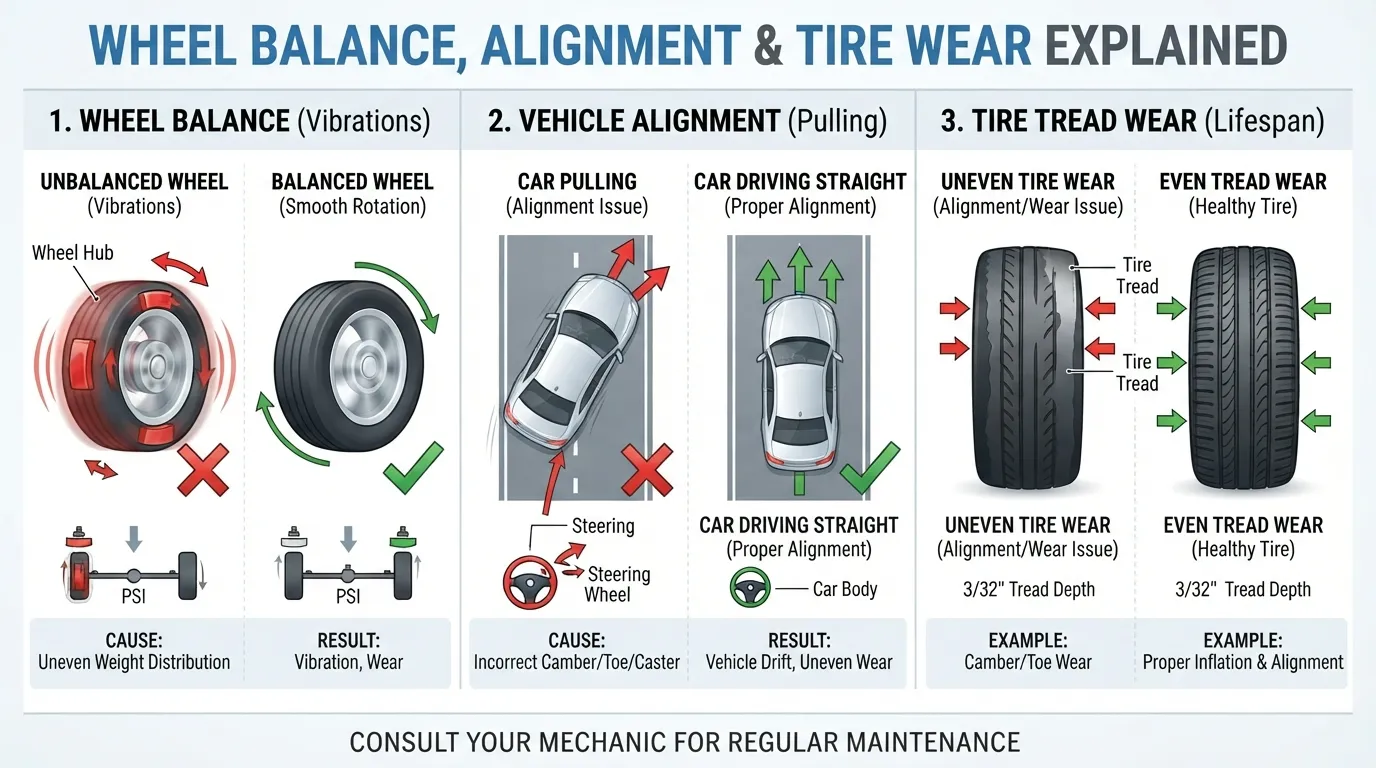
Wheel balancing evens out weight around the wheel and tire assembly. If a wheel is out of balance, it vibrates at certain speeds. Balancing adds small weights to smooth rotation.
Wheel alignment adjusts the angles of the wheels. Alignment sets toe, camber, and caster to factory specs. Correct alignment makes the car track straight and wear tires evenly.
Key differences at a glance:
- Wheel balancing fixes weight distribution on each wheel.
- Wheel alignment fixes wheel angles and steering geometry.
- Balancing reduces vibration. Alignment reduces drifting and uneven tire wear.
I’ve seen cars with both problems. Vibrations felt in the steering wheel usually point to bad balancing. Pulling to one side usually points to bad alignment. Knowing which is which helps you ask the right questions at the shop.
Why wheel balancing vs wheel alignment matters
Both services protect your tires and make driving safer. They also improve comfort, handling, and fuel economy.
Safety and comfort
- Balanced wheels reduce harsh vibration. That lowers stress on suspension parts and reduces driver fatigue.
- Proper alignment keeps the car tracking straight. That improves control and braking.
Cost and tire life
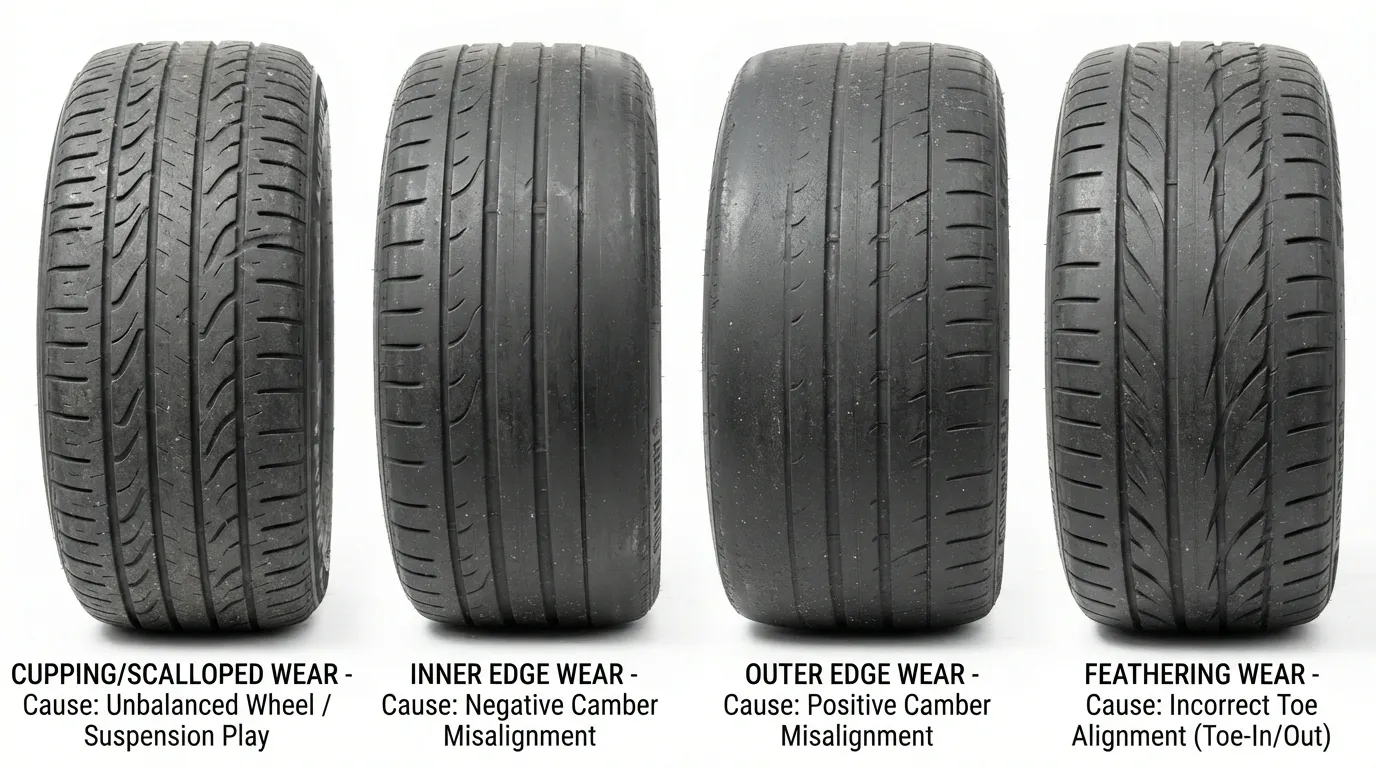
- Unbalanced wheels cause cupping and tread scalloping. Tires wear faster.
- Misalignment causes edge wear and uneven tread depth. That shortens tire life and wastes fuel.
Real-life note: I once replaced tires on a car every year because the owner ignored small vibrations. After balancing and proper alignment, the tires lasted twice as long.
How wheel balancing works
What happens during balancing:
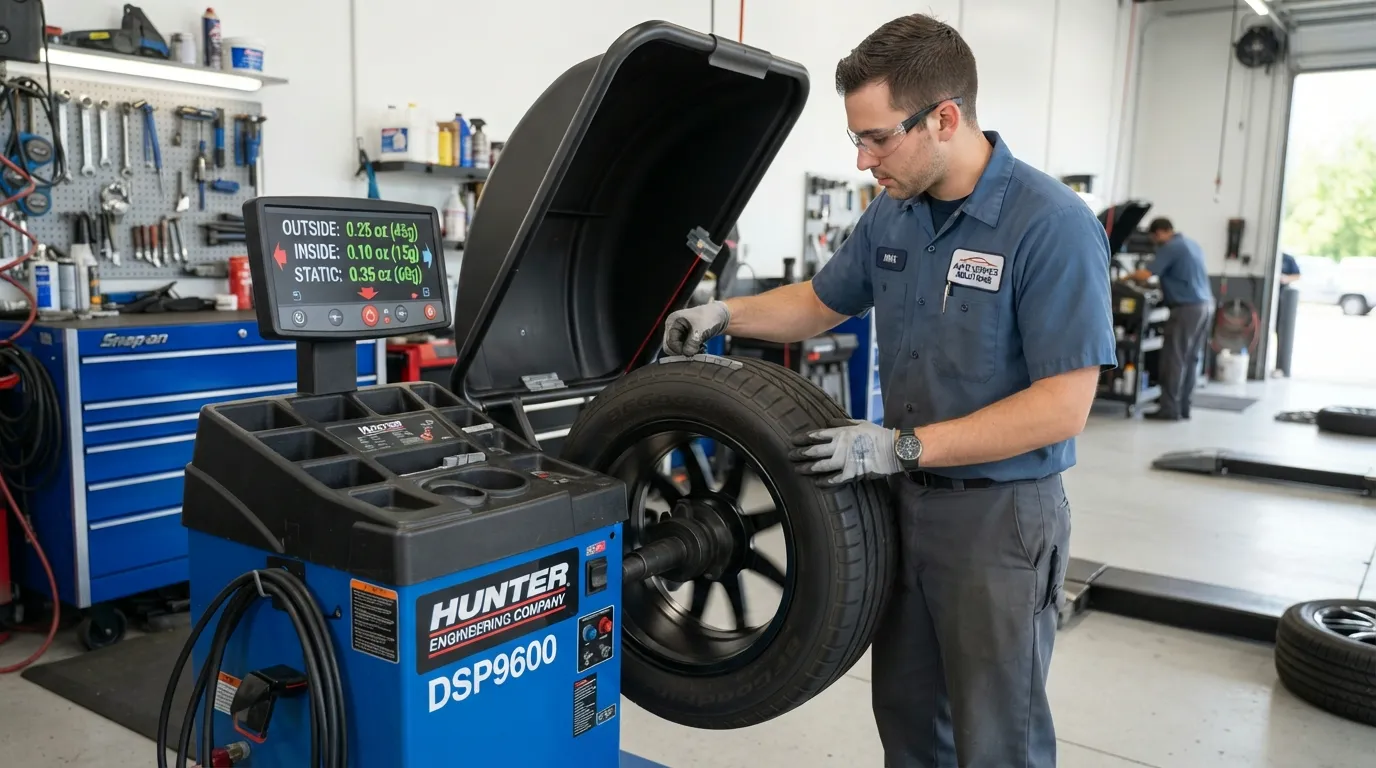
- Technician mounts the wheel and tire on a dynamic balancer.
- The machine spins the assembly and detects heavy spots.
- Small adhesive or clip-on weights are added to counterbalance heavy spots.
Types of balancing:
- Static balancing corrects a single heavy spot. Used less often today.
- Dynamic balancing corrects both vertical and lateral imbalances.
When to balance:
- After new tires are mounted.
- When you feel vibration above 40–50 mph.
- After a tire repair or hitting a pothole.
Typical cost and time:
- Balancing usually takes 15–30 minutes per wheel.
- Costs vary, but it’s often inexpensive compared to replacing tires early.
Practical tip: Always ask the shop to clean the rim and check for bent wheels. Sometimes vibration comes from a bent rim, not just imbalance.
How wheel alignment works
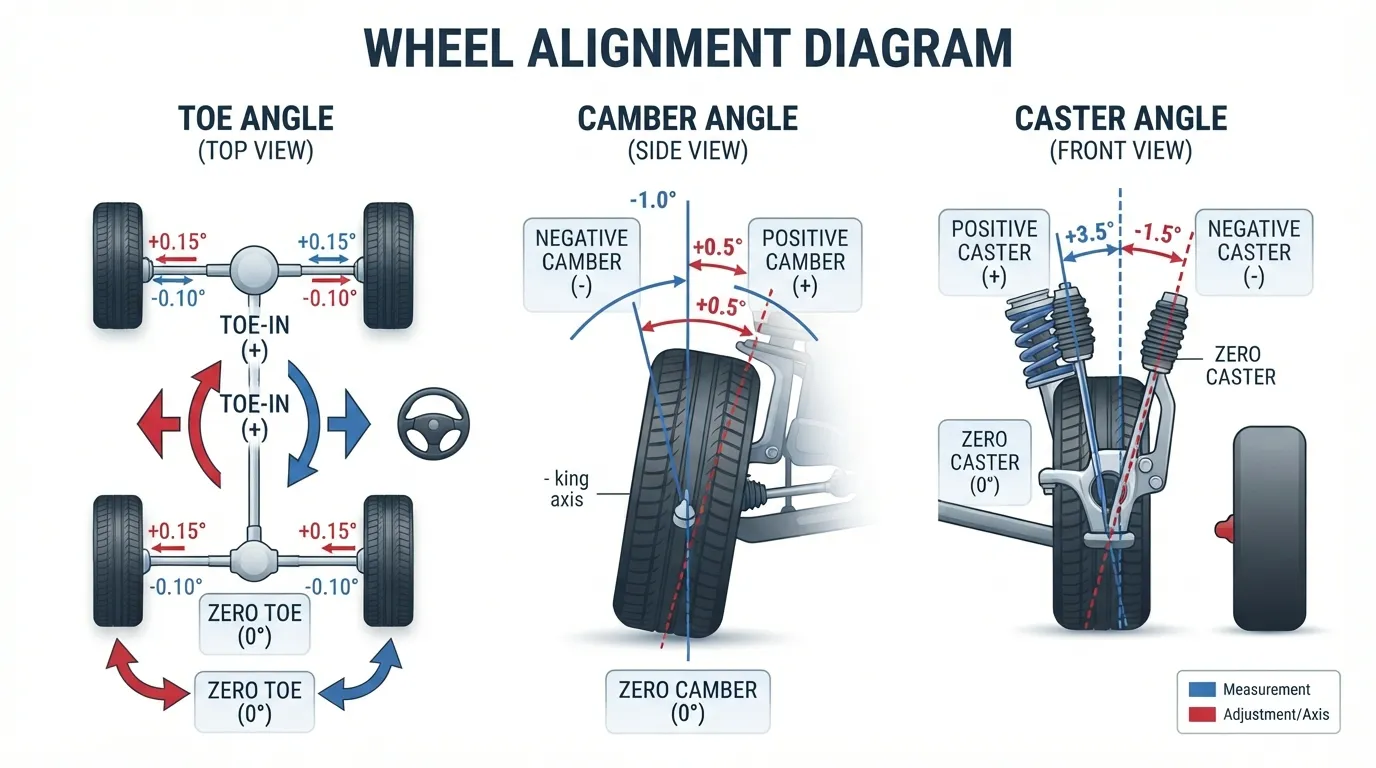
Alignment adjusts three main angles:
- Toe — direction the wheels point relative to centerline. Affects tire scrub.
- Camber — tilt of the wheel inward or outward at the top. Affects edge wear.
- Caster — forward or rearward tilt of the steering axis. Affects straight-line stability.
The alignment process:
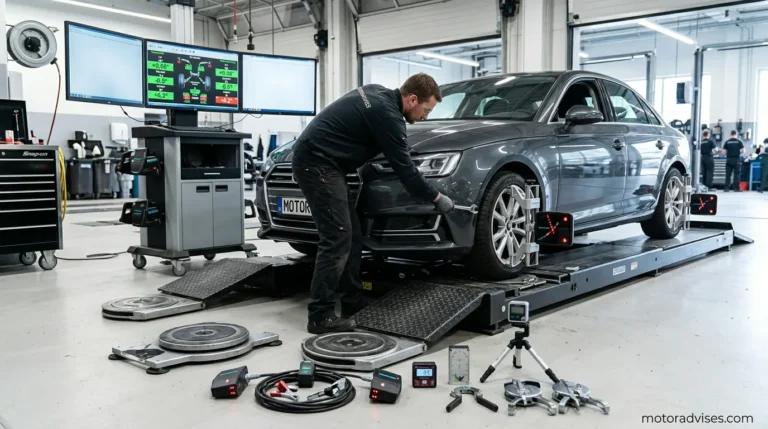
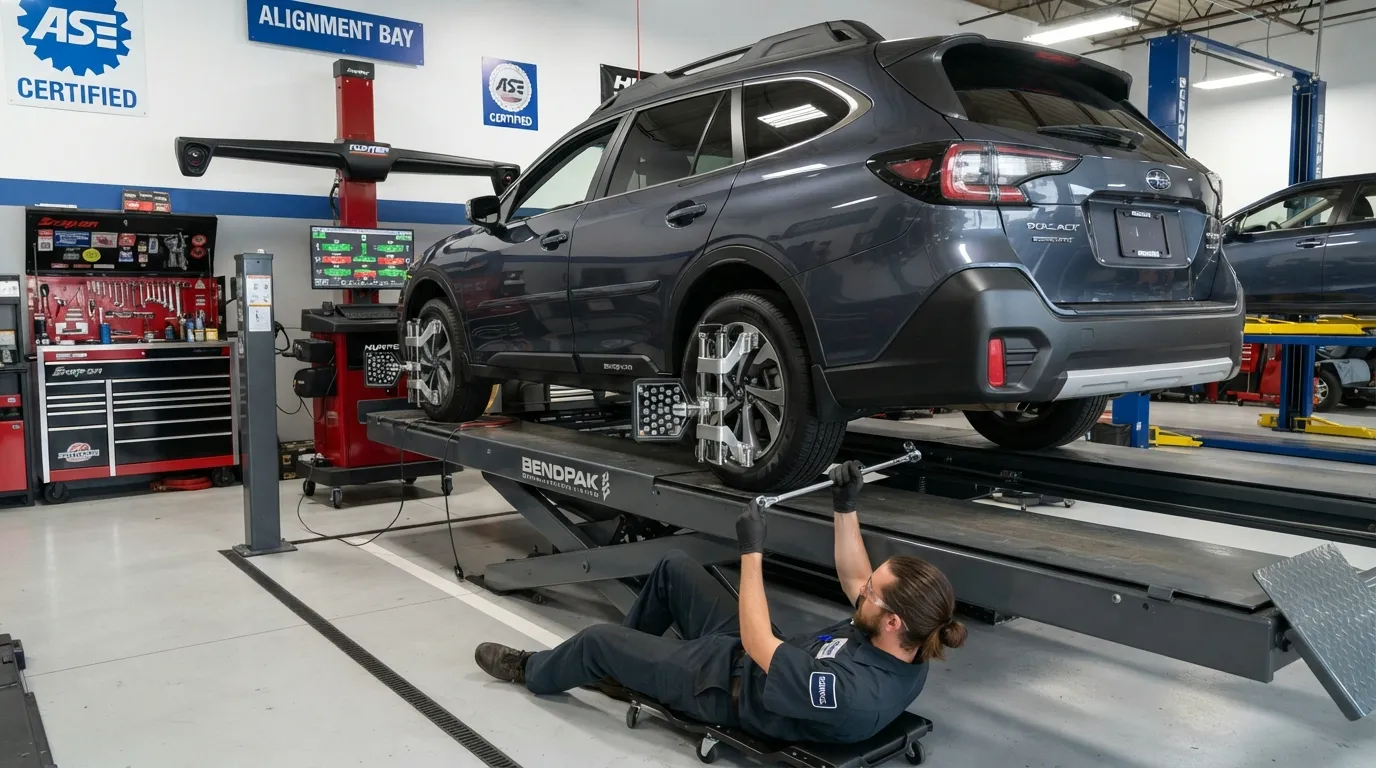
- Shop mounts sensors to wheels and measures current angles.
- Technician compares angles to factory specs for your vehicle.
- Adjustments are made at tie rods, control arms, or cam bolts.
When you need alignment:
- After new tires are installed.
- After suspension repair or replacement.
- If the car pulls to one side or steering wheel is off-center.
Costs and time:
- Alignment typically takes 30–90 minutes.
- A four-wheel alignment costs more than a two-wheel alignment but is often the correct choice.
Personal experience: I’ve adjusted alignment after lowering a car. Even small changes in ride height changed camber and caused rapid inner-tire wear until corrected.
Common myths and mistakes
Myth: Tire rotation replaces alignment.
- Fact: Rotation moves wear but doesn’t correct improper angles.
Myth: Balancing is only for new tires.
- Fact: Balancing can be needed after repairs or hitting potholes.
Mistakes shops sometimes make:
- Using cheap weights that fall off.
- Not checking the rim for bends before balancing.
- Adjusting only two wheels when all four need alignment.
A mistake I once made early in my career was ignoring wheel runout when balancing. The result was repeated vibration until the rim was straightened. Learn from that: ask the shop to check runout and rim condition.
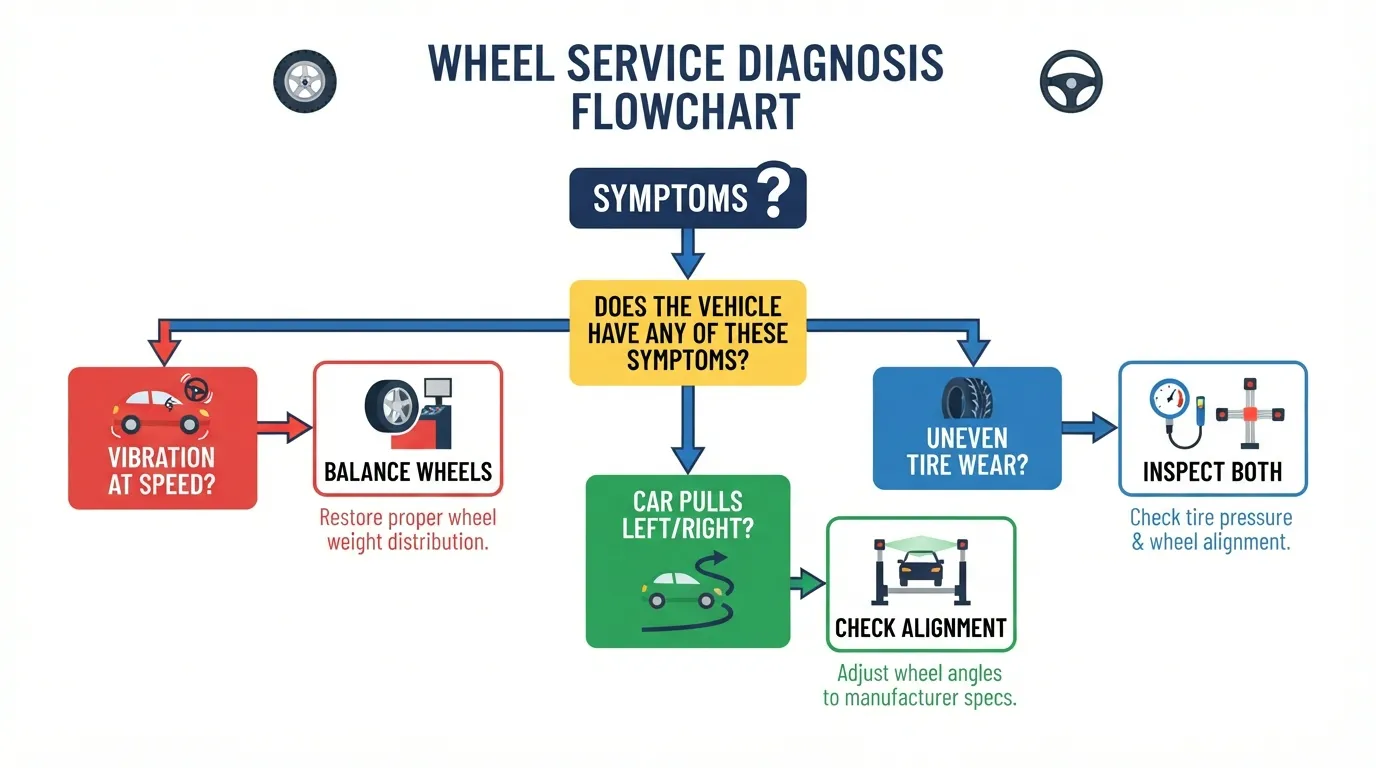
Practical guide: when to choose balancing, alignment, or both
Follow this checklist:
- Vibrations at speed — get wheel balancing.
- Car pulls left or right — get wheel alignment.
- Uneven tire wear — inspect for both balancing and alignment.
- After new tires — do both balancing and alignment as needed.
- After hitting a curb or pothole — inspect both wheels and alignment.
Step-by-step decision:
- Drive and note symptoms: vibration, pull, noise.
- Inspect tires for uneven wear or visible damage.
- Ask the shop to spin-balance wheels and check alignment readings.
- Fix what’s needed first, then reassess.
Real scenario: A client complained of steering wheel shake and uneven tread. We balanced the wheels and found a slight alignment issue. Doing both fixed the problem and prevented early tire replacement.
Maintenance tips and DIY checks
Easy checks you can do at home:
- Look for cupping or scalloped edges on tires.
- Feel for vibration at specific speeds and note when it starts.
- Park on level ground. See if the steering wheel sits off center with straight wheels.
Routine maintenance tips:
- Rotate tires every 5,000–7,500 miles.
- Balance at mounting and any time you feel vibration.
- Get alignment checked annually or after suspension work.
What to avoid:
- Ignoring vibrations or pulling. Small issues grow.
- Letting cheap shops rush an alignment without measuring OEM specs.
- Assuming one service fixes both problems.
My tip: Keep a log of tire services. Track dates for rotations, balances, and alignments. That history helps shops diagnose recurring problems faster.

Related concepts and costs to know
Other things that influence results:
- Tire pressure — always keep tires inflated to spec.
- Wheel condition — bent or corroded rims can prevent good balance.
- Suspension parts — worn ball joints or tie rods can mimic alignment issues.
Estimated cost ranges:
- Wheel balancing — usually low cost per wheel.
- Wheel alignment — moderate cost; four-wheel alignment costs more but is often required.
- Repairs for bent rims or worn suspension add to expenses.
Trade-offs and limits:
- Balancing can’t correct geometric alignment.
- Alignment can’t fix weight imbalance.
- Some vibration causes come from driveline or brakes, not wheels.
Frequently Asked Questions of wheel balancing vs wheel alignment
### What is the main difference between wheel balancing vs wheel alignment?
Balancing evens the wheel-tire weight so the wheel spins smoothly. Alignment sets wheel angles so the car tracks straight and tires wear evenly.
How often should I get a wheel alignment?
Get alignment checked annually or whenever you notice pulling, uneven wear, or after suspension work. New tires or a big impact also warrant a check.
Can I drive with unbalanced wheels or bad alignment?
Short drives are possible, but long-term driving causes faster tire wear, worse fuel economy, and possible safety risks. Fix issues quickly.
Will rotating my tires fix alignment or balancing problems?
Rotation helps even wear but does not fix alignment or balance. It can hide symptoms temporarily but not correct root causes.
How long do balancing and alignment services last?
Balancing usually lasts until the next tire change or until you hit a pothole. Alignment can stay correct for many miles unless suspension parts wear or you hit a curb.
Conclusion
Wheel balancing vs wheel alignment each solve different problems. Balancing stops vibration by equalizing weight. Alignment corrects angles so tires wear evenly and the car tracks straight. Both protect tires, improve safety, and save money in the long run. Take action: check your tires, note symptoms, and schedule the right service. Share your experience, subscribe for more car care tips, or leave a comment below to ask a question.