
Rotate tires every 5,000 to 7,500 miles or at every oil change for most cars.
I have worked on cars and written about vehicle care for years. This guide on tire rotation interval explains what to do, why it matters, and exactly when to rotate tires. Read on for clear rules, easy steps, and tips I use in my shop to keep tires lasting longer and driving safer.
What is a tire rotation interval?
A tire rotation interval is the schedule you follow to move tires between positions. It tells you how often to swap front and rear tires. The interval helps even out wear so tires last longer and ride better. Regular tire rotation interval care also helps suspension and alignment last longer.
Why the tire rotation interval matters
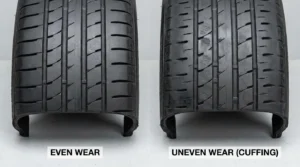
Even tires give you safer braking, better traction, and smoother rides. If you skip the recommended tire rotation interval, tires wear unevenly. Uneven wear shortens tire life and can raise fuel use. Following a sensible tire rotation interval saves money and reduces the chance of blowouts on the road.
Common recommended tire rotation interval guidelines
Most manufacturers and shops suggest these simple rules for tire rotation interval:
- Rotate every 5,000 to 7,500 miles, which matches many oil change intervals.
- Rotate at least once every six months if you drive little but park often.
- Check tires sooner if you see uneven wear or vibration.
Vehicle type changes the tire rotation interval:
- Front-wheel drive cars often need rotations closer to 5,000 miles.
- Rear-wheel and all-wheel drive cars can often go toward 7,500 miles.
- High-performance or heavy-load vehicles may need more frequent rotations and inspections.
In my experience, cars that follow a steady tire rotation interval last a full tread life longer than those that don’t. I once tracked two identical cars; the rotated set reached safe tread depth roughly 15% later than the non-rotated set.
Rotation patterns and how to rotate tires
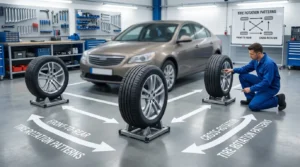
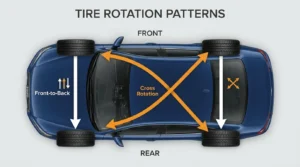
Pick the right pattern for your tire setup:
- Forward cross: for rear-wheel or 4WD with non-directional tires.
- Rearward cross: for front-wheel drive with non-directional tires.
- X-pattern: swaps each tire diagonally; good for regular rotations.
- Side-to-side: only for directional or staggered tires if sizes differ.
DIY step-by-step for a simple rotation:
- Park on level ground and set the parking brake.
- Loosen lug nuts while the car is on the ground.
- Jack up the car and use stands for safety.
- Swap tires according to the chosen pattern.
- Tighten lug nuts to the specified torque once wheels touch the ground.
- Drive and re-torque after 50 to 100 miles.
If you use the same tire rotation interval and pattern, wear evens out and handling stays steady.
Signs you need a tire rotation sooner than scheduled
Look for these signs that your tire rotation interval should be shorter:
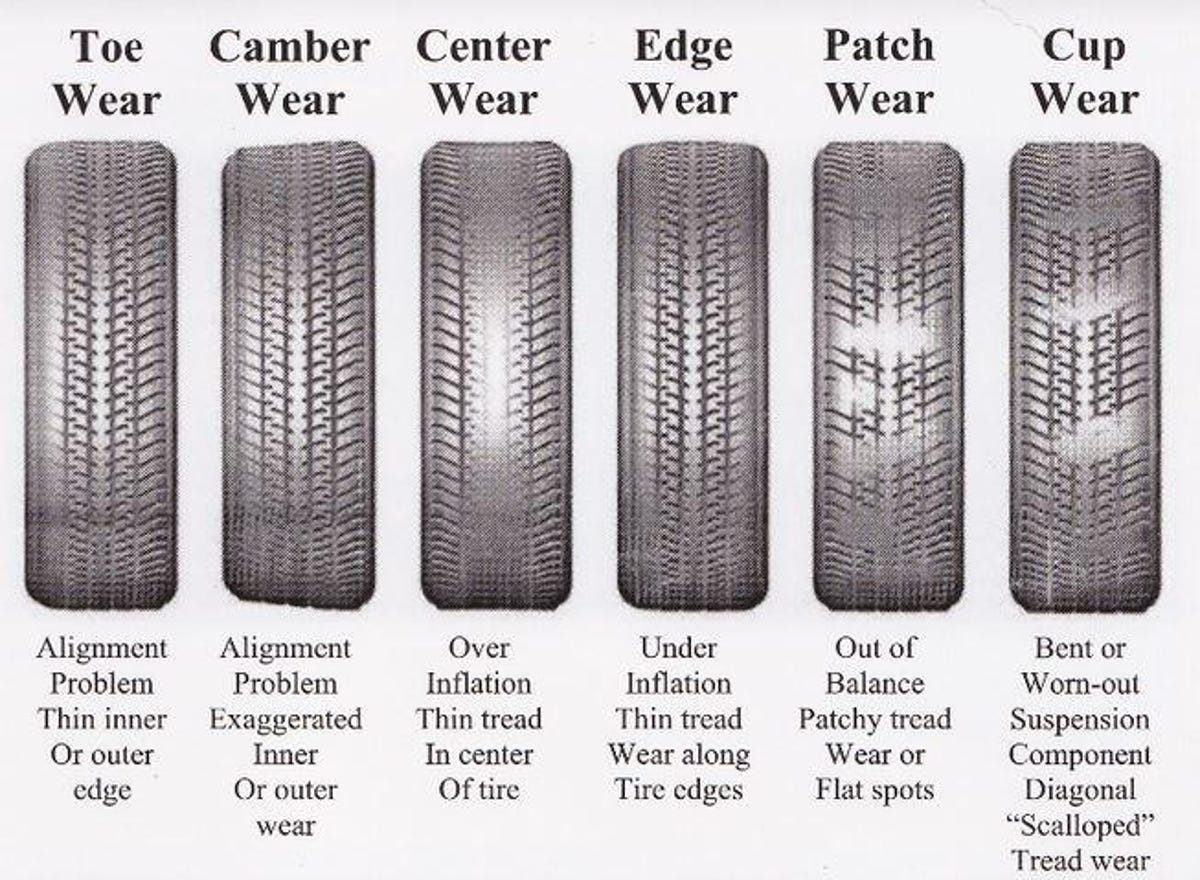
- One tire shows more wear on the inside or outside edge.
- The car pulls to one side while driving.
- You feel vibration or thumping at speed.
- Tread depth varies significantly across tires.
If you see any of these, rotate and inspect tires right away. Addressing uneven wear early prevents bigger damage.

Costs, balancing, and shop vs DIY
Cost and time averages tied to the tire rotation interval:
- Typical shop rotation runs $20 to $75, depending on the shop and region.
- Shops often include tire balancing and inspection for extra charge.
- DIY rotation mainly costs time and basic tools.
Tips from my hands-on work:
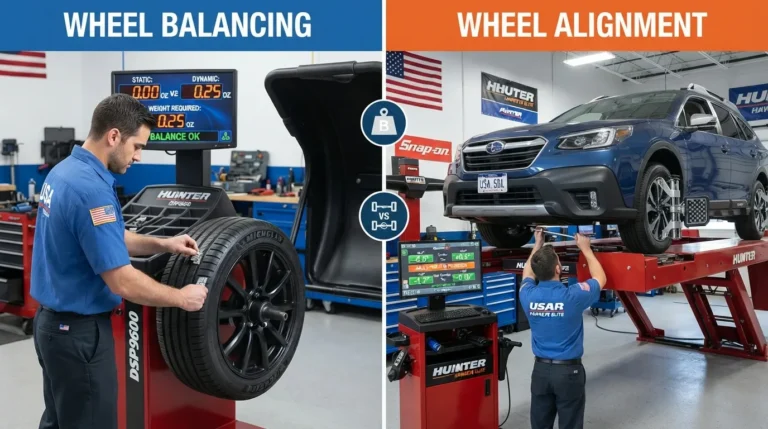
- Have tires balanced when you feel vibration or at every other rotation.
- Keep records of each tire rotation interval and results.
- Use a torque wrench to avoid over- or under-tightening lug nuts.
Good records help spot trends and optimize your tire rotation interval going forward.
Limitations and exceptions to the tire rotation interval
Not every car can follow a simple tire rotation interval:
- Directional tires must stay on the same side. They cannot swap sides.
- Staggered setups (different front/rear sizes) cannot be rotated front-to-back.
- Run-flat and some performance tires need special handling and may have different intervals.
When in doubt, follow the vehicle manual and tire maker advice. If you try to force a rotation on a non-rotatable setup, you risk handling problems.
Source: cnet.com
Practical tips and common mistakes to avoid
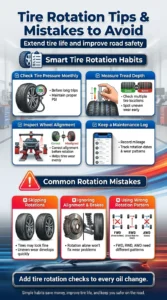
Follow these simple habits to get the most from your tire rotation interval:
- Check tire pressure monthly and before long trips.
- Measure tread depth at multiple points when you rotate.
- Fix alignment issues before or at rotation time.
- Keep a log with dates, mileage, and wear notes.
Common mistakes I see:
- Skipping rotations because tires look “fine.” Small unevenness grows fast.
- Rotating without checking alignment or brakes.
- Using wrong rotation pattern for the drive type.
Start small: add tire rotation interval checks to your oil change routine. Small steps save money and keep you safer on the road.
PAA-style quick questions
Q: How often should I rotate tires on a new car?
A: Most new cars follow the 5,000 to 7,500 mile tire rotation interval. Check the owner manual for exact guidance.
Q: Can tire rotation interval extend tire life?
A: Yes. Regular rotation spreads wear and can add months or years to tire life.
Q: Do I need to balance tires at every rotation?
A: Not always. Balance when you feel vibration or every other rotation to be safe.
Frequently Asked Questions of tire rotation interval
How many miles between tire rotations?
Most drivers follow a 5,000 to 7,500 mile tire rotation interval. Check your manual for a precise recommendation.
Can I rotate tires myself safely?
Yes, you can rotate tires yourself with the right tools and safety stands. Follow torque specs and the correct rotation pattern.
Do I need to rotate directional tires?
Directional tires should stay on the same side, so you cannot swap sides. Rotate only front-to-back on the same side if the tire allows.
Will rotating tires fix uneven wear?
Rotation evens wear but does not fix the cause. If alignment or suspension issues cause wear, fix those first.
What happens if I skip rotations?
Skipping the tire rotation interval leads to uneven wear, reduced lifespan, and possible handling problems. It can cost more in replacement tires.
Should I rotate tires when I get new tires?
Yes. A rotation soon after new tires helps settle wear and starts even wear across the set. Follow the same tire rotation interval.
Is tire rotation included in warranty terms?
Some warranties require regular tire rotation to keep coverage. Keep records to prove you followed the tire rotation interval.
Final thoughts and next steps
A steady tire rotation interval is one of the simplest ways to improve safety and save money. Rotate tires every 5,000 to 7,500 miles unless your vehicle or tires require something else. Keep short records, check tread and pressure often, and fix alignment issues early. Start today by checking your owner manual and scheduling your next rotation. If this guide helped, leave a comment or subscribe for more car care tips.