
Worn clutches, low or burnt fluid, faulty solenoids, or torque converter failure cause slipping.
I’ve spent years diagnosing and fixing drivetrains, so I know how confusing transmission slipping causes can be. This guide breaks down what slipping means, the most common transmission slipping causes, clear symptoms, step-by-step diagnosis, realistic repair options, and prevention tips you can use today. Read on to learn how to spot slipping early, avoid costly mistakes, and choose the right fix for your car.
What is transmission slipping?
Transmission slipping means the engine revs but the car lags, hesitates, or fails to accelerate as expected. It happens when the transmission fails to transfer power from the engine to the wheels smoothly.
This issue can occur in automatic and manual transmissions. Causes vary from fluid problems to worn internal parts. Identifying the true transmission slipping causes early can save money and prevent complete failure.
Common transmission slipping causes
Understanding the likely transmission slipping causes helps you act fast. Below are the most common root issues.
- Low or degraded transmission fluid
- Low fluid lowers hydraulic pressure needed for engagement. Old fluid loses friction modifiers and causes slip.
- Burnt or contaminated fluid
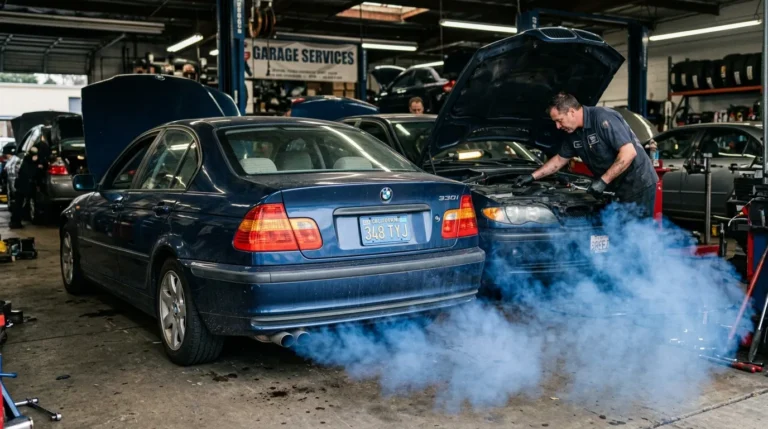
- Overheating or contamination breaks down fluid. Burnt fluid smells and fails to protect parts.
- Worn clutch plates (automatic or manual)
- Friction surfaces wear with time. Worn plates slip under load.
- Torque converter failure
- The torque converter transfers engine torque. A failing converter can slip at acceleration.
- Faulty solenoids or valve body problems
- Solenoids control gear shifts. If they stick, engagement is weak and slipping follows.
- Worn bands or clutches in automatic transmissions
- Bands hold gears. Worn bands cause gears to slip or not hold correctly.
- Broken or stretched clutch cable (manual)
- Poor engagement or slippage in manuals can come from cable issues or misadjusted hydraulics.
- Overheating and thermal damage
- Heat warps parts and degrades fluid, leading to more slip and long-term damage.
- Mechanical wear and internal damage
- Gears, bearings, and shafts wear over time and can cause slipping or grinding.
- Electronic control issues or software faults
- Modern cars rely on transmission control units. Faulty signals can cause improper shifts and slip.
These transmission slipping causes vary by vehicle age and type. Knowing which apply to your car narrows diagnostics.
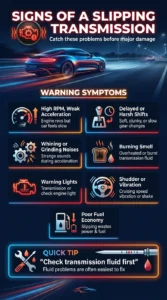
Symptoms that point to a slipping transmission
You can often spot slipping before it becomes severe. Watch for these signs.
- Unexpected engine rev increase with weak acceleration.
- The engine speeds up but the car does not respond.
- Harsh or delayed gear shifts
- Shifts feel soft, slow, or clunky instead of crisp.
- Strange noises during acceleration
- Whining, grinding, or humming often accompany slipping.
- Burning smell from the transmission area
- Burnt scent often signals overheated or burnt fluid.
- Transmission warning light or check engine light
- Codes related to shift solenoids or torque converter can show up.
- Shudder or vibration at cruising speeds
- A shudder can point to torque converter or worn clutches.
- Poor fuel economy
- Slipping wastes power and reduces mileage.
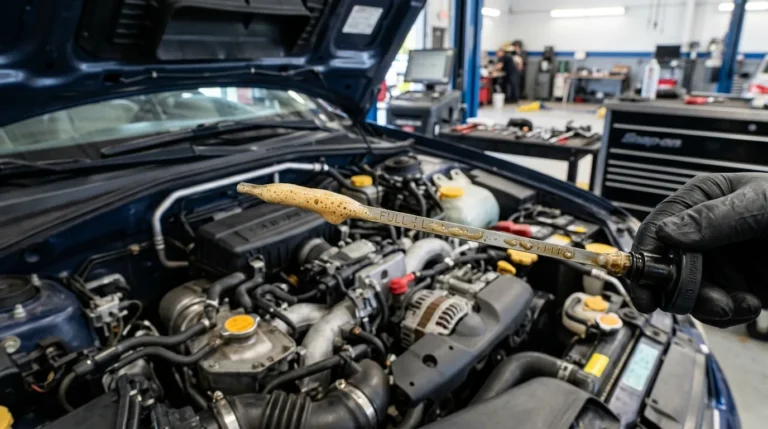
If you notice one or more signs, check fluid first. Fluid issues are easy to verify and often easy to fix.
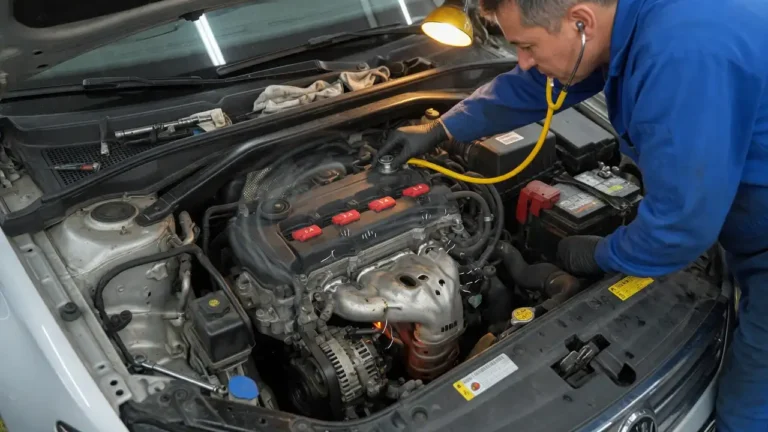
How mechanics diagnose transmission slipping causes
A clear path to diagnosis saves time and money. Here’s a step-by-step approach mechanics use.
- Visual and fluid check
- Inspect fluid level, color, and smell. Look for leaks.
- Road test
- Drive in different gears and loads to reproduce slipping.
- Scan for codes
- Use an OBD-II scanner to read transmission-related trouble codes.
- Pressure and leak-down tests
- Check hydraulic pressure to verify pump and line function.
- Torque converter and stall test
- Test stall speed to see if the converter locks correctly.
- Remove pan and inspect internal parts
- Look for metal shavings, worn clutches, or debris.
- Solenoid and valve body testing
- Test electrical function and hydraulic operation of solenoids.
- Compression and clutch checks (manual)
- Inspect clutch wear and hydraulic systems for manuals.
A proper diagnosis isolates the main transmission slipping causes. Avoid replacing parts before confirming the true problem.

Repair and maintenance options
Fixes range from simple fluid service to full rebuilds. Choose based on diagnosis, vehicle value, and your budget.
- Fluid change or flush
- Best for low fluid or degraded fluid. Use manufacturer-recommended fluid.
- Filter replacement and pan gasket
- Common with fluid service for automatics. Removes trapped debris.
- Replace worn clutch plates or bands
- Needed when friction material is worn past spec.
- Torque converter replacement or repair
- Required if the converter fails. Can be costly but essential for many slip causes.
- Solenoid or valve body repairs
- Replacing faulty solenoids or cleaning valve bodies can stop slipping.
- Rebuild or replace transmission
- For severe internal damage, a rebuild or replacement may be the only option.
- Manual clutch replacement or adjustment
- Replace clutch disc, pressure plate, and release bearing as needed.
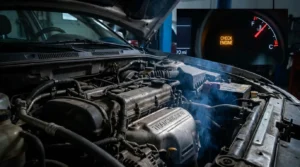
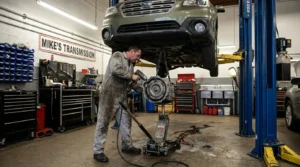
DIY fluid checks and changes are often safe. Internal repairs usually need a skilled technician. Ask for a clear estimate and warranty.
Costs and timelines
Costs vary widely by vehicle, region, and repair depth. Expect ranges below as rough guides.
- Fluid change and filter
- Typical cost: low to moderate. Time: 1–3 hours.
- Solenoid or valve body repair
- Typical cost: moderate. Time: 3–8 hours.
- Torque converter replacement
- Typical cost: moderate to high. Time: 6–12 hours.
- Rebuild transmission
- Typical cost: high. Time: 2–5 days.
- Replace transmission (reman or new)
- Typical cost: very high. Time: 1–4 days.
Get multiple quotes. Consider the vehicle’s worth before agreeing to a full replacement. Preventive care often costs far less over a car’s life.
Preventing transmission slipping — practical tips
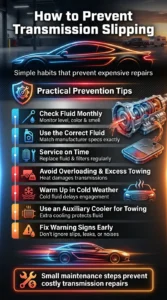
Routine care prevents many transmission slipping causes. Follow these simple habits.
- Check fluid monthly
- Keep the level correct and watch color and smell.
- Use the right fluid
- Follow the manufacturer’s spec exactly.
- Service at recommended intervals
- Replace fluid and filters per the owner’s manual.
- Avoid heavy loads and towing beyond limits
- Overload stresses the transmission and causes heat.
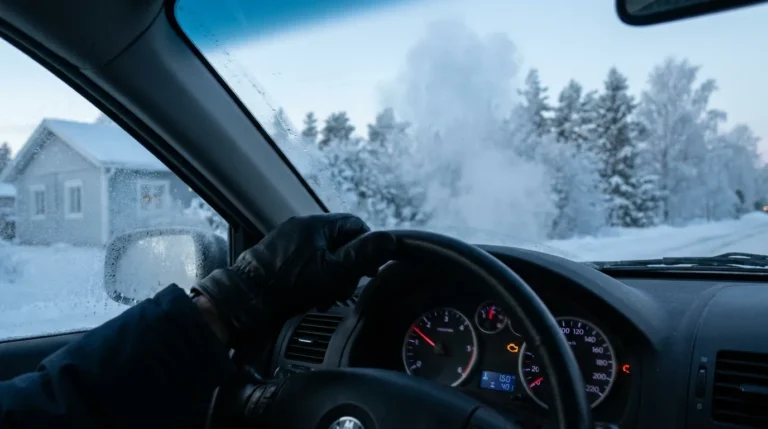
- Allow proper warm-up in cold weather
- Cold fluid is thick and can delay engagement.
- Install an auxiliary transmission cooler for towing
- Extra cooling prevents overheating and fluid breakdown.
- Address warning signs early
- Don’t ignore slipping, noises, or leaks.
Small steps lower the chance of major repairs later.
Personal experience: lessons from the shop
I once diagnosed a slipping automatic in a commuter car. The owner had ignored a small leak and used cheap fluid. The fluid was burnt and the clutch packs were worn. A fluid service would have fixed it months earlier.
Lesson learned:
- Treat small signs early.
- Ask for a clear diagnosis before replacing parts.
- Budget for routine transmission care.
Sharing this saves other drivers time and money. Experience shows prompt action often prevents total failure.

Source: independenttransmission.com
People also ask
What causes a transmission to slip when accelerating?
A slipping transmission during acceleration typically means worn clutches, low fluid, or a failing torque converter. Scan for codes and check fluid first.
Can bad transmission fluid cause slipping?
Yes. Old, burnt, or low transmission fluid reduces hydraulic pressure and friction, which leads to slipping. Fresh, correct fluid often restores proper function.
Is transmission slipping dangerous?
Left unchecked, slipping can worsen and lead to full transmission failure or a sudden loss of drive. It’s safer to diagnose and fix early.
Frequently Asked Questions of transmission slipping causes
What should I check first if my transmission is slipping?
Check the transmission fluid level, color, and smell first. Low or burnt fluid is a common and fixable cause.
Can a solenoid cause transmission slipping?
Yes. A faulty solenoid can prevent proper gear engagement and lead to slipping. Diagnosis with a scanner helps find solenoid faults.
Will changing transmission fluid always stop slipping?
Not always. Fluid change helps many cases, but if internal parts are worn or the torque converter is bad, further repairs are needed.
How long can you drive with a slipping transmission?
Driving while slipping is risky. Short trips to a shop may be okay, but prolonged driving can cause more damage and higher repair costs.
How do I know if my manual clutch is slipping?
Signs include high engine revs with slow acceleration, difficulty shifting, and reduced power. A slipping clutch often requires replacement.
Is transmission slipping covered by warranty?
It depends on the vehicle and warranty terms. Factory powertrain warranties may cover defects, but wear and lack of maintenance often are excluded.
Can software updates fix slipping?
Sometimes. Modern cars use transmission control modules. A software update can resolve shifting issues if the root cause is control-related.
Conclusion
Transmission slipping causes range from simple fluid issues to serious internal damage. Check fluid first, pay attention to symptoms, and get a proper diagnosis before spending money. Small maintenance steps prevent most slipping problems and save you time and cash.
Take action now: inspect your fluid, note any signs, and book a diagnostic if you suspect slipping. If this guide helped, subscribe, leave a comment, or share your experience so others can learn from it.