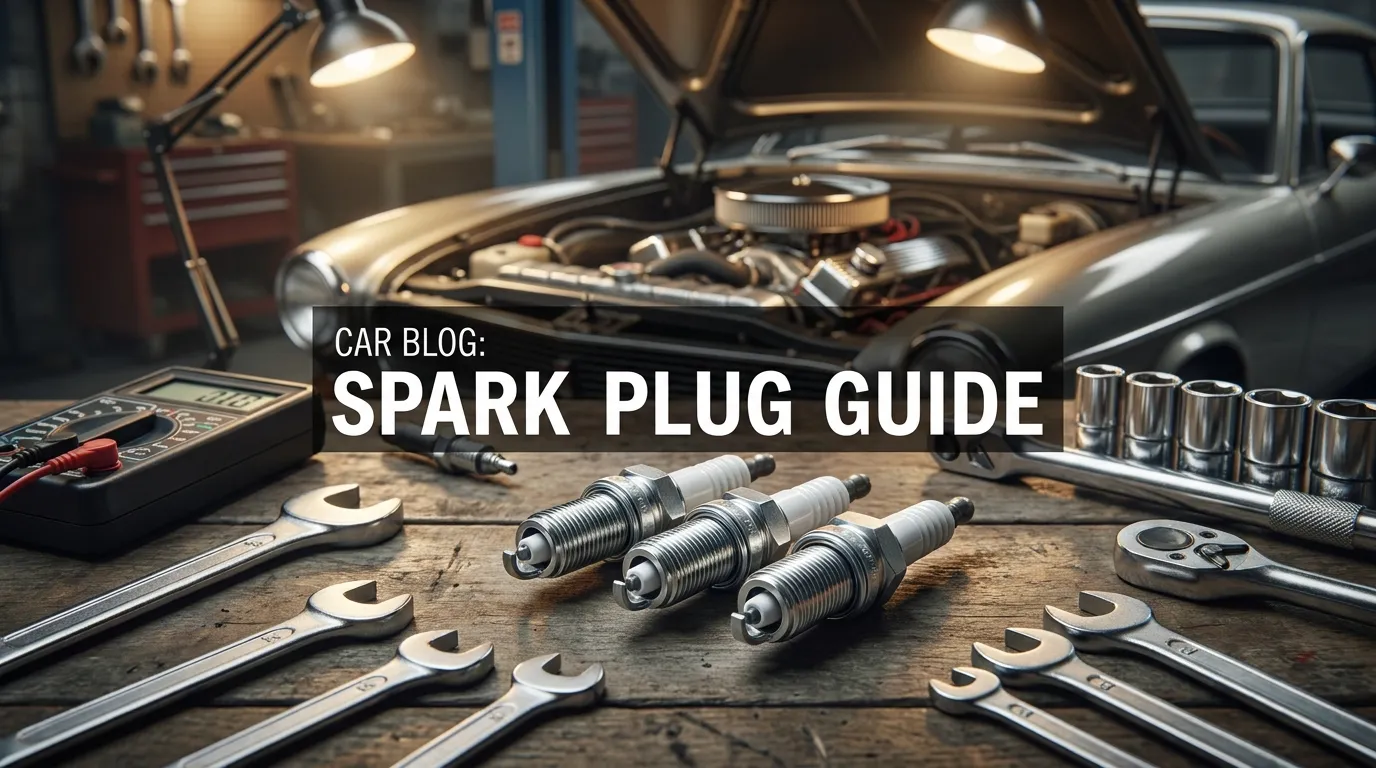
Spark plug maintenance tips prevent misfires, improve fuel economy, and extend engine life quickly.
I write and work on cars for years. I know spark plug maintenance tips inside and out. This guide gives clear steps, real examples, and pro tips. Read on to save time, avoid common mistakes, and keep your engine running smooth.
Why spark plug maintenance matters
Spark plug maintenance tips protect engine health. Worn plugs cause rough idle, hard starts, and low fuel economy. Good maintenance keeps power steady and reduces emissions. I have seen cars regain performance after a simple plug tune. Follow routine checks and you save money in the long run.
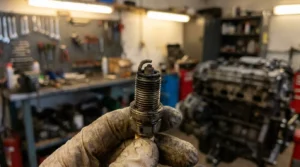
How spark plugs work: a brief definition
A spark plug makes a spark that lights the fuel-air mix in the engine. It must be clean and set to the right gap. Heat range, electrodes, and insulation all affect performance. Knowing how they work helps when you pick parts and tune your engine.
When to inspect and replace spark plugs
Check plugs at intervals listed in your owner manual. Many modern cars need checks every 30,000 to 60,000 miles, but some iridium plugs last 100,000 miles. Inspect earlier if you feel poor idle, rough acceleration, or higher fuel use. Use these spark plug maintenance tips: inspect at oil changes and before long trips.
Visual inspection checklist
Look for signs of wear and failure. Use a flashlight and a gap gauge for checks. Common visual signs include:
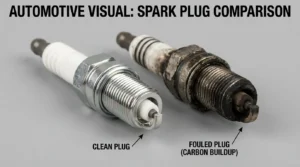
- Light tan or gray deposits indicate normal wear.
- Black, sooty deposits point to a too-rich fuel mix.
- White, blistered insulators suggest overheating.
- Oily fouling shows oil control problems.
If you spot cracks or heavy wear, replace the plug rather than clean it.

Source: autoworksserviceandrepair.com
Cleaning, gapping, and replacement steps
Follow a clear step-by-step routine. This keeps work safe and effective.
- Gather tools: socket set, torque wrench, gap gauge, anti-seize, dielectric grease, and the correct plugs.
- Let the engine cool for at least 30 minutes. Remove one plug wire or coil at a time to avoid mix-ups.
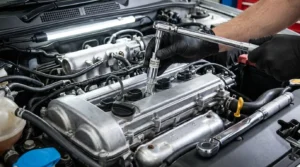
- Clean around the plug to stop debris from falling into the cylinder. Unscrew the plug with a proper socket.
- Inspect the tip and electrode. Clean light carbon with a wire brush or plug cleaner. Replace if damaged.
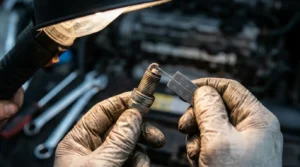
- Set the gap to spec with a gap gauge. Do not over-bend the electrode.
- Apply a tiny dab of anti-seize on the threads if the manufacturer allows it. Thread by hand then torque to spec.
- Add dielectric grease to the boot and reconnect. Start the engine and listen for smooth operation.
Gapping explained and why it matters
The gap is the distance the spark must jump. A wrong gap causes weak spark or misfires. Follow factory specs for your engine. Using spark plug maintenance tips, always check the gap before installation. For high-performance engines, a slight adjustment may help, but match to ignition system capability.
Choosing the right plug: materials and heat range
Pick the right type for your car and driving style. Common options:
- Copper: good conductor, lower cost, shorter life.
- Platinum: longer life, stable gap.
- Iridium: best longevity and performance, pricier.
Heat range affects how fast the plug sheds heat. A colder plug suits high-load engines. When in doubt, stick to the manufacturer’s recommendation.
Tools, parts checklist, and estimated cost
A basic kit saves time and errors. Include:
- Correct spark plugs (set or individual)
- Torque wrench and spark plug socket
- Gap tool or feeler gauge
- Anti-seize compound (if allowed)
- Dielectric grease
- Clean rags and compressed air
Cost varies. Basic plugs can be $5–$15 each. Iridium can run $15–$30 each. Labor at a shop may be $50–$150 depending on access.
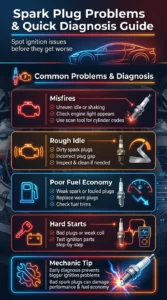
Common problems and how to diagnose them
Recognize these issues early to avoid costly repairs.
- Misfires: uneven idle or check engine light. Use a scan tool to find cylinder codes.
- Rough idle: dirty plugs or wrong gap. Inspect and clean as needed.
- Poor fuel economy: weak spark or fouling. Replace worn plugs and check fuel trims.
- Hard starts: bad plugs or weak ignition coil. Test components in order.
Safety tips and mistakes to avoid
Work safe and avoid common errors. Tips include:
- Never over-torque new plugs; this can crack the head.
- Remove one plug at a time to avoid mixing wires.
- Do not use too much anti-seize unless specified.
- Avoid using tools that can damage the electrode.
I once stripped a spark plug thread by rushing. I learned to use the correct socket and torque. Take your time and follow the steps.
Real-world examples and personal insights
I changed plugs on a 2008 sedan that had 120,000 miles. Fuel economy rose by 2 mpg and idle smoothed in minutes. Another time, cleaning a fouled plug fixed a misfire until the true cause, an oil leak, was found. These spark plug maintenance tips saved hours and money. Trust routine checks to catch issues early.
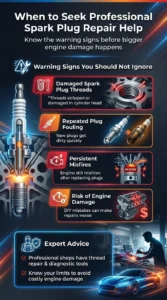
Limitations and when to seek professional help
Some repairs need a mechanic. If you see:
- Damaged threads in the head
- Repeated fouling after plug replacement
- Persistent misfires with new plugs
Get professional help. A shop has tools for thread repair and deep diagnostics. Be honest about limits to avoid more damage.
Maintenance schedule and long-term care
A simple schedule keeps plugs healthy. Follow this plan:
- Every oil change: quick visual check of ignition boots and wires.
- Every 30,000 miles: inspect plugs and gap them if needed.
- Replace based on plug type: copper at 30,000 miles, platinum 60,000 miles, iridium up to 100,000 miles.
Track service dates and parts used in a log to improve long-term care.
Related concepts: coils, wires, and ignition systems
Spark plugs work with coils and wires. A weak coil or bad wire can mimic bad plugs. When you do spark plug maintenance tips, also:
- Inspect ignition wires or coil boots for cracks.
- Test coil resistance if problems persist.
- Consider swapping coils to isolate bad parts.
This holistic view saves time diagnosing issues.
Benefits of regular spark plug care
Routine care gives real gains. Benefits include:
- Better fuel economy
- Smoother idle and acceleration
- Lower emissions
- Longer engine life
These spark plug maintenance tips bring steady, measurable improvements. Small actions often prevent big repairs.
FAQs about spark plug maintenance tips
How often should I check spark plugs?
Check plugs at intervals in your owner manual. For many cars, inspect every 30,000 miles and replace per plug type.
Can I clean and reuse a spark plug?
You can clean lightly fouled plugs, but replace cracked or heavily worn plugs. Cleaning helps short-term but does not restore full life.
Is gapping necessary for all plugs?
Yes. Always confirm the gap matches factory specs. Some pre-gapped plugs can shift in shipping.
What causes spark plug fouling?
Fouling comes from oil, fuel, or carbon build-up due to engine issues or poor combustion. Diagnose the root cause to prevent repeat fouling.
Can bad plugs damage an engine?
Bad plugs cause misfires that can harm the catalytic converter over time. Replace plugs promptly to avoid added repairs.
Conclusion
Spark plug maintenance tips are simple, cheap, and effective. Regular checks, correct gaps, and the right parts keep engines smooth and efficient. Start with one spark plug check this month and add it to your routine. Share your results or ask questions below and subscribe for more practical car-care tips.