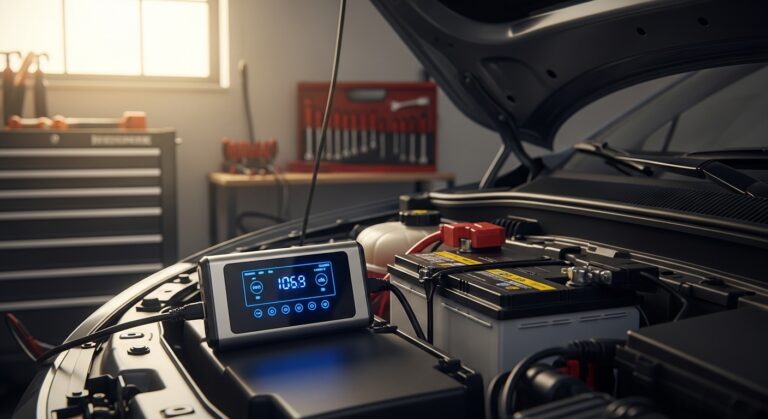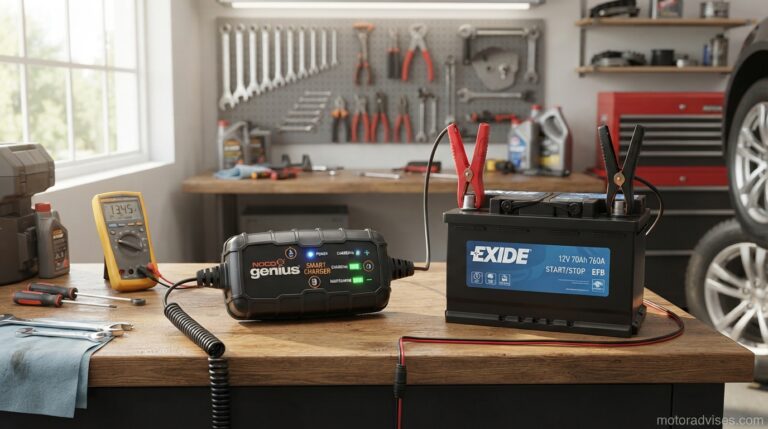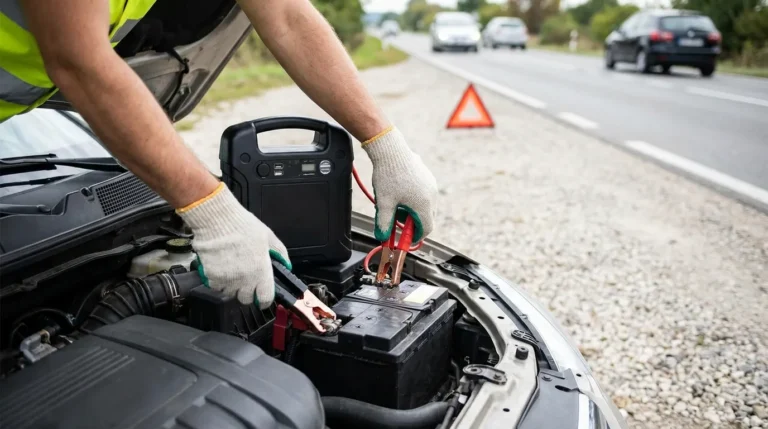
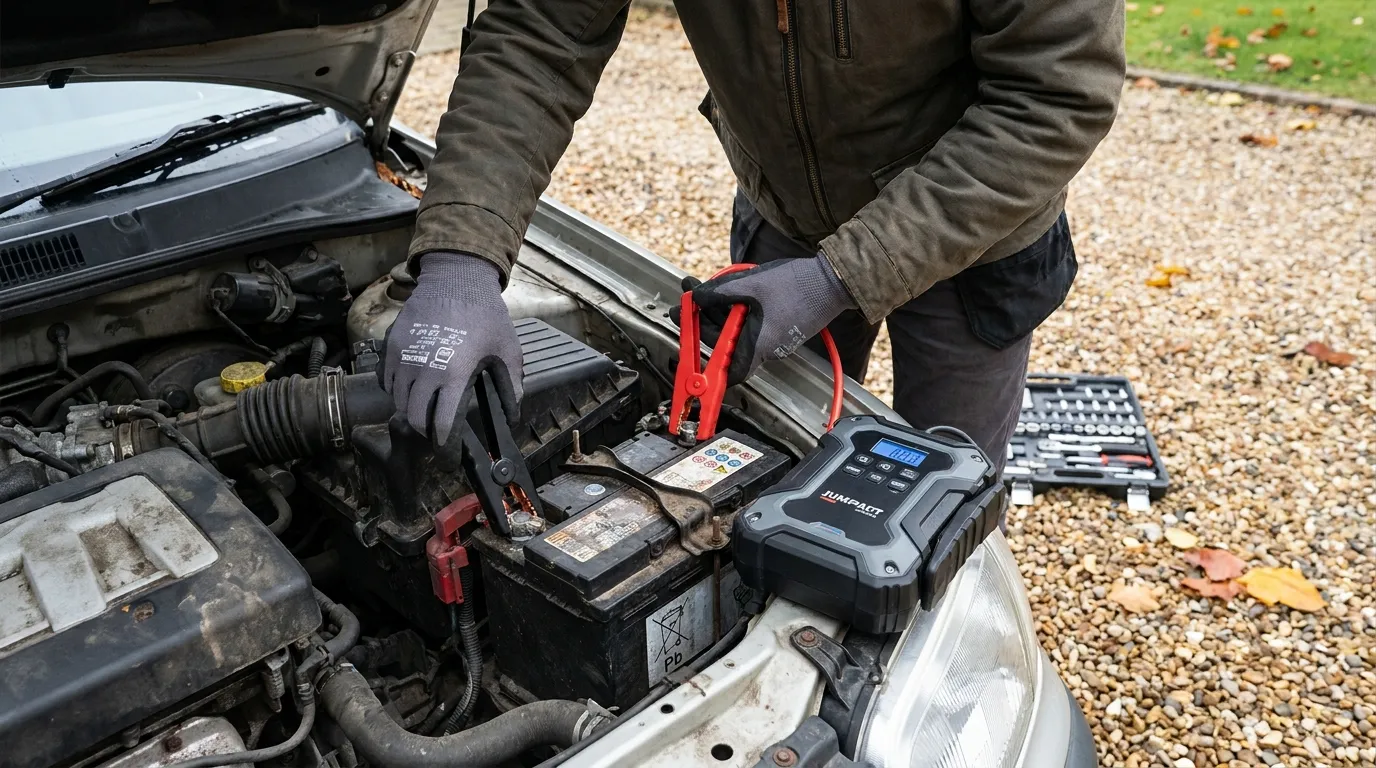
Connect the clamps correctly, power the unit, attach to the battery, then start the engine.
I’ve used portable jump starters for years and taught dozens of drivers how to stay safe when a battery dies. This guide shows exactly how to use portable jump starter units, how to pick the right one, and how to avoid common mistakes. Read on for clear, practical steps and real-world tips so you can handle a dead battery with confidence.
Why carry a portable jump starter?
A portable jump starter gets you back on the road fast. It replaces the need to find another car and reduces wait time. I keep one in my trunk and it has saved me hours on cold mornings and late nights. Knowing how to use portable jump starter means you can act fast, safely, and alone.
Choosing the right portable jump starter
Pick a unit that matches your vehicle’s needs. Look for peak amps and cranking amps that suit your engine size. Battery chemistry matters; lithium units are light and compact while lead-acid units cost less. Consider extra features like USB charging, built-in lights, and safety protections when you learn how to use portable jump starter models.
Source: linex.com
How to use portable jump starter: Step-by-step
Follow these steps every time you jump-start a vehicle. Read your unit’s manual first. Keep clamps clean and dry. Stay clear of moving engine parts.
- Prepare the car
- Turn off the ignition, lights, and accessories.
- Put the car in park or neutral and set the parking brake.
- Open the hood and find the battery and terminals.
- Inspect the battery
- Look for cracks, leaks, or heavy corrosion. If the battery is damaged, do not jump it.
- If terminals are dirty, scrub lightly or use a terminal cleaner.
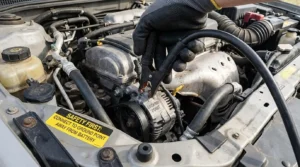
- Connect the jump starter
- Switch the portable jump starter off before connecting.
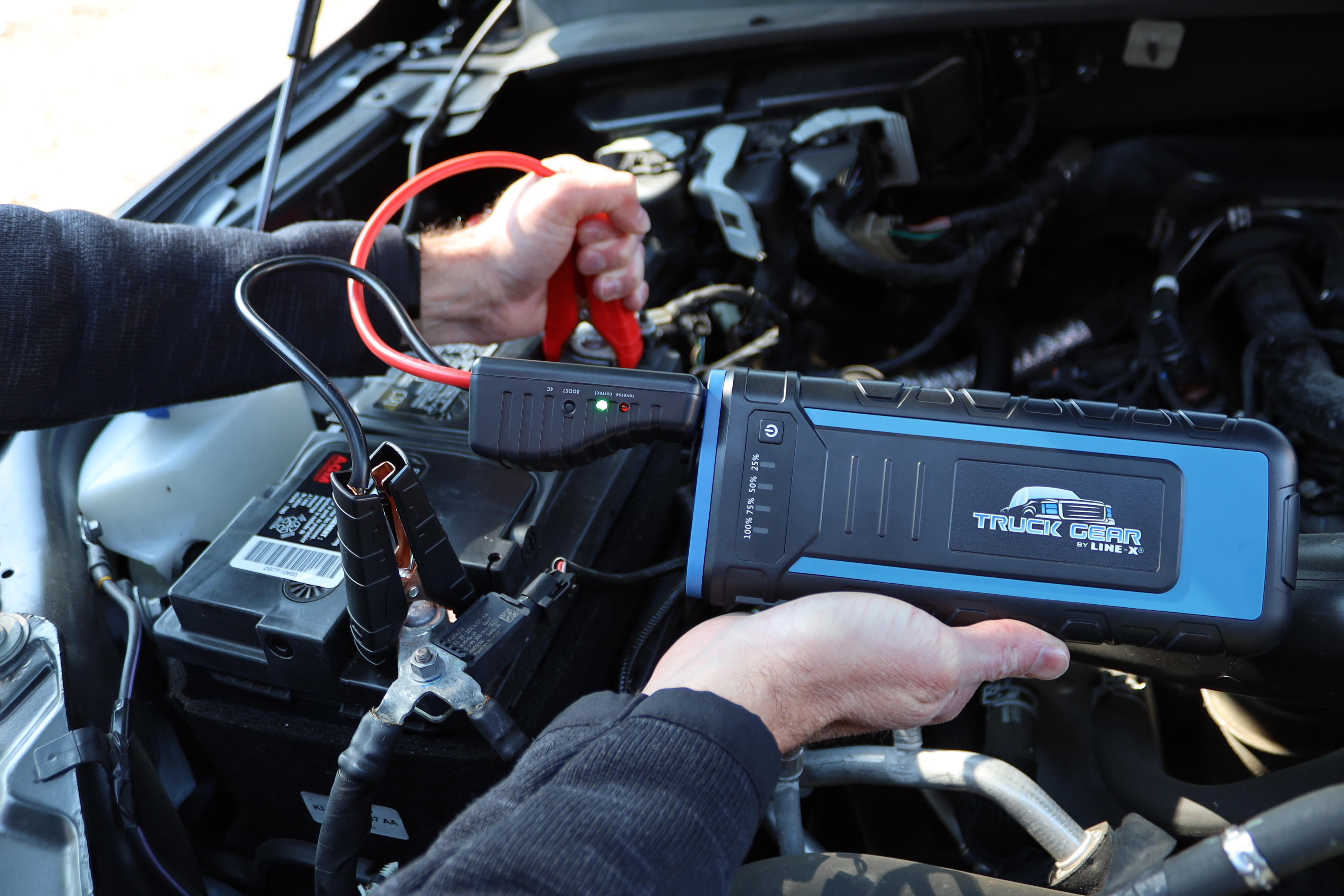
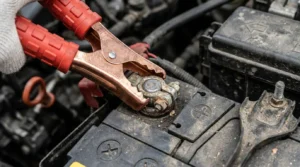
- Attach the red clamp to the positive (+) battery terminal.
- Attach the black clamp to a grounded metal part away from the battery or to the negative (-) terminal if instructed by the manual.
- Double-check clamp connections and polarity before turning the unit on.
- Power and start
- Turn the portable jump starter on and wait a few seconds.
- Start the vehicle. If it does not start within 5–10 seconds, wait a minute and try again; avoid cranking for more than 10–15 seconds at a time.
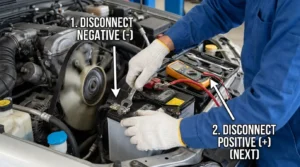
- Once the car starts, keep it running and remove the clamps in reverse order: black clamp first, then red clamp.
- Aftercare
- Let the vehicle run for 20–30 minutes to recharge the battery or drive it.
- Recharge the portable jump starter as soon as possible so it’s ready next time.
Learning how to use portable jump starter safely takes a few minutes but pays off during emergencies.
Safety tips and common mistakes
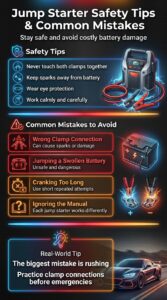
Safety keeps you and your car safe when you use a jump starter. Never touch both clamps together. Avoid sparks near the battery. Wear eye protection if you can.
Common mistakes to avoid:
- Connecting clamps to the wrong terminal. This can cause sparks or damage.
- Trying to jump a badly damaged or swollen battery.
- Cranking too long. Short, repeated attempts are safer.
- Not reading the unit manual. Each model has slight differences.
From experience, the worst mistake is rushing. Take time and follow steps. It helps to practice connecting the clamps once in a calm setting.
Maintenance, storage, and lifespan
Treat your portable jump starter like a tool. Keep it charged and stored in a cool, dry place. Check the charge monthly. Replace batteries or the unit when capacity drops.
Maintenance checklist:
- Charge after each use.
- Test the unit periodically with a voltmeter or built-in test mode.
- Clean clamps and store cables neatly.
- Replace units that show swelling, odd smells, or fail self-tests.
Knowing how to use portable jump starter also includes keeping it ready.
Troubleshooting and quick answers
If the car won’t start
- Check clamp connections and polarity. Ensure the jump starter has charge. Try another start cycle.
If the jump starter won’t hold a charge
- The internal battery may be at end of life or the unit needs professional servicing.
If the starter shows error lights
- Refer to the manual for the error code. Many errors signal reversed polarity or weak charge.
People also ask: Will a portable jump starter work on any car?
- Portable jump starter effectiveness depends on peak amps and battery size. Match the unit’s specs to your vehicle.
People also ask: How long can I crank the car with a portable jump starter?
- Avoid cranking longer than 10–15 seconds at a time. Wait one to two minutes between attempts.
People also ask: Can I jump a hybrid or diesel vehicle?
- Some hybrids and diesel engines need special care. Check the vehicle and jump starter manuals before attempting to jump them.
Frequently Asked Questions of how to use portable jump starter
How do I connect the clamps to the battery safely?
Connect the red clamp to the positive (+) terminal and the black clamp to a metal ground away from the battery or the negative (-) terminal. Ensure the unit is off while connecting and double-check the clamps before powering the jump starter.
Will a portable jump starter damage my car’s electronics?
Most modern portable jump starters have built-in protections to prevent damage. Use a reputable unit and follow instructions to reduce any risk to your car’s electronics.
How many times can I use a portable jump starter before recharging?
Usage varies by model, but a typical unit can provide several starts on a full charge. Recharge the jump starter promptly after use to ensure readiness for the next emergency.
Can I use a portable jump starter on a motorcycle or small engine?
Yes, many portable jump starters work on motorcycles and small engines, but confirm the unit’s minimum voltage and amp rating. Smaller engines often need less power than cars.
Is it safe to keep a portable jump starter in my car year-round?
Yes, but store it in a cool, dry spot inside the vehicle and check its charge monthly. Extreme heat or cold reduces battery life and may require more frequent charging.
Conclusion
Mastering how to use portable jump starter gives you freedom and peace of mind on the road. Pick the right unit, practice safe connections, and maintain the device so it is ready when you need it. Take action: check your car’s battery specs, choose a reliable jump starter, and try a dry run at home so you know what to do in an emergency. Share your experience below or subscribe for more practical vehicle tips.