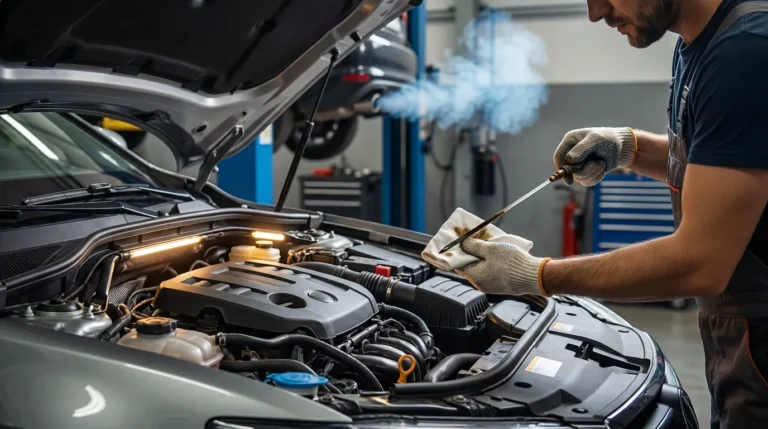
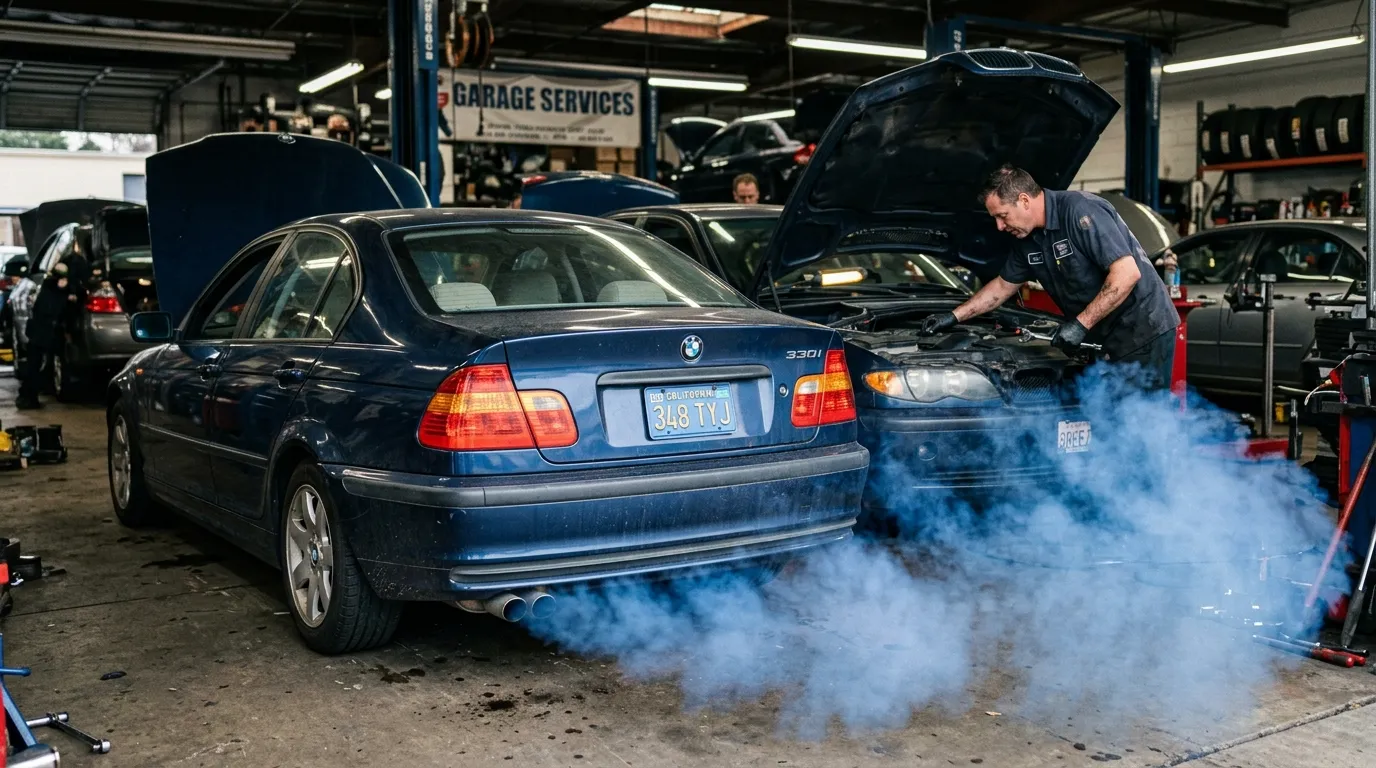
Blue smoke from the exhaust usually means your engine is burning oil inside the combustion chamber.
I’ve spent years diagnosing engines and teaching drivers what different exhaust colors mean. This article explains the blue smoke from exhaust meaning in plain language, shows likely causes, gives step-by-step diagnostic checks, and shares real-world fixes and costs so you can decide what to do next with confidence. Read on to learn how to spot the issue early and avoid costly repairs.
What blue smoke from exhaust means
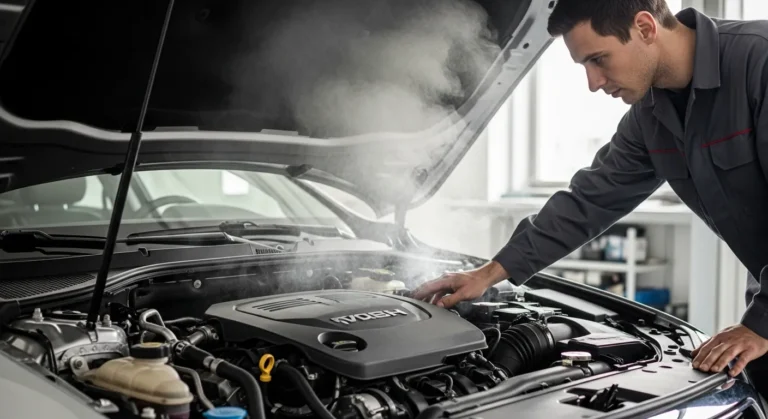
Blue smoke from exhaust meaning is simple: the engine is burning oil with the fuel and air inside the cylinders. When oil gets past seals, rings, or turbo components and reaches hot combustion areas, it vaporizes and leaves a blue-tinted exhaust. The color is a key diagnostic clue that separates oil burning from other problems such as coolant leaks or rich fuel mixtures.
Blue smoke from exhaust meaning also varies by when the smoke appears. Brief blue smoke on cold starts can differ from steady blue smoke while driving. Knowing the pattern helps narrow down the cause. Most mechanics use these visual cues alongside tests to pinpoint which part of the engine is the source.
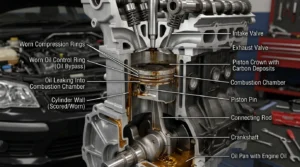
Common causes of blue smoke from exhaust
Understanding typical failure points makes the blue smoke from exhaust meaning actionable. Here are the main culprits.
- Worn piston rings
- Rings stop oil from entering the combustion chamber. When rings wear, oil slips past and burns.
- Damaged valve stem seals
- Seals keep oil off valve stems. Hard starts or long idling can push oil past weak seals.
- Cylinder wall wear or scoring
- Deep wear on cylinder walls lets oil flow where it should not.
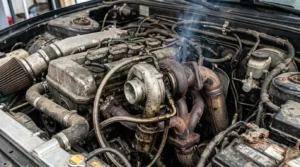
- Turbocharger oil seal failure
- Turbochargers spin at high speed. A failing turbo seal sprays oil into the intake or exhaust, creating blue smoke.
- Faulty or clogged PCV (positive crankcase ventilation) system
- A stuck PCV valve can suck oil into the intake manifold causing oil burn.
- Overfilled engine oil or wrong oil viscosity
- Too much oil or very thin oil can reach combustion areas more easily.
- Worn valve guides or loose valve train components
- Mechanical wear around the valves lets oil seep into the combustion chamber.
Blue smoke from exhaust meaning can also differ between gasoline and diesel engines. Diesel engines often show thicker, bluer smoke under load if oil enters the combustion chamber. On gasoline engines, smoke may be most obvious on startups or deceleration.
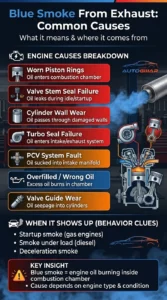
Symptoms and signs to watch for
Blue smoke from exhaust meaning shows up with several companion signs. Look for these to assess severity.
- Increased oil consumption
- You need to add oil more often than normal.
- Strong oil smell in exhaust
- Burnt oil has a distinct acrid scent.
- Fouled spark plugs
- Oil on spark plugs causes misfires and rough idle.
- Smoke on startup only
- Valve seals often cause smoke on cold starts; rings usually cause constant smoke.
- Thick smoke under acceleration
– Turbo or piston ring issues often show when you put load to the engine.
Record when the blue smoke appears. That timing is one of the best clues to the underlying problem.
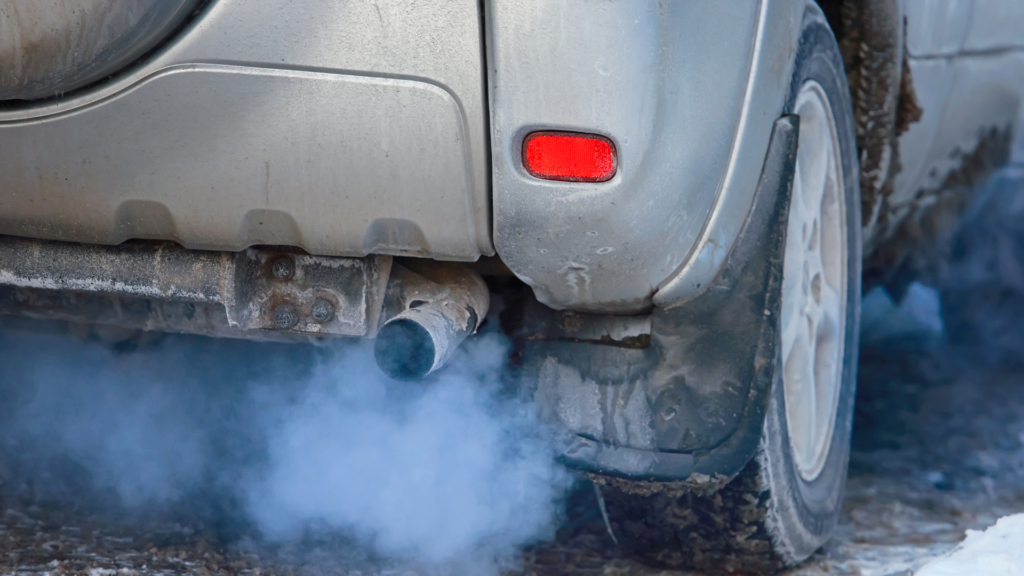
Source: wynns.eu
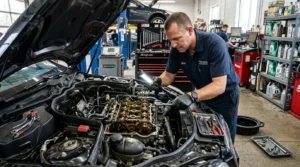
Diagnosis: tests and checks to run
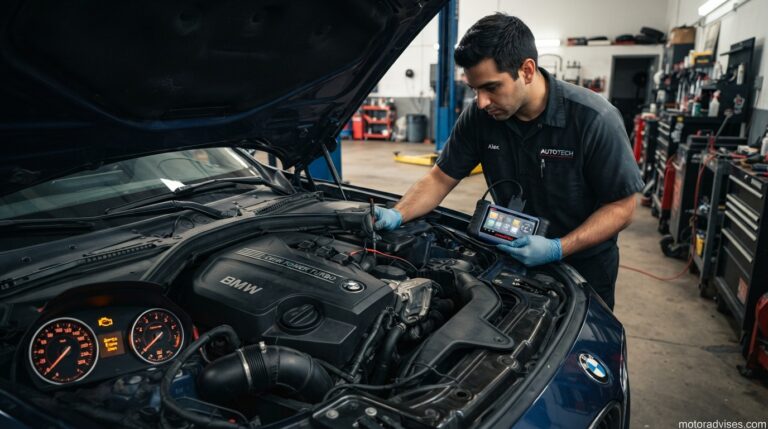
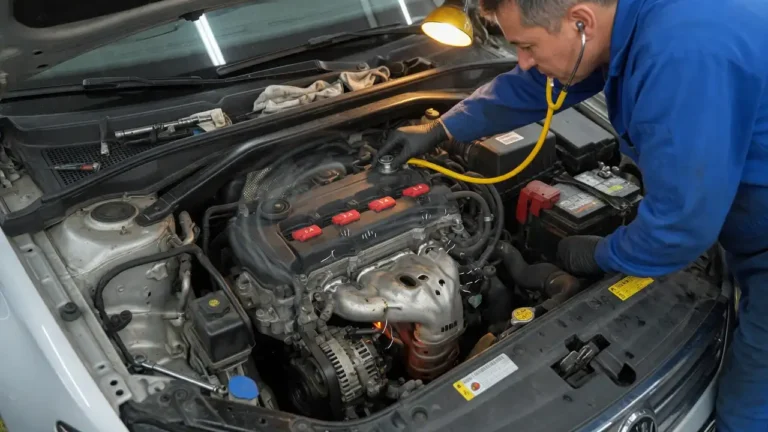
A methodical approach helps confirm the blue smoke from exhaust meaning and avoids needless repairs. Follow these steps.
- Visual and smell check
- Note when smoke happens. Smell the exhaust for oil scent.
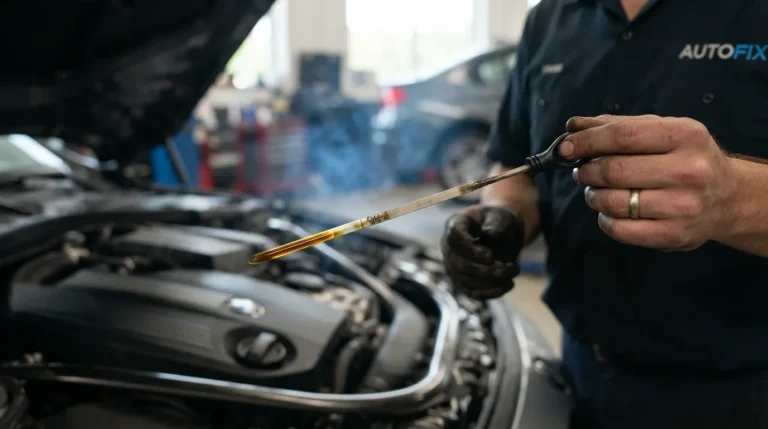
- Check oil level and condition
- Look for overfill or contaminated oil that smells like fuel or coolant.
- Inspect spark plugs
- Oil-fouled plugs point to oil entering the combustion chamber.
- Compression test
- Low compression in one or more cylinders suggests worn rings or cylinder damage.
- Leak-down test
- Determines where compression is lost and whether rings or valves are leaking.
- PCV system check
- Make sure the PCV valve and hoses are clean and functioning.
- Turbo inspection (if applicable)
- Check for shaft play and oil in the intake or intercooler piping.
- Oil analysis
- Lab testing can reveal fuel or coolant contamination and trace metals.
People also ask:
Why does blue smoke appear only on cold start?
Blue smoke from exhaust meaning on cold start often points to worn valve seals letting oil drip into cylinders while the car sits.
Can a clogged PCV cause blue smoke?
Yes. Blue smoke from exhaust meaning can include a clogged PCV which routes oil vapors into the intake, increasing oil burn.
Is blue smoke dangerous to drive with?
Short term it may be manageable, but blue smoke from exhaust meaning left unchecked leads to faster wear and higher repair costs.
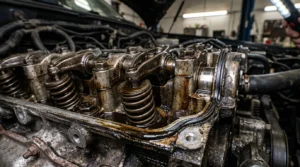
Common repairs and typical costs
Fixes depend on cause and vehicle type. Here are common repairs and general cost ranges. Prices vary widely by make, model, and labor rates.
- Replace valve stem seals
- Moderate cost; typically a few hundred to a thousand dollars depending on engine layout.
- Piston rings or top-end overhaul
- Major repair; can be costly because of engine disassembly. Expect several thousand dollars.
- Cylinder rehone or bore and new rings
- Costs depend on machining and parts; often mid-to-high range.
- Turbo rebuild or replacement
- Turbo work can cost from a few hundred to a couple thousand dollars.
- PCV valve and hose replacement
- Low cost; often under $200 including labor.
- Oil change and correct oil type
- Low cost; can sometimes temporarily reduce smoke if viscosity was the issue.
Blue smoke from exhaust meaning helps you prioritize repairs. Start with inexpensive checks like the PCV and oil level before moving to major engine work.
DIY tips and preventive maintenance
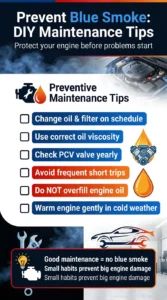
Small habits reduce the chance you’ll see blue smoke from exhaust meaning in the first place. Try these practical tips.
- Service oil and filter on schedule
- Clean oil protects seals and rings.
- Use manufacturer-recommended oil viscosity
- Correct thickness prevents excess oil flow.
- Check PCV system every year
- Replace the PCV valve if it’s sticky or clogged.
- Avoid frequent short trips
- Short trips don’t fully warm the engine and can lead to deposits that damage seals.
- Don’t overfill the crankcase
- Excess oil can reach combustion chambers more easily.
- Warm the engine gently in cold weather
- Hard revs on a cold engine can force oil past weak seals.
These small actions lower the odds of seeing blue smoke and extend engine life.
Personal experience and lessons learned
I once diagnosed a 2006 sedan that emitted light blue smoke only on startup. The owner had ignored frequent short trips and used a low-viscosity oil. A PCV valve replacement and correct oil stopped the smoke for a year. Later, worn rings required more work. Lesson learned: fix small issues early and use the proper oil.
Another time a turbocharged truck showed thick blue smoke under heavy load. A turbo seal had failed. Replacing the turbo fixed the smoke and restored performance. Don’t ignore intermittent smoke when towing or under acceleration.
From my experience, the best approach is to track oil use and smoke timing. That record makes diagnosis faster and cheaper.
Frequently Asked Questions of blue smoke from exhaust meaning
What does blue smoke from the exhaust mean?
Blue smoke from exhaust meaning indicates oil is burning in the combustion chamber. This usually comes from worn seals, piston rings, or turbo issues.
Is blue smoke worse than white or black smoke?
Each color signals different problems. Blue usually means oil burning. White often means coolant leaking. Black points to too rich fuel or injector issues.
Can I drive my car if it emits blue smoke?
Short, cautious drives are possible, but continued driving can worsen damage. Have the cause checked soon to avoid bigger repairs.
How do I know if the turbo is causing blue smoke?
Look for blue smoke under boost, oil in the intake or intercooler, and turbo shaft play. These signs suggest a turbo oil seal failure.
Will changing the oil stop blue smoke immediately?
If the problem is wrong viscosity or overfill, changing oil may reduce smoke. If seals or rings are worn, oil change only helps temporarily.
Conclusion
Blue smoke from exhaust meaning is a clear sign that oil is entering and burning in the combustion chamber. Use the color, timing, and accompanying symptoms to narrow down causes. Start with simple checks: oil level, PCV, and spark plugs. If tests show compression or turbo problems, be ready for more involved repairs. Act early to reduce costs and protect your engine.
Takeaway: monitor oil use, note exactly when the smoke appears, and address small issues fast to avoid large repairs. If you found this guide helpful, leave a comment with your car model and symptoms, subscribe for more automotive tips, or book a diagnostic check with a trusted mechanic.