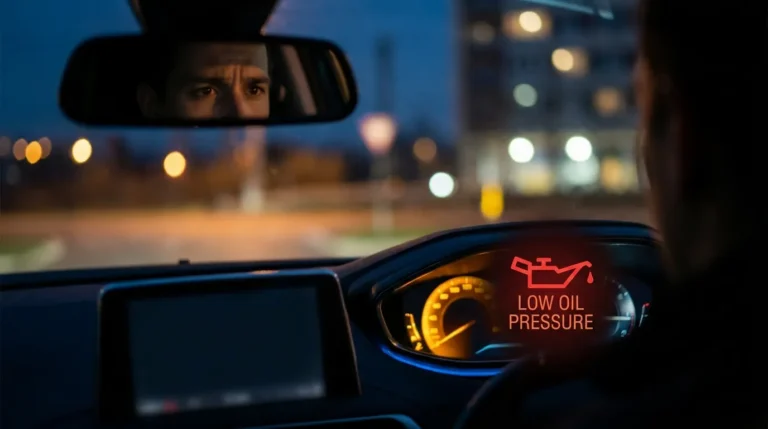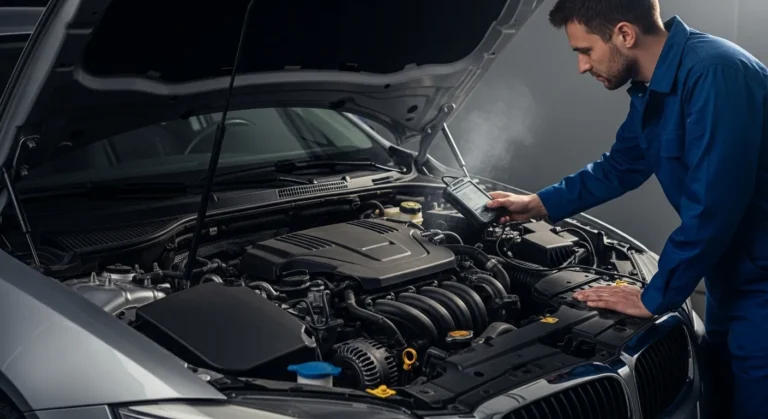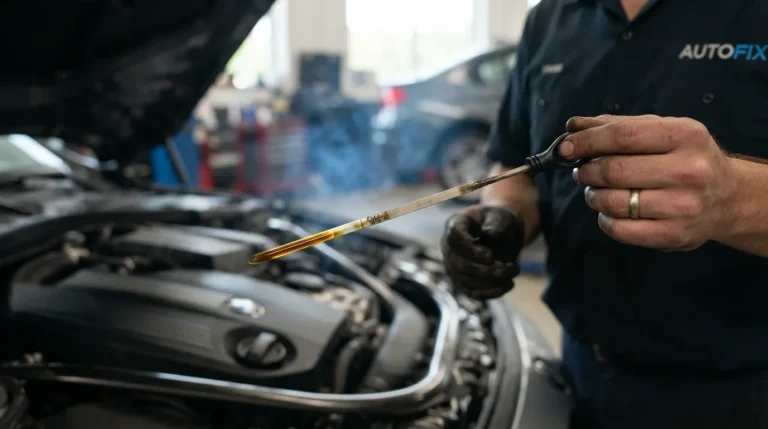
Most jerks under acceleration come from fuel, ignition, air, or transmission issues.
If your car bucks when you hit the gas, you are not alone. I’ve diagnosed and fixed this on daily drivers and track cars alike. In this guide, I break down car jerking when accelerating causes in plain language. You will learn what’s happening, how to test at home, what repairs cost, and when to call a pro. Stick with me, and you’ll go from guesswork to a clear, safe plan.
What jerking feels like and why it matters
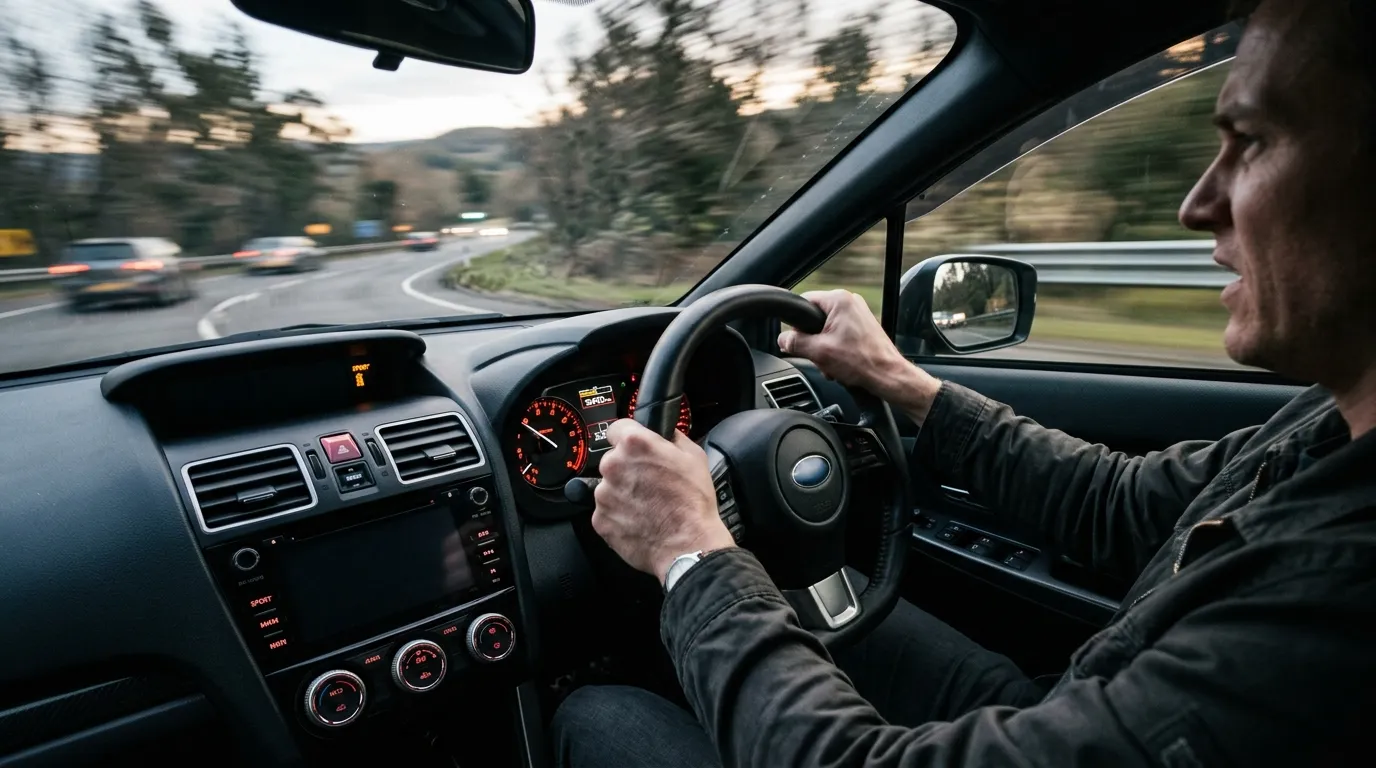
A jerk or hesitation is a sudden break in smooth power. It can feel like the car stumbles, then surges. You might see the tach needle flick, hear a pop, or feel a quick tug.
This is the powertrain crying out for help. It means air, fuel, spark, or torque flow got interrupted. Ignoring it can turn a small fix into a big bill. Early checks can reveal car jerking when accelerating causes before they damage the catalytic converter or transmission.
How acceleration works under the hood
Think of acceleration like a relay race. Each runner must pass the baton cleanly. If one fumbles, the car jerks.
- Air comes through the filter and mass airflow sensor.
- Fuel is pumped, filtered, and injected at the right pressure.
- Spark fires at the right time to burn the mix.
- Exhaust leaves through the catalytic converter.
- The transmission and clutch or torque converter pass torque to the wheels.
A stumble anywhere causes a hiccup you feel as a jerk.
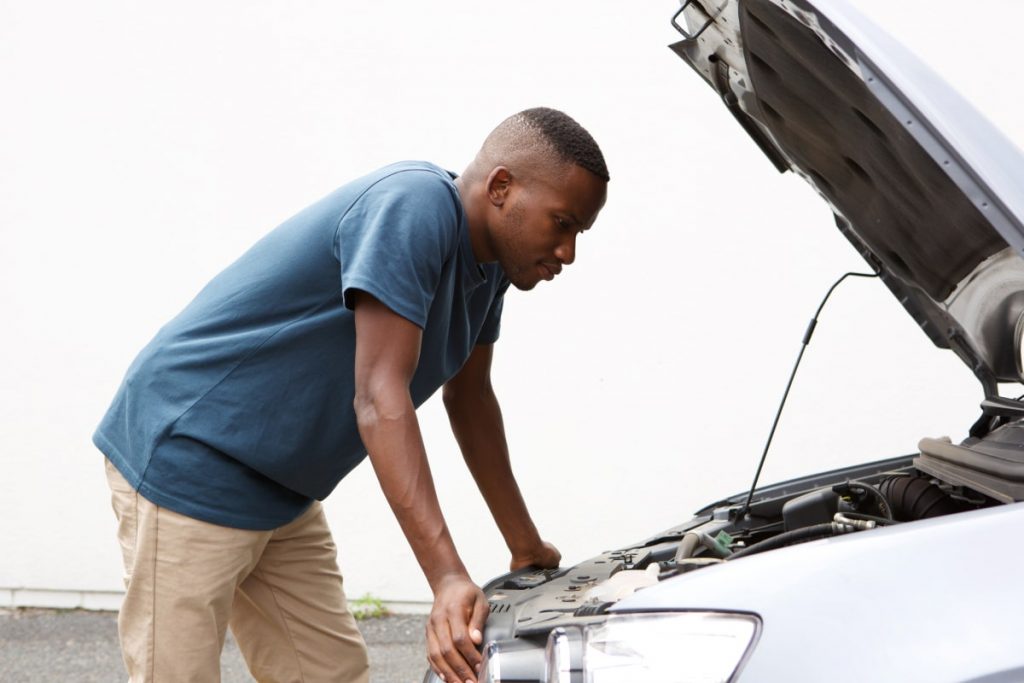
Source: bemac.ca
The most common car jerking when accelerating causes
Among car jerking when accelerating causes, fuel and ignition issues top the list. But air leaks, clogged exhausts, bad sensors, and gearbox faults are common too. Use these signs and checks to zero in fast.
Fuel delivery problems
Low fuel pressure or bad fuel mix causes lean misfires and hesitation.
- Clues: Slow starts, louder pump whine, jerks under load, misfire codes like P0300.
- Quick checks: Listen to the pump prime. Replace an old fuel filter. Scan fuel trims.
- Likely fixes: Fuel filter, pump, pressure regulator, or dirty injectors.
Ignition and misfire
Weak spark lets the burn falter under load.
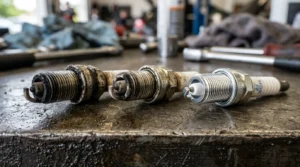
- Clues: Check engine light flashing, sulfur smell, rough idle, wet plugs.
- Quick checks: Inspect plugs for wear, cracks, oil. Swap coils between cylinders to see if misfire follows.
- Likely fixes: New plugs, coils, or wires. Fix valve cover leaks that oil-foul plugs.
Air intake and vacuum leaks
Unmetered air leans out the mix and upsets idle control.
- Clues: Hiss from engine bay, high or wandering idle, lean codes P0171/P0174.
- Quick checks: Spray soapy water along hoses; bubbles move with leaks. Inspect PCV lines and intake boot.
- Likely fixes: Replace cracked hoses, intake boot, PCV valve, or gasket.
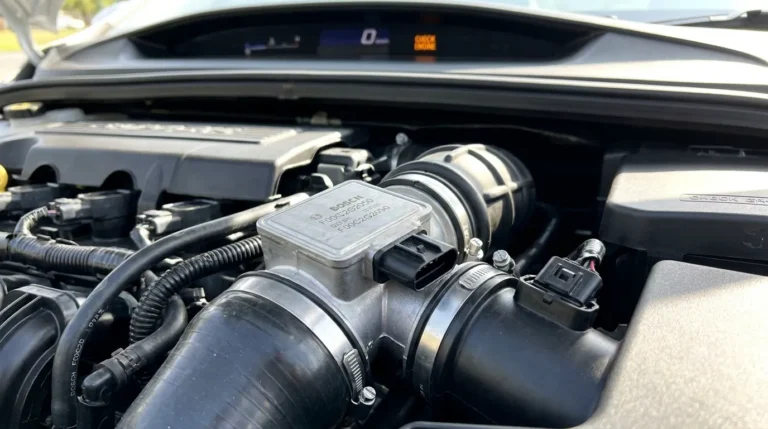
Sensor issues (MAF, TPS, O2, MAP)
Bad data confuses the ECU.
- Clues: Flat spots on throttle tip-in, poor fuel economy, no codes or intermittent codes.
- Quick checks: Clean the MAF with MAF cleaner. Watch live data for TPS dead spots or MAF g/s at idle.
- Likely fixes: Replace failing MAF, TPS, O2, or MAP after testing.
Exhaust restrictions (clogged catalytic converter)
Backpressure chokes the engine at higher RPM.
- Clues: Loss of power as RPM rises, glowing cat, sulfur smell.
- Quick checks: Vacuum at idle vs. 2500 RPM drop test. Infrared temp before/after cat.
- Likely fixes: New catalytic converter. Find and fix the root misfire before installing.
Transmission and clutch
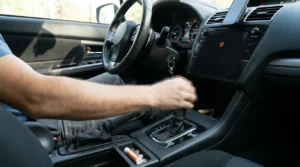
Slip or harsh shifts feel like surges and jerks.
- Clues: Revs rise without speed, flare between gears, harsh 1–2 shift, ATF smells burnt.
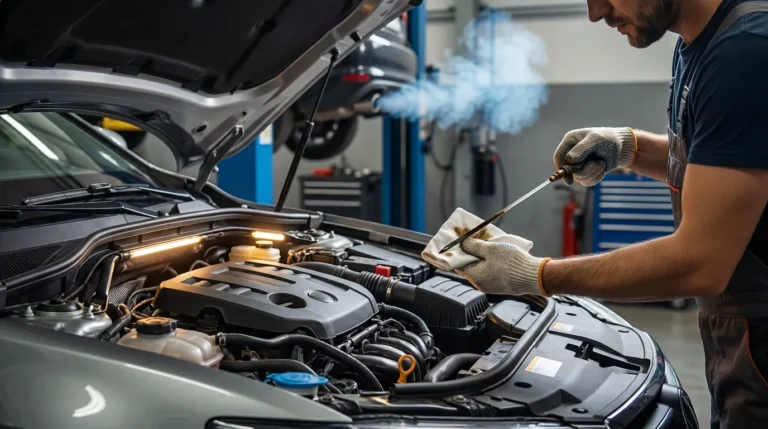
- Quick checks: Check fluid level, color, and smell. Read trans codes with a capable scanner.
- Likely fixes: ATF and filter service, solenoids, valve body, torque converter, or clutch and flywheel on manuals.
Engine and drivetrain mounts
Loose mounts let the engine rock and lurch.
- Clues: Thud on throttle on/off, vibration at stop, visible engine movement.
- Quick checks: Power brake while watching engine movement with a helper.
- Likely fixes: Replace cracked or collapsed mounts.
Throttle body and electronic throttle control
Sticky throttle or gunk confuses airflow.
- Clues: Hesitation right off idle, unstable idle, throttle body codes.
- Quick checks: Inspect throttle plate for carbon. Perform throttle relearn if battery was disconnected.
- Likely fixes: Clean throttle body, fix intake leaks, update ECU, or replace throttle body if failed.
Turbo and supercharger systems
Boost leaks or wastegate issues cause surging.
- Clues: Whoosh sound, black smoke, low boost, overboost limp mode.
- Quick checks: Pressure test charge pipes. Inspect intercooler couplers and clamps.
- Likely fixes: New couplers, clamps, diverter valve, or wastegate actuator.
Software, sensors, and limp mode
The ECU can limit power to protect the car.
- Clues: Reduced power message, fixed low RPM, many related codes.
- Quick checks: Scan for stored and pending codes. Check freeze frame data.
- Likely fixes: Repair the root cause, clear codes, update ECU, or address TSBs.
Bad fuel or water in gas
Contaminants cause random stumbles.
- Clues: Started after a fresh fill-up, rough cold start, multiple misfires.
- Quick checks: Try gas from a different station. Use a water remover if safe for your car.
- Likely fixes: Drain tank in severe cases, replace filter, clean injectors.
EGR and PCV faults
Wrong recirculation upsets combustion.
- Clues: Hesitation on light throttle, pinging, rough idle.
- Quick checks: Inspect PCV flow and hoses. Check EGR valve for sticking.
- Likely fixes: New PCV valve or EGR cleaning/replacement.
These are the prime car jerking when accelerating causes I see in the shop. Start with the easiest checks, then move deeper with data.
Quick at-home checks before you pay a shop
These fast steps address many car jerking when accelerating causes and cost little.
- Scan for codes. A cheap OBD-II reader or app can reveal misfires and sensor faults.
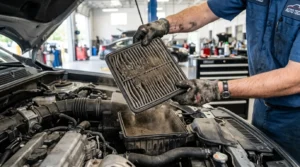
- Check the air filter. If it is dark and clogged, replace it.
- Clean the MAF sensor carefully with MAF cleaner.
- Inspect intake boots and vacuum lines for cracks or loose clamps.
- Test fuel quality. Try fresh gas from a top-tier station.
- Look at spark plugs. Worn or oil-fouled plugs point to ignition or gasket issues.
- Check battery voltage. Low voltage causes odd ECU behavior.
- Review service history. Old plugs, filters, and ATF invite jerks.
These quick checks address many car jerking when accelerating causes and build a baseline.
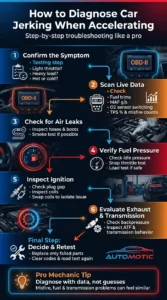
Step-by-step diagnosis like a pro
Follow this simple flow to separate car jerking when accelerating causes without guesswork.
- Confirm the symptom. Note when it happens: light throttle, heavy load, hot, or cold.
- Scan live data. Watch fuel trims, MAF g/s, O2 switching, TPS percent, and misfire counters.
- Rule out air leaks. Smoke test or careful visual and soapy water check of hoses and boots.
- Verify fuel pressure. Use a gauge. Compare idle, snap throttle, and under load if safe.
- Check ignition health. Inspect plugs, measure gaps, and swap coils to isolate cylinders.
- Evaluate exhaust flow. Look for rising backpressure or high pre-cat temps.
- Assess the transmission. Check ATF and adaptives. Road test for slip vs. misfire feel.
- Decide and act. Replace only failed parts. Clear codes. Road test again.
This method helps you sort through car jerking when accelerating causes with clarity and proof.
Fixes, repair costs, and time estimates
Costs vary across car jerking when accelerating causes. These ballparks help you plan.
- Spark plugs and coils: 30 minutes to 2 hours. 60–600 dollars depending on engine.
- Fuel filter or pump: 1–3 hours. 80–900 dollars based on access and brand.
- MAF or TPS: 15–60 minutes. 60–350 dollars.
- Vacuum hoses and PCV: 30–90 minutes. 20–200 dollars.
- Throttle body clean or replace: 30–90 minutes. 10–450 dollars.
- Catalytic converter: 1–3 hours. 400–2,000 dollars. Fix misfires first.
- Transmission service: 1–2 hours. 150–400 dollars. More for valve body or solenoids.
- Engine or transmission mounts: 1–3 hours. 150–700 dollars.
- Injector cleaning or replacement: 1–3 hours. 80–1,000 dollars.
Actual prices vary by vehicle and region. Always get a quote and a parts list in writing.
Prevention and maintenance habits that stop the jerk
Most car jerking when accelerating causes are preventable with simple care.
- Change spark plugs, air filters, and fluids on time.
- Use top-tier fuel. Avoid running near empty to keep the pump cool.
- Inspect hoses and boots at every oil change.
- Clean the throttle body and MAF during major services.
- Fix small misfires fast to protect the catalytic converter.
- Keep software updated during service visits.
- Warm the car gently before hard acceleration.
These habits keep power smooth and repairs rare.
Safety: when to stop driving and tow
Some car jerking when accelerating causes are unsafe to ignore.
- Flashing check engine light. This signals an active misfire that can damage the cat.
- Strong fuel smell, loud backfire, or glowing converter. Risk of fire.
- Severe bucking, no throttle, or limp mode on highways. Risk to you and others.
- Harsh bangs on throttle with big engine movement. Possible broken mount.
If any of these show up, pull over safe, shut down, and call a tow.
Real-world stories from the bay
A family SUV arrived with jerks only on hills. Fuel trims were lean, and the pump whined. A simple fuel filter and later a new pump ended the stumble. Lesson: start with pressure and flow.
A turbo hatch would surge at 3,000 RPM. No codes. A smoke test found a tiny split in the intercooler coupler. A 15-dollar part fixed it. Lesson: boost leaks hide in plain sight.
A sedan bucked after a car wash. The coil boots were cracked, and water got in. New boots and dielectric grease solved it. Lesson: coils and boots are wear items.
These cases highlight hidden car jerking when accelerating causes and the value of basic tests.
Frequently Asked Questions of car jerking when accelerating causes
Why does my car jerk only when accelerating hard?
Hard acceleration demands more fuel and spark. Weak pumps, clogged filters, or old plugs often show up under load and cause a stumble.
Can bad gas cause jerking?
Yes. Water or low-quality fuel leads to lean or uneven burn. If the issue started after a fill-up, try fresh gas and a quality injector cleaner.
Will a dirty throttle body make the car jerk?
It can. A sticky plate confuses airflow at low speeds and tip-in. Cleaning the throttle body often restores smooth response.
Is jerking a sign of transmission failure?
Sometimes. If revs flare between shifts or you feel harsh gear changes, check ATF level and health, then scan for transmission codes.
How do I know if it’s a misfire?
A misfire feels like a sharp cut in power and may flash the check engine light. Scan for P0300–P030X codes and inspect plugs and coils.
Could a bad catalytic converter cause jerking?
Yes. A clogged converter creates backpressure and chokes the engine at higher RPM. Temperature and pressure tests confirm the fault.
Conclusion
Jerking under acceleration is a message, not a mystery. Most car jerking when accelerating causes trace back to fuel, spark, air leaks, exhaust flow, or the transmission. Start with quick at-home checks, use data to guide each step, and fix the root cause, not the symptom. Smooth power is the result.
Take action today. Scan for codes, inspect the basics, and set a simple plan. If you found this helpful, share it with a friend, subscribe for more practical car care guides, or drop your question in the comments so I can help you diagnose your next rattle or stumble.