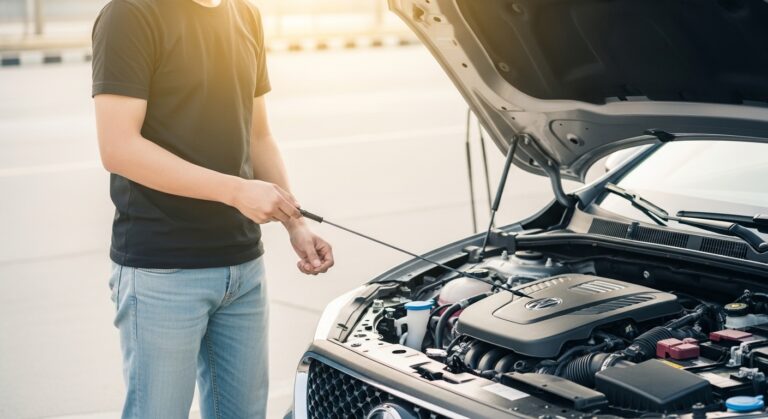
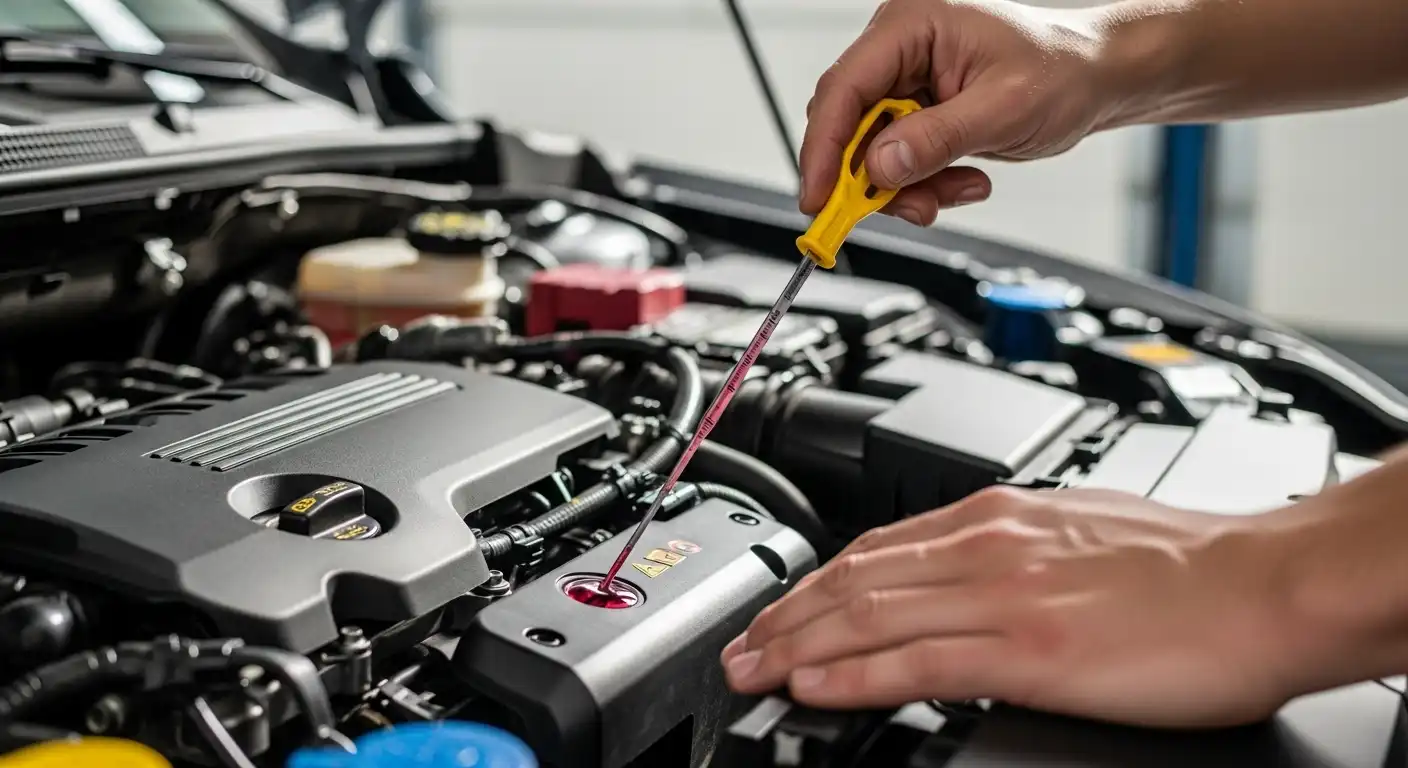
Park on level ground, warm the engine, cycle the gears, pull dipstick, check level and color.
If you need a clear, confident guide on how to check transmission fluid, you’re in the right place. I’ve checked hundreds of transmissions in shops and driveways. I’ll show you safe steps, what the signs mean, and how to avoid costly mistakes. By the end, you’ll know exactly how to check transmission fluid on your car like a pro.
Why Transmission Fluid Matters
Transmission fluid cools, cleans, and protects the gears. It also lets the clutches grab and release. Right level and clean fluid mean smooth shifts and long life.
Low or burnt fluid can cause slip, harsh shifts, and heat. Heat kills transmissions fast. Knowing how to check transmission fluid is simple insurance.
Most cars use ATF. Some use CVT or DCT fluid. The right type matters a lot. The wrong type can damage seals and clutches.
Tools and Preparation
You do not need fancy tools to start. A few basics help you work clean and safe.
Tools you may need:
- Clean, lint-free rag or paper towel. Use white if you can.
- Gloves. ATF can get hot.
- Long-neck funnel. It keeps mess off hot parts.
- Owner’s manual. It shows your exact steps and fluid type.
- OBD2 scan tool with live data. Helpful for sealed units and temp checks.
Prep steps:
- Park on level ground. Set the parking brake.
- Warm the engine to normal temp. A short 10–15 minute drive works.
- With your foot on the brake, shift through each gear. Pause 2–3 seconds in each. Return to Park. This fills the valve body and converter.
- Keep the engine idling if your manual says so. Some cars ask for engine off. Check your book first.
Before you start, learn how to check transmission fluid the right way for your car. A small change in steps can change the reading.
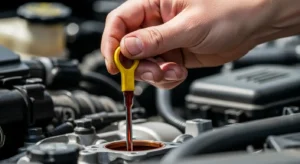
Step-by-Step: How to Check Transmission Fluid
This is how to check transmission fluid on most cars with a dipstick. Always confirm any model-specific notes in your owner’s manual.
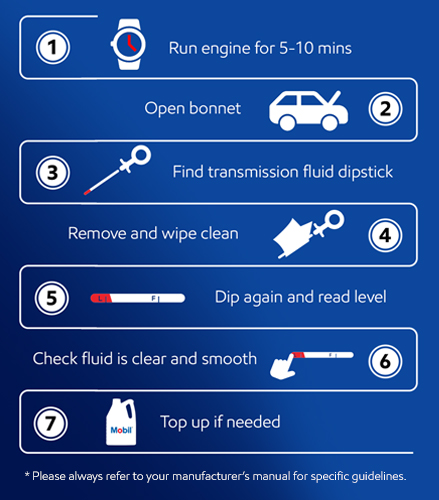
- Warm the car. Drive until the engine reaches normal temp. Many dipsticks have “Hot” marks for this state.
- Park level and set the brake. Leave the engine idling unless your manual says engine off.
- Shift through all gears. Pause 2–3 seconds in each. Return to Park or Neutral, as your manual states.
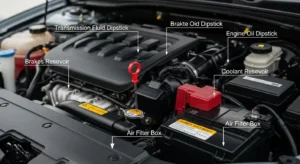
- Find the transmission dipstick. It is often near the firewall. The handle may be red or yellow. Do not confuse it with the engine oil dipstick.
- Pull the dipstick and wipe it clean. Use a lint-free rag.
- Reinsert the dipstick fully. Pull it out again to read the level.
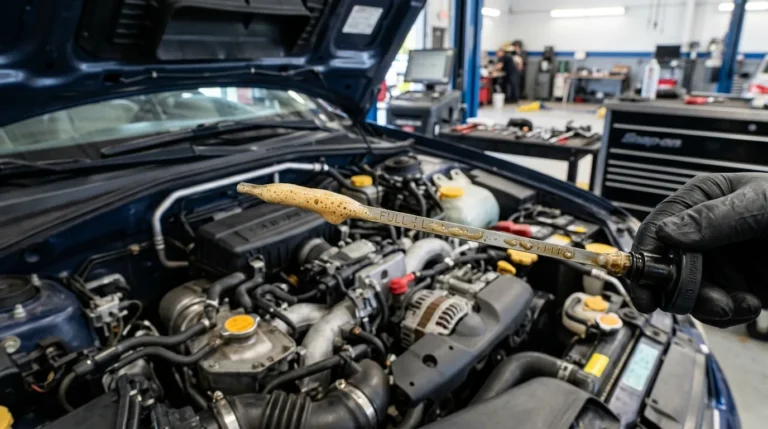
- Read the marks. Look for Hot or Cold lines. The fluid should be between the two notches or within the crosshatch.
- Check color and smell. Healthy fluid is bright red to pink. It should not smell burnt.
- Add if low. Use the correct ATF through the dipstick tube. Add in small steps. Recheck after each small top-up.
- Do not overfill. Overfill can foam and cause slip.
Hot vs. cold reads:
- Many cars have both Hot and Cold marks. Cold checks are only for a quick screen. Final checks should be hot.
- A scan tool with fluid temp makes the read more exact.
Common quick questions:
Should the engine be running?
Most cars want the engine idling in Park. Some ask for Neutral. A few ask for engine off. Check your manual.
Can I check it cold?
Yes, for a quick look. But for a final reading, warm the car. Match the dipstick’s temp marks.
What if there is no dipstick?
Your car may be a sealed unit. In that case, you check level at a fill or check plug, at a set fluid temp.
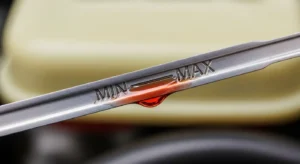
Reading the Dipstick: Color, Level, and Smell
Level:
- Within the Hot range when warm is ideal.
- Slightly low can cause slip on turns or at stops.
- Over the top mark can cause foam and harsh shifts.
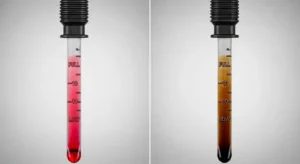
Color:
- Bright red or pink is good.
- Dark brown or black means old or burnt fluid. Plan a service.
- Milky fluid can mean coolant in the ATF. That needs quick help.
Smell and feel:
- Burnt smell hints at heat damage.
- Grit between fingers means wear. Look for clutch or metal debris.
- Bubbles or foam point to overfill or air in the system.
Part of how to check transmission fluid is to judge level, color, and smell together. If two or more red flags show, stop driving hard and plan service.
Special Cases: Sealed Transmissions and CVT
Many newer cars have no dipstick. They are often called sealed. You still can check them, but the steps change.
What changes:
- The car must be level, engine at a set temp, and fluid at a set temp. A scan tool helps a lot.
- You fill from a top or side port. You check level from a lower check plug. Fluid should trickle, not pour, at the target temp.
- CVTs and DCTs use unique fluids. The fluid type is critical. Do not mix.
Examples from the field:
- Some German units want fluid near 40–50°C when checked. A scan tool shows temp.
- Some Toyota and Lexus units use a standpipe in the pan. When fluid drips as a thin stream at the given temp, level is correct.
- Many Honda CVTs need a specific CVT fluid and a strict fill-and-check process.
For sealed units, how to check transmission fluid is different and more exact. If you are unsure, let a shop do it. A small error can get costly fast.
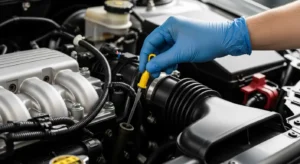
Troubleshooting and Next Steps
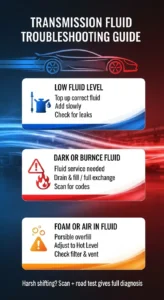
If the level is low:
- Top up with the exact fluid type. Add a little at a time.
- Recheck after a short drive. Look for leaks at cooler lines and pan.
If the fluid is dark or burnt:
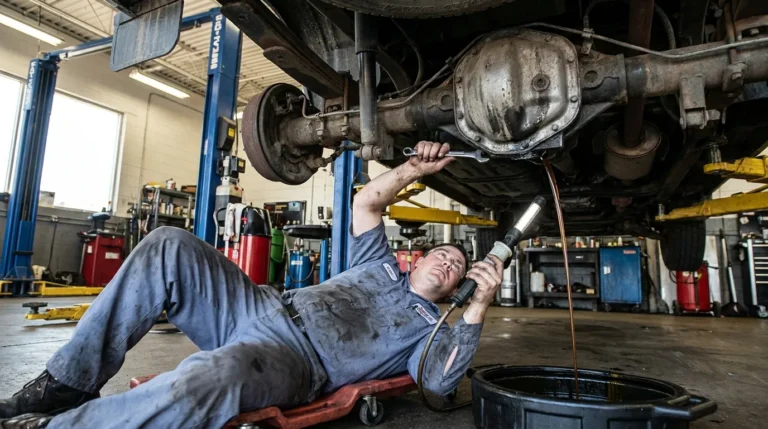
- Plan a fluid service. Use the right method: drain-and-fill, pan service, or full exchange when safe for your model.
- If shifts are bad, get a scan for codes and temp data.
If you see foam or air:
- You may be overfilled. Bring the level down to the Hot range.
- Check for a clogged filter or a vent issue.
If shifts are harsh, how to check transmission fluid fast can point you in the right direction. But a proper scan and a road test tell the full story.
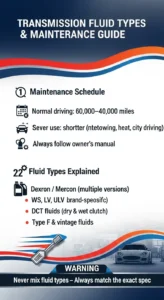
Maintenance Schedule and Fluid Types
Service timing depends on use:
- Normal driving: Many makers suggest 60,000–100,000 miles.
- Severe service: Towing, hot weather, or city stop-and-go can cut that in half.
- Always follow your owner’s manual or service info.
Fluid types to know:
- ATF Dexron and Mercon families. Many versions exist. Use the exact spec.
- ATF WS, LV, ULV, and other low-vis fluids. They are not the same.
- CVT fluids. Each brand has its own blend.
- DCT fluids for dual-clutch units. Dry and wet clutch types differ.
- Older Type F and special fluids for vintage cars.
Never mix types. When in doubt, match the spec on the dipstick label or cap. Teach your family how to check transmission fluid and how to read the label before adding any.
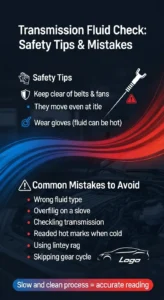
Safety Tips and Common Mistakes
Stay safe:
- Keep clear of belts and fans. They move even at idle.
- Wear gloves. ATF can be hot.
Avoid these mistakes:
- Using the wrong fluid. Always match the exact spec.
- Overfilling. Add small amounts and recheck.
- Checking on a slope. Your reading will be wrong.
- Reading Hot marks when the fluid is cold. Match the temp to the marks.
- Using a fuzzy rag. Lint can fall into the tube.
- Skipping the gear cycle. Air in circuits skews the level.
Never rush how to check transmission fluid steps. A calm, clean process gives the best read.
Frequently Asked Questions of how to check transmission fluid
How often should I check transmission fluid?
Check at every oil change or before long trips. If you tow or drive in heat, check more often.
What if my car has no dipstick?
It is likely a sealed unit. You must use a check plug and a set fluid temperature to measure level.
Can I use any red ATF?
No. Color is not a spec. Use the exact fluid listed in your manual or on the dipstick label.
Is a flush safe for high-mile cars?
It depends on the car and fluid state. If fluid is burnt and there are shift issues, a gentle drain-and-fill may be safer.
Why does my fluid look pink and milky?
Coolant may be leaking into the transmission cooler. Stop driving and get it checked fast.
Do I check in Park or Neutral?
Most cars use Park with the engine idling. Some call for Neutral. Always follow your manual.
Conclusion
You now know how to check transmission fluid with clear, simple steps. Warm the car, cycle the gears, read the dipstick, and trust what you see and smell. If your car is sealed, follow the temp-based method or call a trusted shop.
Make it a habit this week. Take 15 minutes, check the level, and note the color. Your transmission will thank you with smooth shifts and longer life. Have questions or a tricky case? Drop a comment and subscribe for more hands-on car care guides.