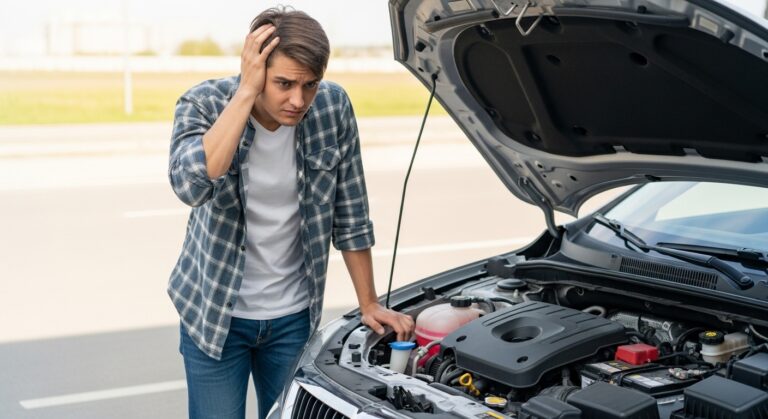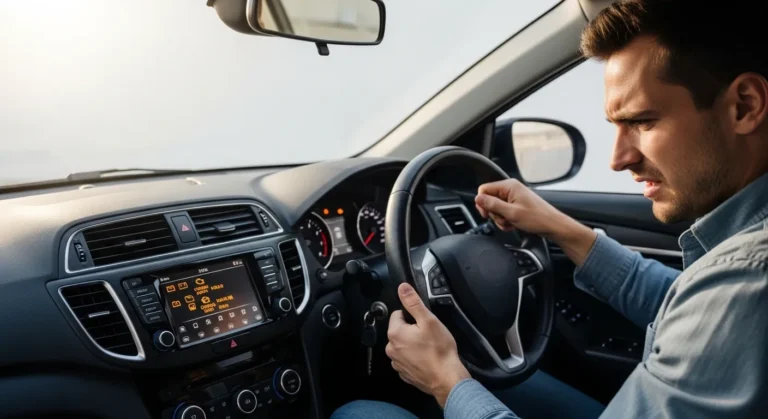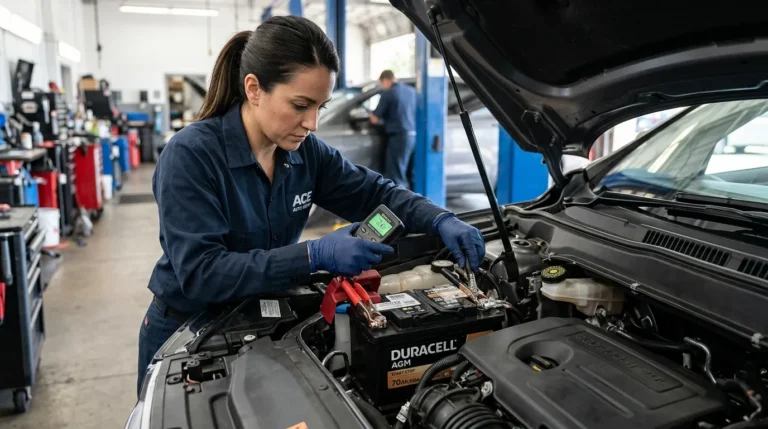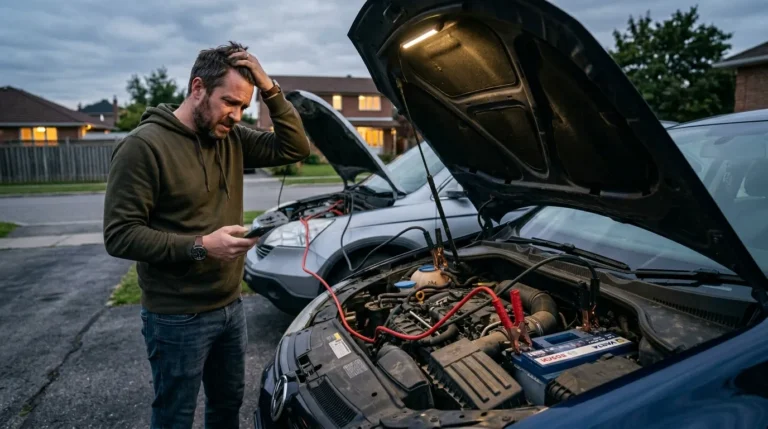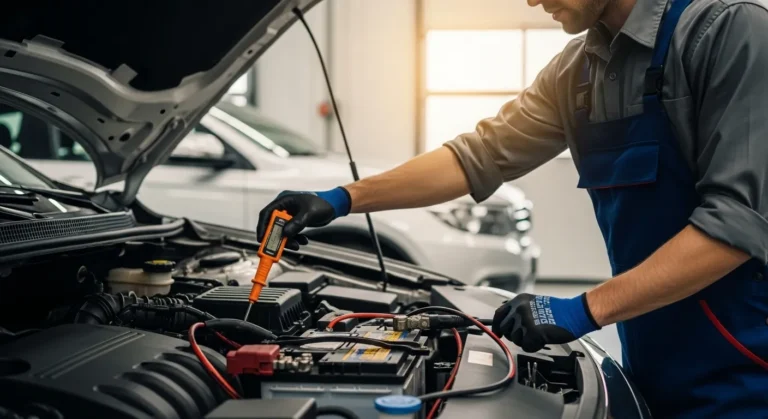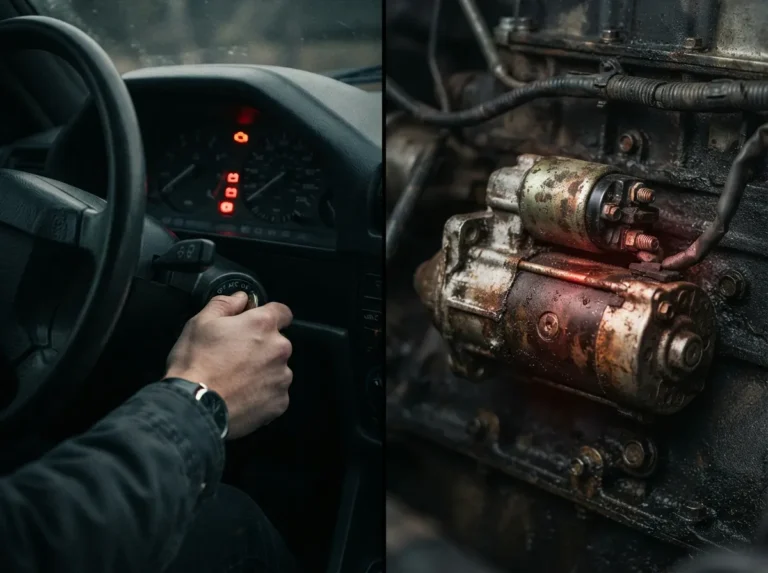
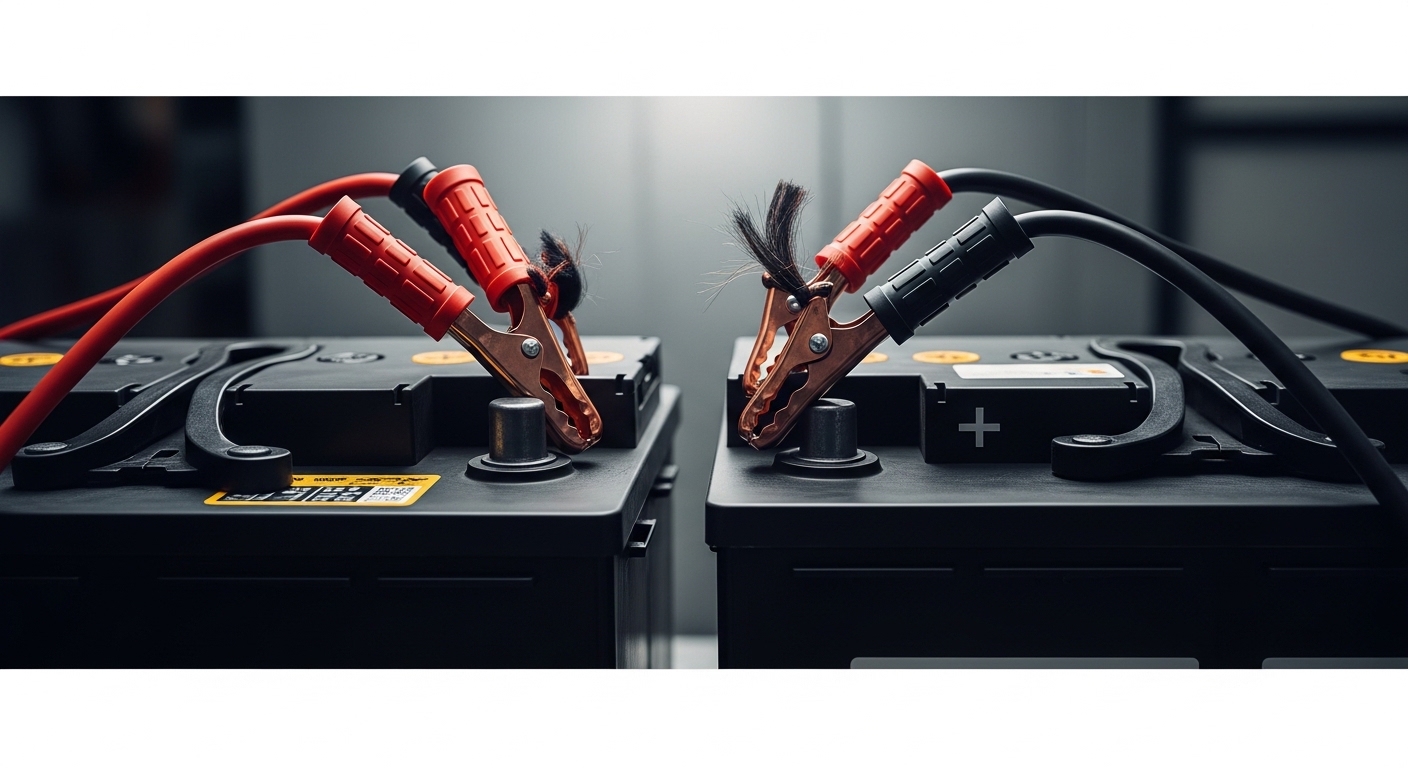
Use proper cables, connect positive first, ground last, then start both cars.
If your car will not start, the fix can be simple. This guide shows how to jump start a car safely, even if it is your first time. I have helped dozens of drivers on the roadside, and I will teach you the exact steps I use. Follow along, and you will learn how to avoid sparks, protect your car, and get moving with confidence.
Safety basics and tools you need
Before you learn how to jump start a car safely, take a minute to prep. Safety comes first. Park away from traffic. Set the parking brakes. Turn off both ignitions and all lights. Keep metal tools and jewelry away from the battery.
Use the right tools. You need a good set of jumper cables or a quality jump starter. Cables should be thick and at least 10 feet long. Many cheap cables are too thin and get hot. Gloves and eye protection help guard against acid or sparks.
Look for danger signs. Do not jump a frozen, cracked, or leaking battery. Do not jump if you smell rotten eggs, see bulging sides, or hear hissing. Check the owner’s manual for special posts or warnings. Many cars have a jump post under the hood even if the battery sits in the trunk.
Source: suzukibattery.sg
Step-by-step: how to jump start a car safely
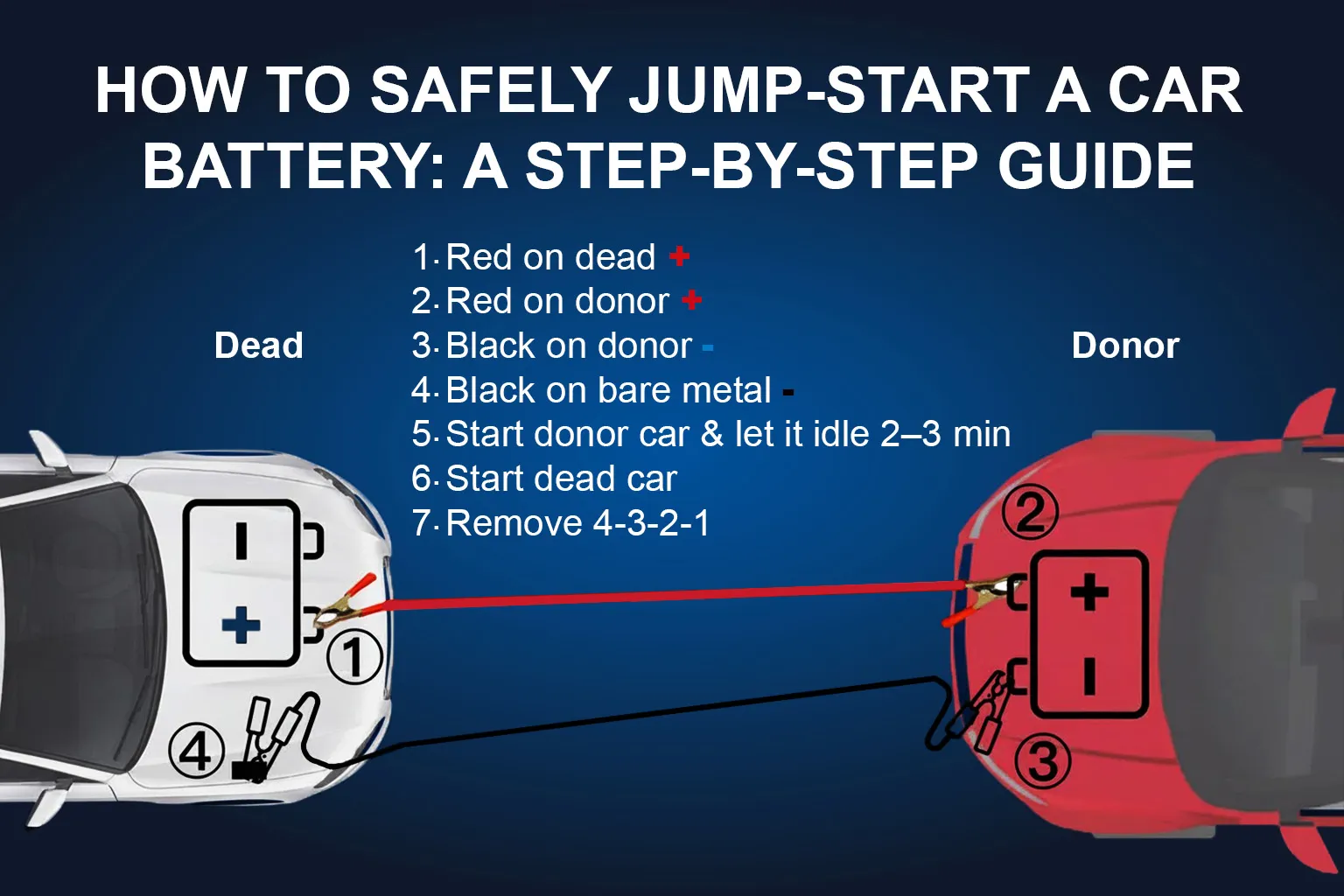
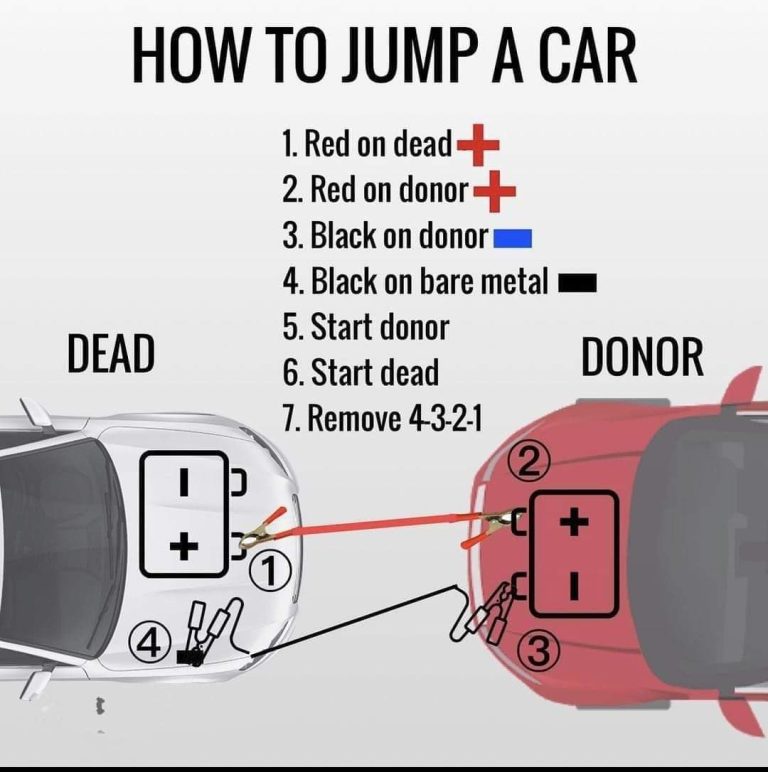
Use this order every time. Slow and steady wins here. Keep clamps from touching. Match red to positive and black to negative or a bare metal ground.
- Park the cars nose to nose but not touching. Set both in Park or Neutral. Turn off both ignitions and all accessories.
- Find the positive (+) and negative (−) posts. Clean off dirt if needed. Use the red cap or a plus sign as a guide.
- Connect red clamp to the dead battery’s positive (+) post. Wiggle it for a firm bite.
- Connect the other red clamp to the good battery’s positive (+) post.
- Connect black clamp to the good battery’s negative (−) post.
- Connect the final black clamp to an unpainted metal part on the dead car. Use a solid bracket or engine ground. Avoid the dead battery’s negative post to reduce sparks.
- Start the donor car. Let it idle for 2–5 minutes. Slightly raise RPM to about 1,500 if safe.
- Try starting the dead car. If it does not start, wait another 2 minutes and try again. Do not crank for more than 10 seconds at a time.
- Once it starts, keep both cars running for 2–3 minutes. Then remove clamps in reverse order: black from ground, black from donor negative, red from donor positive, red from dead positive. Do not let clamps touch.
- Drive the revived car for 20–30 minutes to recharge. Avoid short trips right away.
This is the core of how to jump start a car safely. If the car still will not start after several tries, stop and check the next section. That keeps you safe and protects both cars.
Common mistakes to avoid
Many problems happen due to simple mix-ups. These errors can damage electronics fast. They can also cause sparks or burns.
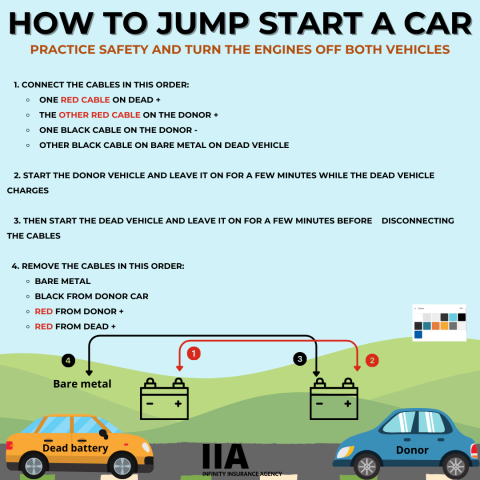
- Wrong order of clamps can fry fuses or control modules. Always go red to dead, red to donor, black to donor, black to ground.
- Clamping to paint or loose metal will not pass current. Make sure each bite is clean and firm.
- Letting clamps touch can arc. Keep them apart and steady.
- Revving too hard can spike voltage. A gentle idle is enough for most jumps.
- Skipping the owner’s manual can miss hidden jump posts. Some cars must use those posts to protect sensitive parts.
Knowing how to jump start a car safely means you avoid these traps. Slow down, double-check, and you will be fine.

Special cases: start-stop, AGM, hybrid, and EV notes
Modern systems need extra care. Many cars use AGM or EFB batteries for start-stop. They handle jumps well, but use correct posts and avoid long cranks. Some cars place the battery in the trunk but add jump posts up front.
Hybrids and EVs use a high-voltage pack plus a small 12V battery. You can often jump the 12V on a hybrid, but never touch the high-voltage lines. Many EVs can be boosted at the 12V posts only, and you should use the manual’s exact steps. If unsure, call for help. That is still part of how to jump start a car safely.
Cold weather adds risk. A frozen battery can crack and leak. Warm the battery area if safe or tow the car. Hot weather can boil batteries, so limit long idle times during a jump.
Source: org.za
Troubleshooting after the jump
Sometimes the car starts and then dies. That can point to a weak alternator or a loose belt. Dim lights and slow windows can be signs too.
If it cranks slow but starts, the battery may be near the end of life. Many batteries last 3–5 years. If it needs a jump often, test or replace the battery. You can do a simple check with a multimeter. With the engine running, voltage near 13.7–14.7 volts is common. Much lower may point to a charging problem.
If you see warning lights after a jump, drive gently and scan for codes soon. That is a safe part of how to jump start a car safely. Do not ignore a battery light or burning smell.
Battery care to prevent the next dead start
Prevention saves time. A little care now keeps you off the shoulder later. Simple habits help a lot.
- Drive at least 20–30 minutes once a week to charge the battery.
- Turn off lights and unplug devices before you park.
- Clean the terminals twice a year. A small brush works well.
- Test the battery before winter and summer. Replace it before it fails.
- Carry a compact lithium jump starter and gloves. Store them in the cabin in cold weather.
These steps sit at the heart of how to jump start a car safely. Good care means fewer jumps and less risk.

Source: reddit.com
When to skip the jump and call a pro
Some signs mean do not try a jump. Safety wins over speed. If you see any of these, get help.
- The battery case is swollen, cracked, or leaking.
- The cables or clamps get hot or smoke.
- You hear loud popping or smell strong sulfur.
- You are not sure where to clamp on a hybrid or EV.
- The car has been underwater or flood damaged.
Knowing your limits is part of how to jump start a car safely. A tow or mobile tech can save your car and your day.
Real-world tips from the road
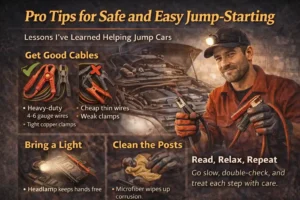
I have helped neighbors, friends, and customers on cold mornings. One lesson stands out. Most failed jumps come from poor clamps and thin wires. Once we used a better cable, the car started at once.
Another tip is to bring light. A small headlamp keeps your hands free in the dark. That one change makes how to jump start a car safely much easier. I also carry a microfiber to wipe posts. A clean contact is a strong contact.
Keep calm, slow down, and read the posts twice. This mindset is core to how to jump start a car safely. It feels like tying your shoes: do it the same way every time.
Frequently Asked Questions of how to jump start a car safely
How long should I let the donor car run before trying to start?
Two to five minutes is enough in most cases. This gives a small charge to the dead battery so it can crank.
Can jump starting damage electronics?
Yes, if clamps are reversed or spark near the battery. Follow the steps and ground the last clamp to reduce risk.
What gauge jumper cables should I buy?
Thicker cables work better. Look for 4-gauge or lower, strong clamps, and solid springs.
Is it safe to jump start in the rain?
Yes, if you keep connections secure and avoid standing water. Do not let clamps touch and keep your hands dry.
Can I use an EV to jump a gasoline car?
Some EVs allow a 12V jump with limits. Check the EV manual and use only the 12V posts, never the high-voltage system.
How long should I drive after a successful jump?
Drive 20–30 minutes to recharge. Avoid short trips right away so the alternator can top up the battery.
Why does my car need frequent jumps?
The battery may be weak, the alternator may be failing, or there is a drain. Test the system and replace weak parts.
Conclusion
You now know how to jump start a car safely with clear, simple steps. Use solid cables, follow the clamp order, and watch for warning signs. Take a short drive after, and plan routine checks to prevent future trouble.
Ready to put this guide to work? Save it on your phone, build a small emergency kit, and share it with a friend. Want more hands-on tips like this? Subscribe for gear checklists, simple fixes, and friendly help you can trust.