Power windows fail due to blown fuses, bad switches, weak motors, or wiring faults.
If you’re asking what would cause my power windows not to work, you’re in the right place. I’ve diagnosed hundreds of dead windows in shops and driveways. In this guide, I’ll explain why power windows stop working, how to test them at home, and what to fix first. We’ll cover simple checks, pro tips, costs, and safety so you can make a smart next move.
Signs your power windows are failing
When you ask what would cause my power windows not to work, the symptoms help a lot. Each clue points to a different fault. Pay attention to sound, speed, and which window fails.
Common signs to note:
- No sound and no movement. Often a blown fuse, dead switch, or a power feed issue.
- Clicks or a faint whir, but no movement. The regulator may be jammed, or the cable is frayed.
- Slow or jerky travel. Dry window seals, a weak motor, or voltage drop can do this.
- Works from the master switch, but not the door switch. The local switch or its wiring is bad.
- None of the windows work. Think main fuse, relay, window lock button, ignition feed, or a control module.
- Window goes down but not up. Worn switch contacts or a tired motor under load.
- Works on cool mornings, fails in heat. Heat can stress motors and weak connections.
- Window moves but drops or tilts. The regulator track or sliders are worn.
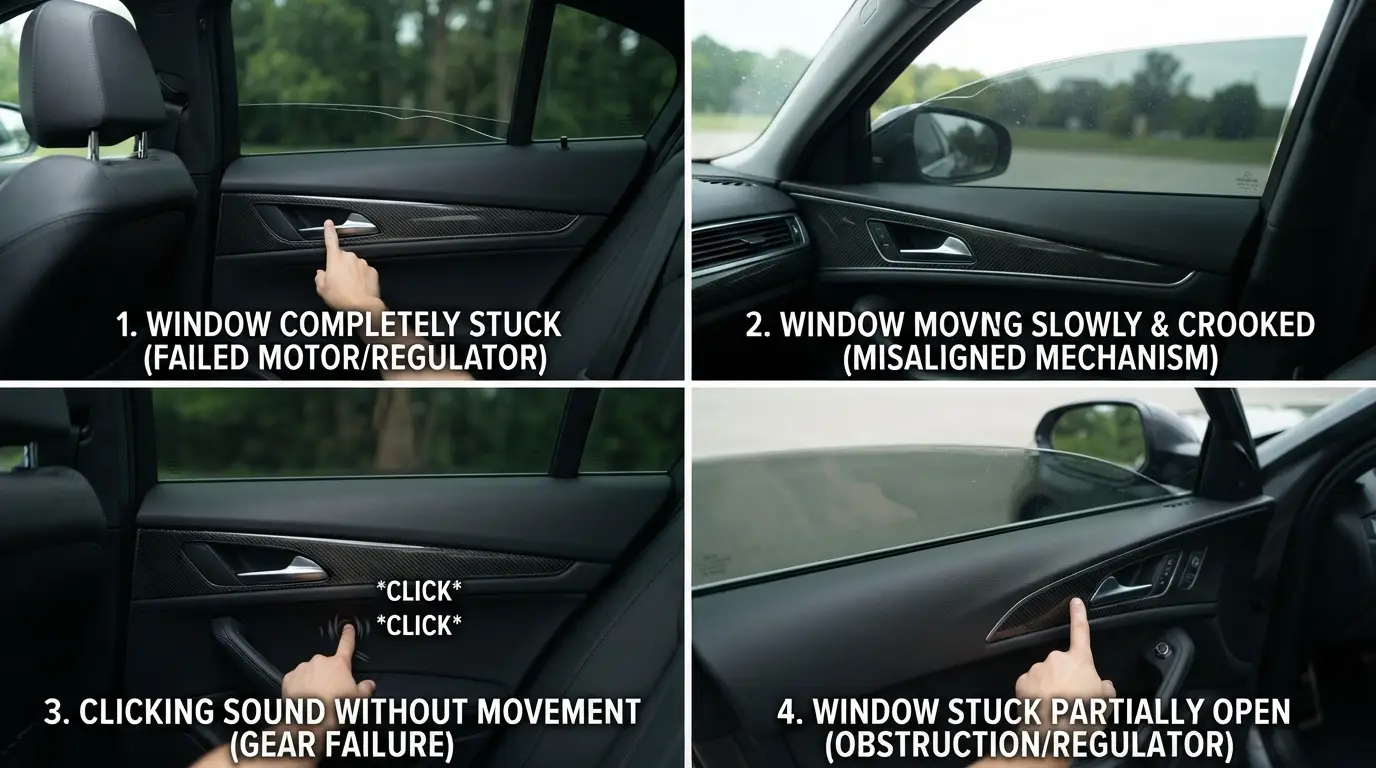
Keep a small list of what you see and hear. It makes the next steps easy.
Common causes of dead power windows
Here are the most common answers to what would cause my power windows not to work. Start with power supply parts. Then move to switches, motors, and mechanical parts.
- Blown fuse or bad relay. A surge or a short pops the fuse. Swapping a like-for-like relay can help test.
- Window lock switch set to lock. It blocks other door switches. Check the master control first.
- Failed master switch on the driver door. It sees the most use and often burns contacts.
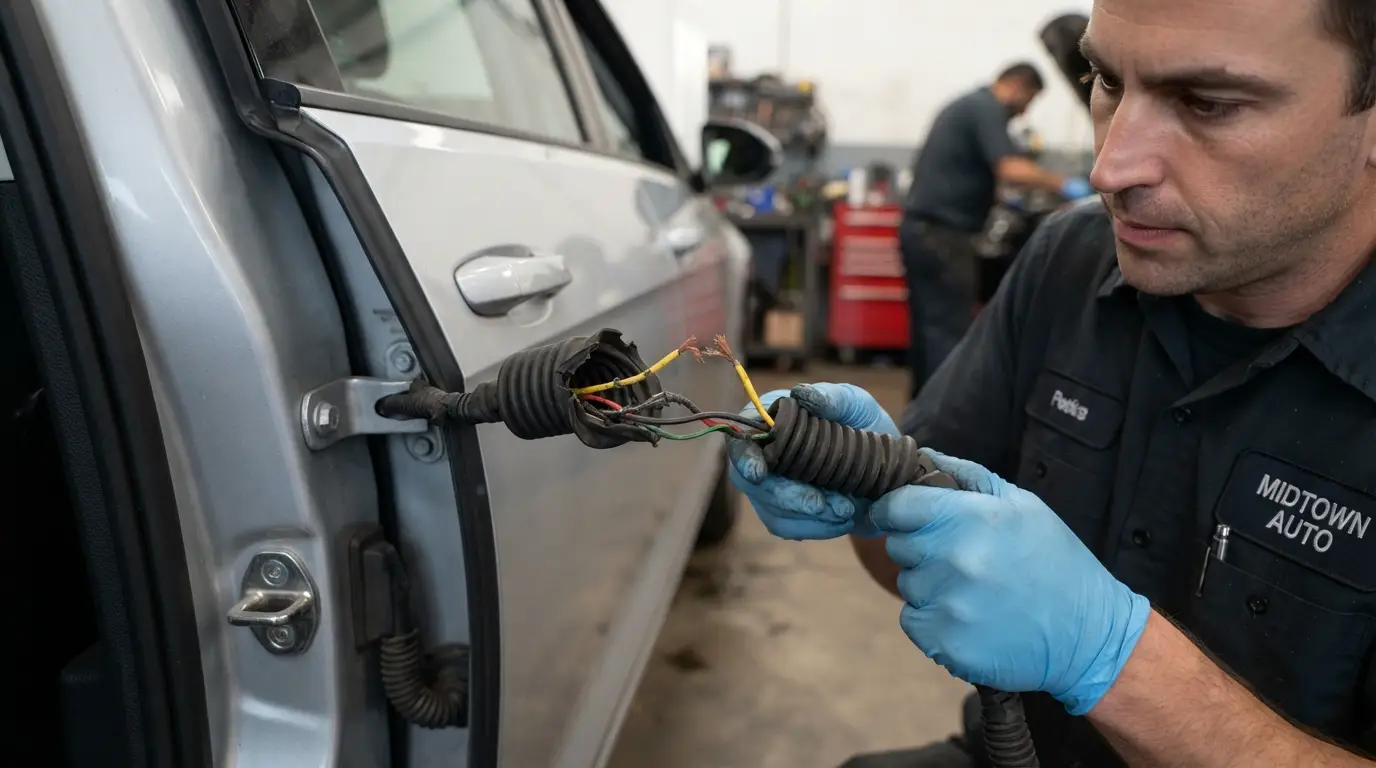
- Broken wires in the door jamb. The rubber boot hides wires that flex and snap over time.
- Weak or seized window motor. Brushes wear out. Motors may hum but lack torque.
- Bad regulator or frayed cable. You may hear crunching. The glass may sit crooked.
- Stuck window seals or dry run channels. Added drag makes motors stall or blow fuses.
- Faulty ground point. A loose or rusty ground drops voltage and slows or stops the motor.
- Ignition switch or accessory power fault. No key-on power means no window power on many cars.
- Body Control Module or comfort module faults. Rare, but possible on modern cars. Sometimes needs programming.
- Aftermarket tint or weatherstrip issues. Extra drag from tacky film edges can bind the glass.
- Frozen glass in winter. Ice glues the glass to the seal. Forcing it can break the regulator.
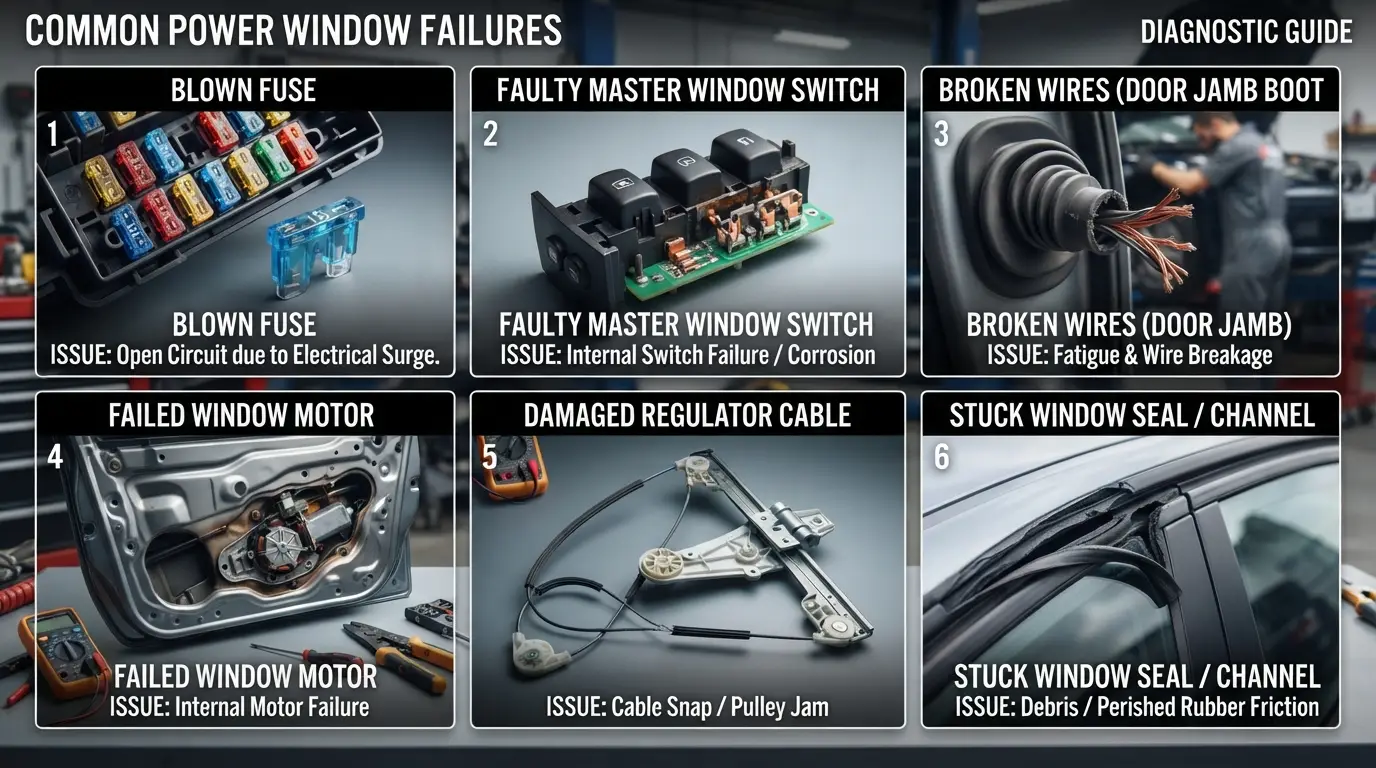
From my bench time, master switch failures and broken door-jamb wires are the top two on older cars. On newer cars, dirty switches and window lock issues take the lead.
Step-by-step diagnosis you can do at home
Use this simple path to confirm what would cause my power windows not to work. You only need a test light or a multimeter, plus a trim tool and patience.
Start here:
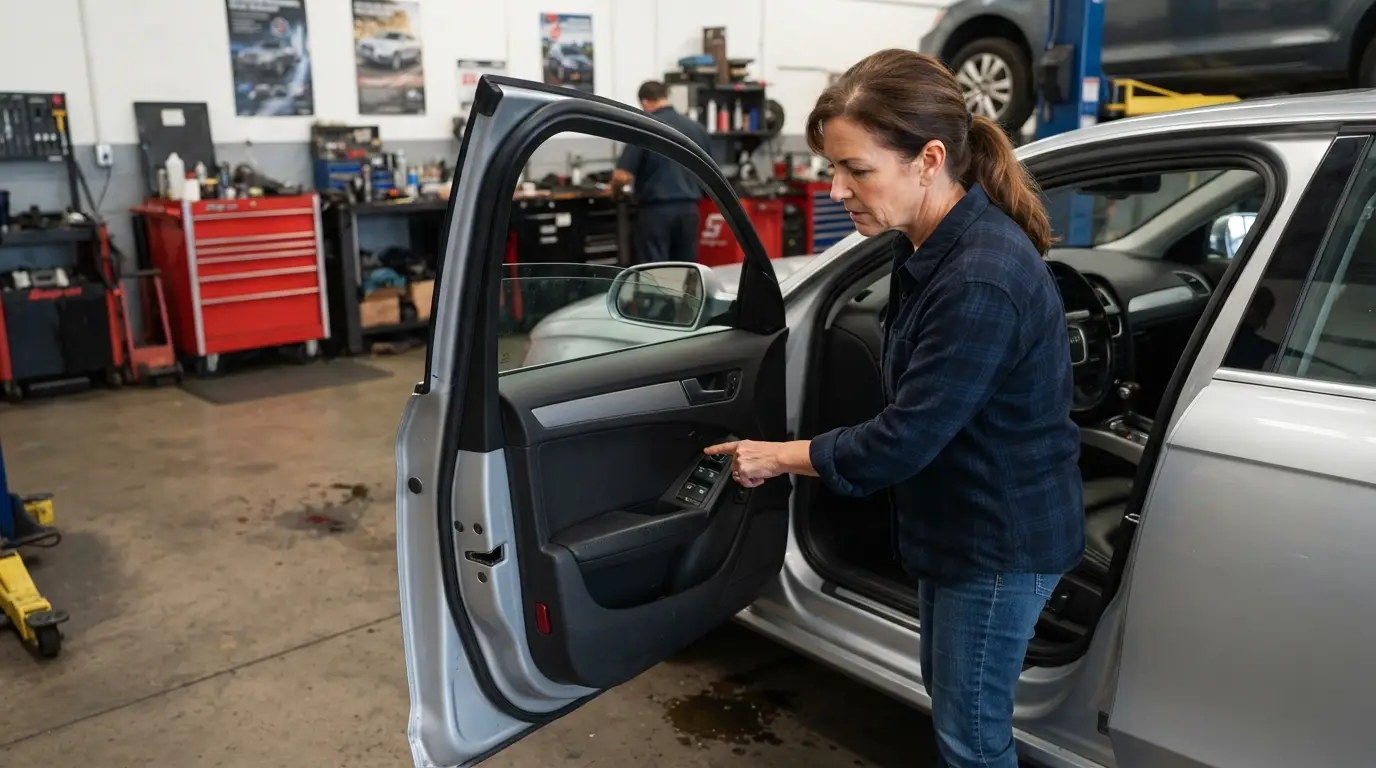
- Check the window lock button. Make sure it is off. Try both the master switch and the door switch.
- Listen at each door. Press and hold the switch. Do you hear a motor hum, a click, or nothing?
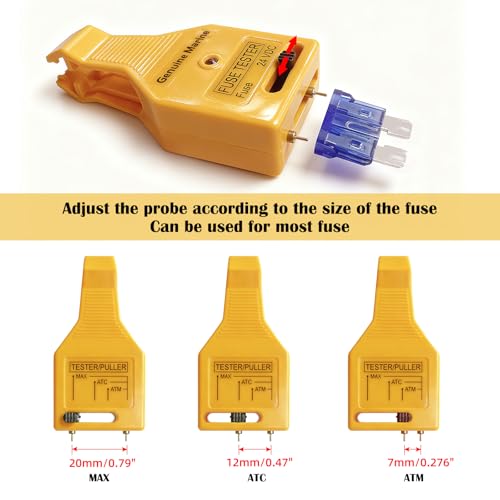
- Test other windows. If all are dead, check the owner’s manual for the window fuse and relay. Replace a blown fuse once. If it blows again, you have a short to trace.
- Wiggle test the door harness. Open the door. Hold the switch. Gently flex the rubber boot near the hinges. If the window jumps to life, you found a broken wire.
- Swap relays if possible. Use a non-critical matching relay from the fuse box to test the window relay.
- Check power and ground at the master switch. With key on, the big feed wire should have 12V. The ground should be near zero ohms to a known ground.
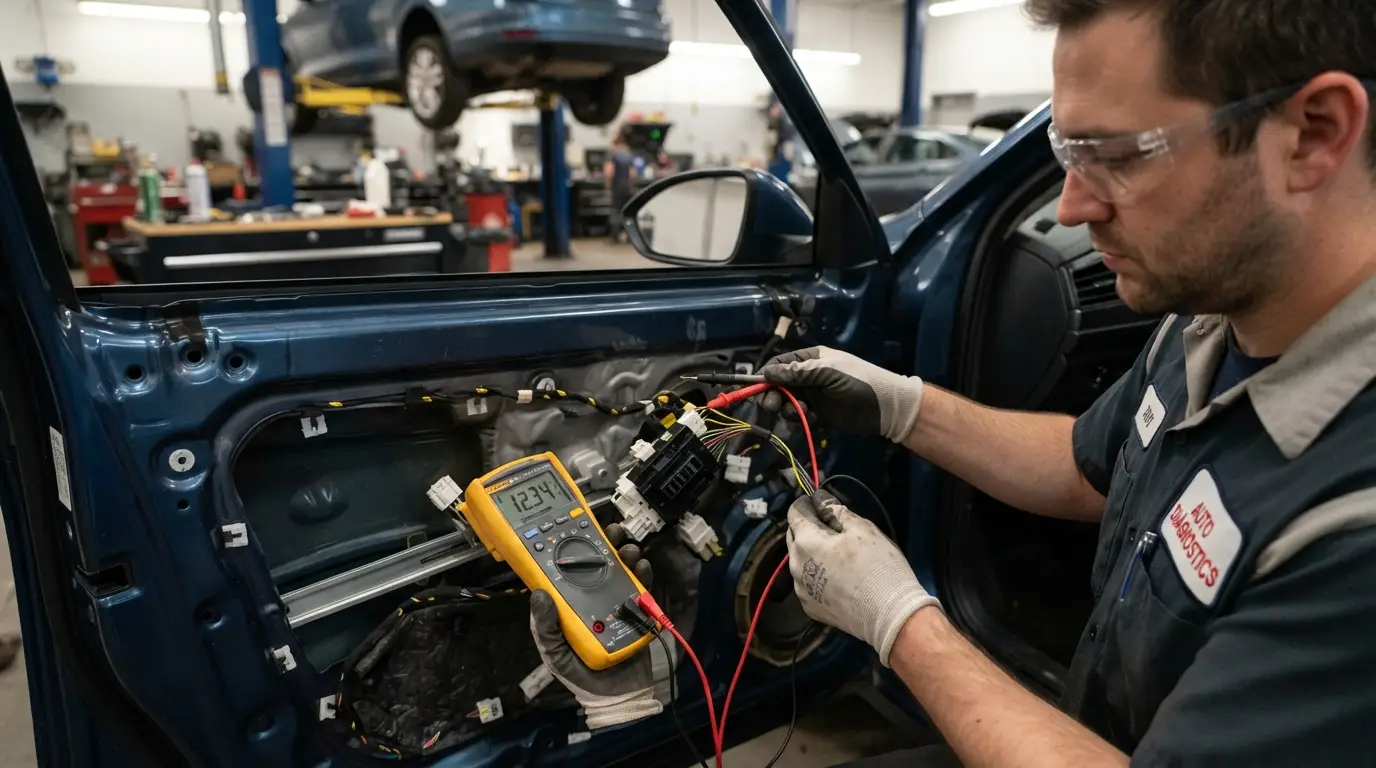
- Bypass the switch. Briefly power the motor with a fused jumper. Reverse polarity to go up or down. If the motor runs, the switch or wiring is suspect.
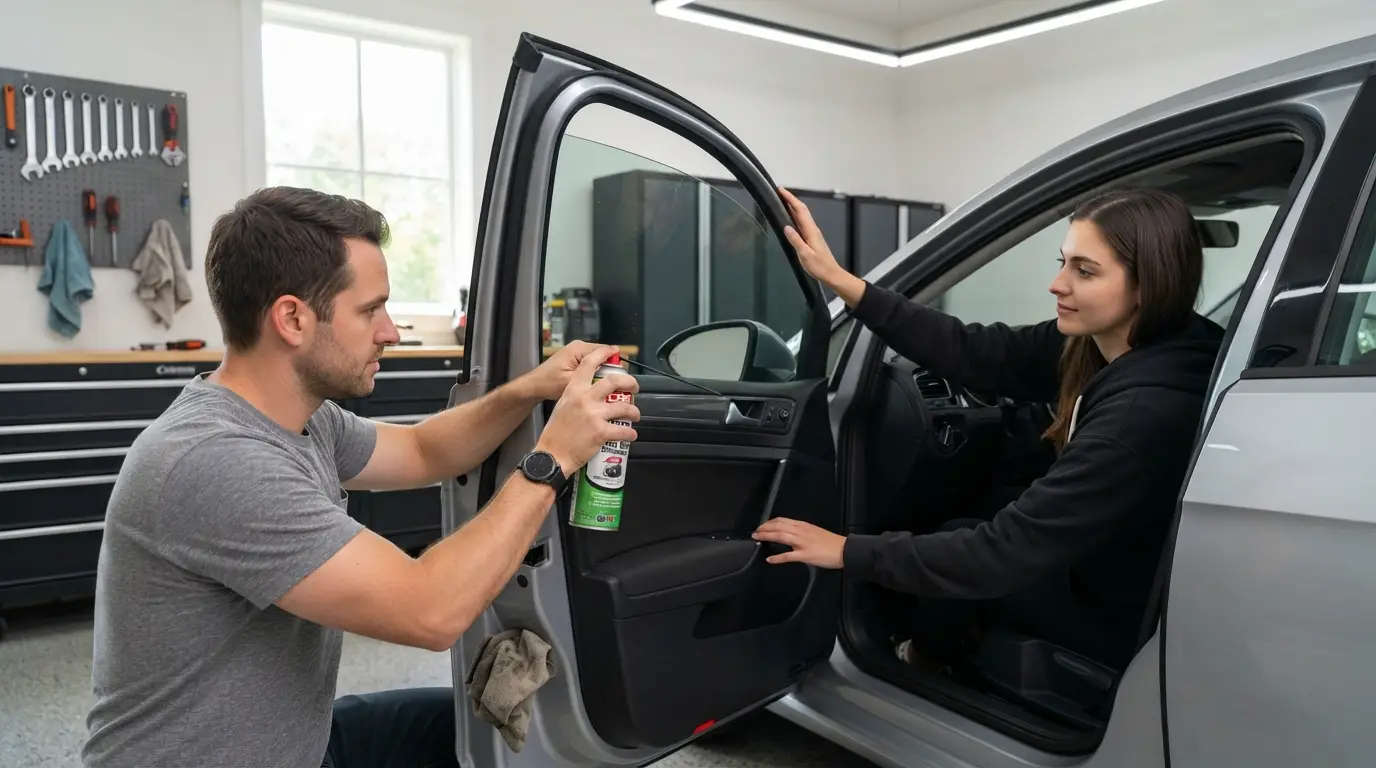
- Check for mechanical bind. If the glass tries to move and stops, lube the run channels with a silicone-safe spray. Do not use grease on the glass track.
- Relearn auto-up/auto-down. Hold the switch up for 5 seconds after it hits the top. Do the same down. This can fix pinch-protect shutoffs after a battery change.
Safety notes:
- Keep hands clear of the glass and regulator.
- Watch for side airbags in the door. Follow factory steps if you remove a door panel.
- Use a fused jumper to avoid melted wires.
Now you know what would cause my power windows not to work in many cases. If you hit a wall, a pro can finish the trace fast with a wiring diagram and scan data.
Quick fixes and temporary workarounds
Need a fast fix while you sort out what would cause my power windows not to work? These tricks can help you close or open the glass in a pinch.
Try these:
- Two-person assist. While you hold the switch, have a helper press the glass up with flat palms. Do not slam. This helps a weak motor clear a tight seal.
- Power reset. Turn key off. Hold the window switch up. Turn key on while holding. Some cars wake the module and finish a stuck cycle.
- Silicone lube on run channels. A light spray reduces drag. Wipe off excess to avoid streaks.
- Clean the switch. A small shot of electrical contact cleaner can revive sticky contacts. Spray lightly. Let it dry before use.
- Use accessory power wisely. Many cars allow windows for a short time after key-off. Try that mode if the ignition switch is flaky.
These are stopgaps. If the window is open and rain is near, tape a plastic sheet over the frame until you can repair it.
When to see a pro and what they’ll check
Sometimes what would cause my power windows not to work is deeper than a fuse. If you have no power or repeated fuse blows, it is time for a shop.
A good tech will:
- Scan the Body Control Module for codes. Many cars log a fault for overload or anti-pinch.
- Load-test power and ground. Voltage drop tests find weak spots that a simple meter misses.
- Check the harness in the door boot. They may repair or replace sections with proper solder and heat-shrink.
- Bench-test the motor and regulator. If the cable is frayed or the drum is cracked, the unit gets replaced.
- Calibrate pinch-protect. After repairs, they reset the limits so the glass stops at the right points.
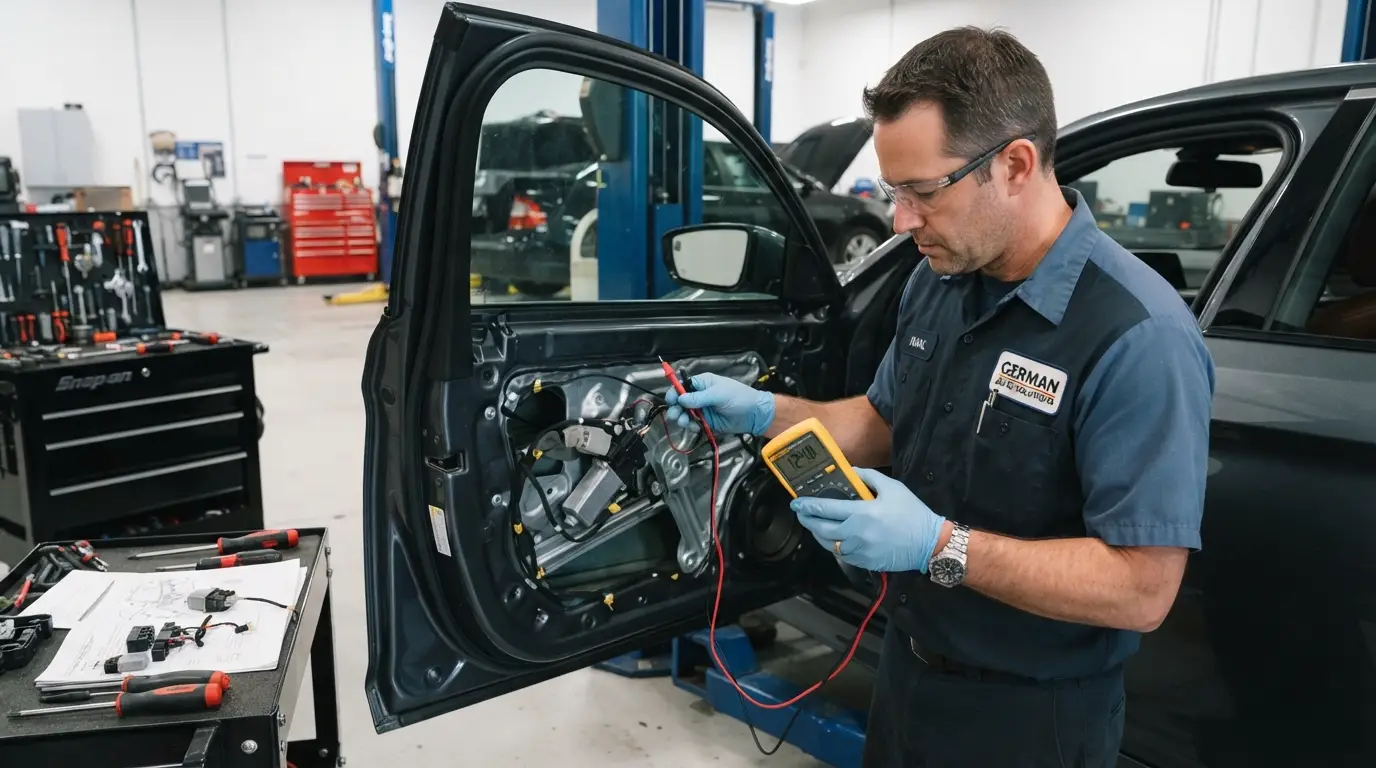
Expect a short visit for a simple switch or fuse. Deeper harness repairs and regulator swaps take longer.
Prevention tips to avoid future window issues
You can prevent many issues that lead to what would cause my power windows not to work. A little care goes a long way.
Do this every few months:
- Clean and dry the run channels. Use a mild soap and water. Finish with a silicone-safe spray.
- Cycle the windows monthly. Keeps motors and regulators from sitting in one spot.
- Keep drains clear. Door drains carry water out. If they clog, water soaks the motor and connectors.
- Be gentle at the end of travel. Do not hold the switch after full up or down.
- Avoid ice force. Free the glass with de-icer or warm air before moving the window.
- Fix slow windows early. Drag strains motors and pops fuses later.
These steps reduce load, protect the motor, and save the regulator from early wear.
Typical repair costs and time estimates
Here is what it may cost to fix what would cause my power windows not to work. Prices vary by vehicle and region.
Common ranges:
- Fuse or relay replacement. 5 to 30 minutes. Parts under 20 dollars.
- Master or door switch. 0.5 to 1.0 hour. Parts 40 to 250 dollars, more on luxury models.
- Regulator and motor assembly. 1 to 2 hours. Parts 80 to 400 dollars.
- Harness repair in door jamb. 1 to 2 hours. Parts 10 to 60 dollars in wire and seals.
- BCM diagnosis and programming. 0.5 to 1.5 hours. Module cost varies widely.
From my experience, most cars land under 300 dollars for a single window repair if the motor or regulator fails. Wiring faults can be cheaper if caught early.
Frequently Asked Questions of what would cause my power windows not to work
Why do all my power windows stop at once?
Check the window lock button, main fuse, and relay first. Some cars also need key-on or accessory power for windows to work.
My window goes down but not up. What now?
The up contacts in the switch may be worn, or the motor is weak under load. Try the two-person assist once, then test the switch with a meter.
Can a weak battery cause dead power windows?
Yes. Low voltage can make modules shut down or motors stall. Charge or test the battery and try again.
How do I reset auto-up and pinch protection?
Close the window and hold the switch up for about five seconds. Then open it and hold down for five seconds. Repeat once if needed.
Is it safe to drive with a stuck window?
It is safe for the car, but not ideal for you. Rain, theft risk, and noise go up. Cover the opening and plan a repair soon.
Do I need to replace the motor and regulator together?
If the cable is frayed or the sliders are worn, replace the full assembly. If only the motor is weak and the track is smooth, a motor-only swap can work.
Why does my fuse keep blowing?
There is a short or a motor that draws too much current. Find the pinch point in the harness or replace the failing regulator or motor.
Conclusion
Power windows are simple once you break them into power, control, and movement. Start with the easy checks, like the lock button, fuses, and the master switch. Then look at the motor, regulator, and the door-jamb wiring. With these steps, you can pin down what would cause my power windows not to work and fix it with confidence. Take action today: run the quick tests, note your findings, and choose a safe repair path. If this helped, share it with a friend or leave a comment with your results.