Most overnight drains come from parasitic draws, weak batteries, or charging faults.
If your car won’t start in the morning, you’re not alone. I’ve diagnosed hundreds of overnight drains in shops and driveways. In this guide, I’ll break down Car Battery Draining Overnight Causes with clear steps, real examples, and simple fixes. You’ll learn what to check, how to test, and how to stop it for good.
What “draining overnight” really means
A healthy 12‑volt battery stores energy in amp‑hours. Small draws are normal. Your clock and alarm need a little power when parked. This is called parasitic draw.
Normal draw is about 20–50 milliamps. If the draw is over 100 milliamps after the car “goes to sleep,” you likely have a problem. Leave that drain overnight and you may wake up to a dead battery. That is the heart of Car Battery Draining Overnight Causes.
Main Car Battery Draining Overnight Causes
Here are the most common Car Battery Draining Overnight Causes I see in the field:
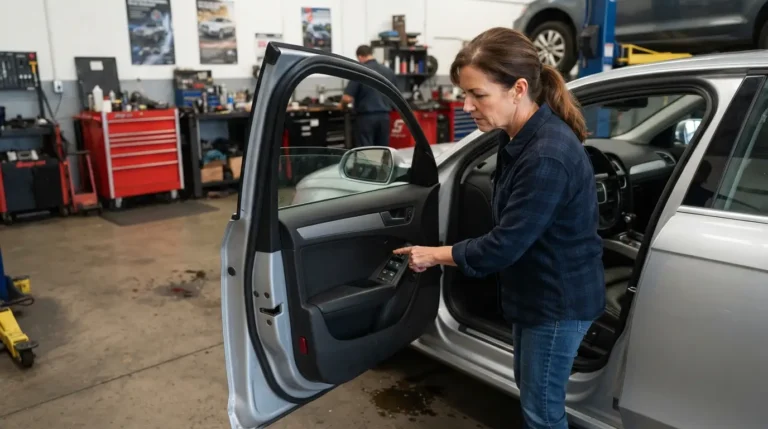
- Interior, trunk, or glove box lights stuck on. Bad switches or misaligned latches keep tiny bulbs on all night.
- Aftermarket gear. Dash cams in parking mode, big amps, alarms, remote start, and OBD trackers can pull heavy power.
- Phone chargers and accessories left in the socket. Some stay live when the car is off.
- Infotainment or body modules that never sleep. Software bugs keep the radio or control units awake.
- Faulty alternator diodes. They can let current flow backward and drain the battery while parked.
- Weak or old battery. Age, heat, and sulfation cut capacity. A tired battery “drops” faster overnight.
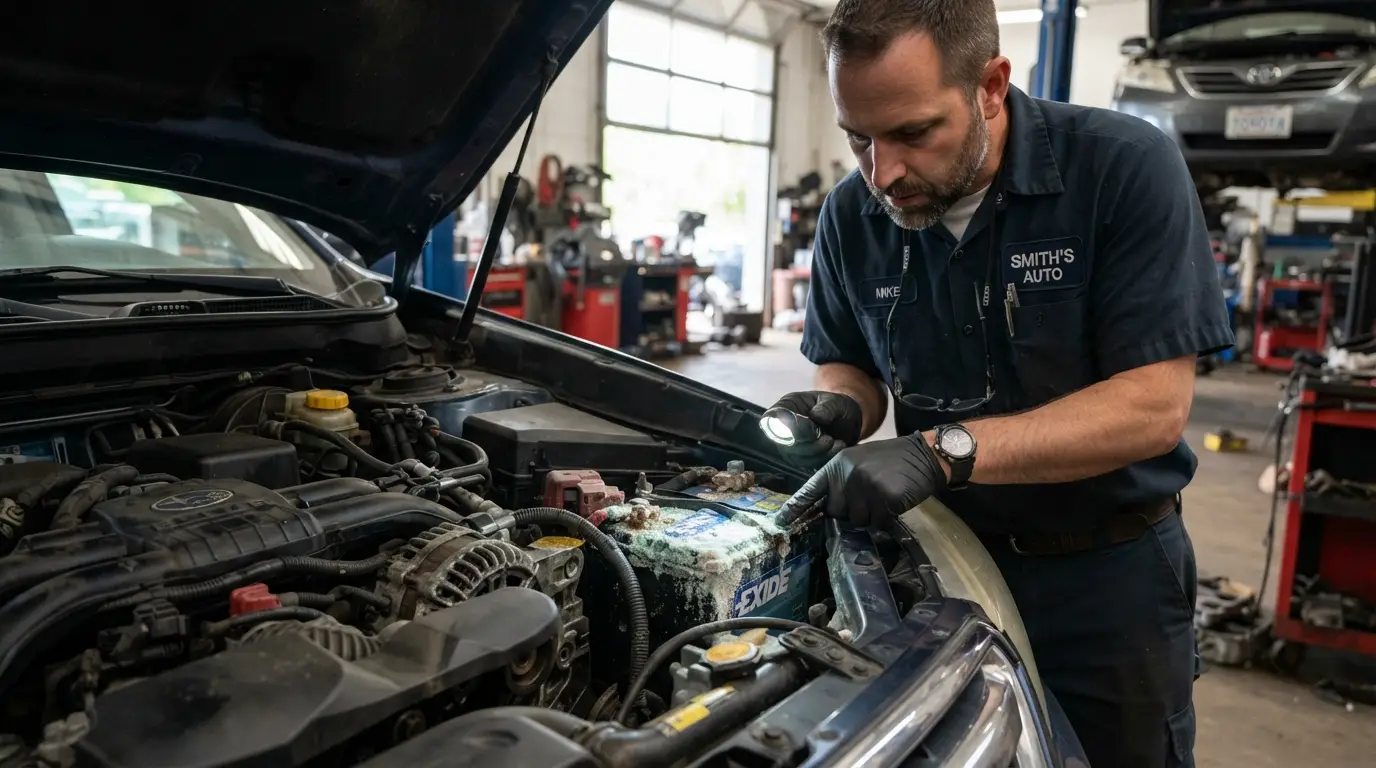
- Loose or corroded battery terminals. Poor connections cause charge issues and strange drains.
- Stuck relays. Cooling fans, fuel pumps, or HVAC blowers can run after shutdown.
- Keyless entry or proximity systems. A nearby key fob can keep the car awake.
- Short trips and heavy loads. The alternator cannot recharge fully after many short drives.
- Bad grounds or added wiring. High resistance paths cause charging faults and hidden drains.
- Cold weather. Capacity falls in the cold. A small drain that was fine in summer kills the battery in winter.
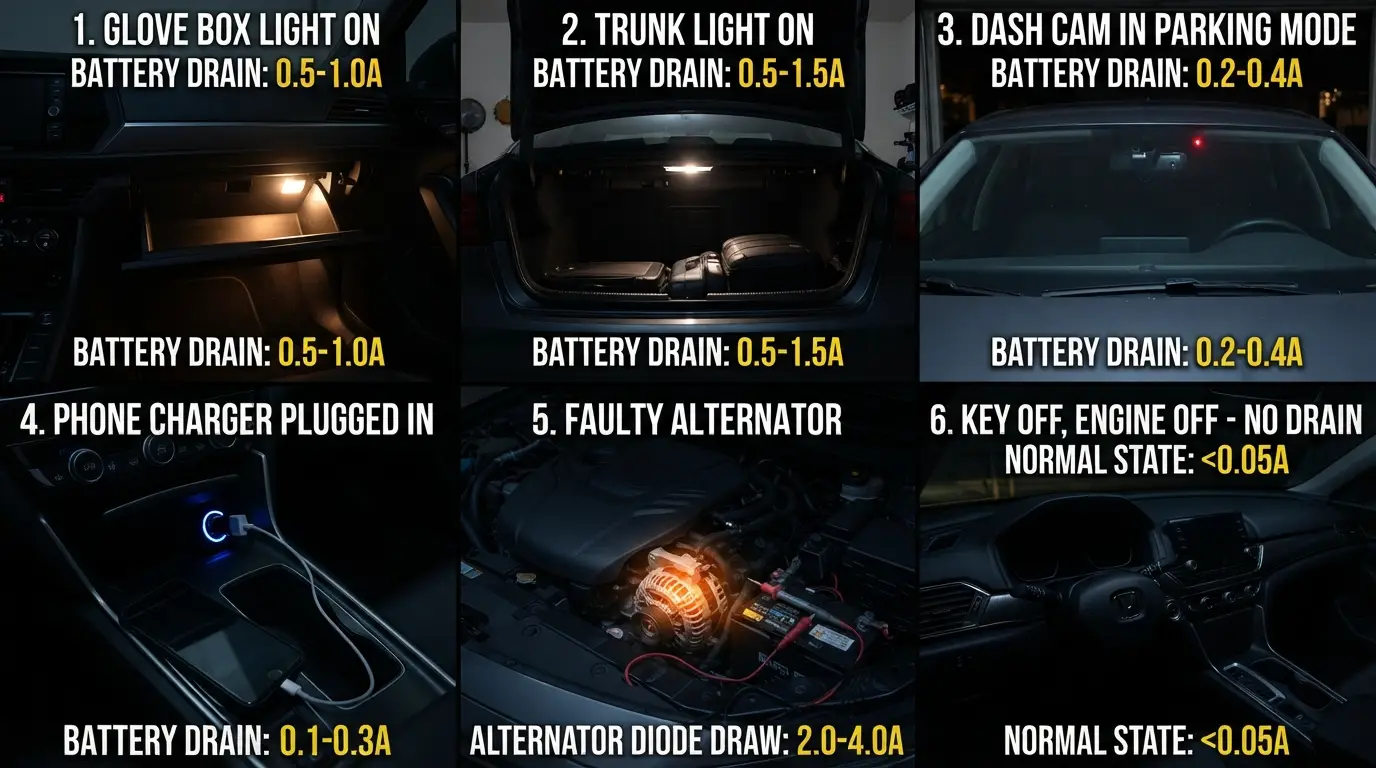
Tip: If you park, step away, and hear a fan or pump run for minutes, suspect a stuck relay. If the trunk light goes off only when you press the latch, the switch may be bad. These small things are classic Car Battery Draining Overnight Causes.
How to diagnose Car Battery Draining Overnight Causes at home
You can track most problems with simple tools and patience. Work safely and take notes.
Step-by-step checklist
- Safety first
- Wear eye protection. Keep flames away.
- Do not short battery posts with tools.
- Quick visual check
- Confirm all lights are off. Check trunk, glove box, and vanity mirrors.
- Look for loose cables, green corrosion, or damp fuse boxes.
- Battery health check
- Read the date sticker. Over 4 years old? Plan for a test or replacement.
- Measure resting voltage after the car sits for 3 hours.
- 12.6–12.8 V is full.
- 12.4 V is fair.
- 12.2 V is about half.
- 12.0 V or less is very low.
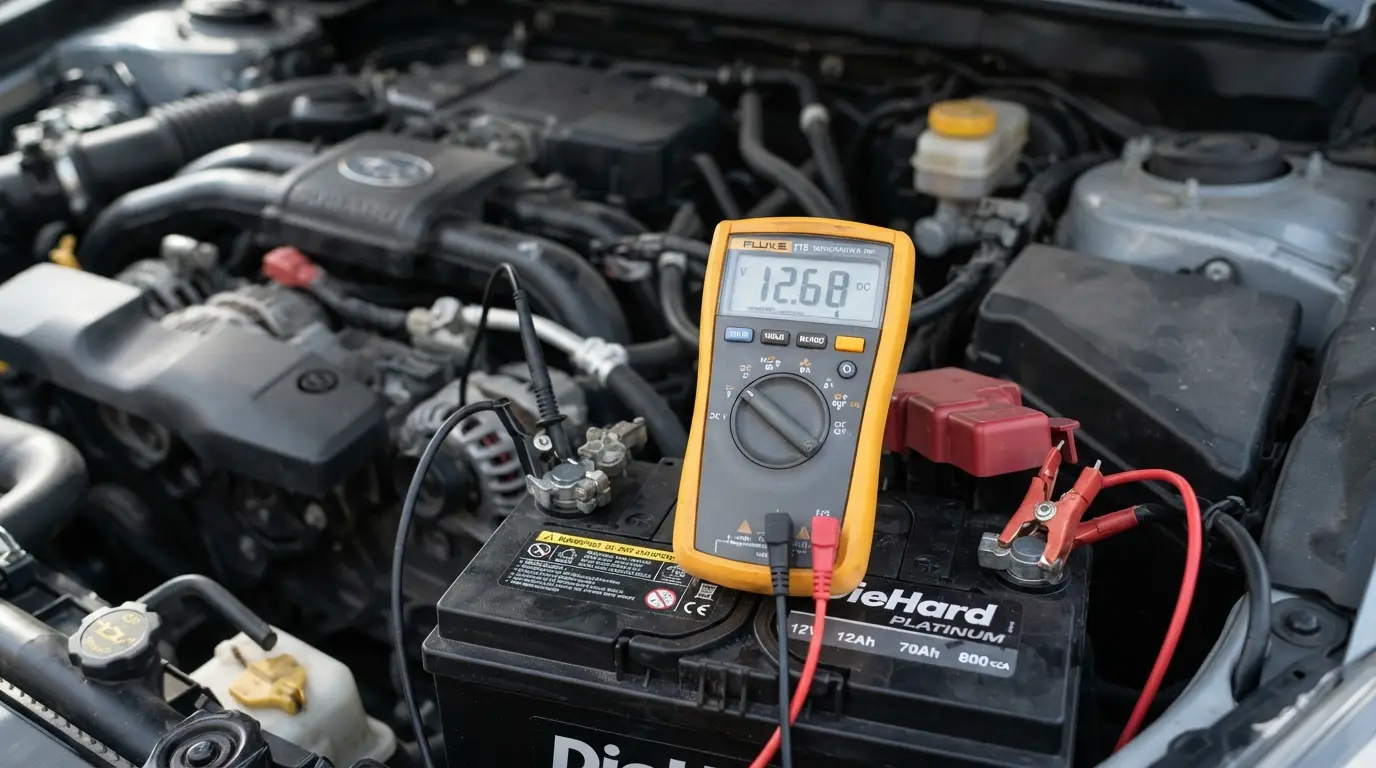
- Charging check
- Start the car. Measure across the battery.
- 13.8–14.7 V is normal.
- Below 13.5 V suggests a weak alternator or belt.
- Above 15 V hints at a bad regulator.
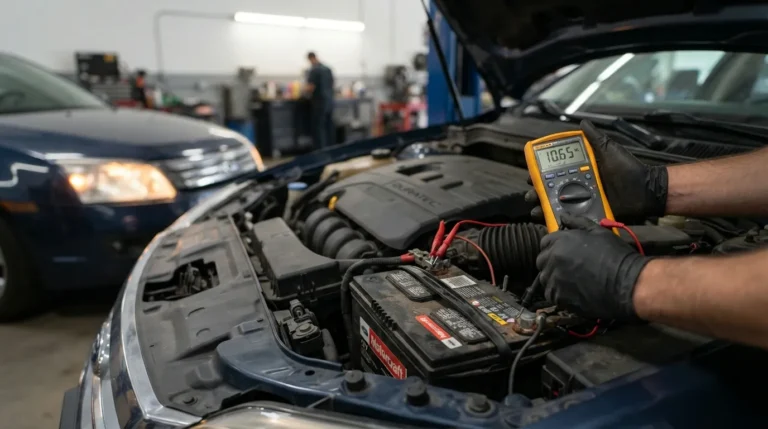
- Parasitic draw test with a meter
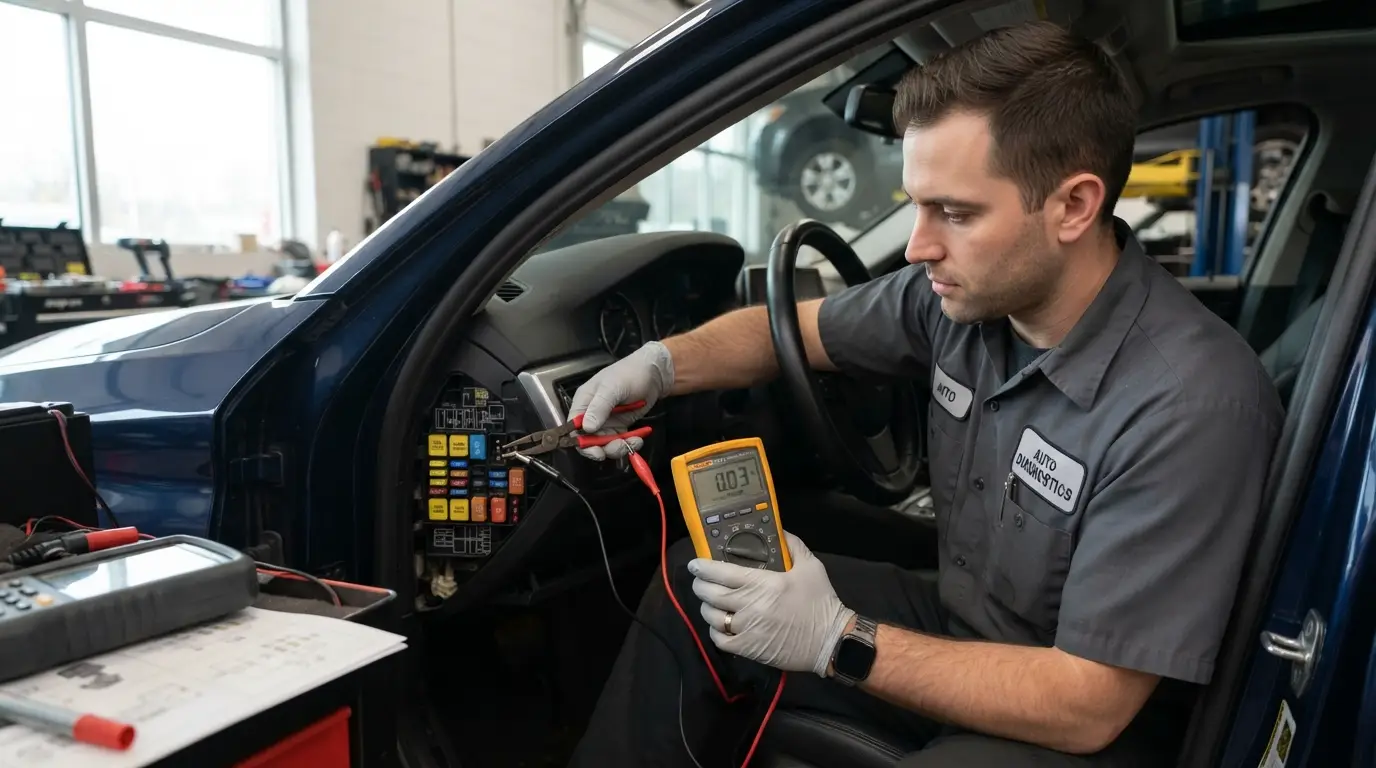
- Close all doors. Latch the door strikers with a screwdriver so lights stay off.
- Wait 20–45 minutes for modules to sleep.
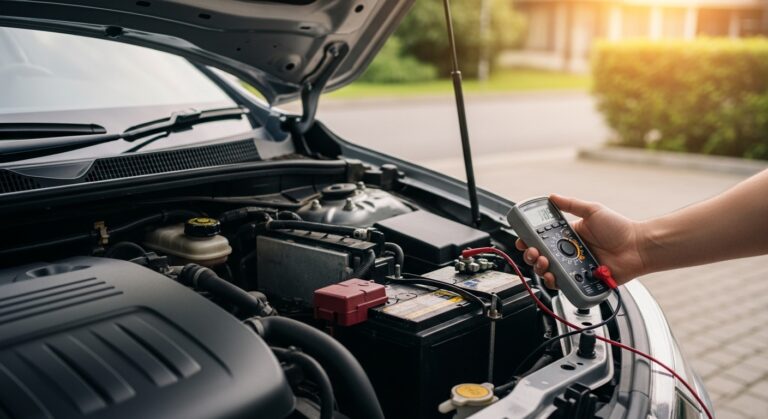
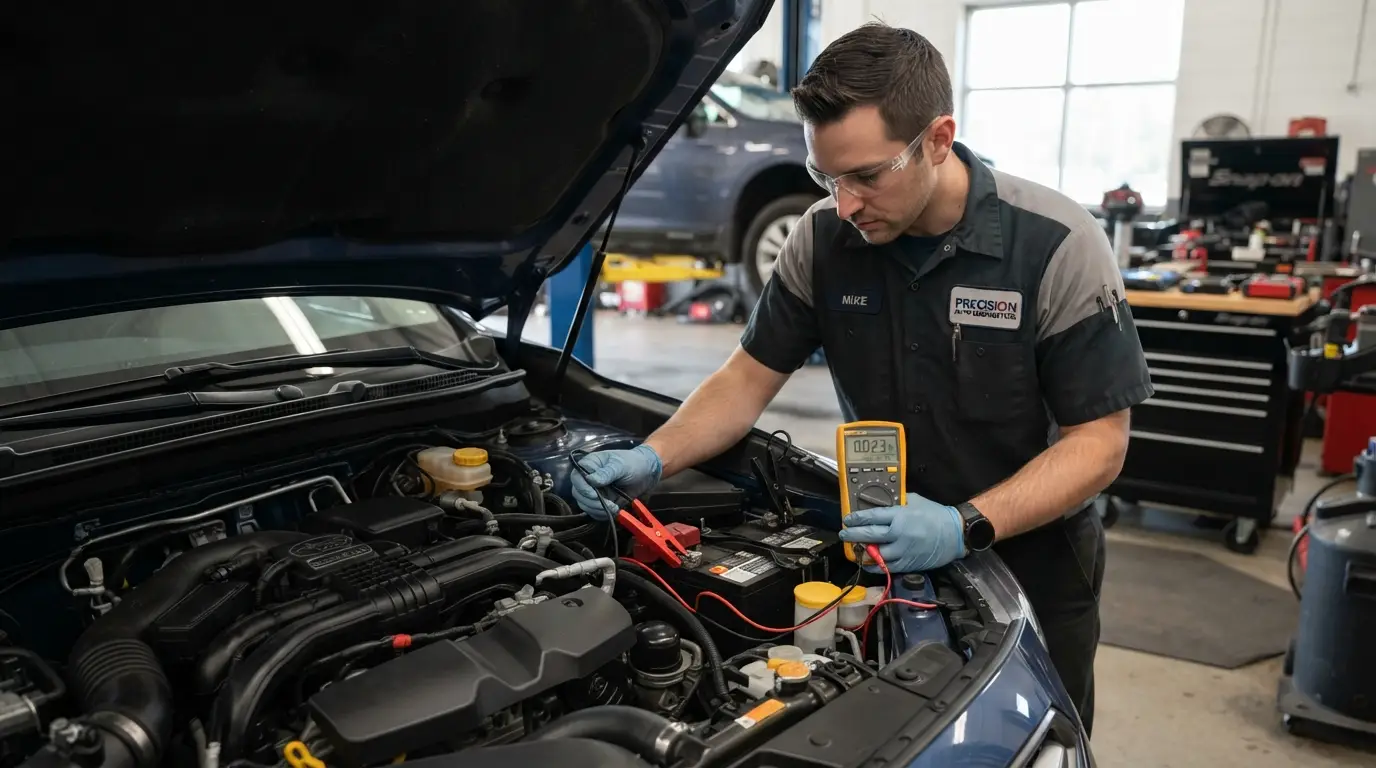
- Put your multimeter in series on the negative cable in amps mode. Use a fused lead.
- Normal sleep draw: 20–50 mA. Over 100 mA is high.
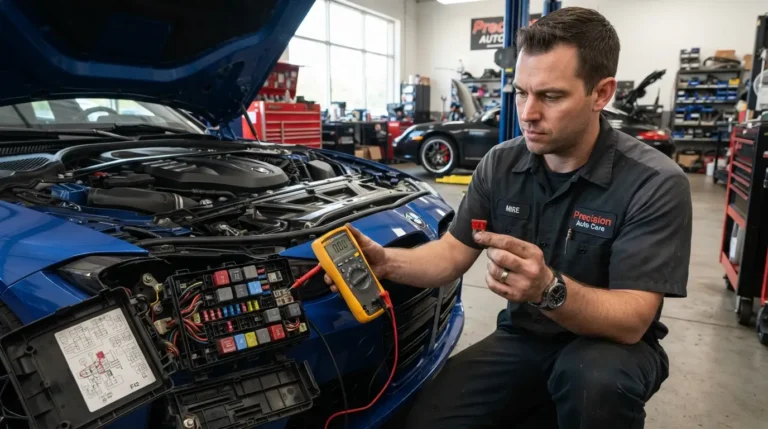
- Pull fuses one at a time. When the draw drops, you found the circuit.
- Trace that circuit to the part: radio, module, relay, or light.
- Use a DC clamp meter if you have one
- Clamp around the negative cable. It is safer and faster.
- It reads current without breaking the circuit.
- Night test
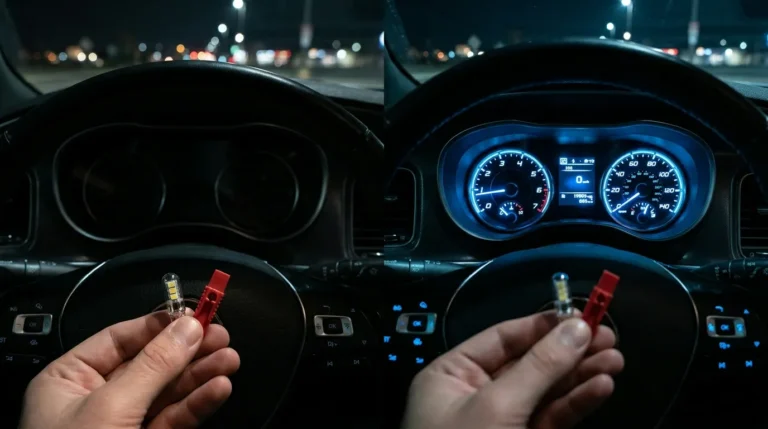
- Park in a dark spot. Step back and look for a faint glow inside.
- A phone camera can spot dim lights you may miss.
PAA-style quick answers inside the guide
How long should a car take to go to sleep?
Most cars sleep in 15–45 minutes. Newer cars with connected features can take longer. Do not open doors during this wait.
Can a bad alternator drain the battery overnight?
Yes. A shorted diode lets current leak backward when parked. You may also see dim lights and charging issues while driving.
Will disconnecting the battery stop the drain?
It hides the symptom but not the cause. Use it as a short-term fix only. You will lose settings and may trigger faults.
These steps will help you confirm Car Battery Draining Overnight Causes without guesswork. Keep a log of readings and fuse pulls. It speeds up the fix.
Fixes for common Car Battery Draining Overnight Causes
Use the test results to pick the right repair. Start simple and verify each change.
- Replace a weak battery after a load or conductance test. Most last 3–5 years.
- Clean and tighten terminals. Use a brush and add a light coat of dielectric grease.
- Repair or replace a bad alternator. A diode leak needs a new alternator.
- Update software. Many sleep issues are fixed by module updates or resets.
- Tame aftermarket gear.
- Add a hardwire kit with low‑voltage cutoff for dash cams.
- Use a relay that switches with ignition for amps and lights.
- Unplug OBD trackers when parked long term.
- Fix stuck relays. Replace the relay or the part it controls.
- Adjust or replace glove box, trunk, and hood switches. Confirm lights go off.
- Disable proximity unlock if it keeps the car awake in tight garages.
- Repair grounds and worn cables. High resistance hurts charging and causes heat.
- Use a smart charger or maintainer if the car sits for weeks.
Each fix should cut the draw to a normal level. Re-test after each change. This is how you close the loop on Car Battery Draining Overnight Causes.
Prevention habits that stop Car Battery Draining Overnight Causes
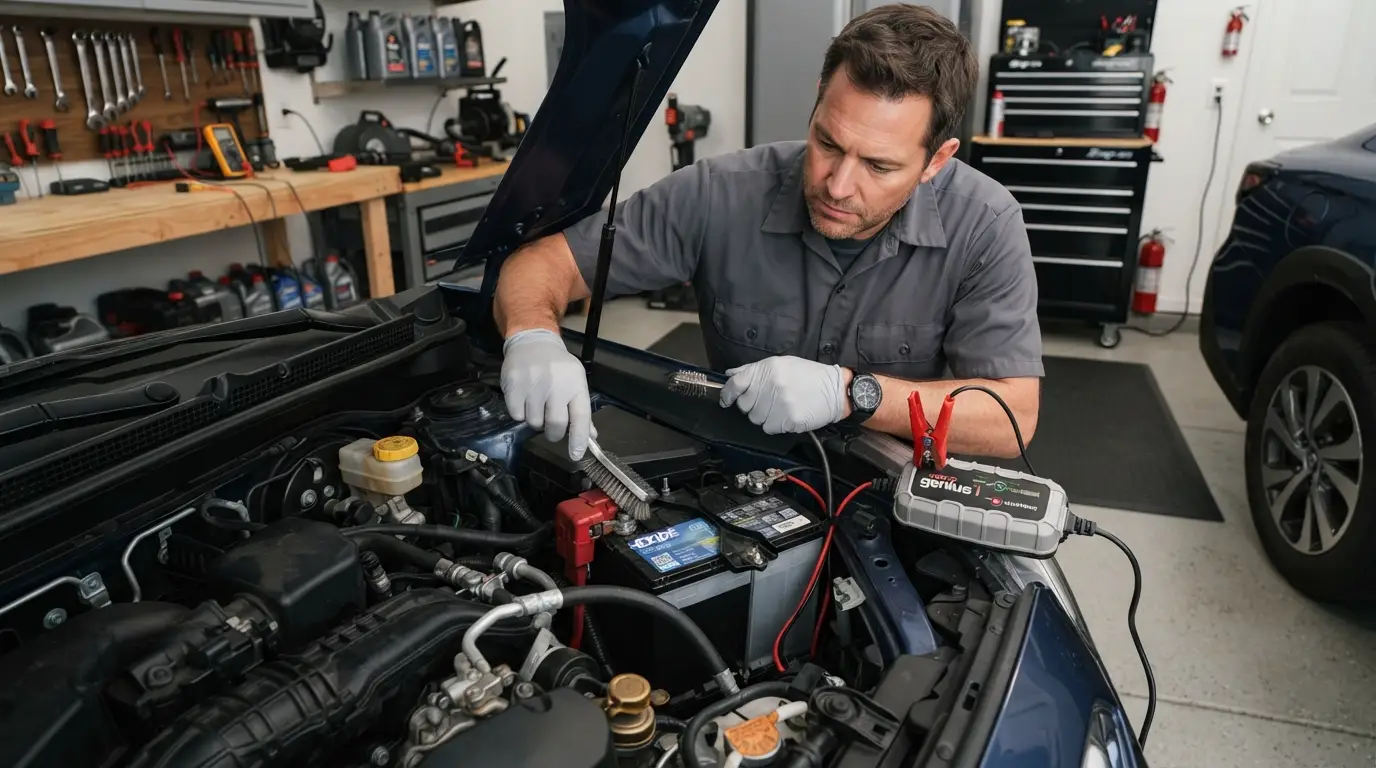
Small habits save big headaches. Use this quick routine.
- Drive 20–30 minutes on the highway once a week. It helps recharge fully.
- Check that all doors and the trunk are latched. Watch for “door ajar” lights.
- Unplug chargers and gadgets when you park.
- Store key fobs away from the car. Some cars wake when a fob is near.
- Test the battery before winter and summer. Extreme temps find weak cells fast.
- Keep terminals clean and dry. Moisture and salt speed up corrosion.
- Use a maintainer for seasonal cars or short-trip use.
- Review settings after software updates. Make sure sleep modes still work.
These habits attack the root of most Car Battery Draining Overnight Causes. They also extend battery life and save money.
When to replace the battery, and what it costs
Replace the battery when it fails a load test, cannot hold charge, or is past its service life. Many last 3–5 years in normal use. Hot climates shorten life. Frequent short trips do as well.
Plan for $120–$200 for a standard flooded battery. AGM or start‑stop types often run $200–$350+. Some cars need battery registration or coding after install. Recycling is free at most parts stores.
Pick the right type and size. Match cold cranking amps to or above the spec. A strong, correct battery reduces the risk of Car Battery Draining Overnight Causes returning due to low reserve.
Safety tips and mistakes to avoid
- Do not measure current with the meter set to volts. You can blow the fuse in the meter.
- Do not slam doors during sleep tests. You will wake modules and skew results.
- Do not cross jumper cables. Protect sensitive electronics with correct jump‑start steps.
- Do not skip the wait time. Modern cars take time to power down.
- Do not ignore signs of heat on cables or fuse boxes. Heat means resistance and risk.
Follow these basics and you will fix Car Battery Draining Overnight Causes without damage or extra cost.
Real-world stories and lessons
A dash cam drain
A client’s SUV died every third day. Sleep draw was 280 mA. Pulling the fuse for the cigarette lighter dropped it to 35 mA. The dash cam was in parking mode without a cutoff. A $25 hardwire kit with low‑voltage shutdown solved it.
The glove box switch
My own sedan had a 150 mA draw. At night I saw a faint glow. The glove box light stayed on due to a bent tab. A $6 switch and five minutes of work ended weeks of pain. These are classic Car Battery Draining Overnight Causes that hide in plain sight.
Related concepts and myths about Car Battery Draining Overnight Causes
- Idling for a few minutes does not fully recharge a dead battery. Driving or a charger works better.
- Lead‑acid batteries have no “memory.” They prefer full charge. Repeated deep discharges shorten life.
- Jump‑starting a dying battery often stresses the alternator. Charge first when you can.
- Cold does not “create” a drain. It reduces capacity, which exposes small drains.
Know these points and you will avoid repeat Car Battery Draining Overnight Causes.
Frequently Asked Questions of Car Battery Draining Overnight Causes
How do I know if the battery or the alternator is bad?
Test resting voltage and then charging voltage. If resting is low and charging is normal, suspect the battery. If charging is low or swings, suspect the alternator.
What is a safe parasitic draw?
Around 20–50 mA is common. Over 100 mA after sleep time points to a problem and needs a trace.
Can a brand‑new battery drain overnight?
Yes. A new battery masks the issue for a while, but a large parasitic draw will still kill it overnight.
Will a battery maintainer hide a problem?
It keeps the car ready, but it does not fix the root cause. Use it while you diagnose, not as the only solution.
Do I need a pro to find complex drains?
Sometimes, yes. Networked modules and CAN bus issues need pro tools and wiring charts. If fuse pulls do not isolate it, seek a shop.
Conclusion
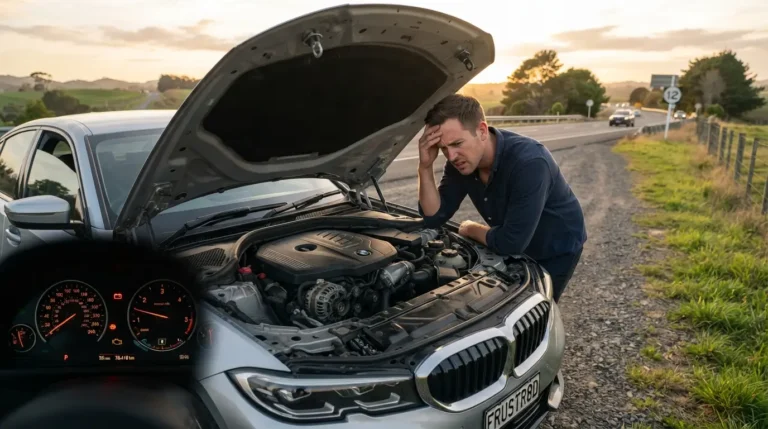
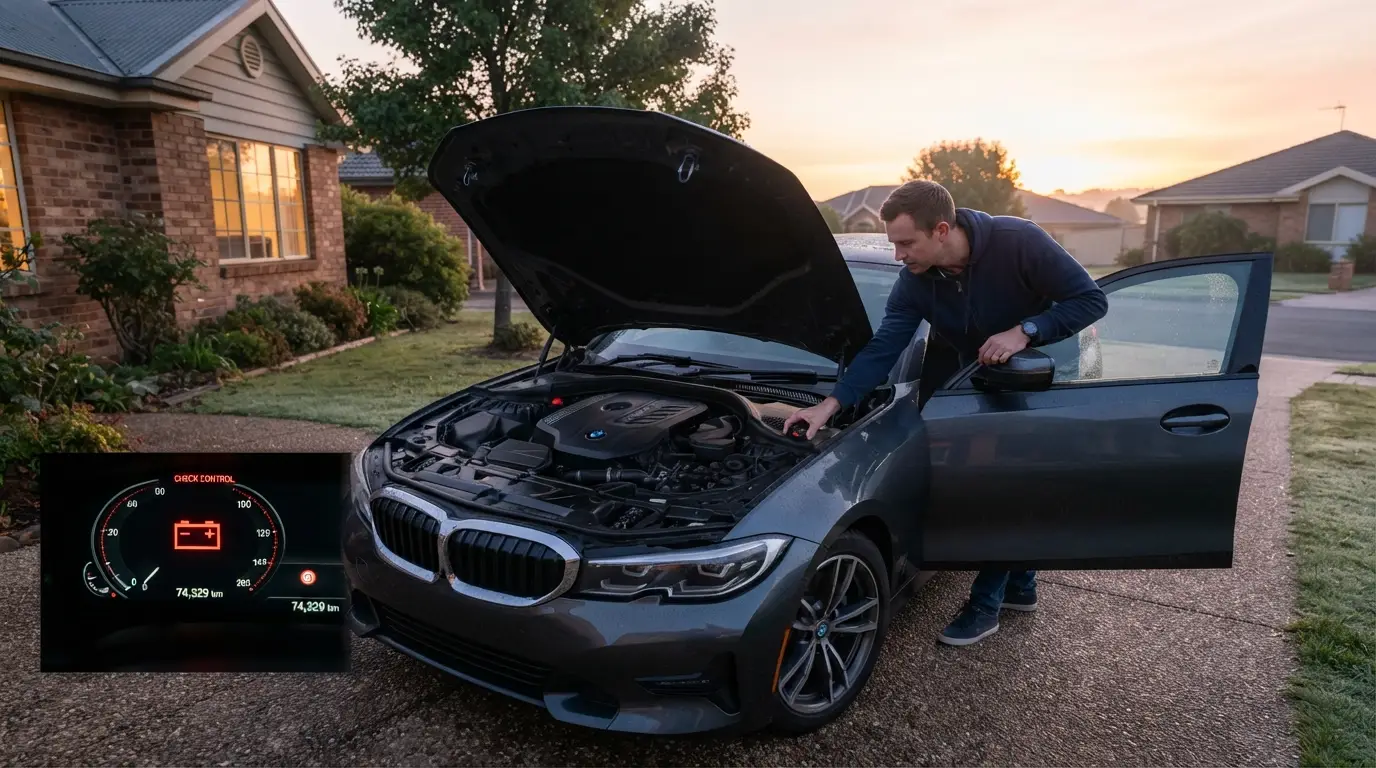
A dead battery at dawn is more than bad luck. It is a sign of a parasitic draw, a charging fault, or a tired battery. Use the simple tests here to measure, isolate, and fix the issue. Start with lights, fuses, and voltage checks. Then tackle modules, relays, and add‑ons.
Take action today. Build better habits, test your system, and set up a maintainer if you store the car. If you need help, share your readings and steps, and I’ll guide you. Want more hands‑on tips like this? Subscribe, ask a question, or leave a comment with your results.