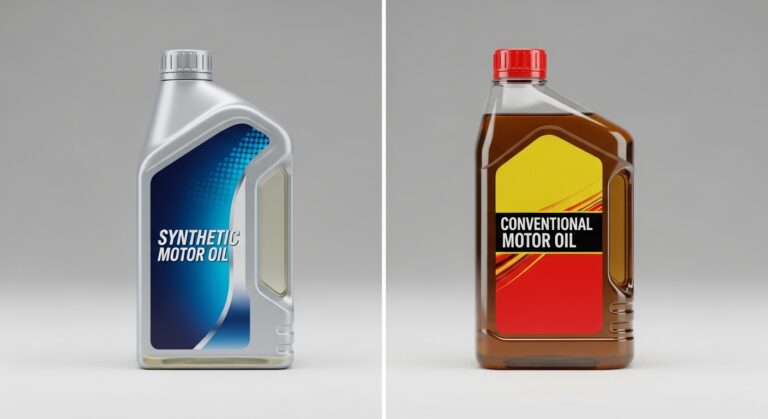
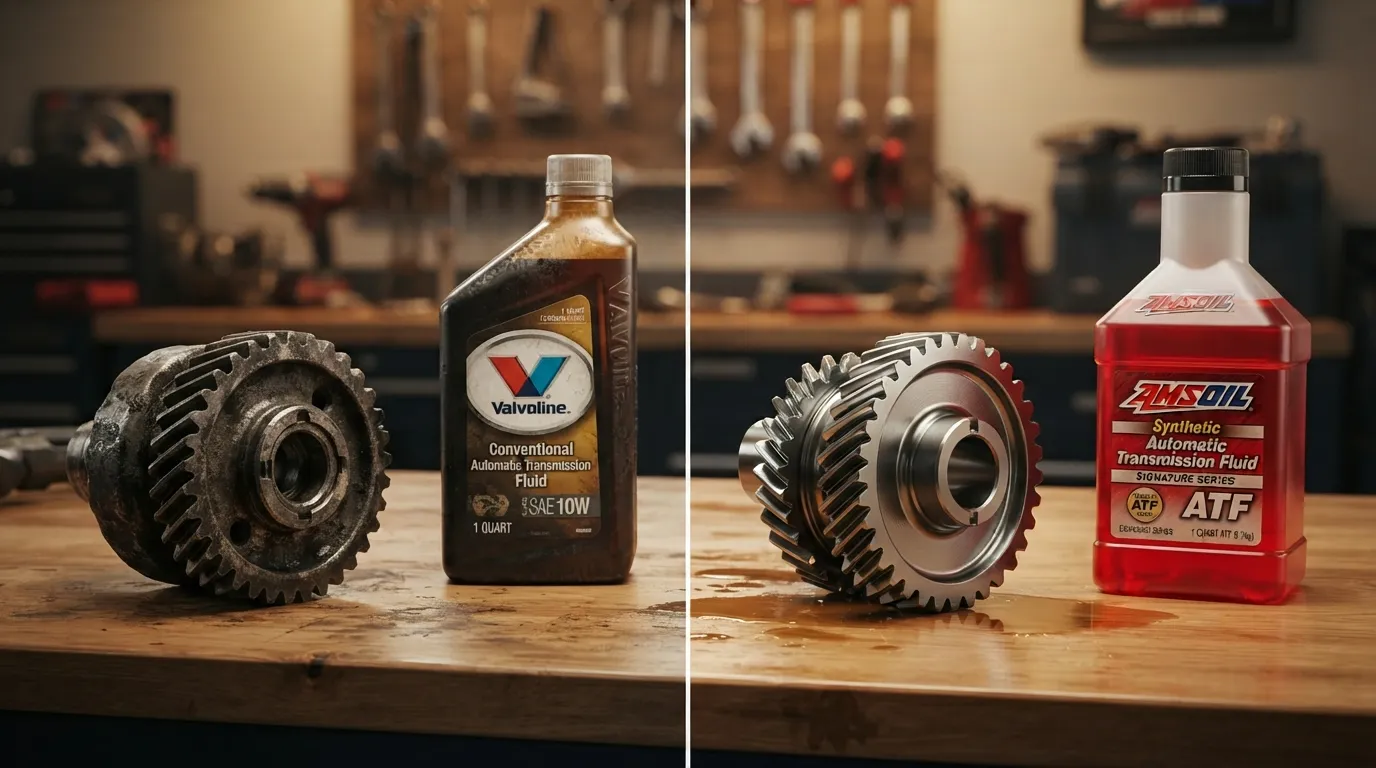
Synthetic fluid lasts longer and protects better, while conventional fluid costs less upfront.
I have worked on cars and fleets for over a decade, and I know transmission fluids inside and out. This guide breaks down synthetic vs conventional transmission fluid with clear facts, real-world tests, and practical advice. You will learn how each fluid works, where they help or hurt, cost trade-offs, maintenance tips, and how to pick the right fluid for your car. Read on to make a confident, money-smart choice for your transmission.

How transmission fluid works
Transmission fluid lubricates gears, bearings, and clutches inside automatic and manual gearboxes. It carries heat away from friction parts and helps hydraulic systems operate smoothly. Fluid also protects metal from rust and reduces wear by forming a thin film on moving parts. Choosing the right fluid keeps shifts crisp and extends transmission life.

Synthetic vs Conventional: composition and key properties
Synthetic transmission fluid is made from engineered base oils and tailored additives. Conventional transmission fluid uses refined mineral oil plus additives. Synthetic fluids have cleaner molecular structure and more uniform molecules. Conventional fluid is less processed and can contain a wider range of molecule sizes.
Key property differences include:
- Viscosity stability: Synthetic resists thinning at high heat and thickening at low temperatures.
- Oxidation resistance: Synthetic resists breakdown and sludge formation longer.
- Friction modifiers: Both types include them, but synthetic formulas are often tuned for modern transmissions.
These properties shape how synthetic vs conventional transmission fluid perform under strain and over time.

Performance comparison: heat, wear, and shifting
Heat control
- Synthetic fluid manages heat better. It holds viscosity at high temperatures and resists oxidation.
- Conventional fluid will break down faster in hot conditions and may darken or form varnish.
Wear protection
- Synthetic base oils provide a more consistent lubricating film. This reduces metal-to-metal contact.
- Conventional oils protect well at normal conditions but wear increases once the oil degrades.
Shift quality and friction
- Many modern transmissions rely on specific friction characteristics. Synthetic formulations can be tuned for smoother, faster shifts.
- Conventional fluid can work fine in older designs but may not meet tight modern specs.
In short, synthetic fluids often give better performance under stress and in modern gearboxes, while conventional fluids meet basic needs in milder use.

Maintenance, service intervals, and compatibility
Change intervals
- Synthetic vs conventional transmission fluid intervals differ. Synthetic often allows longer intervals—sometimes double or more.
- Conventional fluid usually needs more frequent changes, especially under towing or heavy use.
Compatibility and manufacturer requirements
- Always check the vehicle’s manual. Many automakers specify a grade or a synthetic formula.
- Mixing small amounts of synthetic and conventional fluid is generally safe, but matching specs is best for optimal performance.
Signs you need service
- Hard shifts, slipping gears, unusual noises, or dark fluid smell indicate a change is due. Regular checks help prevent damage.
Cost, value, and environmental impact
Upfront cost
- Synthetic transmission fluid costs more per quart. High-performance blends are pricier.
- Conventional fluid is cheaper up front, which makes sense for tight budgets.
Value over time
- Synthetic often saves money in the long run by reducing service frequency and lowering repair risk. For high-mileage and heavy-use vehicles, synthetic can be cost-effective.
- For low-mileage cars used in light city driving, conventional fluid can be adequate and cost-efficient.
Environmental notes
- Longer life for synthetic fluid means fewer fluid changes and less waste. Proper disposal of either fluid is important to prevent pollution.
Choosing the right fluid for your vehicle: practical advice
Match the spec
- Follow the owner’s manual spec first. If the manual calls for a specific synthetic grade, use it.
- If the manual allows conventional fluid, weigh use case and budget.
When to choose synthetic
- You tow heavy loads, drive in hot climates, or want longer service intervals.
- Your car has high mileage and you want better protection against wear.
When conventional is sensible
- You have a low-mileage daily driver with gentle use and short trips.
- Budget constraints make frequent changes practical.
Personal note from my experience
- I switched a light truck to synthetic when I began towing weekly. The transmission ran cooler and shifts stayed smooth after long drives. The fluid cost more, but I went two service cycles between changes and avoided an expensive repair later.
Common questions (People also ask)
What happens if you mix synthetic and conventional transmission fluid?
Mixing short-term rarely causes instant harm, but it may dilute performance benefits. For best results, match the manufacturer spec and use one type consistently.
Can synthetic fluid prevent transmission failure?
Synthetic fluid improves protection but cannot fix worn mechanical faults. It reduces the risk of failure when used correctly and changed on schedule.
Is synthetic required for modern transmissions?
Some modern transmissions require synthetic formulations for proper shift feel and longevity. Always follow the owner’s manual requirements.

Frequently Asked Questions of synthetic vs conventional transmission fluid
What is the main difference between synthetic vs conventional transmission fluid?
Synthetic uses engineered base oils with uniform molecules; conventional uses refined mineral oil with a wider mix of molecules. The result is more stable performance from synthetic fluid in extreme conditions.
Will synthetic fluid extend my transmission life?
Synthetic can extend life by resisting heat and oxidation and by maintaining protective viscosity longer. It reduces wear when used properly and changed per guidelines.
How often should I change synthetic vs conventional transmission fluid?
Synthetic changes are often recommended less frequently—sometimes every 60,000 to 100,000 miles depending on the vehicle. Conventional fluid commonly requires changes every 30,000 to 60,000 miles or sooner under heavy use.
Can I switch from conventional to synthetic fluid?
Yes. Switching is common and usually safe. Drain as much old fluid as possible and follow manufacturer guidance to avoid compatibility issues.
Does synthetic fluid improve fuel economy?
Synthetic fluids can slightly improve fuel economy by reducing internal friction and improving hydraulic efficiency. Gains are small but measurable in many cases.
Are there risks to using synthetic fluid in older transmissions?
Older transmissions that have not been well maintained may leak more with some synthetic blends due to thinner formulations. Monitor seals and check for leaks after switching.
How do I know which transmission fluid spec to use?
Check the owner’s manual for the exact spec and viscosity. Use fluids that meet the transmission maker’s standards and certification.
Conclusion
Choosing between synthetic vs conventional transmission fluid comes down to use, budget, and manufacturer guidance. Synthetic offers better heat resistance, longer life, and improved protection under heavy use, while conventional is cheaper and works well for light driving and low-mileage cars. My practical tip: follow your manual, consider synthetic for towing or high heat, and keep a steady maintenance schedule to protect your transmission. Try the right fluid, monitor performance, and share your experience or questions below to help others decide.