Use car ramps safely by choosing the right ramp, level ground, secure wheel chocks, and test stability.
I’ve spent years working on cars in driveways and small shops, and I know how simple mistakes on ramps can turn routine work into a risky task. This guide explains how to use car ramps safely with clear steps, real-world tips, and the know-how you need to lift a vehicle, work underneath, and lower it with confidence. Read on to learn the right ramp types, prep steps, step-by-step procedures, common mistakes, and practical maintenance advice so you can protect yourself and your vehicle.
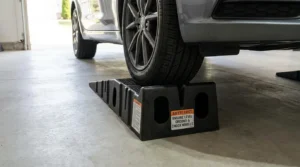
Types of car ramps and when to use them
Car ramps come in several forms. Each fits a different job and vehicle size. Understanding types helps you pick the right tool for safe lifting.
- Solid molded ramps
- Lightweight, stackable, good for quick oil changes on low-clearance cars.
- Heavy-duty steel ramps
- Built for trucks and heavier vehicles. Often have higher load ratings.
- Telescoping or adjustable ramps
- Allow variable height. Useful when you need more clearance without stands.
- Drive-on roller ramps
- Have integrated safety stops and traction surfaces for stability.
Choosing the wrong ramp can be a safety hazard. Match ramp capacity to vehicle weight, account for axle load, and check ramp contact area to avoid slipping. When learning how to use car ramps safely, pick ramps rated above your vehicle’s loaded weight to add a safety margin.
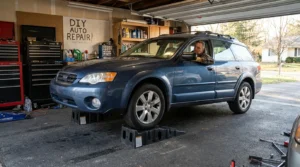
Choosing the right ramp: capacity, design, and material
Picking the right ramp is the first safety decision. Consider these key factors.
- Load rating
- Pick a ramp with a load rating higher than your vehicle’s gross weight.
- Width and track spacing
- Tracks must align with your tires. Wider trucks need wider ramps.
- Height and angle
- Higher ramps give more clearance but increase approach angle. Ensure your car can climb the angle without scraping.
- Surface and traction
- Look for non-slip surfaces and drainage grooves for wet conditions.
- Material and durability
- Plastic ramps resist corrosion; steel ramps are more durable for repeated heavy use.
When in doubt, choose the stronger ramp. A ramp rated for heavier loads reduces risk and increases stability. This is a basic rule of how to use car ramps safely.
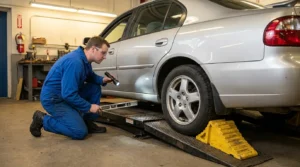
Preparing your vehicle and workspace
A safe lift starts before the wheels roll up the ramps. Proper preparation cuts risk dramatically.
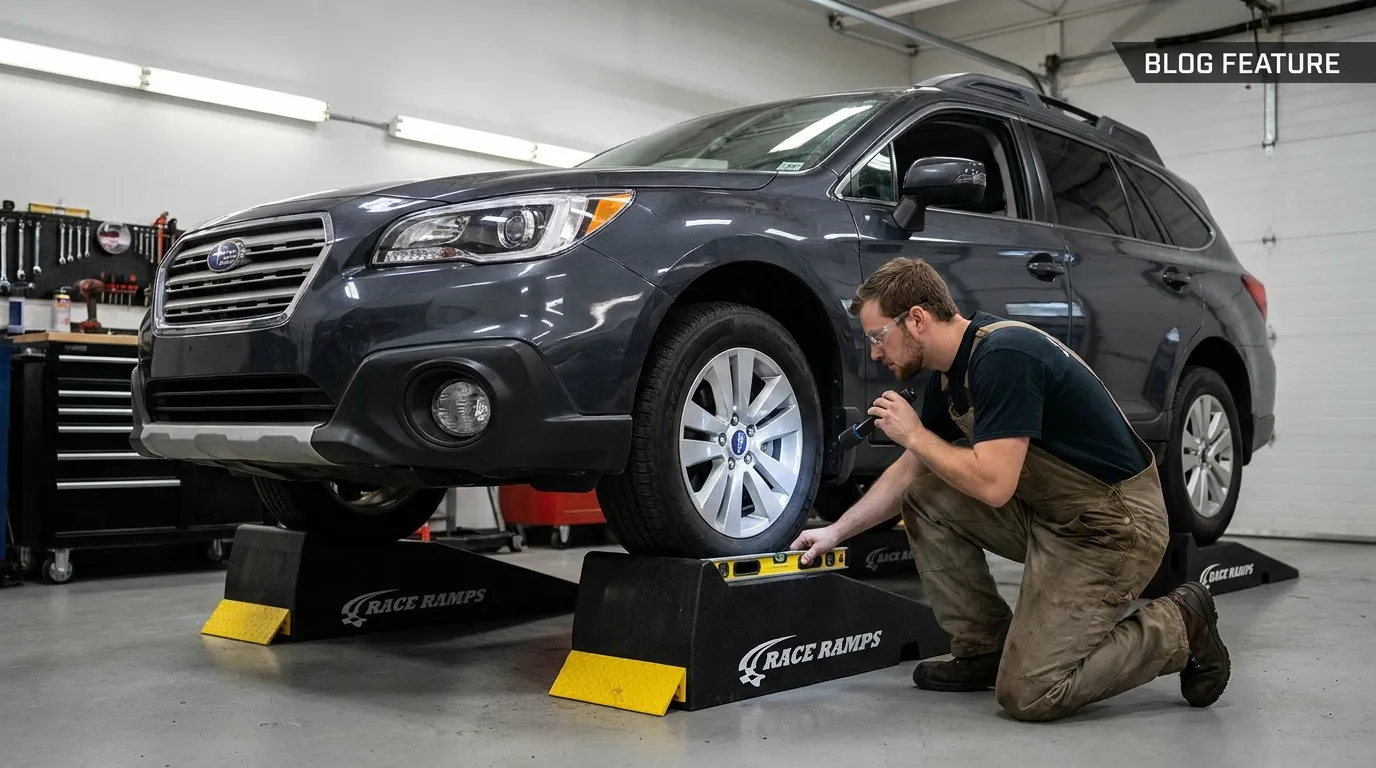
- Choose level ground
- Never use ramps on a slope. Concrete or packed asphalt is ideal.
- Clear the area
- Remove debris, tools, and bystanders from the work zone.
- Inspect ramps
- Check for cracks, rust, or damaged traction surfaces.
- Check tire condition and pressure
- Worn or underinflated tires can slip off ramp tracks.
- Engage parking brake and put transmission in park (or first gear for manual)
- This prevents unwanted rolling.
- Use wheel chocks
- Chock the rear wheels when lifting the front, and the front wheels when lifting the rear.
These prep steps are central to how to use car ramps safely. A well-prepared workspace is half the job.
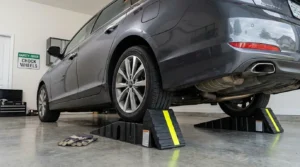
Step-by-step: how to use car ramps safely
Follow a clear, steady routine each time you use ramps. Keep sentences short and actions specific.
- Position ramps in line with tires
- Ensure tracks point straight at the tire centers.
- Back up slowly and align
- For front lifts, drive forward; for rear lifts, reverse onto ramps slowly.
- Drive up with a spotter
- A helper outside can guide alignment and stop you quickly if needed.
- Set the vehicle on the ramp pads
- Stop when the tire hits the built-in stop or tread edge.
- Apply parking brake and shift into park or first gear
- Always double-check brakes and gear.
- Place wheel chocks behind the opposite axle
- Chock both wheels on the ground side for redundancy.
- Test stability before working under vehicle
- Push the bumper firmly to confirm the vehicle does not rock.
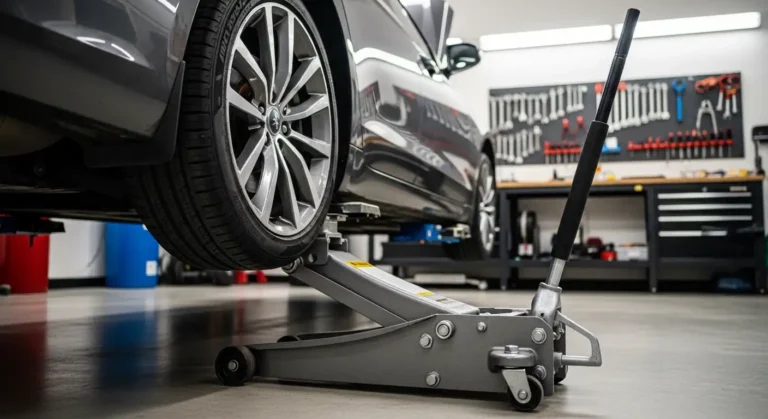
- Use jack stands for added safety when performing major repairs
- Even stable ramps benefit from backup support.
- When finished, remove tools from under car
- Drive down slowly, with a helper if possible.
- Store ramps properly
- Clean and inspect before storage.
Repeatable steps reduce mistakes. This checklist explains how to use car ramps safely each time you lift a vehicle.

Safety gear, backups, and extra precautions
Never rely on a single method to hold a vehicle. Redundancy is a core safety principle.
- Safety gear
- Wear eye protection and gloves. Use wheel chocks and a reflective vest if working near traffic.
- Backups
- Use jack stands under the frame or pinch welds in addition to ramps for heavy work.
- Emergency plans
- Keep a phone nearby and know emergency contact numbers.
- Avoid working alone for high-risk tasks
- A partner can help if the vehicle shifts or a tool fails.
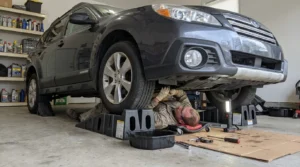
I learned the value of backups the hard way. Once, my ramp slipped a few inches on gravel. Thankfully I had chocks and a stand in place, and no one was hurt. Redundancy saved the day—this is a key lesson in how to use car ramps safely.
Common mistakes and how to avoid them
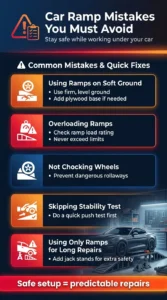
Knowing common errors helps you steer clear of them.
- Using ramps on soft or uneven ground
- Use a firm, level surface. Add a plywood base if needed.
- Overloading ramps
- Check and respect the load rating.
- Not chocking wheels
- Chocks stop unexpected rollaways.
- Skipping a stability test
- A quick push check prevents surprises.
- Relying only on ramps for heavy repairs
- Add jack stands when you will be under the car for extended work.
Avoid these mistakes to keep your work safe and predictable.
Maintenance, inspection, and storage of ramps
Well-maintained ramps last longer and stay safer.
- Inspect before every use
- Look for cracks, loose bolts, and worn traction surfaces.
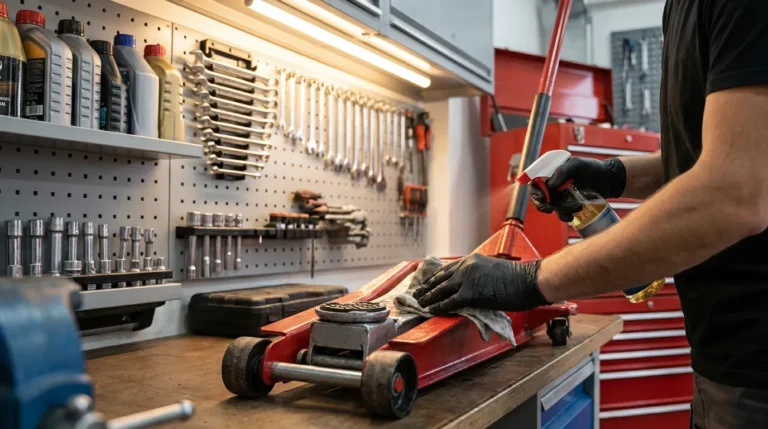
- Clean ramps after use
- Remove oil, grease, and grit to maintain traction.
- Replace damaged parts
- Do not use ramps with structural damage.
- Store flat and dry
- Keep plastic ramps out of direct sun to avoid warping.
- Lubricate moving parts
- For telescoping ramps, keep mechanisms moving smoothly.
Routine checks are part of responsible ownership and of using car ramps safely.

Source: haynes.com
Personal tips and real-world examples
I’ve used ramps for routine oil changes, exhaust work, and brake checks. Here are practical tips from those experiences.
- Practice alignment without the engine on
- Walk the path of the tires to be confident before driving up.
- Use a spotter and hand signals
- A consistent signal system speeds safe alignment.
- Start with low speeds
- Approach ramps at walking pace to avoid bouncing onto the track.
- Keep a small toolkit near your ramp
- A tire gauge, chocks, and a flashlight make tasks smoother.
One time, a neighbor’s truck had an approach angle too steep. We built a small ramp approach with scrap wood to protect the bumper. Small tweaks like that help you adapt while maintaining safety in how to use car ramps safely.

Signs a ramp is unsafe or failing
Recognize warning signs early to avoid accidents.
- Visible cracks or split plastic
- Rusted or bent metal frames
- Wobbly or loose components
- Slippery or missing traction surface
- Ramps that shift under light pressure
If you spot any of these signs, stop using the ramp and replace or repair it.
How to handle specific scenarios
Sometimes the situation is not textbook. Here’s how to adapt.
- Soft ground
- Lay a thick plywood board or use a concrete slab as a base.
- Low-clearance vehicles
- Use low-profile ramps or drive-on creepers designed for low cars.
- High-ride trucks
- Use heavy-duty steel ramps or platform lifts with appropriate capacity.
- Wet or icy conditions
- Postpone the work if possible. If you must, add traction mats and take extra care.
These adjustments show practical ways to maintain safety while using ramps.
Frequently Asked Questions of how to use car ramps safely
Are car ramps safer than jacks?
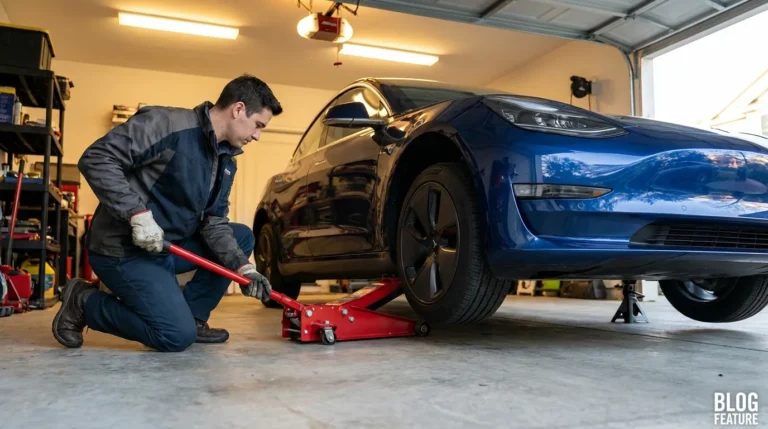
Car ramps are safer for long-term support because they provide broad contact and lower center-of-gravity lift. Jacks are good for short lifts but should be paired with jack stands for prolonged work.
How do I choose the right ramp for my car?
Match ramp load rating to vehicle weight, ensure track width fits tires, and pick a suitable height. Choose ramps rated above your vehicle’s weight for a safety margin.
Can I use ramps on gravel or soft ground?
Avoid ramps on soft ground. If you must, place a thick plywood sheet or concrete pad under the ramps to create a stable base.
Should I use jack stands with ramps?
Yes. Use jack stands as a backup when working under the vehicle for extended periods or for heavy repairs. Redundancy increases safety.
How often should I inspect my ramps?
Inspect ramps before every use. Look for cracks, rust, worn traction, and loose parts, and do not use damaged ramps.
Conclusion
Using car ramps safely comes down to three simple habits: choose the right ramp, prepare the site and vehicle, and always use redundancy. Follow the step-by-step routine in this guide, inspect and maintain your ramps, and add backups like wheel chocks and jack stands whenever you work underneath a car. Take action today: check your ramps, practice the alignment steps on level ground, and share a safety tip with a friend. If this guide helped, subscribe or leave a comment with your ramp tips or questions.