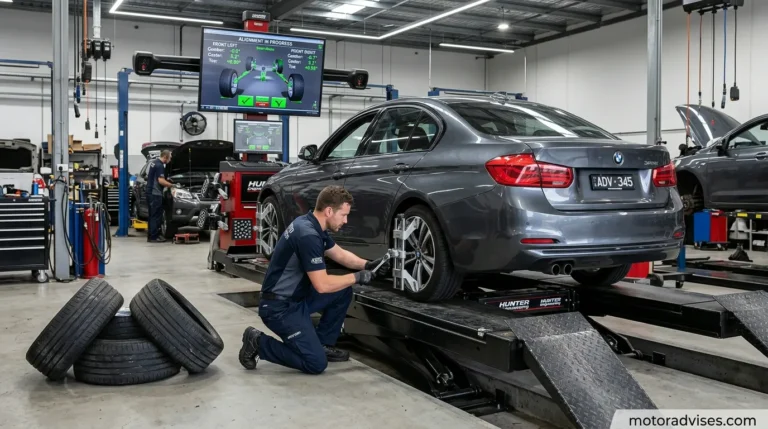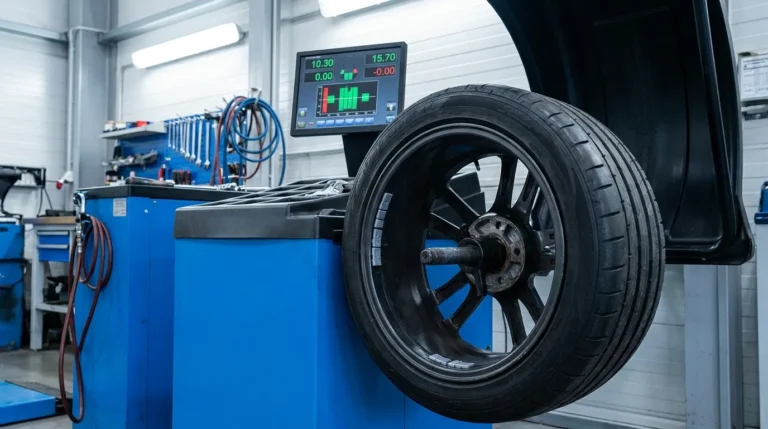

Wheel hub bearing symptoms include humming, grinding, wheel play, vibration, and uneven tire wear.
I’ve worked on dozens of cars and inspected hundreds of wheel hubs, so I know how subtle a bad bearing can start and how quickly it can become dangerous. This guide lays out wheel hub bearing symptoms, why they happen, how to diagnose them, what repairs cost, and practical tips you can use today to stay safe and save money. Read on to catch issues early and make better repair decisions.
What are wheel hub bearing symptoms?
A wheel hub bearing connects the wheel to the vehicle and lets it spin smoothly. When it wears or fails, it creates specific, repeatable symptoms you can hear, feel, or visually spot.
Common signs include noise, vibration, looseness at the wheel, uneven tire wear, and ABS warnings. Each sign points to slightly different issues, so knowing the pattern helps you diagnose right away. Personally, I learned to trust small hums at speed — they often meant a bearing was starting to fail.
Common signs and how they present
Below are the most common wheel hub bearing symptoms and what they usually mean.
- Humming or growling noise that changes with speed
Usually louder as speed increases. The noise often gets worse when turning slightly. - Grinding or rumbling
A rough sound that suggests more advanced wear or metal-on-metal contact. - Wheel play or looseness
You can feel or measure side-to-side movement at the wheel when lifted. - Vibration through steering wheel or floor
Often felt stronger at certain speeds and may reduce when braking lightly. - Uneven or rapid tire wear
One edge of the tire wears faster because the wheel doesn’t spin true. - ABS or wheel sensor warnings
A failing hub can affect the ABS sensor inside the assembly. - Heat at the hub after driving
Excessive heat can be felt by carefully placing a hand near (not on) the hub after a short drive.
I once ignored a faint hum on a friend’s car. Two weeks later the bearing seized on the highway. The small early sound was the clear warning I should have acted on sooner.
Why these symptoms appear — causes and mechanics
Understanding why wheel hub bearing symptoms happen makes diagnosis simpler.
- Normal wear and tear
Bearings wear out over time from miles and load. - Water, salt, and corrosion
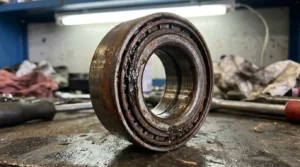
Contaminants degrade grease and cause pitting on bearing surfaces. - Impact damage
Hitting potholes or curbs can damage the hub or bearing race. - Poor or incorrect installation
Over-torquing or wrong parts shorten bearing life. - Failed seals
When seals fail, grease escapes and dirt gets in, accelerating failure. - Overload and towing
Heavy loads heat bearings and speed wear.
These failures lead to noise, looseness, and uneven wheel rotation. In my shop, salt-driven corrosion was the top cause in winter months.
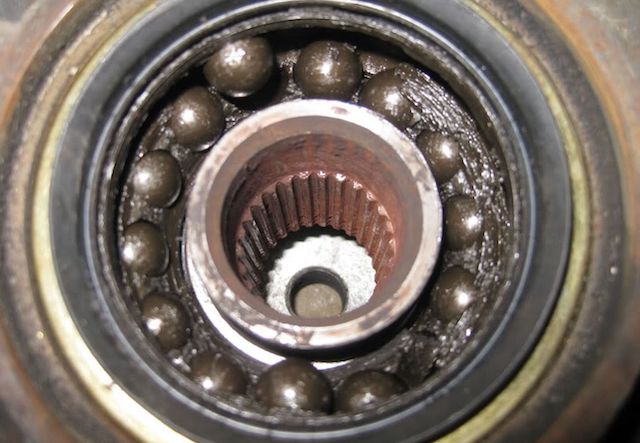
Source: gmb.net
How mechanics diagnose wheel hub bearing symptoms
A proper diagnosis mixes simple tests and a hands-on check.
- Road test
Listen for humming, growling, or rumbling at various speeds. - Wheel lift and shake
With the car on a lift, grasp the tire at 12 and 6 o’clock and rock it to check play. - Spin test
Spin the wheel by hand to feel roughness or catch. - Heat check
Carefully feel for a hot hub after a short drive; excess heat signals internal friction. - Listen with a mechanic’s stethoscope
Isolates noise while someone else drives slowly or turns the wheel. - Scan for ABS codes
Electronic faults can indicate a hub assembly problem.
I always start with a simple wheel shake. It tells me more in 10 seconds than longer tests sometimes. If doubt remains, remove the hub and inspect the bearings and races.

Repair options and costs
Repair choices depend on vehicle design and damage severity.
- Bearing pack and seal replacement
For serviceable bearings, a new race, bearings, and seals may be possible. - Hub assembly replacement
Many modern cars use sealed hub assemblies that are replaced as a unit. - Wheel bearing pressing
Some replacements need a press or special tools at a shop.
Cost factors to expect:
- Parts: sealed hub assemblies cost more than loose bearings.
- Labor: press-in bearings need a shop with the right tools.
- Extra repairs: damaged studs, sensors, or knuckles add cost.
Rough cost guide:
- DIY loose bearing job: parts $50–$150, tools extra.
- Shop replacement (sealed hub): $150–$400 per wheel including labor.
- Complex or performance vehicles: higher due to parts and labor.
My tip: don’t skimp on installation. Bad torque or reused parts cause repeat failures.
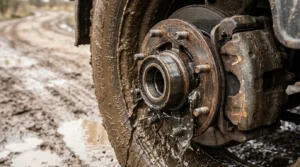
Maintenance and prevention
Simple steps extend bearing life and reduce wheel hub bearing symptoms.
- Keep wheel seals intact and replace them when damaged.
- Avoid repeated hard impacts and slow down for potholes.
- Rinse undercarriage in winter to remove salt.
- Repack bearings with fresh grease if they’re serviceable.
- Use correct replacement parts and proper torque specs.
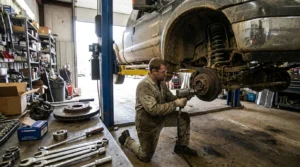
I recommend inspecting hubs during brake jobs. You already have the wheel off, so check for play and noise. This catches many failing bearings early and saves money later.
When to see a mechanic — safety and timing
Some symptoms are urgent and need immediate attention.
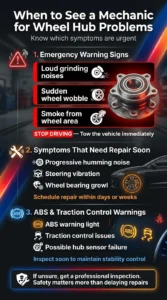
- Loud grinding, sudden wheel wobble, or smoke
Stop driving and tow the vehicle. These signs can lead to wheel separation. - Progressive humming or vibration
Schedule a repair within days to weeks depending on severity. - ABS or traction control errors linked to a hub
Have it inspected soon; the vehicle may lose stability control features.
If you feel unsure, ask a trusted mechanic for a quick inspection. Safety matters more than saving a little money.
Quick PAA-style questions
What does a bad wheel bearing sound like?
A bad wheel bearing often hums, growls, or rumbles. The noise usually rises with vehicle speed and may change when turning.
Can a wheel bearing cause vibration?
Yes. A failing bearing can cause vibration felt in the steering wheel or cabin, especially at certain speeds.
How long can you drive with a bad wheel bearing?
You can sometimes drive short distances, but risk increases quickly. If noise or play worsens, don’t delay repairs.
How does a wheel hub bearing affect ABS?
Many hub assemblies include wheel speed sensors. Bearing wear can disrupt sensor readings and trigger ABS warnings.
Is a hub assembly repair DIY-friendly?
Some tasks are DIY-friendly if you have the right tools and experience. Press-fit bearings and wheel sensors often need a shop.
Frequently Asked Questions of wheel hub bearing symptoms
How can I tell if the wheel bearing is just noisy or unsafe?
Noisy can be an early warning, but unsafe signs include wheel play, grinding, heat, or smoke. If any of those appear, stop driving and get it checked.
Will a new tire fix vibration caused by a bad bearing?
No. Tire issues and bearing issues can both cause vibration, but a new tire won’t fix bearing-induced vibration. Diagnose the root cause first.
Can bad wheel bearings affect fuel economy?
Yes, increased friction from bad bearings can slightly reduce fuel efficiency. The main concern is safety, not mileage loss.
How long do wheel hub bearings last?
Typical life is 85,000–130,000 miles, but environment, load, and driving habits matter. Regular inspection extends service life.
Are wheel hub bearing replacements covered by warranty?
It depends on the part and warranty terms. Manufacturer defects might be covered, but wear and damage usually aren’t.
Conclusion
Wheel hub bearing symptoms range from a faint hum to dangerous grinding and wheel play. Catching these signs early keeps you safe, saves money, and prevents more costly damage. Inspect wheels during routine service, respond to new noises quickly, and choose quality parts and correct installation. If you noticed any of the symptoms described here, schedule an inspection or leave a comment below to share your experience — and consider subscribing for more practical car care tips.